Boeun Beopjusa Temple [UNESCO World Heritage] (보은 법주사 [유네스코 세계문화유산])
Boeun Beopjusa Temple [UNESCO World Heritage] (보은 법주사 [유네스코 세계문화유산])
 – Homepage
www.beopjusa.org
www.templestay.com
– Tel
+82-43-543-3615
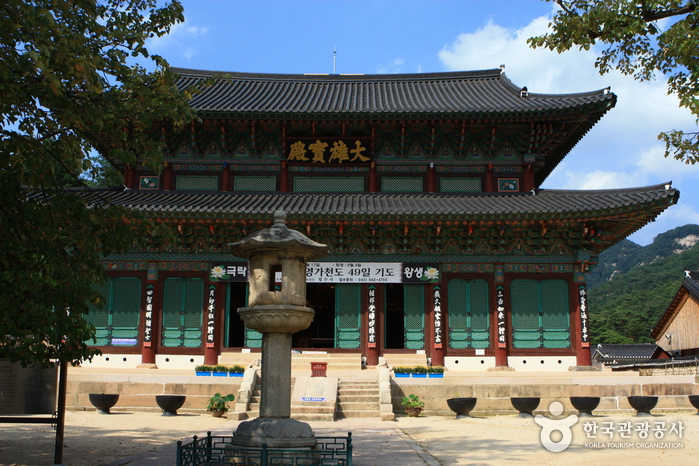
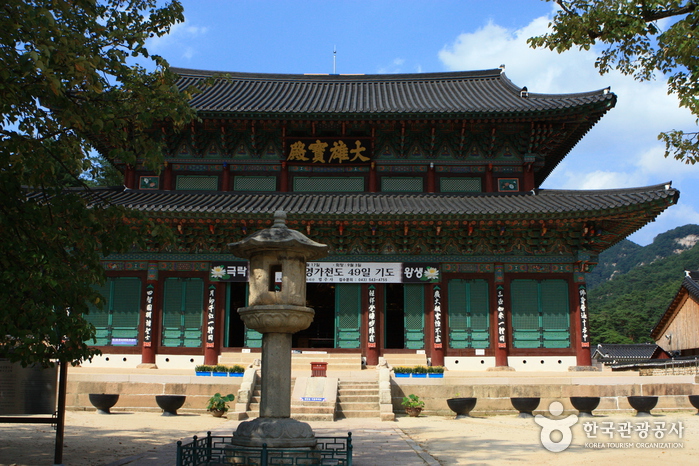
Built in 553 during the 14th year of Silla King Jinheung’s reign, Beopjusa Temple is located on Songnisan Mountain. However, many of the original buildings were destroyed during the Imjin War (1592-1598), with the current structures having been rebuilt in 1624. The temple features many beautiful and important Buddhist relics and artworks, centered around the main hall, Daeungbojeon Hall.
– Address : 405, Beopjusa-ro, Boeun-gun, Chungcheongbuk-do
※ Presentation Information
– Information and Guides
• 1330 Travel Hotline: +82-2-1330
(Korean, English, Japanese, Chinese)
• For more info: +82-43-543-3615
– Parking
Available (Temple parking lot)
– Day Off
N/A (Open all year round)
– Operating Hours
Sunrise-Sunset
– Admission Fees
Individuals – Adults 5,000 won / Teenagers 2,500 won / Children 1,000 won
Groups – Adults 4,000 won / Teenagers 1,600 won / Children 800 won
* Adults (ages 19-65) / Teenagers (ages 13-18) / Children (ages 7-12)
– Restrooms
Available
– Parking Fees
One-day parking: 7,000 won


◎ Nearby Tourism Infobox
⊙ Songnisan Special Tourist Zone (속리산 관광특구)
View detailed guide on Korea Trip Guide →
– Homepage
https://www.boeun.go.kr/tour/
http://songni.knps.or.kr
– Tel
+82-43-540-3393
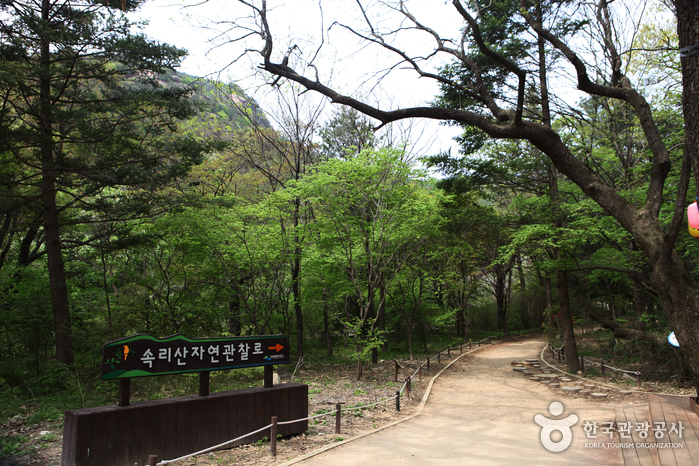
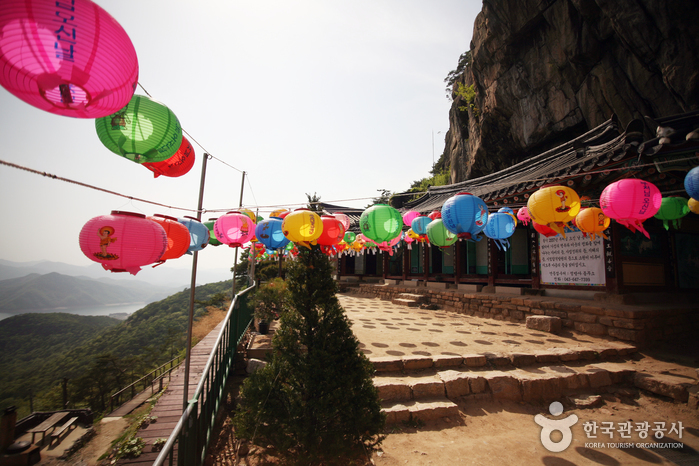
With Songnisan National Park at its center, Songnisan Special Tourist Zone offers picturesque scenery and cozy resorts. At 1,058 meters above sea level, Songnisan Mountain is one of the 8 scenic wonders in Korea, and its steep peaks and deep valleys create a fascinating view. A variety of hiking trails that set out from Beopjusa Temple offer superb mountain scenery from every angle.
A tourism complex around Songnisan National Park offers various types of accommodations, and the area’s attractions, such as Beopjusa Temple, Seowongyegok Valley, Mansugyegok Valley and Solhyang Park are not to be missed. In fact, the mountain is a habitat for rare animals and plants, including flying squirrels and Berchemia Berchemiaefolia, and is called a “treasure house of natural resources.”
The convenient accessibility should be noted as well. The highway between Dangjin and Yeongdeok goes through the zone, and it takes only 30 minutes from Cheongju International Airport. This helps foreign tourists from China, Taiwan and Singapore as well as Korean visitors to easily access the zone.
A variety of events, including the Songni Festival, the Songnisan Maple Music Festival and the Songnisan Hiking Festival, are held every year, and the largest number of tourists visit in autumn to appreciate a view of the mountain tinged with red.
* Current State of Songnisan Special Tourist Zone
1) Districts Covered: Areas around Sangpan, Jungpan, Galmok and Sanae-ri, Songnisan-myeon, Boeun-gun, Chungcheongbuk-do
2) Area: 43,745,528 ㎡
⊙ Deongnim Sanchae Sikdang (덕림산채식당)

– Tel
043-543-4846
Deongnim Sanchae Sikdang is a tile-roof restaurant located next to the parking lot of Songnisan Mountain’s Beopjusa Tourist Complex. It serves sanchae jeongsik (wild vegetable dish set menu) made with mushrooms and vegetables sourced from Songnisan Mountain, deodeok gui jeongsik (grilled deodeok set menu), beoseot jjigae jeongsik (mushroom jjigae set menu), sanchae bulbaek jeongsik (wild vegetable and bulgogi set menu), bibimbap, and haemul pajeon (seafood and green onion pancake). The restaurant is close to tourist sites like Songnisan Sculpture Park, Orisup Trail, and Beopjusa Temple.
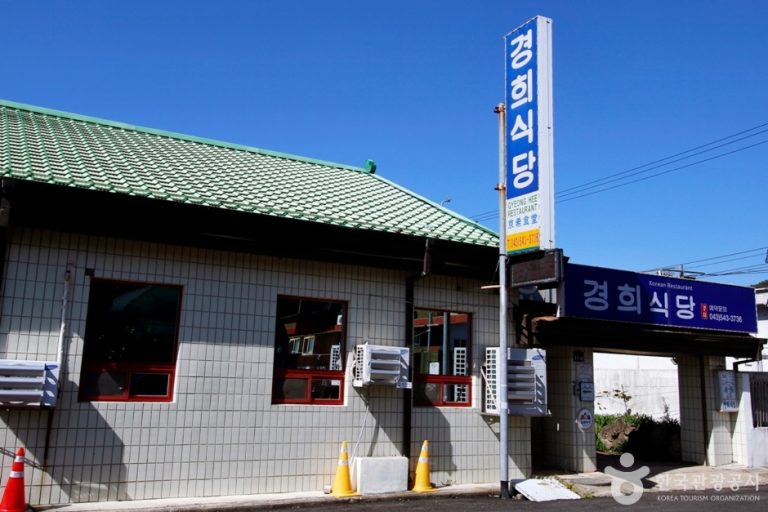
⊙ Kyunghee Sikdang (경희식당)

– Homepage
www.ikyunghee.co.kr
Kyunghee Sikdang is a Korean table d’hote restaurant with 70 years of history, located at the entrance to the Beopjusa Temple in Songnisan Mountain. The dishes are prepared with ingredients sourced from Songnisan Mountain, vegetables grown by the restaurant, and in-house sauces. They come with nearly 40 side dishes, such as sogogi pyeonyuk (boiled beef slices), dureup namul (fatsia shoot salad), gosari (bracken), gam jangajji (pickled persimmons), ssari beoseot (coral mushroom), meowi namul (butterbur salad), pyogojeon (pan-fried battered golden oak mushrooms), bam jorim (braised chestnuts), and deulkkae songi twigak (young perilla branch chips). The restaurant’s mustard sauce and gangdoenjang (seasoned soybean paste) are made according to its secret recipe.
![Topten – Cheongju Branch [Tax Refund Shop] (탑텐 청주)](https://ktrip.blogsailing.com/wp-content/uploads/2025/12/2883117_image2_1-768x576.jpg)
2 Comments