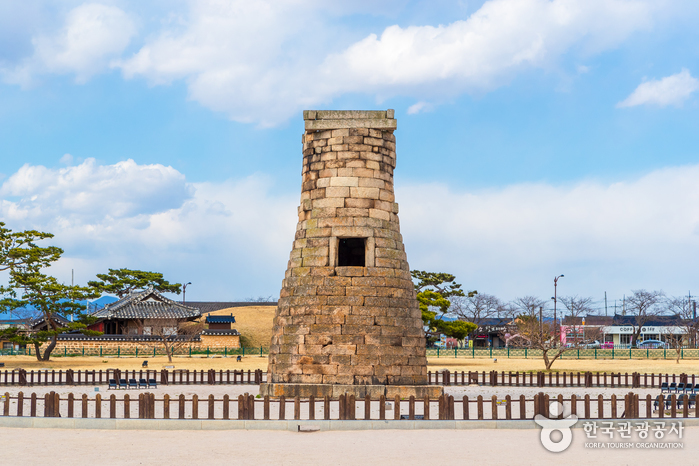
Cheomseongdae Observatory (경주 첨성대)
Cheomseongdae Observatory (경주 첨성대)
 – Homepage
www.gyeongju.go.kr
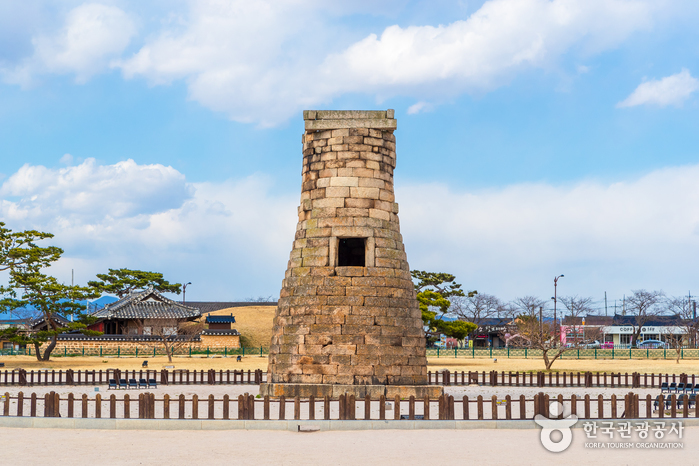
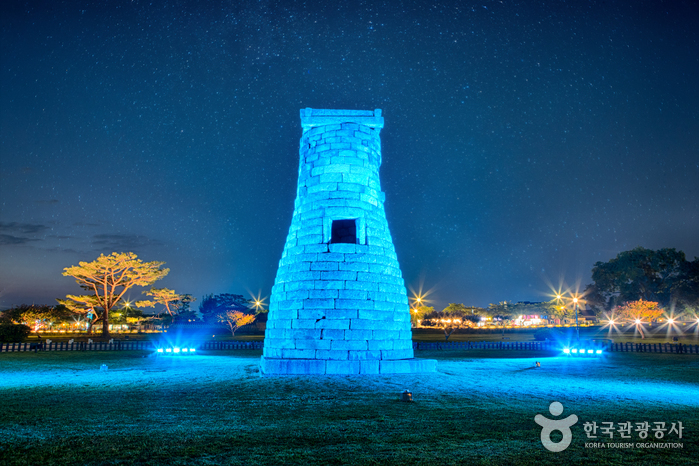
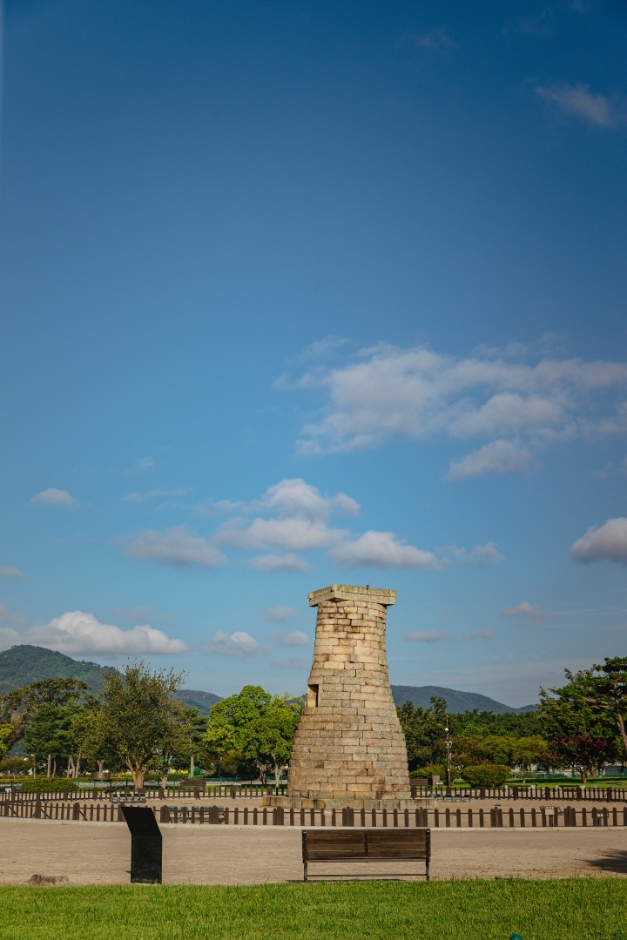
Cheomseongdae Observatory, constructed during the reign of Queen Seondeok (r. 632-647), is one of the landmarks of Gyeongju. The observatory was built in a cylinder shape at approximately 9 meters in x_height. The observatory consists of 365 stones, symbolizing the number of days in a year. The rocks are piled in 27 layers symbolizing the 27th ruler, Queen Seondeok, and the days in a lunar month by adding the of two rock layers on top.
◎ Travel information to meet Hallyu’s charm – “A Good Day to Be a Dog”
Cheomseongdae Observatory, where Bo-gyeom and Ji-ah, bound by a special fate, encounter each other, is the landmark that represents the city of Gyeongju and one of the oldest astronomical observatories in the world. In addition to its superlative value as a historical site, it is also popular as a tourist destination thanks to flowers and plants that bloom each season.
– Address : 140-25 Cheomseong-ro, Gyeongju-si, Gyeongsangbuk-do
※ Presentation Information
– Information and Guides
+82-54-772-3843
– Parking
Available
– Day Off
N/A (Open all year round)
– Operating Hours
Summer season 09:00-22:00
Winter season 09:00-21:00
– Restrooms
Available
– Admission Fees
Free
– Available Facilities
Tour bus
– 4,000 won for adults
– 3,000 won for teenagers
– 2,000 won for children
– Operating hours: 09:00-17:45


◎ Nearby Tourism Infobox
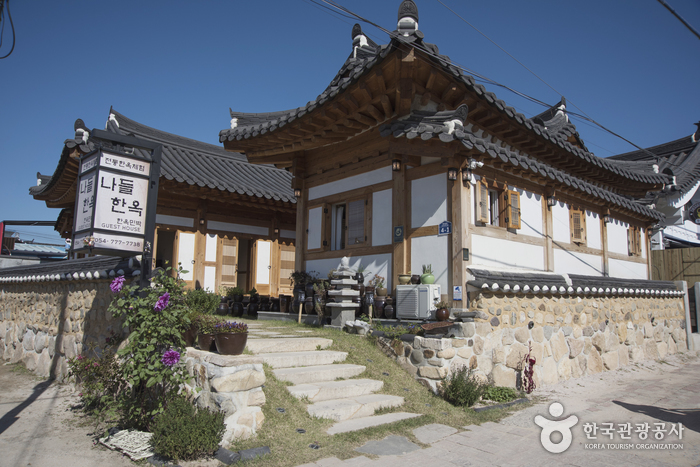
⊙ Nadul Hanok (나들한옥)
– Homepage
http://gjhanok.com
– Tel
+82-10-5011-7738
Nadeul Hanok is a newly-built hanok stay in Gyeongju, Gyeongsangbuk-do, which combines traditional hanok style with modern convenience. All rooms come with bed, toilet and bathroom, and thermostat-controlled ondol underfloor heating. In the shared lounge is an automatic coffee machine, a water purifier, toaster, electric range and electric kettle – plus emergency medical kit – all of which are free of charge to residents. Breakfast is also provided without charge. Nadeul Hanok is just a minute’s walk from Gyeongju Cheomseongdae, with other famous Gyeongju sites also within walking distance.
⊙ Ipungnyeo Guro Ssambap (이풍녀구로쌈밥)
– Tel
054-749-0600
Near the Cheomseongdae Observatory in Gyeongju, Ipungnyeo Guro Ssambap is renowned for its signature dish, Guro ssambap (leaf wraps and rice set menu). The dish is accompanied by jeyuk bokkeum (spicy stir-fried pork) and doenjang jjigae (soybean paste jjigae), along with a diverse array of side dishes and ten different types of vegetables for wraps. The restaurant focuses on preserving the natural flavors of the ingredients, using minimal chemical seasonings. Its commitment to providing a hearty and wholesome meal attracts numerous visitors.
⊙ Wiyeonjae Hanok Stay (위연재)
– Homepage
http://www.wiyeonjae.kr
– Tel
+82-10-9384-1000, +82-10-5694-2426
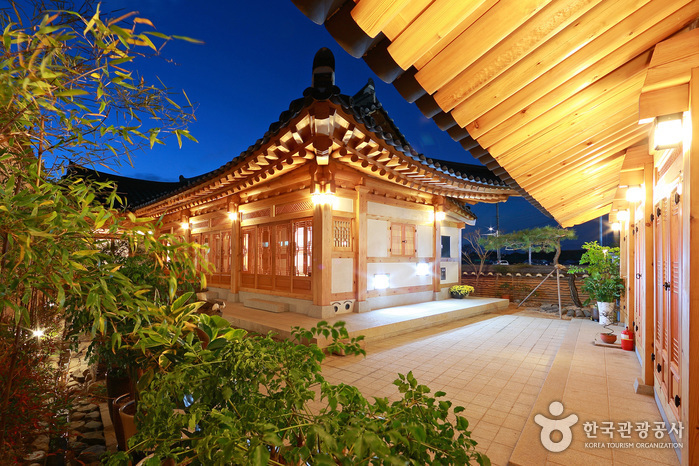
Wiyeonjae hanok stay stands on the edge of the Gyeongju Historic Area, so that from here Cheomseongdae, Daereungwon, Donggung Palace, Wolji Pond and the other historic sites can be reached on foot. It’s a place where Silla period relics were excavated during construction, and you can still feel the 1,000 year history of the Silla capital. All rooms are ondol-style, and all have bathrooms. One room, Munmu, has a numary(raised floor) which is a great spot for taking photos. A free breakfast is provided and parking space is available.
⊙ SOSEOLJAE (소설재(첨성대점))
– Homepage
http://www.soseoljae.com
– Tel
+82-10-2237-6560
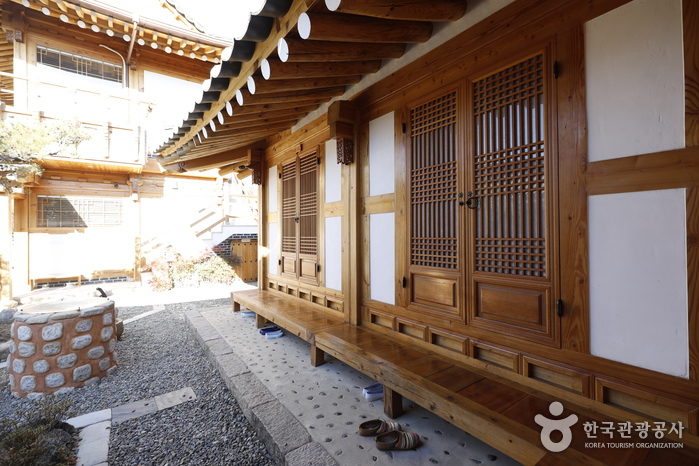
Located on a side street in Cheomseongdae in Gyeongju, Gyeongsangbuk-do, Soseoljae is a hanok stay combining traditional charm with modern facilities.The larger stand-alone guestroom has its own tea room, while 11 other rooms accomodate 2 or 3 people. All rooms are equipped with a toilet/bathroom and air conditioning/heating, and there is a small cafe at the hanok entrance. Soseoljae is close to Gyeongju Station and Gyeongju Express Bus Terminal and tourist attractions such as Cheomseongdae, Daereungwon, and Hwangnyongsaji are also nearby.
⊙ Gyeongjuhyanggyo Local Confucian School (경주향교)
– Homepage
hyanggyo.kr
Gyeongjuhyanggyo Local Confucian School is located near Gyochon Hanok Village in Gyeongju. The surrounding areas, Gyochon, Gyori, and Gyodong, derive their names because of this school. Although the exact date of its original construction is unknown, Gyeongju Hyanggyo was renovated during the reign of King Seongjong of the Joseon Dynasty, modeled after Seoul’s Seonggyungwan National Academy. The buildings follow the typical Confucian layout of “hall in the front, shrine in the back.” While seowon were private academies, hyanggyo were public institutions. Although it no longer serves the educational purpose, every spring and autumn it hosts traditional Confucian rituals. It also offers cultural programs such as tea ceremonies, rice-cake pounding, and archery. From April to October it hosts traditional Korean-style demonstration weddings, where visitors can participate in the ceremonies for free.
⊙ Woljeonggyo Bridge (월정교)
– Homepage
www.gyeongju.go.kr
– Tel
+82-54-772-9289
Woljeonggyo Bridge, located in Gyo-dong, Gyeongju, was built during the Unified Silla period (AD 676-935), but was burnt down during the Joseon dynasty. Through historical research, the bridge was rebuilt in April 2018 to become the largest wooden bridge in Korea. According to Samguk Sagi (History of the Three Kingdoms), the bridge was built during the 19th year of King Gyeongdeok’s reign (AD 760), connecting Wolseong and Namsan together. The historical research to rebuild the bridge lasted from November 26, 1984 to September 8, 1986, finding that the bridge was made with wood for the first time. The first rebuilding of the bridge was from 2008 to 2013 and the finishing touches were added from April 2016 to April 2018. Through this research and rebuilding process, future restoration of historical buildings have a better reference to use.
⊙ Yosukgung 1779 (요석궁1779)
– Homepage
Instagram @yosukgung.kr
Named after Silla King Muyeol’s daughter Princess Yoseok, Yosukgung 1779 is a fine dining restaurant that serves traditional Korean food. The resturant is run by the Choi family, who settled on the site of Princess Yoseok’s house during the Joseon dynasty, and has passed on the restaurant and family recipes through 12 generations. All the foods served are made with organic ingredients, for a healthy taste that cannot be found anywhere else.
⊙ Gyochon Cultural Performance Silla Ogi(교촌문화공연 신라오기)
⊙ Gyeongju Wolseong Palace Site (Banwolseong Fortress) (경주 월성(반월성))
– Homepage
www.gyeongju.go.kr
– Tel
+82-10-3226-6390
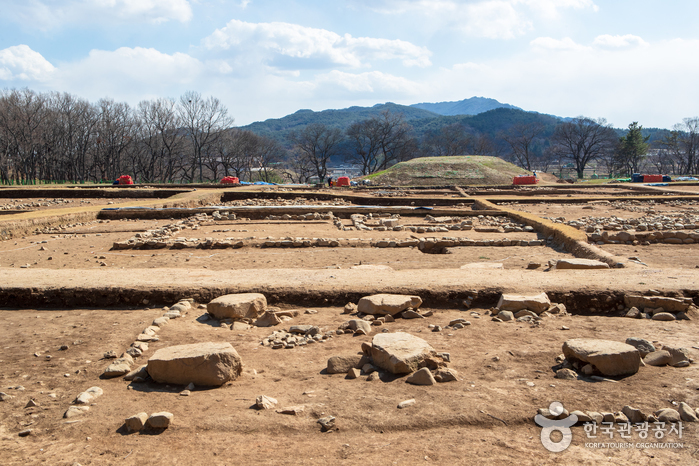
This was the location of the palace-fortress during the Silla dynasty (57 BC ~ AD 935). The fortress takes after its name, which, literally translates to mean a crescent moon shape on top of a hill. The famous history books of Samgukyusa mention that Silla’s 4th King Seoktalhae (AD 57~80) thought this area was an ideal spot for the fortress and bought the land from a nobleman. The 2nd King Namhae (AD 4~24) impressed by Seoktalhae’s actions, took him in as his son-in-law, later, becoming the 4th king. The area was then under Silla’s rule for 900 years, the last king being the 56th, Gyeongsoon (AD 927~935).
Although the magnificent grandeur of the palace is now just an empty lot, it has been told that this area was filled with imperial buildings during the Silla dynasty. Currently, the region of Wolseong has a freezer made out of rocks called Seokbinggo, an archery range, a horse-riding field, and a traditional playground, which resembles the grounds of the Joseon Period (the dynasty that ruled the Korean peninsula from 1392-1910).
![CheongKwanJang – Yeongcheon Branch [Tax Refund Shop] (정관장 영천)](https://ktrip.blogsailing.com/wp-content/uploads/2025/12/2883762_image2_1-768x576.jpg)
4 Comments