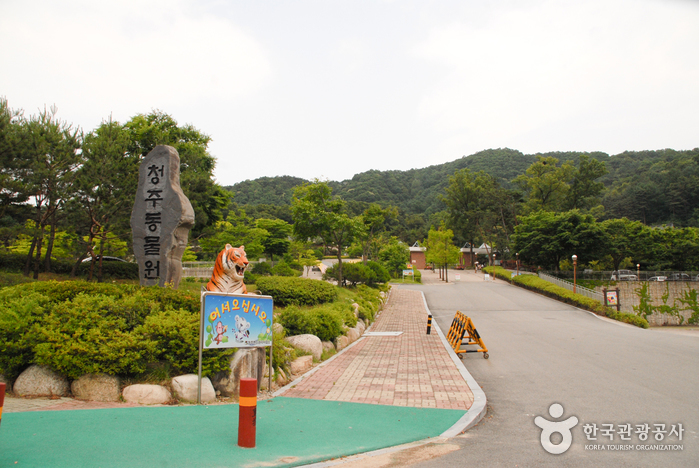
Cheongju Zoo (청주동물원)
Cheongju Zoo (청주동물원)
 – Homepage
www.cheongju.go.kr
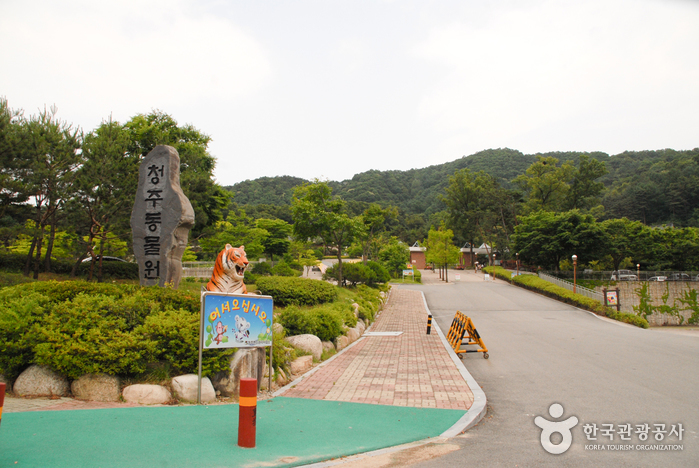
Cheongju Zoo houses mammals, birds, and reptiles as its main attractions, featuring iconic animals such as tigers, lions, elephants, giraffes, zebras, penguins, seals, and monkeys. Visitors can engage in animal classrooms to learn about the ecology and characteristics of various species. Guided tours by zookeepers offer insights into wildlife ecology and unique stories exclusive to Cheongju Zoo.
– Address : 224 Myeongam-ro, Sangdang-gu, Cheongju-si, Chungcheongbuk-do
※ Presentation Information
– Experience Guide
Animal class, Animal life guide
– Information and Guides
+82-43-201-4863
– Parking
Available
– Day Off
Mondays, New Year’s Day, Seollal (Lunar New Year’s Day) & Chuseok (Korean Thanksgiving Day) holidays
– Operating Hours
09:00-18:00 (Ticketing until 17:00)
– Admission Fees
Children 500 won, Teenagers 800 won, Adults 1,000 won
– Admission Fees
Animal class, Animal life guide


◎ Nearby Tourism Infobox
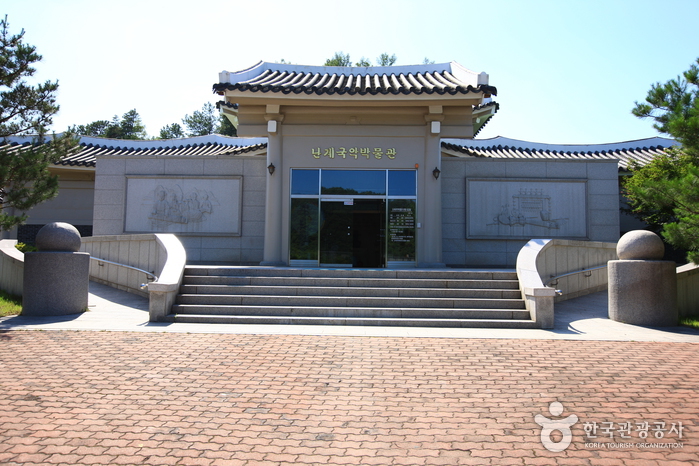
⊙ Cheongju National Museum (국립청주박물관)
– Homepage
cheongju.museum.go.kr
– Tel
+82-43-229-6300
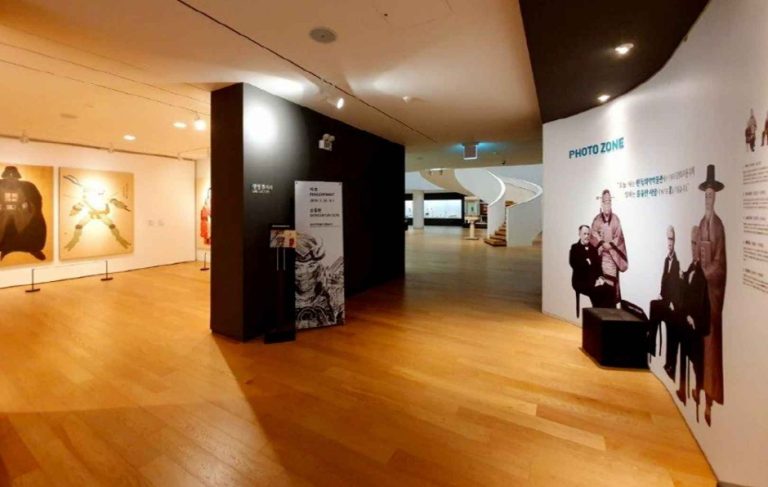
Cheongju National Museum, opened in 1987, collects and preserves national cultural treasures. The museum holds more than 42,000 artifacts with approximately 1,200 pieces on display. The museum has exhibition halls, outdoor exhibition hall, children’s museum and more, displaying artifacts from the Old Stone Age to the Joseon Period. The special exhibition hall holds themed exhibitions every spring and fall.
⊙ Cheongju Sangdangsanseong Fortress (청주 상당산성)
– Homepage
https://www.cheongju.go.kr/sangdang/
http://www.cha.go.kr
– Tel
+82-43-201-0202
Sangdangsanseong Fortress in Cheongju, Chungcheongbuk-do is a fortress built along the natural slopes close to downtown Cheongju. It was comprehensively improved in 1596 (29th year of King Seonjo’s reign) during Imjinwaeran (Japanese invasion of Korea in 1592) and later remodeled into a stone fortress during the 42nd year of King Sukjong’s reign.
This 4.2km-long, 3-4m-tall fortress was built with stones of various sizes, earth and sand. The fortress has three gates, located in the east, west and south respectively. The three gates remain almost intact, and all still have their gate towers. The front gate in the south, named ‘Gongnammun Gate,’ is crescent-shaped while the East and West gates are square. The East and West Command Posts also stand within the confines of the fortress itself. This fortress was designated as Historic Site No. 212 in 1970. Additionally, visitors can sample Jujube Wine (Korean traditional wine) as well as a variety of local cuisine.
![Homeplus – Dongcheongju Branch [Tax Refund Shop] (홈플러스 동청주)](https://ktrip.blogsailing.com/wp-content/uploads/2025/12/2882972_image2_1-768x576.jpg)
![E-Mart – Cheongju Branch [Tax Refund Shop] (이마트 청주)](https://ktrip.blogsailing.com/wp-content/uploads/2025/12/2883146_image2_1.jpg)
One Comment