Ganghwa Deokjinjin Fortress (강화 덕진진)
Ganghwa Deokjinjin Fortress (강화 덕진진)
– Homepage
www.ganghwa.go.kr
– Tel
+82-32-930-7074
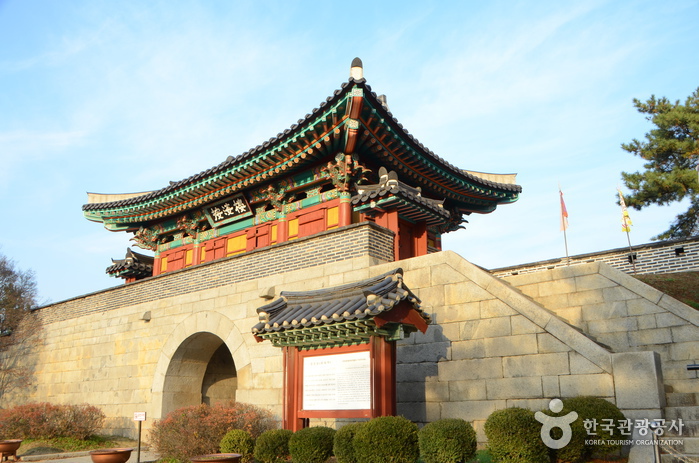
Deokjinjin Fortress was the key strategic point of the outer fortress wall used for defending the Ganghwa Straits during the Goryeo dynasty (918-1392). It was originally a military camp commanded by an official with the rank of Cheomsa under the command of the Korean naval base. In 1677, an official with the rank of Manho was assigned to this camp along with 26 military officials, 100 soldiers, 2 battle ships, and other military equipment. In 1679, the Namjangpodae and Deokjinpodae batteries were stationed here.
Deokjinjin Fortress was the scene of fierce battles that took place during Byeonginyangyo (the French invasion in 1866) and Shinmiyangyo (the American invasion in 1871). The battlements and gatehouse of Deokjinjin that had all been destroyed during Sinmiyangyo were restored in 1977. At the Namjangpodae Battery, cannons used by the Joseon military have been reproduced and installed for display.
– Address : 31-9 Deokjin-ro, Bureun-myeon, Ganghwa-gun, Incheon
※ Presentation Information
– Information and Guides
+82-32-930-7074
– Parking
Available (Free parking)
– Day Off
N/A (Open all year round)
– Operating Hours
09:00-18:00
– Admission Fees
Adults: Individuals 900 won / Groups 700 won
Children & Teenagers: Individuals 600 won / Groups 500 won
* Groups: 20 people or more
* Free admission: Preschoolers (ages 6 & under) with one guardian, Senior citizens (ages 65 & older), People with disabilities plus one companion (Proof required)
* Ganghwa-gun Main Tourist Sites Discount (up to 20% discount)
Main tourist sites: Chojijin Fortress, Deokjinjin Fortress, Gwangseongbo Fortress, Gapgotdondae Fortification, Goryeogung Palace Site, Peace Observatory, Hwamunseok Cultural Center, Ganghwa History / Natural History Museum, Manisan Mountain, Mudflat Center, and Hamheodongcheon Stream
– 15% discount: 3-4 sites
– 20% discount: 5 or more sites
* When choosing 8 sites or more, the ticket is valid until the next day
– Restrooms
Available
– Parking Fees
Free
– Korean Info. Service
Cultural Tourism Explanation Guide: 10:00-17:00
* Available upon request: +82-32-930-7074
◎ Nearby Tourism Infobox
⊙ Gimpo Hamsang Park (김포함상공원)
View detailed guide on Korea Trip Guide →
– Homepage
www.gimpo.go.kr
– Tel
+82-31-987-4097
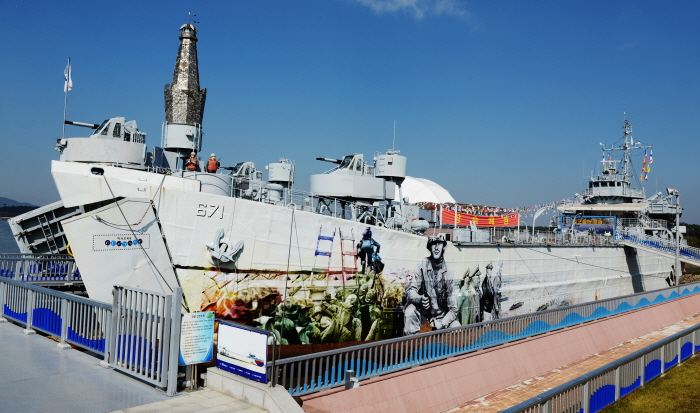
Gimpo Hamsang Park is the first battleship themed park in the Seoul metropolitan area. With LST battleship on display, there are many things to see and experience at the park. Visitors can learn various information about the lives and duties of naval officers as well as enjoy a panoramic view of the West Sea.
⊙ Gwangseongbo Fortress (광성보)
View detailed guide on Korea Trip Guide →
– Homepage
www.ghss.or.kr (Korean only)
www.cha.go.kr (Korean, English, Japanese, Chinese)
– Tel
+82-32-930-7070
Gwangseongbo Fortress’s outer wall from the Goryeo era was mended in 1618. The fortress was built in 1656 and the outpost was constructed in 1679. It was completely remodeled into
a masonry castle with gates in 1745. During Sinmiyangyo (the American invasion in 1871), Gwangseongbo was the fiercest battle ground in Ganghwa. On April 24, 1871, a
fleet with 1,230 American naval forces led by Rear Admiral John Rodgers landed on Ganghwado Island to demand the
opening of Korea’s ports and commerce. The armed forces attacked Chojijin Fortress
and Deokjinjin Camp, then marched to Gwangseongbo Fortress, where they engaged in close combat with the warriors of Joseon. Although General Eo Jae-yeon and the other warriors were poorly equipped with far inferior weapons, they bravely fought to the
death against the invading forces.
The battlefield ruins of the fortress and the gate towers such as Anhaeru, Gwangseongdon, Sondolmokdon, and Yongdudon were repaired
in 1977. The twin tombs of General Eo Jae-Yeon and his brother Eo Jae-seon, along with the anonymous tombs of warriors who died on the battlefield were
also honorably arranged at the same time. Furthermore, a stone monument commemorating the restoration of Ganghwa Battlefield was erected on Yongdudondae Post.
In 1988, an extensive rest area was created toward the shore for visitors’ convenience. Gwangseongbo Fortress is presently designated as Historical Relic No. 227. A religious service known as Gwangseongje is held annually to commemorate the patriotic spirits of General Eo Jae-yeon and other unnamed warriors. This service takes place at 11 a.m. on every April 24th of the lunar calendar.
⊙ Gimpo Daemyeong Port (김포 대명항)
View detailed guide on Korea Trip Guide →
– Homepage
www.gimpo.go.kr
The piercing smell of salt, the energy of freshly caught fish, fishing boats returning from far out at sea, and people walking in and out of the fish market and raw fish restaurants – these are the scenes of Daemyeong Port in Daegot-myeon, Gimpo where the fresh vigor of life is vividly alive. It is located just 30 minutes from Gimpo Airport by car so it is close to Seoul. Fishermen and owners of fishing boats personally run raw fish restaurants so the prices of raw fish are about 20% cheaper here than at other ports, according to the people of Daemyeong Port. Raw fish restaurants that you first encounter at the entrance of the port have tanks filled with freshly caught fish, and fishing nets spread out here and there vividly show the unique characteristics of a port. As it is the only port on the coast of Ganghwado Island, you are able to fully enjoy the beautiful seascape. The port is also receiving a great deal of attention both locally and nationwide thanks to the Daemyeong Type 2 Fishery Harbor project and the Pungeoje Festival. In 2001, Daemyeong Port was selected as one of the “7 Winter Seas recommended by the Korea Tourism Organization” for its beautiful seascape and flavors of a traditional port. Facing Ganghwado across Ganghwa Strait, Daemyeong Port is not as busy with tourists as Sorae Port or Yeonan Pier and boasts quiet and affectionate scenes of a fishing village. Nearby lies Deokpojin Fort, which is a historical site where our ancestors in the late Joseon Dynasty fought against foreign forces.
⊙ Dosol Museum (Hanok Gallery Cafe) (한옥카페 갤러리도솔)
Located on Ganghwado Island, Incheon, the museum is housed in a traditional hanok building with a café. Adorned with pine trees, it offers a relaxing space where visitors can enjoy traditional Korean desserts and drinks on the menu. In addition, it also offers various hands-on experience programs, such as mug-making.