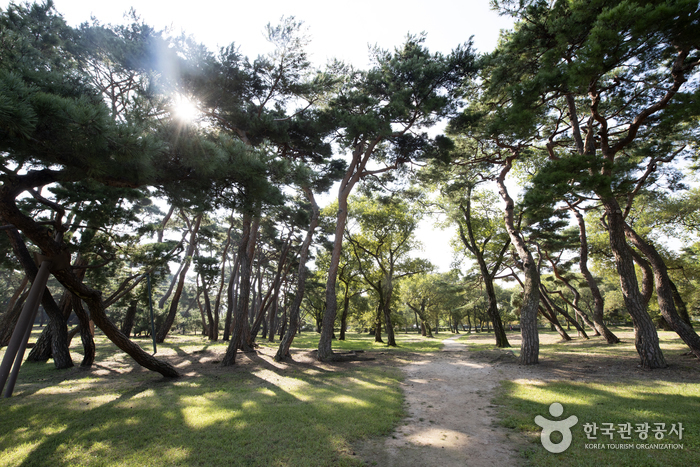
Gyeongju Five Royal Tombs (경주 오릉)
Gyeongju Five Royal Tombs (경주 오릉)
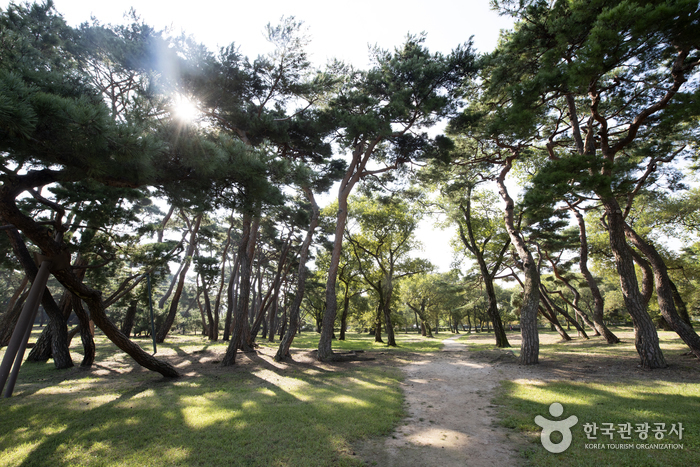 – Homepage
www.gyeongju.go.kr
The Five Royal Tombs (called Oreung in Korean) have been officially designated Historic Site No. 172 and are the final resting places of four kings of the Park clan—King Park Hyeokgeose (founder of the Silla Kingdom), King Namhae, King Yuri, and King Jabi—and one queen (Queen Aryeong, wife of King Park Hyeokgeose).
To the east of the royal tombs lies Sungdeokjeon Shrine, which holds the ancestral tablet of King Park Hyeokgeose. Behind the shrine is the Aryeongjeong Well, said to be the birthplace of Queen Aryeong.
– Address : 38-9 Geumseong-ro, Gyeongju-si, Gyeongsangbuk-do
※ Presentation Information
– Information and Guides
+82-54-750-8612
– Parking
Available
– Day Off
N/A (Open all year round)
– Operating Hours
March-October 09:00-18:00
November-February 09:00-17:00
– Restrooms
Available
– Parking Fees
Compact cars 500 won / Small cars 1,000 won / Large cars 2,000 won
– Admission Fees
[Individual] Adults 2,000 won / Teenagers 1,000 won / Children 500 won
[Group] Adults 1,600 won / Teenagers 800 won / Children 400 won


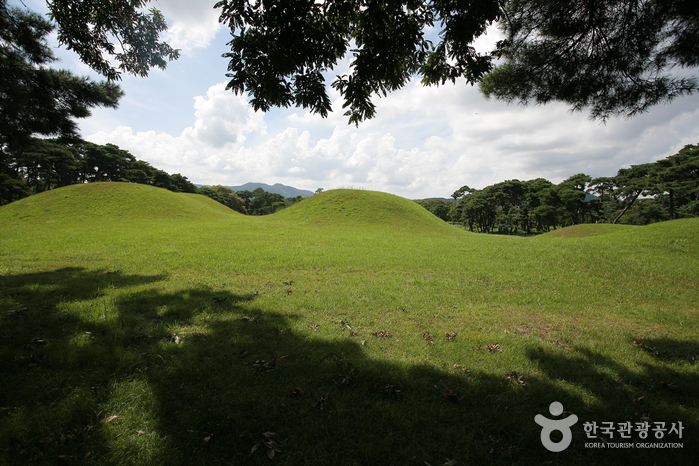


◎ Nearby Tourism Infobox
⊙ KELIMGUNG (계림궁)
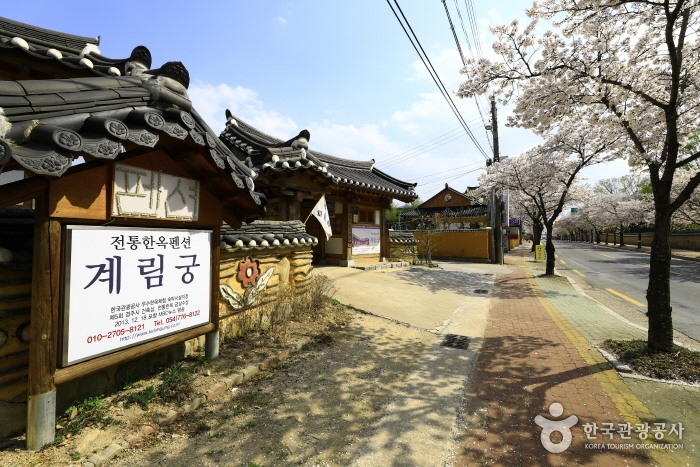
– Homepage
http://www.kelimgung.co.kr
– Tel
+82-54-776-8122
Gyerimgung is a comfortable hanok pension near the Oreung tombs in, Gyeongju, Gyeongsangbuk-do; the name derives from Gyerim, the forest birthplace of Kim Alji who helped found the ancient Silla kingdom. The main building has four rooms and a shared kitchen, and there are two guest rooms in the yard, where barbecues can be held; reservations are required. Residents can experience traditional activities such as Gamasot cooking and Neolttwigi, and enjoy strolling in the nearby Oreung. Other nearby attractions include Banwolseong, Cheomseongdae, and Daereungwon.
⊙ Gyeongju Oreung Hanok (경주오릉한옥)
– Homepage
https://blog.naver.com/sswlsrud
– Tel
+82-10-8858-3183
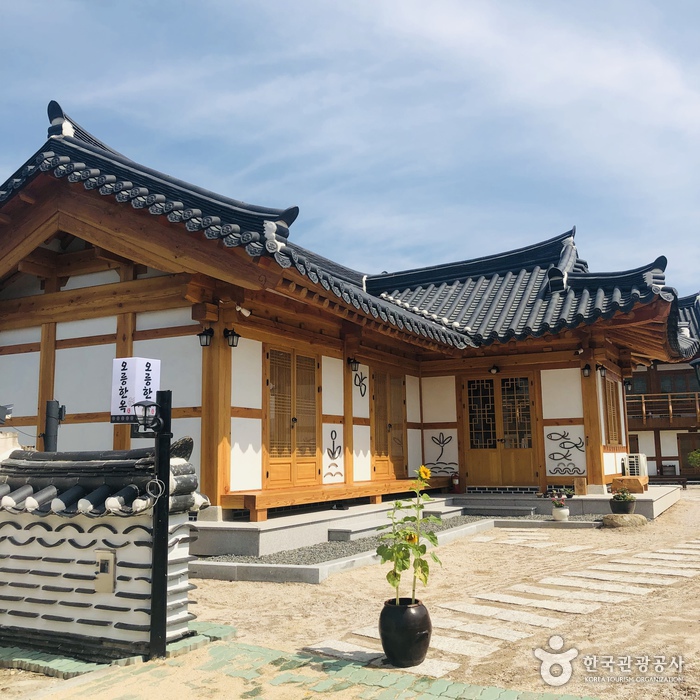
Oreung Hanok in Gyeongju, is a guesthouse just across Namcheon Stream from Gyeongju’s Five Royal Tombs (‘oreung’ in Korean). The guesthouse’s location gives it a panoramic view not only of the tomb complex but over much of the 1,000 year old city of Gyeongju. The cozy rooms have double doors to block drafts and noise, and clean white bedding; while the spacious yard outside is a good spot for taking photos. The bustling Hwangnidan Street is a 15-minute walk away, while must-see sites Cheomseongdae, the Daereungwon tomb complex, Donggung Palace and Wolji Pond are 10 minutes away by car.
⊙ Hanok Stay Sohwa [Korea Quality]한옥스테이 소화[한국관광 품질인증]

– Homepage
https://www.instagram.com/tdesign71
– Tel
+82-507-1325-7205
Hanok Stay Sohwa near the famous Hwangnidan-gil in Gyeongju, Gyeongsangbuk-do, is a modern hanok that opened its doors in 2022, and combines tradition with sophistication. Accommodation consists of a living room, two sleeping rooms (bedroom and ondol), two bathrooms and a kitchen, plus an outdoor terrace and a heated mini swimming pool. Visitors will find rest and comfort here, however busy and stressed they were when they set out. The hanok stay only accepts bookings from one group per day.
⊙ Wadamjung (와담정)
– Homepage
http://wadamjung.com
– Tel
+82-54-772-5400, +82-10-6571-3412
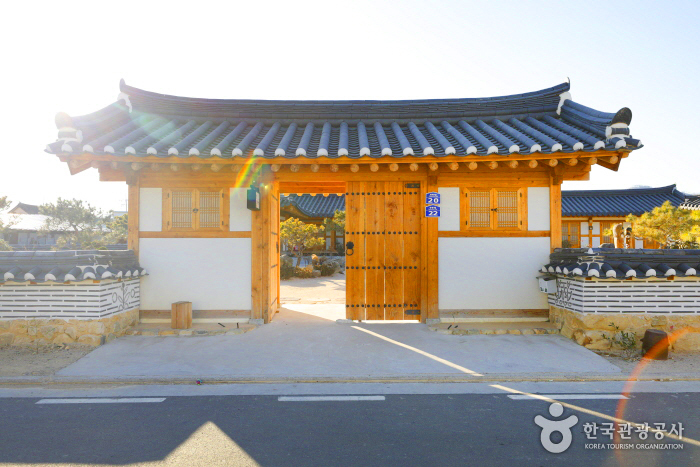
Wadamjeong in Cheonwon Village, Gyeongju, Gyeongsangbuk-do, is a hanok pension combining traditional style and atmosphere with modern convenience. All rooms have air-conditioning/heating and a bathroom with toilet. The stand-alone guestroom has its own kitchen, while other rooms have basic cooking facilities in a shared kitchen. In the spacious yard – decorated with traditional landscape scenes – visitors can try out traditional games such as Jegi (shuttlecoks) and Tuho (arrow-throwing). Historic sites such as Cheomseongdae and the Gyeongju Museum are all nearby.
⊙ Gyeongjuhanok 1st (경주한옥1번가)
– Homepage
http://hanok1st.co.kr
– Tel
+82-10-9505-5367
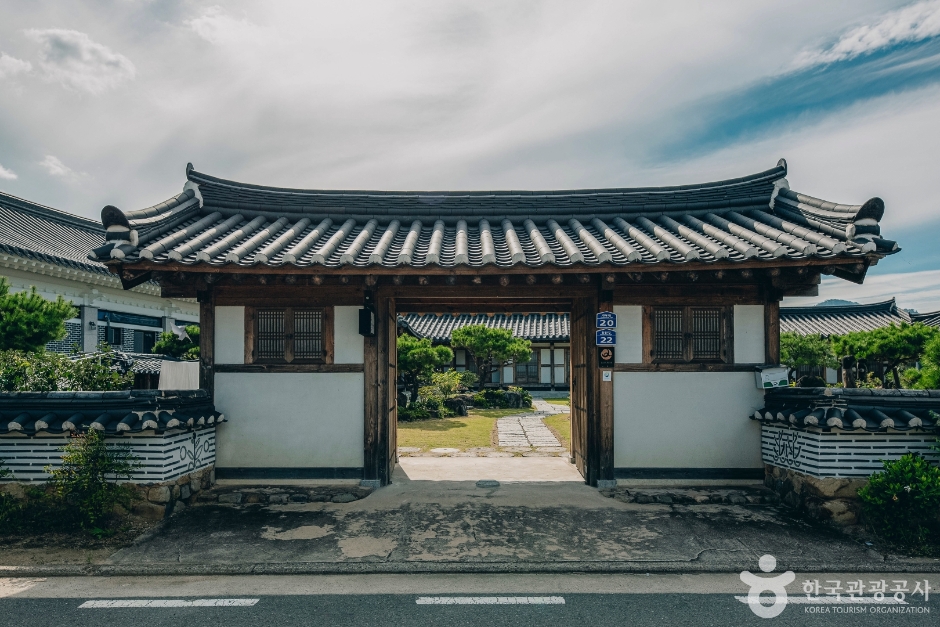
Standing at the entrance of Cheonwon Village in Gyeongju, Gyeongsangbuk-do, Gyeongju Hanok First is a hanok stay combining the beauty of tradition with modern convenience. All rooms are Korean-style with comfortable bedding on the floor, and all have a toilet and bathroom. One guestroom has its own kitchen, while the others have basic cooking facilities in a shared kitchen. The spacious yard is decorated with figurines in traditional clothes. Nearby tourist attractions include Anapji Pond, Cheomseongdae Observatory, and Gyeongju Museum.
⊙ Gyeongju Gyochon Traditional Village (경주 교촌마을)
– Homepage
gyeongju.go.kr
At Gyeongju Gyochon Village, visitors can see the House of the Gyeongju Choi Clan (Important Folklore Material No. 27) and try some Gyeongju Gyodong Beopju Liquor (Important Intangible Cultural Asset No. 86-3). The village centers around the Gyeongju Choi Clan, a family known to have maintained their wealth for over 12 generations, producing many important people. Visitors can learn about the lifestyle and spending habits that enabled the family to do this. The village is also home to the site of Yoseokgung, the house of Silla Princess Yoseok. Nearby attractions include Gyerim Forest, Naemulwangneung Royal Tomb, and Gyeongjuhyanggyo Local Confucian School.
⊙ Gyochon Cultural Performance Silla Ogi(교촌문화공연 신라오기)
⊙ Yosukgung 1779 (요석궁1779)
– Homepage
Instagram @yosukgung.kr
Named after Silla King Muyeol’s daughter Princess Yoseok, Yosukgung 1779 is a fine dining restaurant that serves traditional Korean food. The resturant is run by the Choi family, who settled on the site of Princess Yoseok’s house during the Joseon dynasty, and has passed on the restaurant and family recipes through 12 generations. All the foods served are made with organic ingredients, for a healthy taste that cannot be found anywhere else.
⊙ Woljeonggyo Bridge (월정교)
– Homepage
www.gyeongju.go.kr
– Tel
+82-54-772-9289
Woljeonggyo Bridge, located in Gyo-dong, Gyeongju, was built during the Unified Silla period (AD 676-935), but was burnt down during the Joseon dynasty. Through historical research, the bridge was rebuilt in April 2018 to become the largest wooden bridge in Korea. According to Samguk Sagi (History of the Three Kingdoms), the bridge was built during the 19th year of King Gyeongdeok’s reign (AD 760), connecting Wolseong and Namsan together. The historical research to rebuild the bridge lasted from November 26, 1984 to September 8, 1986, finding that the bridge was made with wood for the first time. The first rebuilding of the bridge was from 2008 to 2013 and the finishing touches were added from April 2016 to April 2018. Through this research and rebuilding process, future restoration of historical buildings have a better reference to use.
![Lotte Himart – Indong Branch [Tax Refund Shop] (롯데하이마트 인동점)](https://ktrip.blogsailing.com/wp-content/uploads/2025/12/2883791_image2_1-768x576.jpg)
![Seoneulgi Culture [Korea Quality] 서늘기문화[한국관광 품질인증]](https://ktrip.blogsailing.com/wp-content/uploads/2025/12/3042325_image2_1-768x512.jpg)
2 Comments