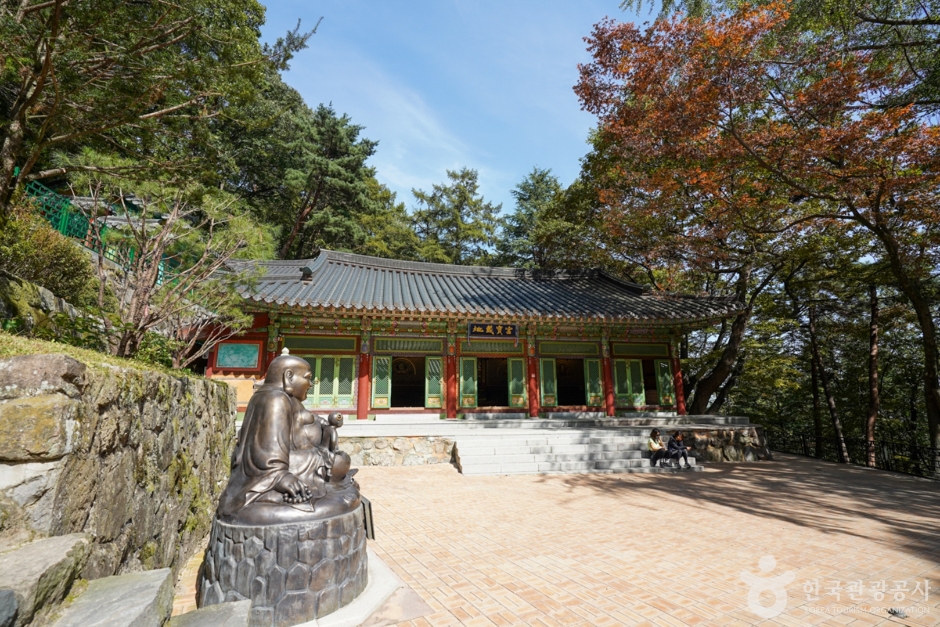
Haeunsa Temple (Gumi) (해운사(구미))
Haeunsa Temple (Gumi) (해운사(구미))
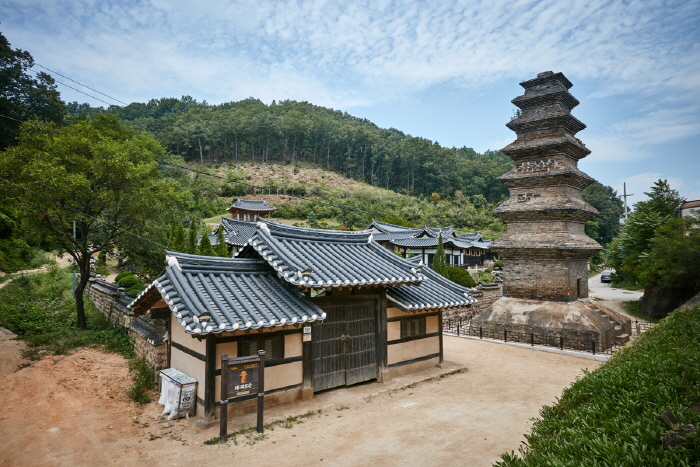
 Haeunsa Temple, nestled on the slopes of Geumosan Mountain in Gumi, offers convenient access owing to the opening of the Geumosan cable car. Originally founded as Daehyeolsa Temple towards the end of the Silla period, it underwent significant reconstruction after its destruction during the Japanese Invasion of Korea. The temple was rechristened as Haeunsa Temple in 1956, coinciding with the construction of Daeungjeon Hall. This hall is a sanctuary for the Seated Avalokitesvara Bodhisattva, sculpted in plaster. It also hosts Stone Arhat statues, believed to be the work of Japanese artisans during their occupation of Korea.
– Address : 434-2 Geumosan-ro, Gumi-si, Gyeongsangbuk-do
※ Presentation Information
– Experience Guide
Not available
– Information and Guides
+82-54-452-4917
– Opening Date
1925-01-01
– Parking
Available
– Day Off
N/A (Open all year round)
– Operating Hours
09:00~18:00
– Restrooms
Available
– Available Facilities
Daeungjeon Hall, Monks’ residence
– Admission Fees
Free


◎ Nearby Tourism Infobox
⊙ Geumosan Provincial Park (금오산도립공원)
– Homepage
www.gumi.go.kr
– Tel
+82-54-480-4604
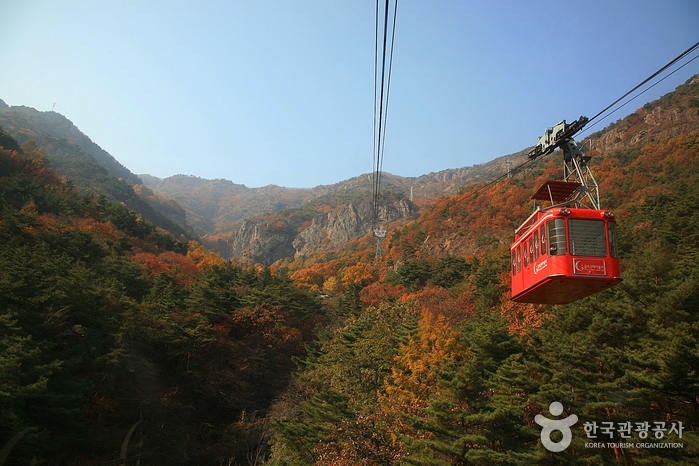
Geumosan Mountain (976 m) is part of the Sobaeksan Mountain Range, and was designated as a provincial park in 1970. Daehyepokpo (Myeonggeum) Falls can be accessed via cable car. Additional attractions within the park include Yaksaam Hermitage, Rock-carved Standing Bodhisattva, Haeunsa Temple, Doseongul Cave, and Chaemijeong Pavilion.
⊙ Yaksaam Hermitage (Gumi) (약사암(구미))
Yaksaam Hermitage was founded during the Silla dynasty atop Geumosan Mountain in Gumi City. Yaksajeon Hall, the centerpiece of Yaksaam Hermitage, stands at the base of a rocky cliff. The granite Seated Rock-Carved Medicine Buddha, enshrined in Yaksajeon Hall, along with those at Sudoam Hermitage on Sudosan Mountain and at Samseongam Hermitage on Hwangaksan Mountain, are collectively known as the Three Brothers. Spring water flows out of a crack in the rock wall on the east side of the temple. Legend has it that in the past, grains of rice once fell one by one from this hole.
2 Comments