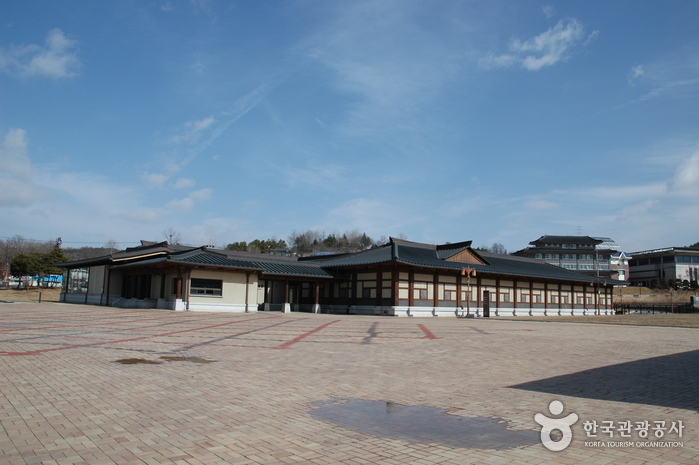
Jeongnimsaji Museum (정림사지박물관)
Jeongnimsaji Museum (정림사지박물관)
 – Homepage
www.jeongnimsaji.or.kr
– Tel
+82-41-832-2721
Jeongnimsaji Museum is located in Buyeo, the last capital of Baekje, where the Baekje culture flourished for the 123-year-long “Sabi Era.” The museum was established on the building site of Jeongnimsa Temple, which was a symbolic meeting place for royalty and a center for politics based on Buddhist morals.
The museum highlights the Buddhist culture of Baekje, said to be the origin of Buddhism in Korea and Japan, and Jeongnimsa Temple, known as the culmination of Baekje Buddhism. The museum also seeks to emphasize the advanced technology of Baekje and reenact the Sabi Era using an interactive approach that relies heavily on videos, panels, replicas, and hands-on programs. Main attractions at the museum include the Jeongnimsa Temple Site (Historic Site No. 301), the five-story stone pagoda of Jeongnimsa Temple (National Treasure No. 9) and the seated stone Buddha (Treasure No. 108).
– Address : 83, Jeongnim-ro, Buyeo-gun, Chungcheongnam-do
※ Presentation Information
– Information and Guides
• 1330 Travel Hotline: +82-2-1330
(Korean, English, Japanese, Chinese)
• For more info: +82-41-832-2721
– Parking
Available
– Parking Fee
Free
– Day Off
[Designated holidays]
New Year’s Day, Seollal (Lunar New Year’s Day) & Chuseok (Korean Thanksgiving Day) holidays
[Temporary closures]
Days requiring repairs and maintenance
– Usage Fee
Individuals – Adults 1,500 won / Teenagers 900 won / Children 700
won
Groups – Adults 1,200 won / Teenagers 700 won / Children 500 won
* Group: 30 people or more
– Operating Hours
March-October 09:00-18:00
November-February 09:00-17:00
* Last admission 1 hour before closing


◎ Nearby Tourism Infobox
⊙ Jeongnimsa Temple Site & Sabi-gil (정림사지와 사비길)
View detailed guide on Korea Trip Guide →
– Homepage
www.buyeo.go.kr
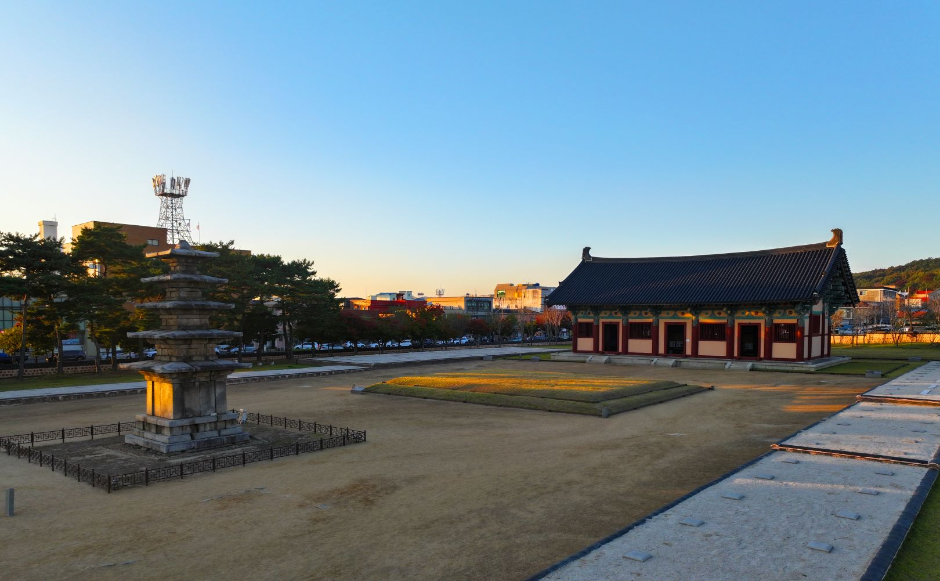
Jeongnimsa Temple Site, located in the city center of Baekje, the capital during the Sabi dynasty, is a representative Buddhist site of Baekje. Even after the fall of Baekje, the Five-story Stone Pagoda of Jeonnimsa Temple Site still stands tall today, revealing the historical significance of Baekje. Sabi-gil, an eco-friendly walking trail, takes visitors around many popular attractions from the Baekje era, allowing a glimpse into the history and culture of Baekje.
⊙ Five-story Stone Pagoda at Jeongnimsa Temple Site [UNESCO World Heritage] (부여 정림사지 오층석탑 [유네스코 세계문화유산])
View detailed guide on Korea Trip Guide →

– Homepage
tour.buyeo.go.kr
www.jeongnimsaji.or.kr
– Tel
+82-41-830-2880
This granite pagoda from the late Baekje period in Buyeo-gun, Chungcheongnam-do has been designated a National Treasure. It is generally known as the “Baekje Five-story Pagoda.” As one of two remaining Baekje pagodas, this stone pagoda itself is a precious and important artifact that established the lineage of Korean stone pagoda patterns. With refined and creative features, it exemplifies the beauty and elegance that were imitated in the latter-day pagodas.
◎ Travel information to meet Hallyu’s charm – variety show “Two Days and One Night”
This location was featured on the variety show “Two Days and One Night,” where the cast took on three ‘human tower building’ challenges inspired by the Five-story Stone Pagoda at Jeongnimsa Temple Site as part of their dinner mission. Surrounded by numerous national heritage sites showcasing Baekje culture, the area is an excellent destination for cultural exploration.
⊙ Buyeo Sky Banner (부여하늘날기)

– Homepage
www.skybanner.kr
Buyeo Sky Banner is the only place that offers free-flying hot air balloon ride in Korea and was designated as one of the top ten themed travels by Korea Tourism Organization. Buyeo is a rural region considered ideal for flying hot air balloons due to its relatively low mountain terrains. The balloons fly a distance of seven to eight kilometers over the Baengmangang River, offering a bird’s-eye-view of Buyeo and the Geumgang River as well as the many historical heritages from the Baekje period.
⊙ Buyeo Market & Baengmagang Moonlight Night Market (부여장 (5, 10일) / 백마강달밤야시장)

– Homepage
www.buyeo.go.kr
Buyeo Market is a 5th-day market that opens every month on the 5th, 10th, 20th, 25th, and 30th or 31st (last day) of the month in the Gua-ri area of Buyeo-gun, Chungcheongnam-do. The market is regularly within the permanent market area spans over 9,693 ㎡. The market is visited by 2,000 customers on a daily basis and offers a wide variety of goods such as grain products, general supplies, fruits, and more. On Fridays and Saturdays, Baengmagang Moonlight Night Market takes place in the evening from 18:00 to 23:00. Visitors will find a charming stage and diverse food vendors equipped with tables and seats.
⊙ Buyeo National Museum (국립부여박물관)
View detailed guide on Korea Trip Guide →
– Homepage
buyeo.museum.go.kr
– Tel
+82-41-833-8562
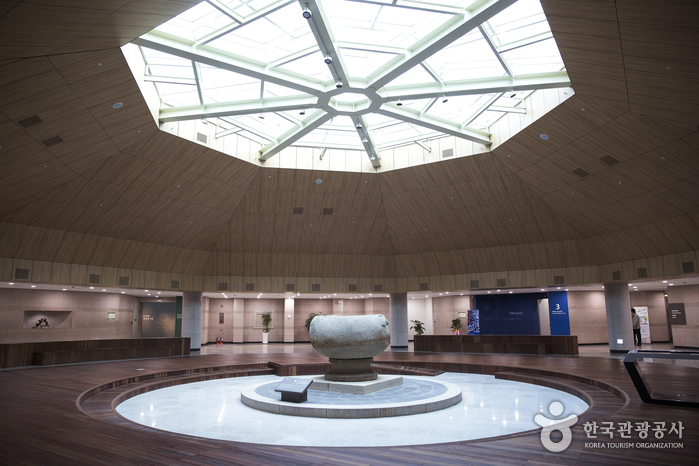
Buyeo National Museum was first established by the Buyeo Preservation Society in 1929 as a collection of relics and artifacts related to the Baekje kingdom. This collection was on display at a government building from the Joseon dynasty until 1970, when a new building was erected on the southern foothills of Busosan Mountain. It moved again on August 6, 1993 to the current location. The museum has four exhibition halls and an outdoor exhibit with a total of about 1,000 relics on display.
⊙ Archaeological Site in Gwanbuk-ri and Busosanseong Fortress [UNESCO World Heritage] (관북리유적과 부소산성 [유네스코 세계유산])
View detailed guide on Korea Trip Guide →

– Homepage
www.buyeo.go.kr
– Tel
+82-41-830-2880
Archaeological Site in Gwanbuk-ri and Busosanseong Fortress are historical sites dating back to the Baekje period (BC 18-AD 660), when they served as the capital from 538 to 660 AD. Archaeological Site in Gwanbuk-ri functioned as the royal palace where the king resided and governed during peacetime, while Busosanseong Fortress served as a defensive wall for wartime preparedness. Many Baekje historical relics have been excavated from these sites, and there is a virtual experience center called Sabido Fortress for visitors to explore, along with guided tour services available.
⊙ Kudurae Dolssambap (구드래돌쌈밥)
– Homepage
0418369259.modoo.at
(Korean only)
– Tel
+82-41-836-9259
Kudurae Dolssambap is situated on the Goodtrae Food Street in Buyeo, the historic capital of the Baekje kingdom. The restaurant is renowned for its dolssambap – a nutritious set meal consisting of rice cooked in a hot stone pot, accompanied by a selection of vegetables and side dishes. This signature dish emphasizes the use of medicinal plants and vegetables, promoting a wholesome dining experience.
⊙ Nakhwaam Rock (낙화암)
View detailed guide on Korea Trip Guide →
– Homepage
tour.buyeo.go.kr (Korean only)
www.cha.go.kr (Korean, English, Japanese, Chinese)
– Tel
+82-41-830-2880
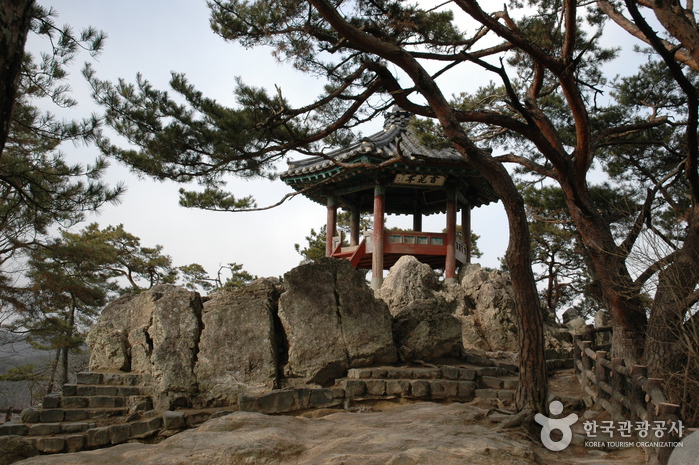
Nakhwaam is a rock cliff towering over Baengmagang River in the northern end of Busosan Mountain. According to the legend, this is where the royal court women of Baekje jumped off to kill themselves when the kingdom of Baekje was defeated during the invasion of Sabiseong Fortress (now Busosanseong Fortress in Buyeo) by the Shilla-Tang Alliance. The name of this rock, Nakhwaam, literally means “the cliff of falling flowers” and symbolizes the fidelity and loyalty of Baekje women.
⊙ Gudeurae Park (구드래조각공원)
View detailed guide on Korea Trip Guide →

– Homepage
tour.buyeo.go.kr (Korean only)
– Tel
+82-41-830-2880
Located at the western end of Busosan Mountain along the Baekma River, the Gudeurae region boasts beautiful scenery and a well-developed sculpture park. The port in the region acted as an entrance to the Sabi Castle during the Baekje dynasty and today serves as a dock for the cruise ship that travels up and down the Baekma River. Restaurants serving delicious regional cuisine are located near the dock, making the area a recommended tourist location for visitors who are looking for a combination of natural beauty and flavorful culinary delights.
Gudeurae was designated a Korea tourist region in 1985. Following the official designation, a sculpture park housing 59 sculptures was established in the area. Thirty of the works of art were crafted by sculptors residing in Gudeurae who are known for skills that have been handed down from artists dating back to the Baekje Period. The other 29 pieces are from Korean and overseas artists who participated in the International Modern Sculpture Symposium in 1999. The sculptures bring about a sense of beauty that reflects the region’s history as well as modern art, making the park a popular tourist site and retreat for residents. A monument built in memory of a well-known folk song describing the beauty of Gudeurae is also located in the region.
![Izzat Baba – MODA Outlet Cheonan Asan Branch [Tax Refund Shop] (아이잗바바 모다아울렛 천안아산)](https://ktrip.blogsailing.com/wp-content/uploads/2025/12/3314202_image2_1-768x432.jpg)
![CheongKwanJang – Homeplus Cheonan Branch [Tax Refund Shop] (정관장홈플러스천안점)](https://ktrip.blogsailing.com/wp-content/uploads/2025/12/2890787_image2_1.jpg)
2 Comments