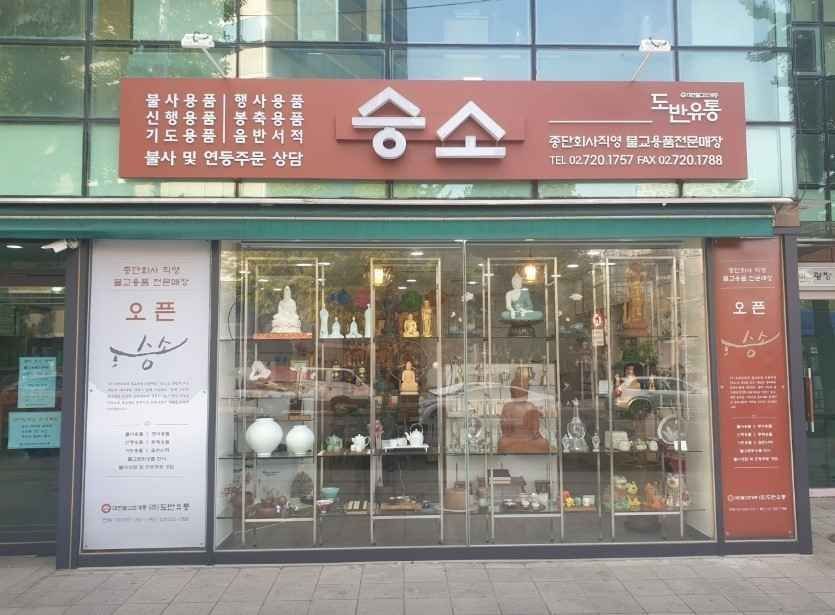
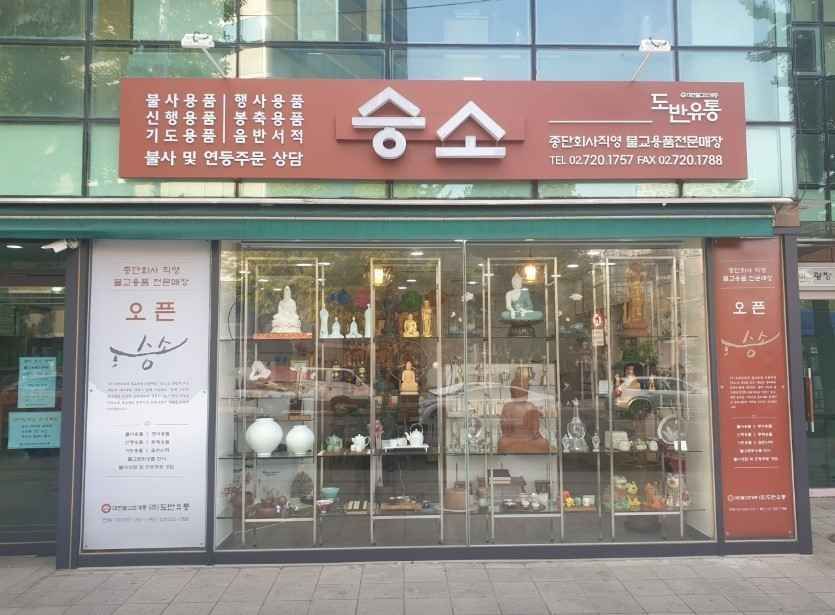
Jogye Order of Korean Buddhism Doban HC Seungso [Tax Refund Shop](대한불교조계종 도반HC 승소)
Jogye Order of Korean Buddhism Doban HC Seungso [Tax Refund Shop](대한불교조계종 도반HC 승소)
 – Homepage
seungso.co.kr/
–
– Address : 1F, Jeonbeop Hoegwan, 67, Ujeongguk-ro, Jongno-gu, Seoul
※ Presentation Information
– Fair Day
Monday – Sunday
– Information and Guides
02-720-1786
– Opening Hours
09:00~18:00
– Day Off
Seollal (Lunar New Year’s Day) & Chuseok (Korean Thanksgiving Day) holidays
– Parking
Not available
– Restroom
Not available
– Items for Sale
Souvenirs / local specialties
◎ Nearby Tourism Infobox
⊙ Insa-dong (인사동)
View detailed guide on Korea Trip Guide →
– Homepage
www.insainfo.or.kr
– Tel
+82-2-734-0222
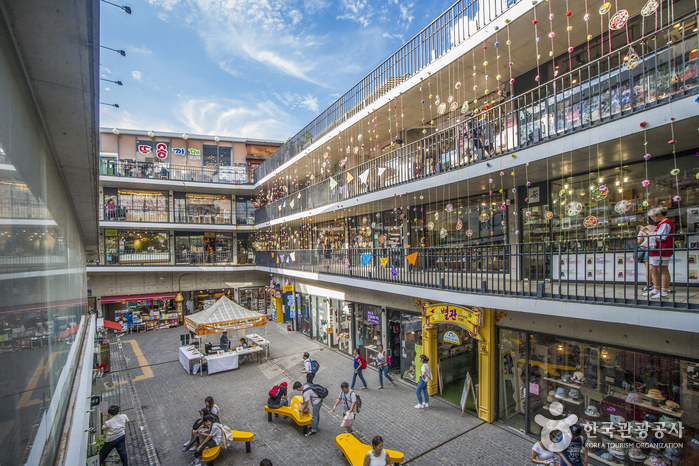
Insa-dong, located in the heart of the city, is an important place where old but precious traditional goods are on display. There is one main road in Insa-dong with alleys on each side. Within these alleys are galleries, traditional restaurants, teahouses, and cafes.
The galleries are the heartbeat of Insa-dong. There are about 100 galleries in the area offering every example of traditional Korean fine art from paintings to sculptures. The most famous galleries are Hakgojae Gallery, which functions as the center of folk art, Gana Art Gallery, which promotes many promising artists, and Gana Art Center.
The teahouses and restaurants are the perfect complement to the galleries. They are hidden deep within the twisting alleyways, making it feel like a treasure hunt. The shops in Insa-dong are very popular among all age groups, because each one is unique.
Every Saturday from 14:00 to 22:00 and Sunday from 10:00 to 22:00, the main street is blocked to vehicular traffic and it becomes a cultural space. Stores set up booths outside and Korean candy merchants and fortune teller stalls can easily be found; there are traditional performances and exhibits as well. Insa-dong is especially popular among international tourists. This is where they can experience and see traditional Korean culture first-hand, and also purchase pieces of fine art.
⊙ Line Friends – Insa Branch [Tax Refund Shop] (라인프렌즈 인사점)
View detailed guide on Korea Trip Guide →
–
⊙ KongKongY Gallery [Tax Refund Shop] (콩콩이 그림가게)
View detailed guide on Korea Trip Guide →
–
⊙ Bachi Ring (UMC Jewelry) [Tax Refund Shop] (바치링(UMC쥬얼리))
View detailed guide on Korea Trip Guide →
–
⊙ Yeon Deung Hoe (Lotus Lantern Festival) (연등회)
View detailed guide on Korea Trip Guide →
– Homepage
www.연등회.kr
– Tel
+82-2-2011-1744~7
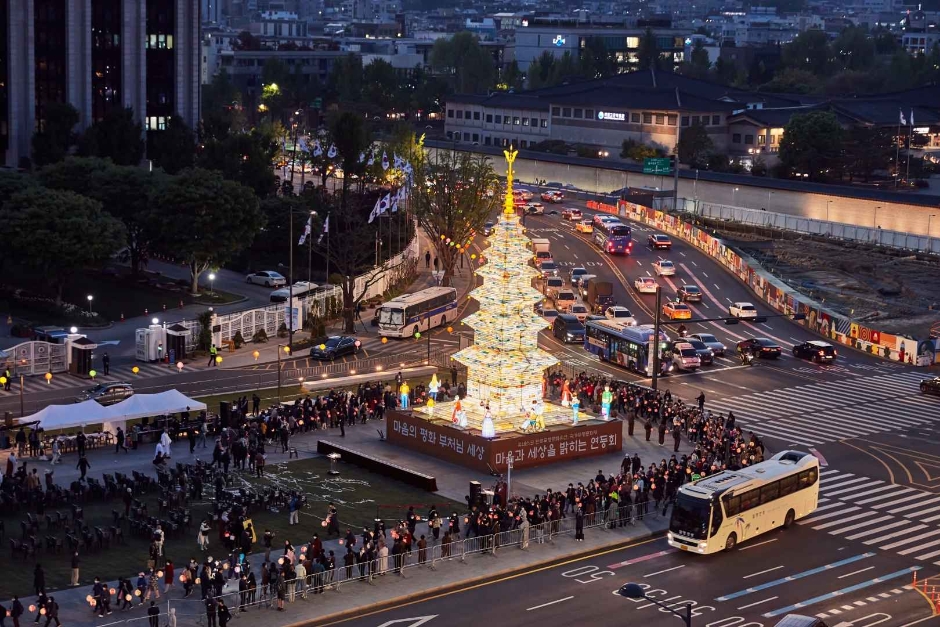
Started approximately 1,200 years ago during the Silla dynasty and continued through the Goryeo Yeon Deung Hoe and Joseon lantern festival, the Yeon Deung Hoe Festival is a traditional festival registered as an Intangible Cultural Heritage and UNESCO Masterpiece of the Oral and Intangible Heritage of Humanity. The lanterns at Yeon Deung Hoe Festival brighten the heart and the world!
⊙ Seoul Museum of Craft Art (SeMoCA) (서울공예박물관)
View detailed guide on Korea Trip Guide →
– Homepage
craftmuseum.seoul.go.kr
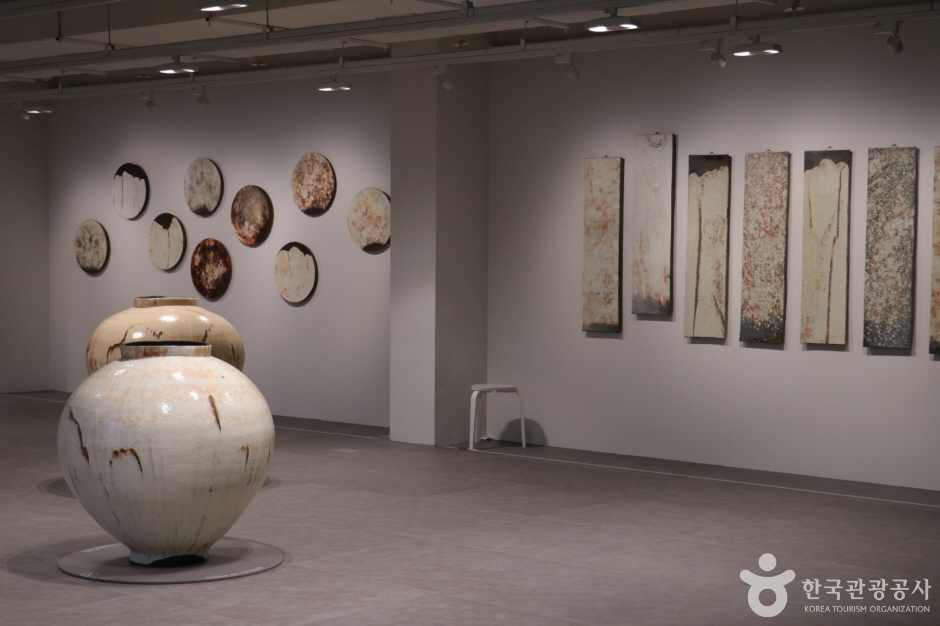
The Seoul Museum of Craft Art (SeMoCA), the first public museum of craft art in Korea, opened its doors in Anguk-dong, Jongno-gu, in July 2021 after renovating five buildings of the former Pungmoon Girls’ High School. SeMoCA studies and shares not only works, but also information, records, people, and environment related to craft art with the goal of becoming a dynamic platform for experiencing the technical, practical, artistic, and cultural values of craft.
SeMoCA holds a collection that comprises various crafts and craft materials covering multiple fields and eras from the traditional to the present. SeMoCA also holds exhibitions that feature the history of craft from traditional to contemporary art as well as local and children’s crafts, along with programs that utilize the museum’s craft installations, craft archives, craft library, and craft resource management system.
The site of the museum has deep historical roots as it is also the Andong Secondary Palace Site, where a detached palace was constructed as a royal residence for King Sejong’s son Prince Yeongeung, and served as a venue for royal celebrations, such as the wedding of King Sunjong. The site is also at the center of Jongno-gu, where Joseon-era master artisans (“gyeonggongjang”) of the royal palace produced and delivered craft works.
⊙ Matthew Chang Anguk (메튜장 안국)
View detailed guide on Korea Trip Guide →
– Homepage
www.matthewchangperfumes.com
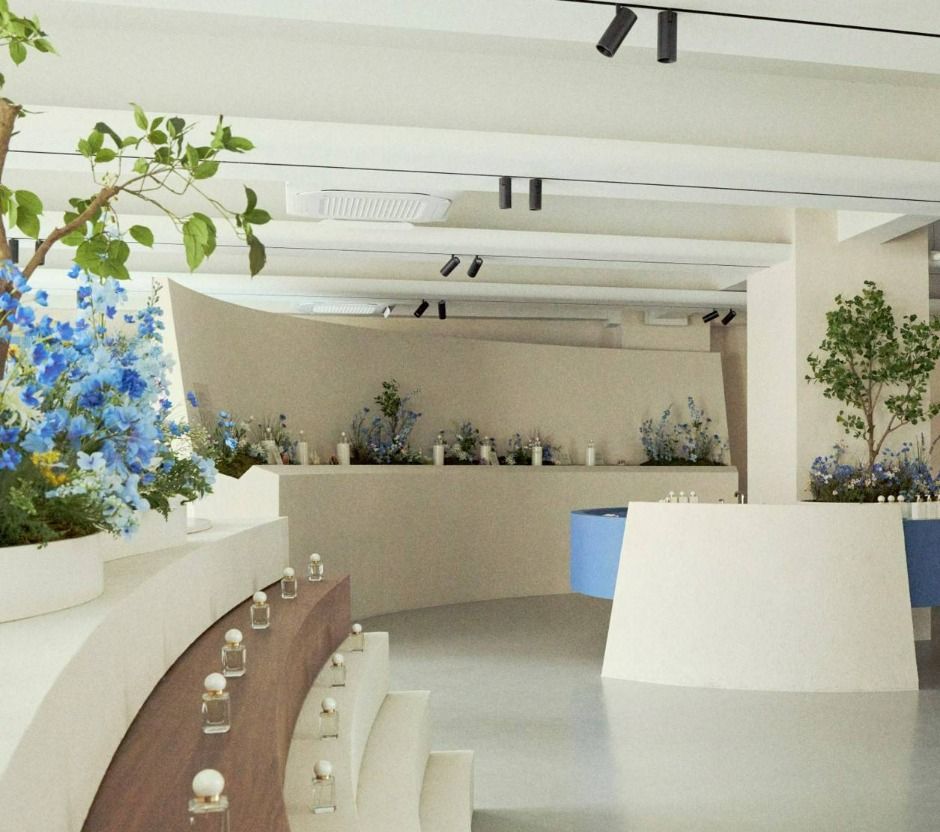
Matthew Chang Anguk flagship store uses the whole space to bring the brand’s philosophy to life through fragrance. Located in Anguk, the heart of Korea’s tradition and aesthetics, the store’s tranquil atmosphere sets the mood for visitors to try on and experiment with the brand’s carefully selected perfume collection. The staff provides assistance in recommending the perfect scent according to visitor’s preference, mood, and nostalgia. The store also has a section dedicated to body care products, such as hand wash and body lotion.
⊙ High – Anguk Branch [Tax Refund Shop] (하이엔드코리아 안국)
View detailed guide on Korea Trip Guide →
–
⊙ Templestay Information Center (템플스테이 홍보관)
View detailed guide on Korea Trip Guide →
– Homepage
www.templestay.com
– Tel
+82-2-2031-2000
Templestay Information Center offers various information and services regarding templestays and temple meals for domestic and international visitors. The center also operates traditional cultural experiences, such as tea time with a Buddhist monk, traditional culture activities and more.
⊙ Jogyesa Temple (조계사(서울))
View detailed guide on Korea Trip Guide →
– Homepage
www.jogyesa.kr
As the main temple as well as the district head temple of the Jogye order in Seoul, Jogyesa Temple is the center of Korean Buddhism. The temple was built in the late 14th century during the Goryeo period but was completely destroyed in a fire. It was rebuilt under the name of Gakwangsa Temple in 1910 with the effort of many respectful monks, namely Han Yong-un and Lee Hee-gwang. The temple was given a role as the head temple of Korea’s Buddhism and renamed to Tegosa Temple in 1936. In 1954, a purification drive took place to eliminate Japanese influence and revive traditional Buddhism, which established the present day Jogyesa Temple as a result.
Jogyesa Temple plays an important role in Korean Buddhism as the head temple of the Jogye order. Jogyesa Temple’s Dharma Hall serves as the main venue for several Buddhist events, holding rituals, lectures, ceremonies, and other events all year long. The annual lantern festival in celebration of Buddha’s birthday also takes place at this temple.
![Yankee Candle – Coex Branch [Tax Refund Shop] (양키캔들 코엑스)](https://ktrip.blogsailing.com/wp-content/uploads/2026/02/2879881_image2_1.jpg)
![Polham – Hyundai Garden5 Branch [Tax Refund Shop] (폴햄 현대가든파이브)](https://ktrip.blogsailing.com/wp-content/uploads/2026/02/2879388_image2_1-768x576.jpg)
![Unipair – Apgujeong Branch [Tax Refund Shop] (유니페어 압구정)](https://ktrip.blogsailing.com/wp-content/uploads/2026/02/2879575_image2_1-768x576.jpg)
![Seoul Papyrus [Tax Refund Shop] (서울파피루스)](https://ktrip.blogsailing.com/wp-content/uploads/2026/02/2878574_image2_1-768x576.jpg)
![Aritaum – Hankuk Univ. of Foreign Studies Station Branch [Tax Refund Shop] (아리따움 외대역)](https://ktrip.blogsailing.com/wp-content/uploads/2026/02/2889660_image2_1-768x576.jpg)