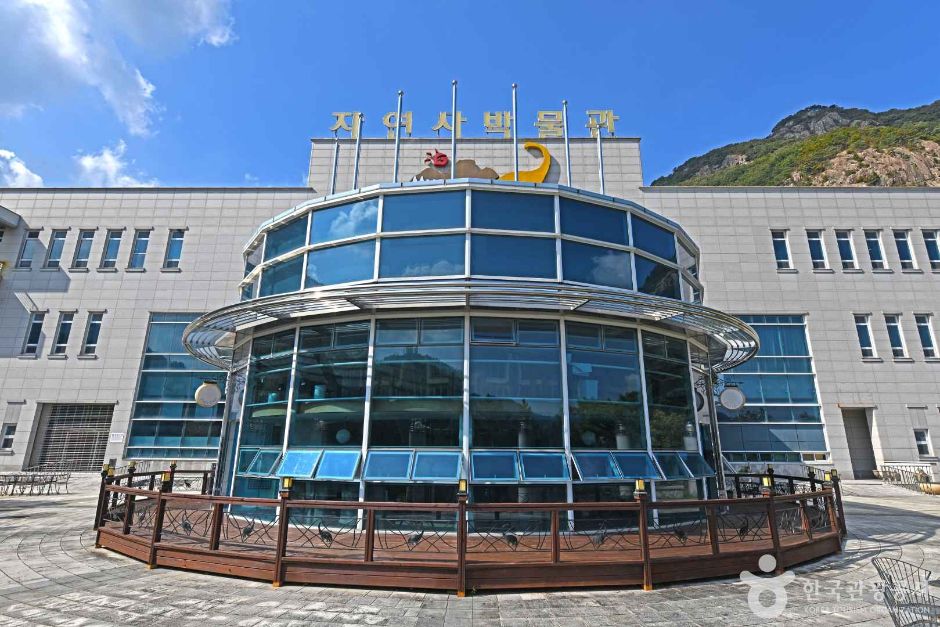
Korean Natural History Museum (한국자연사박물관)
Korean Natural History Museum (한국자연사박물관)
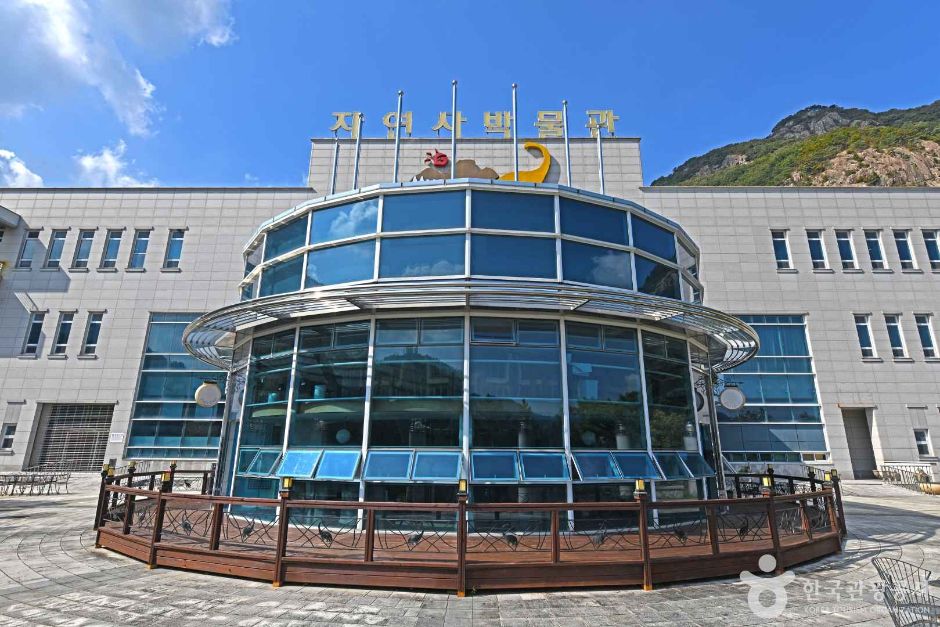 – Homepage
krnamu.or.kr
The Korean Natural History Museum showcases Korea’s plants, animals, insects, and rocks. It includes exhibition halls, a café, and a theater. The main attractions are the massive dinosaur fossils and replicas. Visitors can also explore natural rocks, minerals, and gemstones from the Korean Peninsula, as well as various fossils and mummies from different eras. Hands-on activities include creating imaginary dinosaurs and making bracelets with gemstones.
– Address : 49-25 Imgeumbong-gil, Banpo-myeon, Gongju-si, Chungcheongnam-do
※ Presentation Information
– Information and Guides
+82-42-824-4055
– Parking
Available
– Day Off
Mondays, Tuesdays
– Usage Fee
Adults 9,000 won / Teenagers 6,000 won / Children 4,000 won
– Operating Hours
10:00-18:00


◎ Nearby Tourism Infobox
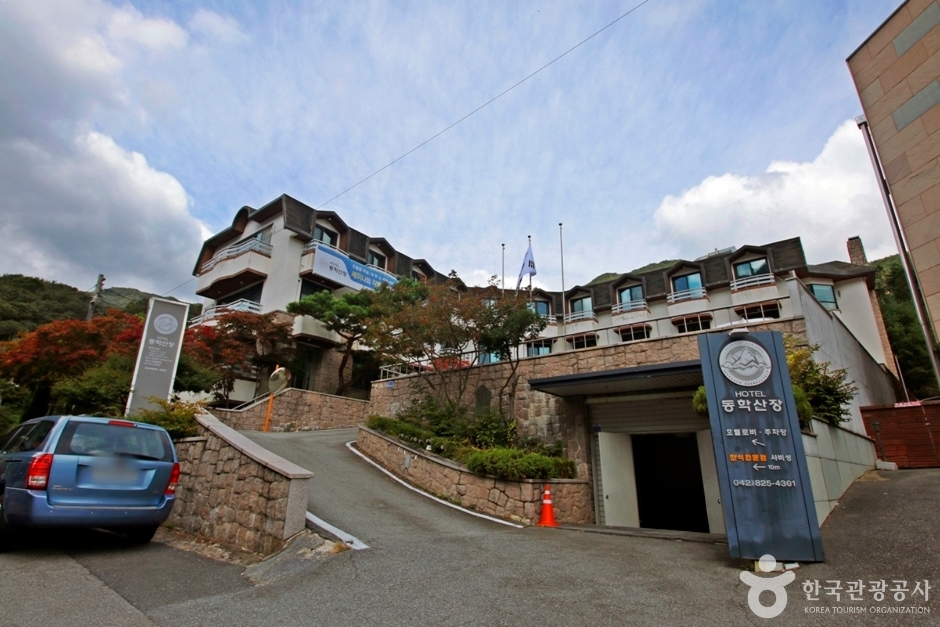
⊙ Sabiseong (Donghak Sanjang Hotel Korean restaurant) (사비성 (동학산장호텔 한식당))
– Homepage
http://www.dhsanjang.co.kr
– Tel
042-825-4301
Sabiseong is a Korean restaurant operated by Donghak Sanjang Hotel, located on the eastern slope of Gyeryongsan Mountain. It offers a variety of traditional Korean dishes such as sagor ugeojiguk (kimchi cabbage soup), hwangtae kongnamulguk (dried pollack and bean sprout soup), yukgaejang (spicy beef soup), sanchae bibimbap (wild vegetable bibimbap), and grilled dishes like samgyeopsal (pork belly) and ori hunje (smoked duck). Nearby attractions include Gyeryongsan National Park, Donghaksa Temple, and the Korean Natural History Museum.
⊙ Gyeryongsan National Park (계룡산국립공원)
View detailed guide on Korea Trip Guide →
– Homepage
gyeryong.knps.or.kr
– Tel
+82-42-825-3002
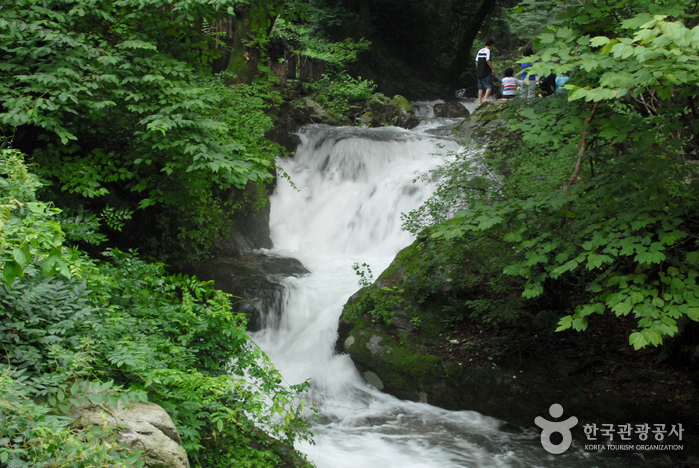
Gyeryongsan National Park stretches across the cities of Daejeon, Gongju, and Nonsan in Chungcheongnam-do and was made a national park on December 31, 1968. The name of the mountain comes from the fact that the ridgeline looks like a dragon wearing a chicken’s crest on its head. The topographical features are what make this mountain stand out and its mysterious folklore is what makes it so interesting. The park features many peaks, including the main peak Cheonhwangbong (alt. 845.1 m), as well as Sambulbong, Yeoncheonbong, and Gwaneumbong Peaks. This mountain is famous for its many interesting sites, with its fantastic rock structures and Yongmunpokpo Falls on the west, Eunseonpokpo Falls to the east, and Amyongchu and Sutyongchupokpo Falls in the south.
In spring, cherry blossoms bloom along the path to Donghaksa Temple, and during summer the lush green of the valley is very beautiful. During fall, the maple trees reveal their crimson colored leaves around Gapsa Temple and Yongmunpokpo Falls. The snowcapped peak of Sambulbong in winter is simply breathtaking. Gyeryongsan is full of rare animals and plants, beautiful waterfalls and a rich history with mysterious legends and cultural treasures. To the east is Donghaksa Temple; northwest, Gapsa Temple; southwest, Sinwonsa Temple; and southeast, Yonghwasa Temple.
![Tommy Hilfiger – Lotte Buyeo Branch [Tax Refund Shop] (타미힐피거 롯데부여)](https://ktrip.blogsailing.com/wp-content/uploads/2025/12/2883357_image2_1-768x576.jpg)
![Homeplus – Cheonan Branch [Tax Refund Shop] (홈플러스 천안)](https://ktrip.blogsailing.com/wp-content/uploads/2025/12/2883184_image2_1-768x576.jpg)
![Olive Young – Cheonan Arario Branch [Tax Refund Shop] (올리브영 천안아라리오)](https://ktrip.blogsailing.com/wp-content/uploads/2025/12/2883213_image2_1-768x576.jpg)