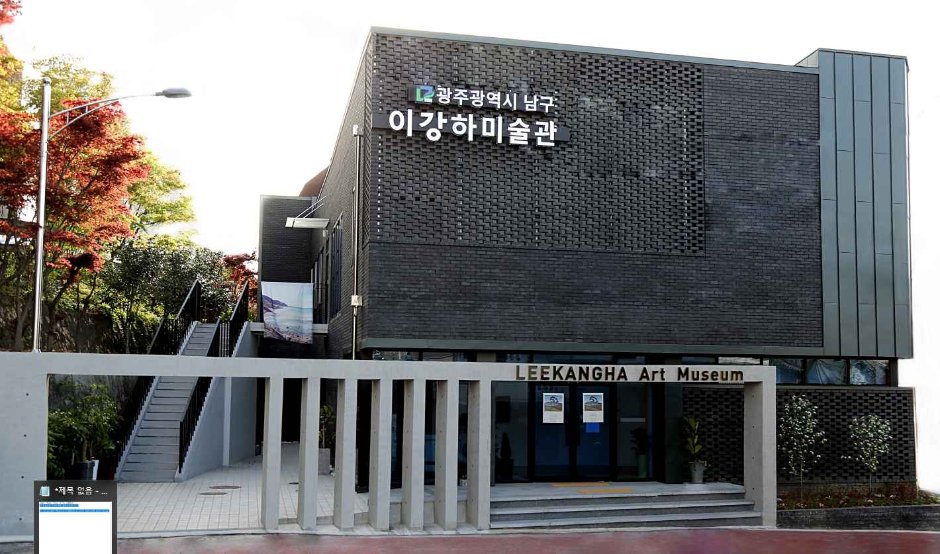
LEEKANGHA Art Museum (이강하미술관)
LEEKANGHA Art Museum (이강하미술관)
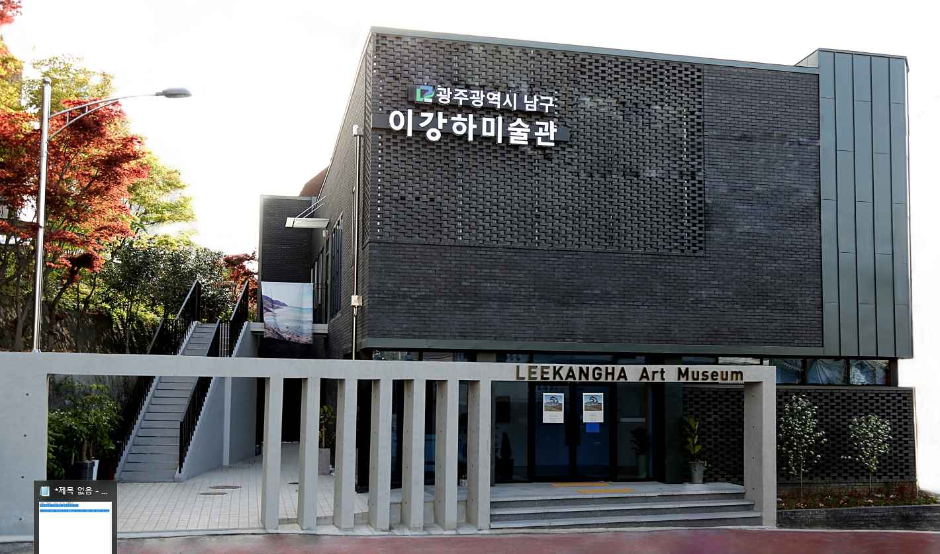 – Homepage
lkh-artmuseum.com
The LEEKANGHA Art Museum, opened in 2018, offers a range of exhibitions, educational programs, and a research center. Visitors can explore the life and art world of Lee Kang-ha in different eras through various exhibitions and gain a deeper understanding of art with performances and educational programs. The museum aims to foster empathy and communication to enrich cultural knowledge by using diverse art-culture experience programs.
– Address : 6 3·1manseundong-gil, Nam-gu, Jeonnam-Gwangju Special Metropolitan City
※ Presentation Information
– Information and Guides
+82-62-674-8515
– Parking
Available
– Day Off
Mondays, January 1, Seollal (Lunar New Year’s Day) & Chuseok (Korean Thanksgiving Day) holidays
– Usage Fee
Free
– Operating Hours
10:00-18:00 (Break time: 12:00-13:00)


◎ Nearby Tourism Infobox
⊙ Yangnim-dong Penguin Village Craft Street (양림동 펭귄마을공예거리)
View detailed guide on Korea Trip Guide →
– Homepage
www.instagram.com/yanglim_craft_street
Yangnim-dong Penguin Village Craft Street is a narrow alleyway located behind the Yangnim-dong Community Center. The village, named because of the way the elderly residents appear to waddle like penguins, has become an exhibition space of life in the 70s and 80s. Villagers cleaned up empty houses that had been burnt down and left unattended in the past, brought discarded items, and began displaying them on the village walls. “Let’s be thankful for living at that time” was engraved on the village wall. It also has historical culture, such as the House of Choe Seunghyo, the House of Missionary Uilsa, and Owen Memorial Hall. The Penguin Jumak in the middle of the village was the residents’ gathering place, selling small but necessary items. Various workshops, such as leather workshops, textile workshops, and carpentry workshops, are located on Craft Street, so you can purchase pretty crafts or experience upcycling crafts with a retro vibe in which the historical and the modern coexist.
⊙ Art Polygon Horanggassinamu (호랑가시나무 아트폴리곤)
View detailed guide on Korea Trip Guide →
– Homepage
www.horang-c.com
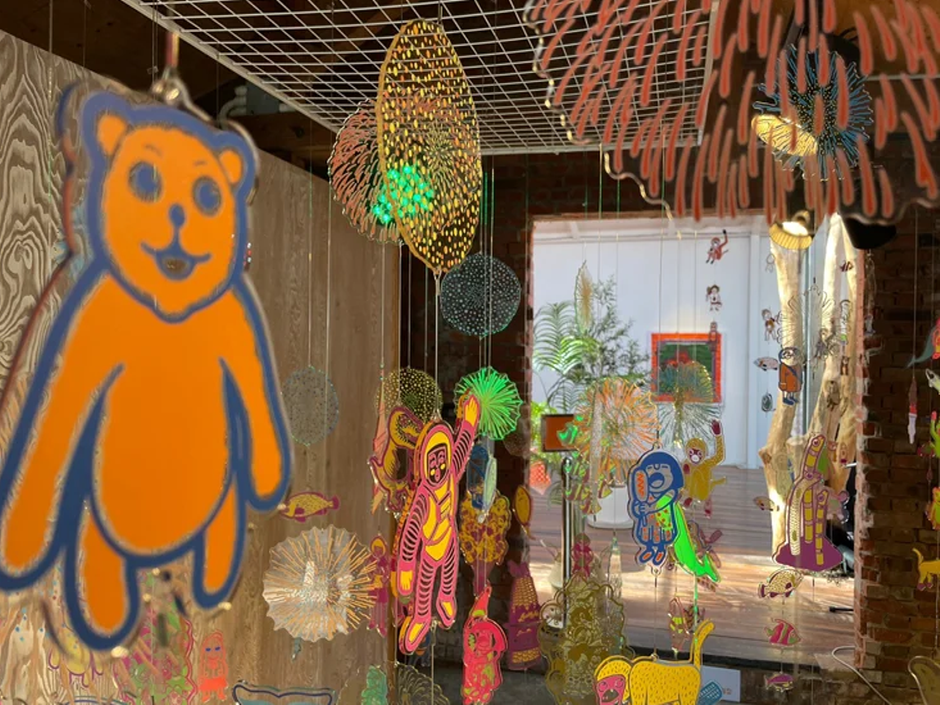
Located in Yangnim-dong, Art Polygon Horanggasinamu is a multi-purpose cultural space that hosts various programs such as exhibitions, lectures, and performances. In 2021, it was used as one of the venues for the Gwangju Biennale. The space was created by preserving and expanding the original structure of a missionary’s garage. Yangnim-dong is home to many modern historical cultural heritage sites and art galleries that connects the past and the present.
⊙ Lee Jang-woo’s House (이장우 가옥)
View detailed guide on Korea Trip Guide →
– Homepage
https://tour.gwangju.go.kr
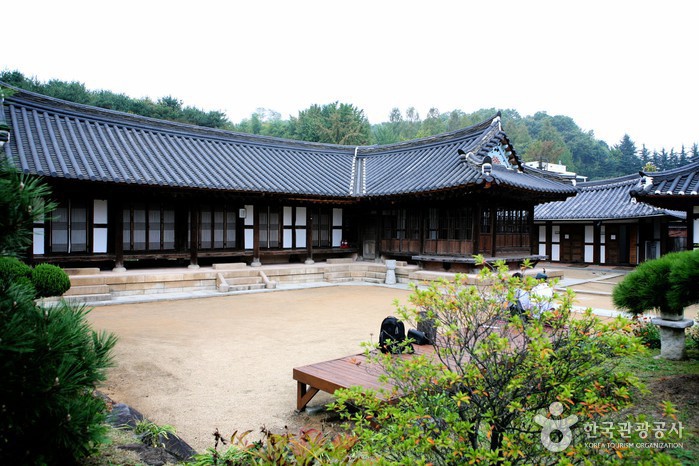
Designated the first Gwangju Folk Material on March 20, 1989, Lee Jang-woo’s House is an upper-class, tile-roofed house with a gate, storeroom, servants’ quarters, detached building, and main building. The building is estimated to have been constructed in 1899 and is overall a sturdy example of Korean architecture, well-preserved in its original state. The L-shaped main hall of the historic building is rather large and consists of (left to right) a wooden verandah, a small room, a hall, the main room, a kitchen, and another small room. The room doors are double doors with a sliding door on the inside and a hinged door on the outside. The hall also has partitions that can be hung up as necessary.
◎ Travel information to meet Hallyu’s charm – movie “Meet the In-Laws”
This hanok served as Hyeon-joon’s (played by Song Sae-byeok) family home in Jeolla-do in the movie “Meet the In-Laws.” With its well-preserved architecture and traditional Korean garden, it captures the elegance and charm of early modern Korea.
⊙ Obang Choi Heung-jong Memorial Hall (오방 최흥종 기념관)
View detailed guide on Korea Trip Guide →
– Homepage
www.obangmuseum.or.kr
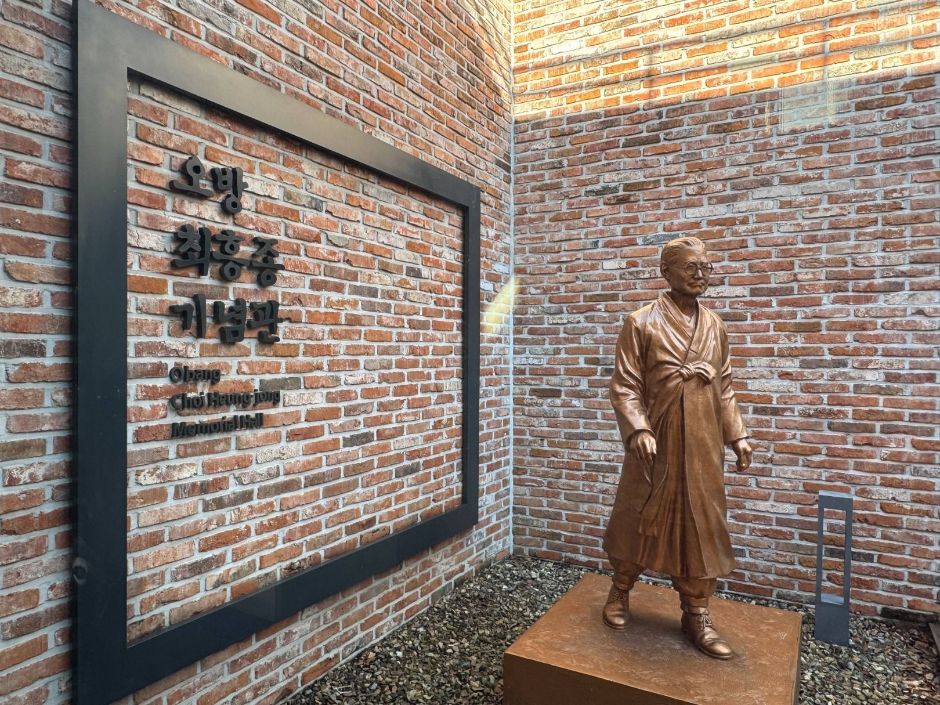
Obang Choi Heung-jong Memorial Hall is dedicated to Rev. Obang Choi Heung-jong who was also a Korean independence fighter and a social activist. His lifetime of sacrificing for others while improving the Gwangju neighborhood made him a true hero. Visitors to the memorial hall can deeply understand the life that Obang Choi Hueng-jong lead.
⊙ Yangnim Art Center (양림미술관)
View detailed guide on Korea Trip Guide →
– Homepage
blog.naver.com/yangrimart
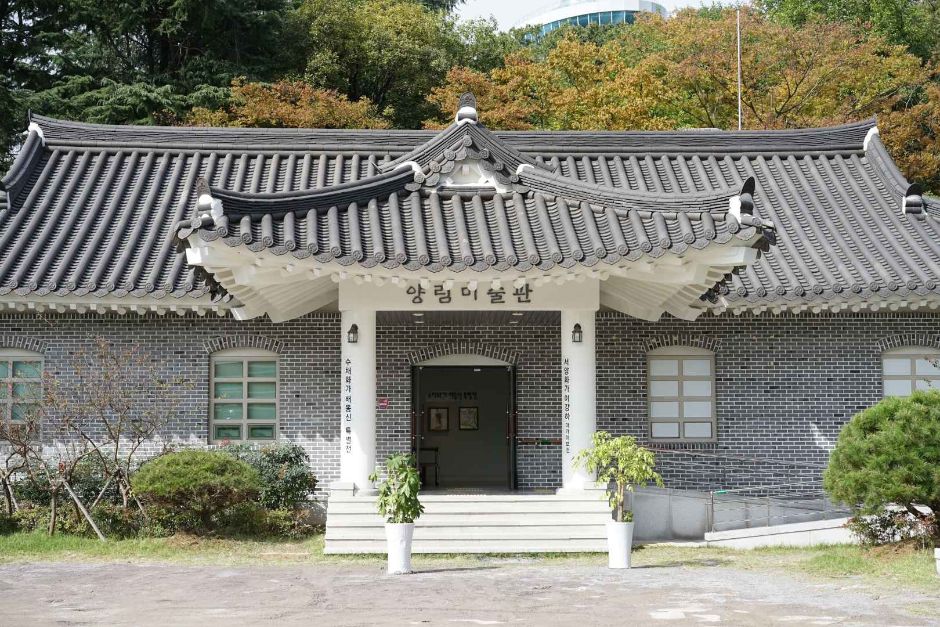
Yangnim Art Center takes its name from its location in Yangnim-dong, the center of modern history and culture. Designed in hanok style, the building features exhibition rooms on each floor, offering both artists and visitors a creative space to connect and immerse themselves in the art.
⊙ Han Hee-won Art Museum (한희원미술관)
View detailed guide on Korea Trip Guide →
– Homepage
@hanheewon_museum
Han Hee-won Art Museum is a small hanok art museum in the back alley of Yangnim-dong.
Painter Han Hee-won grew up in Yangnim-dong, where he was influenced as a painter. In July 2015, he purchased a small hanok between the House of Yi Jang-u and the House of Choe Seunghyo and transformed it into an art museum to preserve and show the spirit of love, comfort, and art in his hometown, Yangnim-dong. An art museum with a low threshold approaching citizens with a humble mind, Han Hee-won Art Museum is open to anyone. Feel free to visit, appreciate the paintings, and be comforted through art.
⊙ House of Choi Seung-hyo (최승효가옥)
View detailed guide on Korea Trip Guide →
– Homepage
www.cha.go.kr
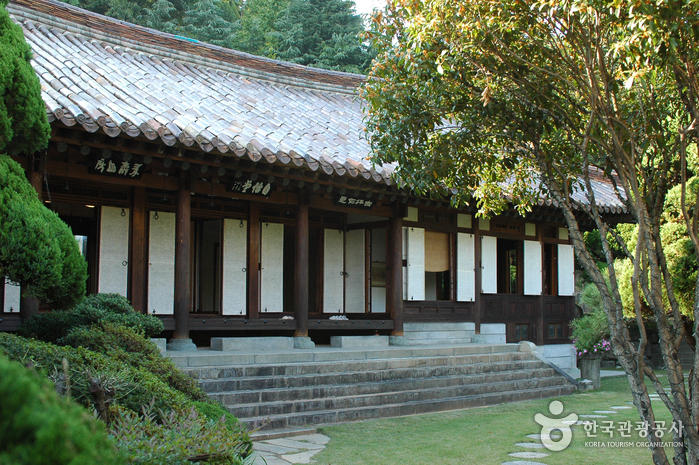
The House of Choi Seung-hyo is a traditional residential building located on the southeastern slopes of Yangnimsan Mountain. The rectangular building is open to the east, has 8 kan (the space between two pillars) in the front and 4 kan to the sides, and is graced by a traditional hipped and gabled roof. Since the building was constructed in the 1920s, it offers a valuable glimpse into the architectural style of Korean houses at the end of the Japanese colonial period. Choi Sang-hyeon was an activist who offered his attic as a place of refuge for other activists.
⊙ Arie-ne guesthouse (아리네 게스트하우스)
View detailed guide on Korea Trip Guide →
– Homepage
https://ariene.modoo.at
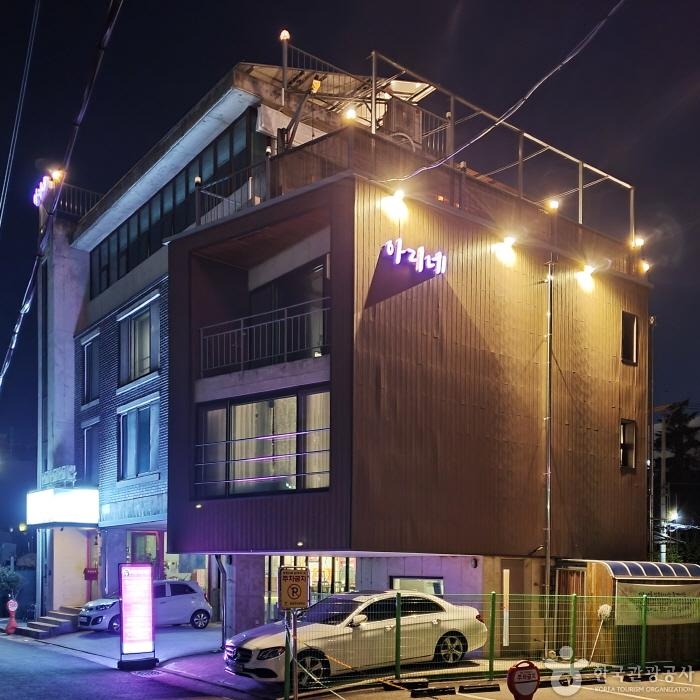
Ariene Guesthouse is an integrated cultural platform located in Yangrim-dong, Nam-gu, Gwangju. The accomodation is located in the downtown area of Gwangju, making it both easily accessible and affordable. On the first basement floor, there is Yanglim Culture Hall, a lounge cafe on the first floor, and a rooftop party room on the fourth floor. The guesthouse has nine rooms on the second and third floors, including double rooms, twin rooms, ondol rooms, and separate dormitory rooms for men and women. Each room is equipped with a bathroom for guests’ convenience, and breakfast is provided at no charge. A fee is charged for laundry services. There are modern cultural and historic sites nearby.
⊙ Gwangju Sajik Park (사직공원 (광주))
View detailed guide on Korea Trip Guide →
– Homepage
www.namgu.gwangju.kr
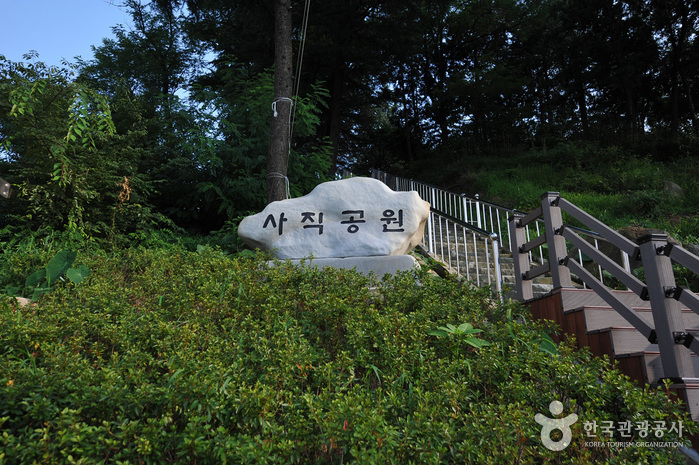
Sajik Park is located at the previous site of Sajikdan Altar, a ritual site to pray for peace and prosperity during the Three Kingdoms Era. In the 1960s, the site was home to Sajik Zoo, with the ritual being abandoned in 1894 and the altar in disrepair. However, in 1991, it was decided to move the zoo to another location and begin restoring the site. It was reopened in April 1994, 100 years after the last ritual.
Sajik Park is landscaped with various trees and flower beds. The park blooms pink and white with cherry blossoms annually in mid-April. During this time, the municipality of Gwangju installs lighting in the trees for citizens to enjoy the blossoms late into the night. The park has become established as a favorite rest area for Gwangju citizens. The park houses several attractions including Gwangju Broadcast Station (KBS), Memorial Tower for Policemen, Yangpajeong Pavilion, and Palgakjeong Pavilion overlooking downtown Gwangju.
4 Comments