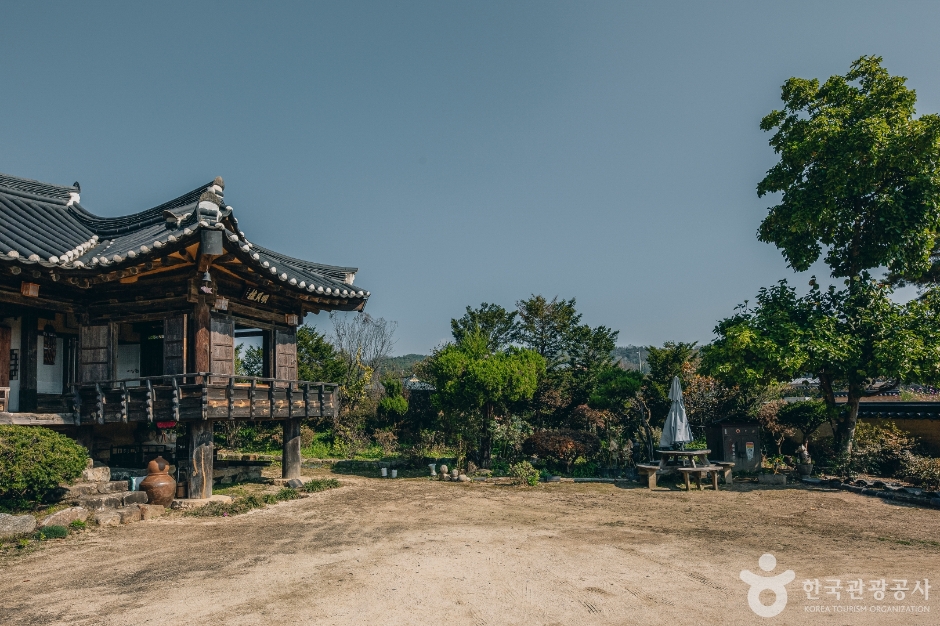
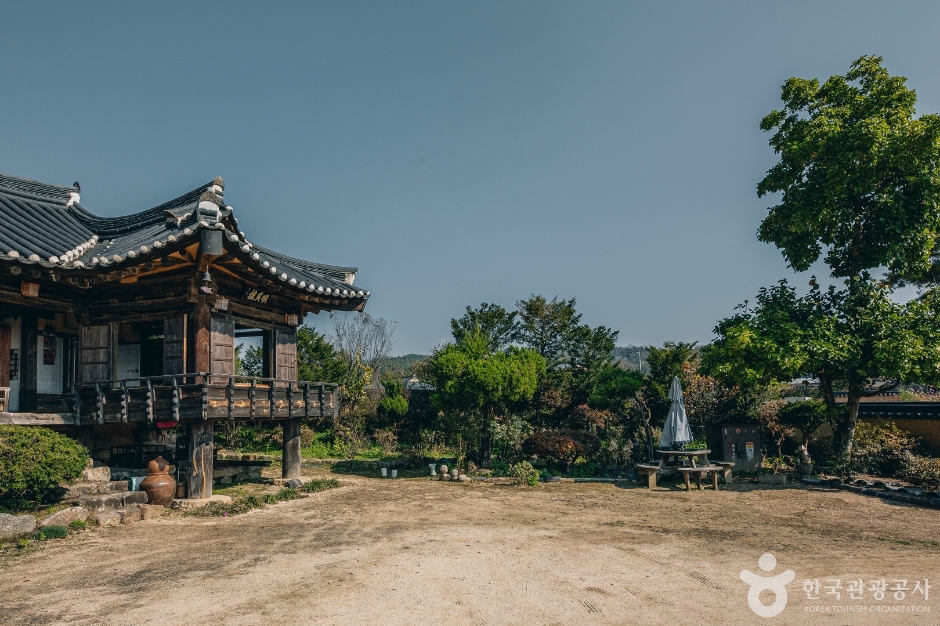
Manhoegotaek (만회고택)
Manhoegotaek (만회고택)
 – Homepage
http://manhoegotaek.modoo.at
– Tel
+82-54-673-7939, +82-10-8079-7939
The prestigious Manhoe Old House in Baraemi Village, Bonghwa, Gyeongsangbuk-do, is a nationally designated folk cultural asset, because of its 300 year history and its association with both Korean literature and the March 1st independence movement. It is said that a thousand poems were written in Myeongwolru, the Old House’s pavilion; and the 1919 Independence Petition was also written here. There are 7 guestrooms, one with an attic with exposed roofbeams, and most but not all rooms have individual toilets. Guests can take part in traditional activites such as folk games.
– Address : 51 , Baraemi 1-gil, Bonghwa-gun, Gyeongsangbuk-do
※ Presentation Information
– Check-in Time
16:00
– Check-out Time
11:00
– Daily Rate
Available
– Amenities
No
– Parking Fee
Yes
– Number of Rooms
7


◎ Nearby Tourism Infobox
⊙ Tohyang traditional house (토향고택)
View detailed guide on Korea Trip Guide →
– Homepage
http://tohyang.modoo.at
– Tel
+82-10-8575-9036
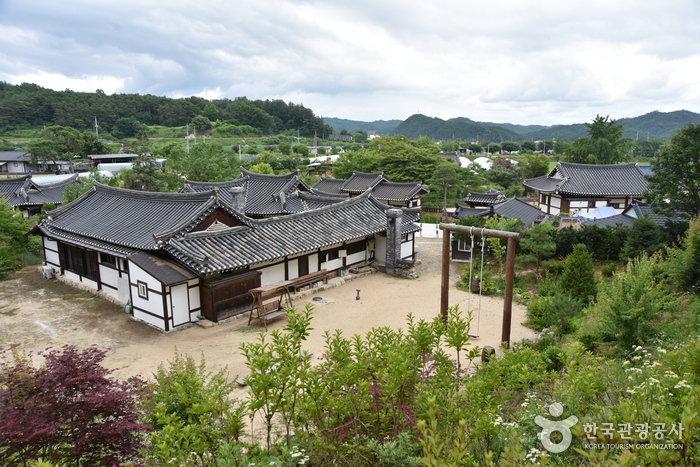
Tohyang Old House is a grand old house in Bonghwa, Gyeongsangbuk-do, formerly the home of eleven generations of the same family. The main house is estimated to be over 350 years old, and is a place where past and present harmonize. The garden contains flower beds, a lotus tree, a walking path, and a wood-fired pottery kiln, where you can take part in a traditional pottery experience.
⊙ The Namho house (남호구택)
– Homepage
https://namhohouse.modoo.at
– Tel
+82-54-673-2257, +82-10-2311-3488
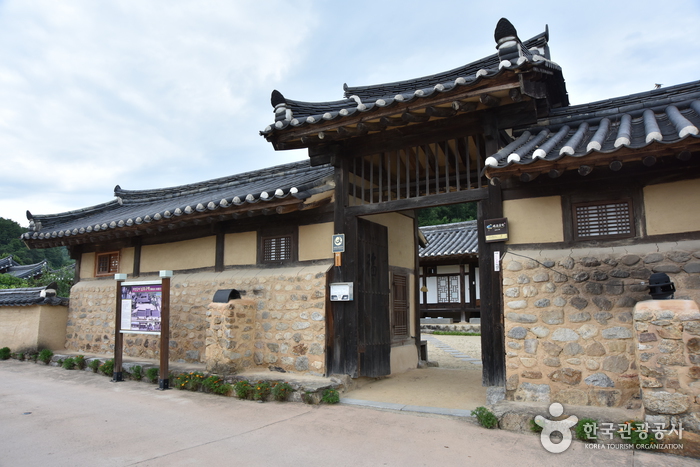
Bonghwa Namho Old House in Bonhwa-gun is a Gyeongsangbuk-do cultural treasure with a history going back 140 years – but the original materials were of such high-quality that the Old House has hardly detiorated at all. The toilet is shared, but has recently been renovated to a high standard. In the spacious yard you can enjoy traditional games such as Tuho, Neolttwigi, and Jegichagi. The house is convenient for transport, with Bonghwa Station (on the Yeongdong Line) just a 15-minute walk away, and a city bus stop in the village.
⊙ Sogang House [Korea Quality] / 소강고택 [한국관광 품질인증]

– Homepage
https://soganghouse.modoo.at/
– Tel
+82-10-9189-5578
Located in Baraemi Village, Bonghwa, Gyeongsangbuk-do, Sogang House is a hanok that is over 100 years old. Baraemi Village, the Uiseong Kim clan village, has lots of old houses remaining, but Sogang House has an outstanding history and ambiance. The house was built around 1910 by Namho Kim Roi-sik, a renowned wealthy patriot in Gyeongsang-do, for his second son, Sogang Kim Chang-gi when he was married. Kim Roi-sik is a figure who donated the money secured on his whole possession when the Provisional Government of Korea in Shanghai was raising contributions, and received the Order of Merit for National Foundation.
Sogang House is a D-shaped hanok with the adjoining sarangchae and anchae. Even the door frame of the house is built with the chunyang pine, showing the elaboration put in its building. As it is not easily twisted or rotten, chunyang pine is the best pine for architecture that was used for building the palace, the temple, and houses of aristocrats in the Joseon period. There are six guest rooms, including Sarangbang and Eosabang. Sarangbang contains two rooms and veranda, Seonbibang is the room that sunshine comes in the earliest in the morning, and Doryeongbang is the only ondol (floor-heated) room that is built with red clay. Every room has an air-conditioner and the lovely garden with a flower tree is seen through the open window.
⊙ Seokcheongyegok Valley (석천계곡)
View detailed guide on Korea Trip Guide →
– Homepage
www.bonghwa.go.kr
– Tel
+82-54-679-6334
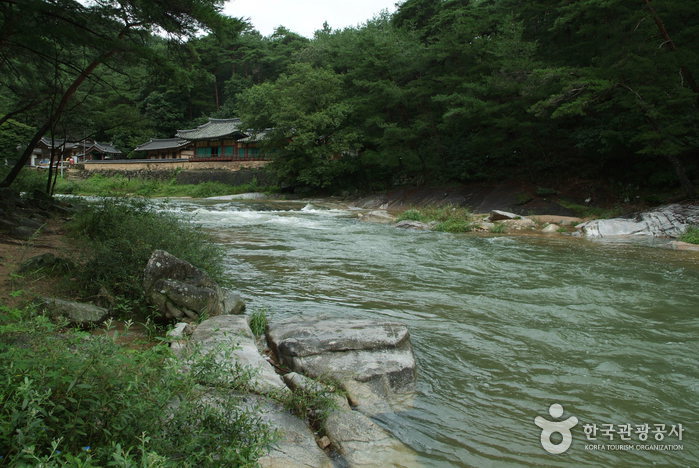
Waters from the Taebaek Mountains forged Seokcheongyegok Valley, located in Bonghwa-gun, Gyeongsangbuk-do. The valley is wide, shallow, and surrounded by thick pine forests. Broad, flat rocks are scattered throughout, and the valley is a great place for children to play. Next to the valley, visitors will also find Seokcheonjeong Pavilion, which was built in 1535. This pavilion, made of Bonghwa red pine trees called Chunyangmok, and mounted on stone, offers a great view of the nearby scenic mountain.
![Leehyun Eyewear [Tax Refund Shop] (이현안경원)](https://ktrip.blogsailing.com/wp-content/uploads/2025/12/3313204_image2_1.jpg)
![Jeonju Hanok Village [Slow City] (전북 전주 한옥마을 [슬로시티])](https://ktrip.blogsailing.com/wp-content/uploads/2026/02/3479250_image2_1-768x511.jpg)