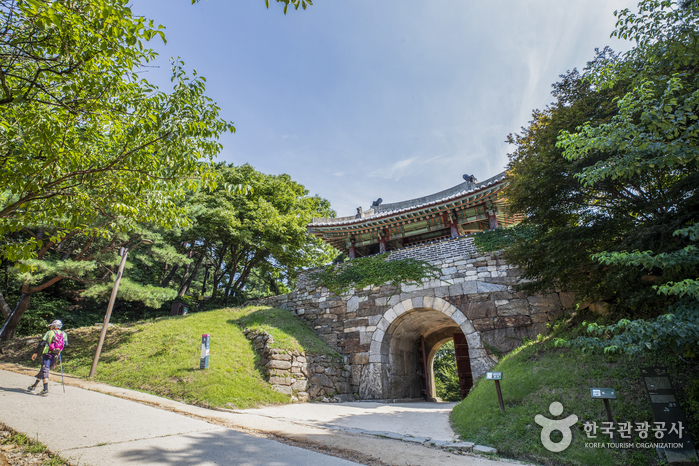
Namhansanseong Provincial Park [UNESCO World Heritage] (남한산성도립공원 [유네스코 세계문화유산])
Namhansanseong Provincial Park [UNESCO World Heritage] (남한산성도립공원 [유네스코 세계문화유산])
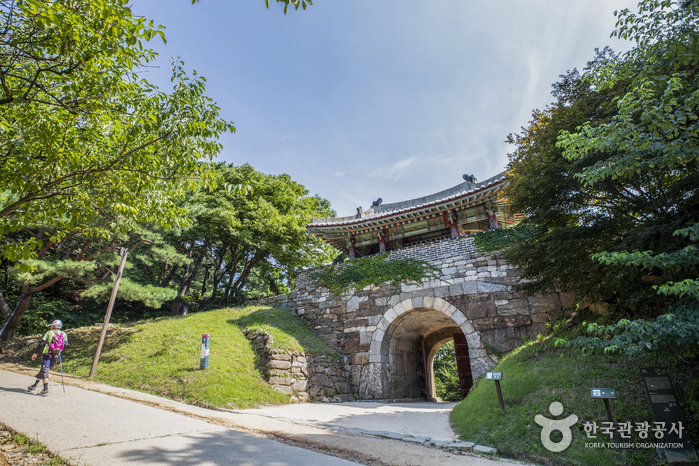 – Homepage
www.gg.go.kr
– Tel
+82-31-746-1088
Namhansanseong was a fortress that protected the southern approaches to the capital during the Baekje kingdom (18 B.C. – 660 A.D.) and the Joseon dynasty (1392-1897). During the Qing invasion of Joseon in 1636, King Injo of Joseon (reigned 1623-1649) sought refuge here and constructed Haenggung, a temporary palace. Subsequently, it became the administrative center of the Gwangju region, and today, it is a site where many cultural properties are preserved.
– Address : 731 Namhansanseong-ro, Namhansanseong-myeon, Gwangju-si, Gyeonggi-do
※ Presentation Information
– Information and Guides
+82-31-8008-5155
– Parking
Available
– Day Off
[Namhansanseong] N/A (Open all year round)
[Namhansanseong Haenggung] Mondays
– Operating Hours
[Namhansanseong] Open 24 hr [Namhansanseong Haenggung] April-October 10:00-18:00 / November-March 10:00-17:00
– Hiking Course
[Course 1] Sanseong Rotary – North Gate – West Gate – Sueojangdae – Yeongchunjeong – South Gate – Sanseong Rotary
[Course 2 ] Sangseong Rotary – Yeongwoljeong – Sungyeoljeon – West Gate – Sueojangdae – Sanseong Rotary
[Course 3 ] Namhansanseong Fortress UNESCO Heritage Center – Hyeonjeolsa Temple – Beolbong Peak – Janggyeongsa Temple – Mangwolsa Temple – East Gate – Namhansanseong Fortress UNESCO Heritage Center
[Course 4] Sanseong Rotary – South Gate – Namjangdaeteo – East Gate – Jisudang Altar – Gaewonsa Temple – Sanseong Rotary
[Course 5] Namhansanseong Fortress UNESCO Heritage Center – East Gate – Dongjangdaeteo – North Gate – West Gate – Sueojangdae – Yeongchunjeong – South Gate – East Gate – Namhansanseong Fortress UNESCO Heritage Center
– Mountain Not Access Period
Seasonal Forest Fire Watch
February 1-May 15, November 1-December 15
* TBD by park directors based on fire weather advisories, snow/precipitation levels, and other local conditions.
– Parking Fees
Two-wheel vehicles: 500 won / Cars 1,000 won
Buses: Under 12 seats 1,000 won / Over 12 seats 2,000 won
Trucks: Under 4.5 ton 1,000 won / Over 4.5 ton 2,000 won
– Admission Fees
[Namhansanseong] Free
[Namhansanseong Haenggung] Adults 2,000 won / Children 1,000 won
– Available Facilities
Haenggung, fortress walls, visitor center
– Restrooms
Available
– Interpretation Services Offered
Available (Guided tours provided in English, Chinese, and Japanese)


◎ Nearby Tourism Infobox
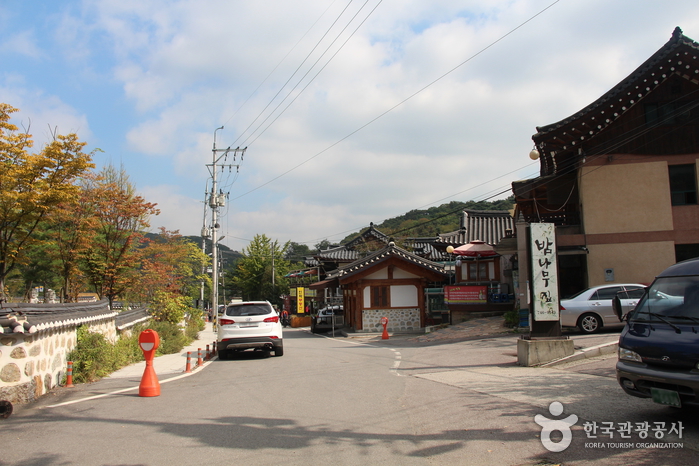
⊙ Traditional Food Town around Namhansanseong Fortress (남한산성 전통음식마을)
– Homepage
www.gjcity.go.kr
– Tel
+82-31-762-3010
The Traditional Food Town around Namhansanseong Fortress has many restaurants offering rice, dotorimuk (acorn jelly salad), tojongdak (whole chicken) dishes, and other traditional dishes. The area embraces almost 300 years of Korean history and the restaurants were built in traditional hanok-style buildings around Namhansanseong Fortress, a military stronghold from the Joseon dynasty.
⊙ Namhansanseong Trail (남한산성 탐방로)
– Homepage
https://www.gg.go.kr/namhansansung-2
Namhansanseong Trail is a historical-themed path designed to provide an experiential journey through the Namhansanseong Fortress, a UNESCO World Heritage site. This lengthy elliptical fortress is built on rugged terrain at an elevation of 500 meters, with walls spanning a circumference of 12.4 kilometers. Offering a total of five routes, the trail presents breathtaking scenery and adds charm with pathways that closely follow the fortress walls.
⊙ Gyeonggi Janggyeongsa Temple (장경사(경기))
– Homepage
http://jangkyungsa.or.kr/
– Tel
+82-31-743-6548
Janggyeongsa Temple is located in Namhansanseong Fortress. Namhansanseong Fortress, which protected Seoul along with Bukhansanseong Fortress, was built at the same time as Janggyeongsa Temple in 1638, during the 16th year of King Injo. Warrior monks from all eight provinces throughout the country helped with the construction. Janggyeongsa Temple is the only remaining temple among nine such temples where military groups made up of monks stayed for trainings.
![E-Mart – Bora Branch [Tax Refund Shop] (이마트 보라)](https://ktrip.blogsailing.com/wp-content/uploads/2025/12/2888874_image2_1.jpg)
![Vans – Lotte Giheung Branch [Tax Refund Shop] (반스 롯데기흥)](https://ktrip.blogsailing.com/wp-content/uploads/2026/01/2882238_image2_1.jpg)
![Idl Maje – Shinsegae Paju Branch [Tax Refund Shop] (IDL 마쥬 신세계파주)](https://ktrip.blogsailing.com/wp-content/uploads/2026/01/2880869_image2_1.jpg)
![S Market – MODA Outlet Branch [Tax Refund Shop] (S마켓 모다아울렛)](https://ktrip.blogsailing.com/wp-content/uploads/2025/12/3313709_image2_1-768x576.jpg)
![Columbia – Lotte Gwangmyeong Branch [Tax Refund Shop] (컬럼비아 롯데광명)](https://ktrip.blogsailing.com/wp-content/uploads/2026/01/2881848_image2_1-768x576.jpg)
2 Comments