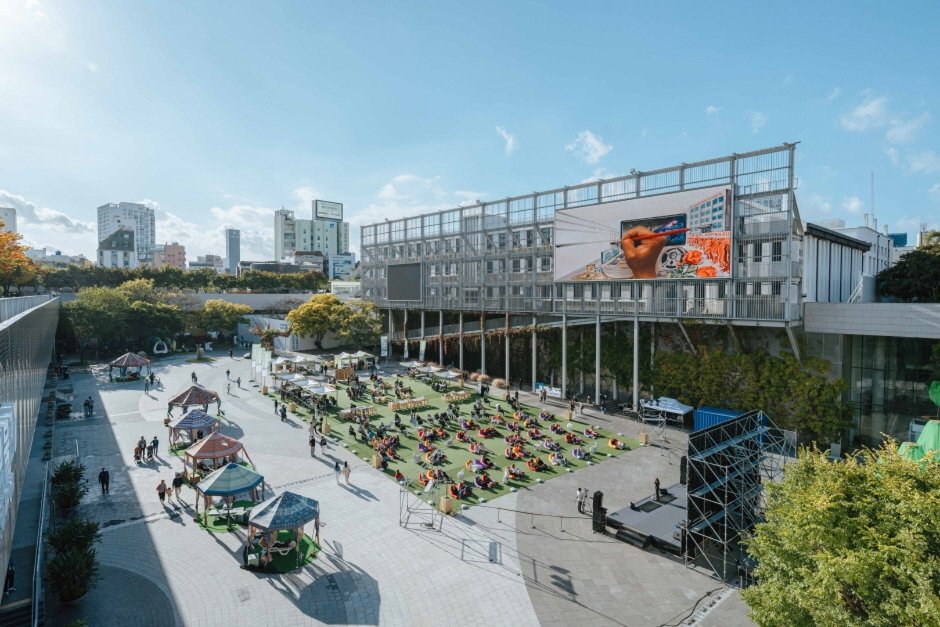
National Asian Culture Center (국립아시아문화전당)
National Asian Culture Center (국립아시아문화전당)
 – Homepage
www.acc.go.kr
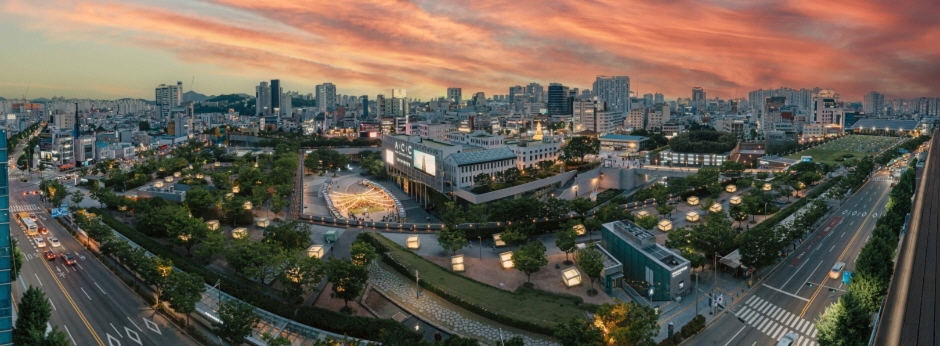
The National Asian Culture Center (ACC) is an international arts and cultural exchange organization aimed to promote Gwangju as Asia’s central hub through the integration of past and present-day cultural arts as well as the development of futuristic and progressive arts. The center consists of ACC Culture Exchange, ACC Children, ACC Archive & Research, ACC Theater, and other facilities to support and foster innovation.◎ Travel information to meet Hallyu’s charm – movie “Exhuma”This venue served as the backdrop for the scene where Hwa-rim and Bong-gil visit a hospital in LA to see a newborn whose parent’s life is in danger. Although portrayed as a hospital lobby, the scene was filmed in the National Asian Culture Center, Gwangju’s landmark cultural venue, notable for its impressive architecture that integrates natural elements.
– Address : 38 Munhwajeondang-ro, Dong-gu, Jeonnam-Gwangju Special Metropolitan City
※ Presentation Information
– Information and Guides
+82-1899-5566
– Parking Fee
– Basic rate (per 15 min): Small car 400 KRW / Medium bus or larger 800 KRW- Daily rate (24 hours): Small car 15,000 KRW, Medium bus or larger 30,000 KRW
– Day Off
Mondays, January 1
– Usage Fee
Varies by facility; refer to the official website
– Operating Hours
[Indoor facilities] 10:00-18:00 (ACC Archive & ACC Creation open 10:00-22:00 on Wednesdays & Saturdays) [Outdoor facilities] 06:00-22:00* Refer to the website for more information




◎ Nearby Tourism Infobox
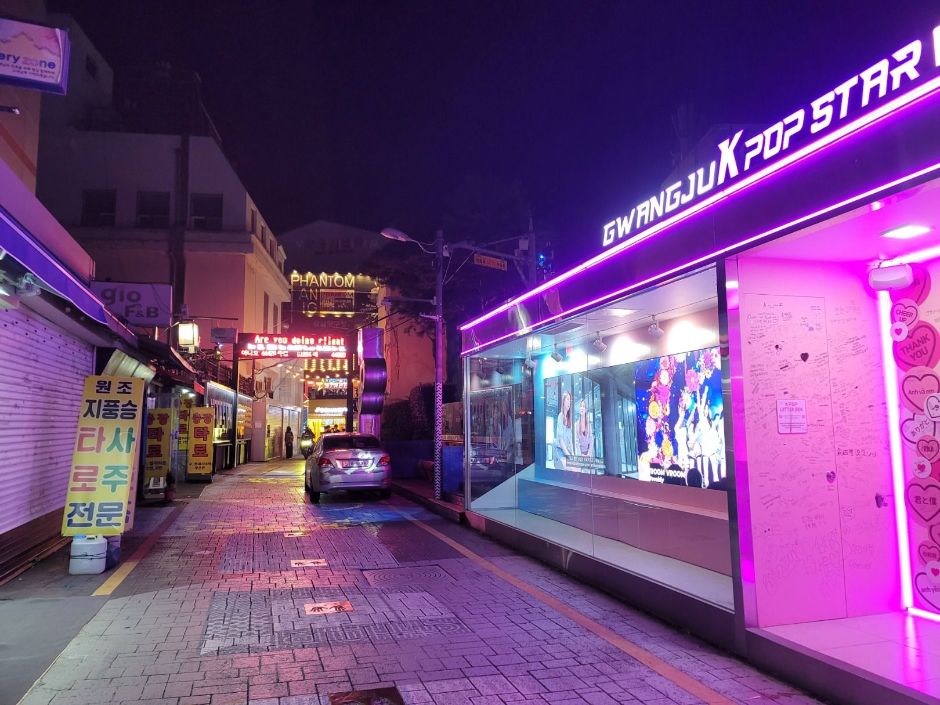
⊙ Gwangju Chungjang-ro KPOP STAR Street(광주 충장로 케이팝 스타의 거리)
View detailed guide on Korea Trip Guide →
– Homepage
tour.gwangju.go.kr
J-hope Hope World
This street was created to commemorate K-pop stars from Gwangju. Within the street, there are murals depicting singers’ album jackets, benches decorated with song titles, handprints, and sculptures. After j-hope personally stopped by the bench decorated with the theme of a BTS song and posted a proof shot, it became a holy place for fans. It is one of the essential courses that ‘ARMY’ cannot miss because he left a message of appreciation and impressions of visiting this place.
⊙ Chonnam National University Hospital (전남대학교병원)
View detailed guide on Korea Trip Guide →
With 114 years of history and tradition, CHONNAM NATIONAL UNIVERSITY HOSPITAL is Korea’s best tertiary hospital that has led the development of Korea’s medical science and improved public health.
Chonnam National University Hospital is the nation’s largest multi-hospital system for each disease, and operates as the main hospital, as well as Chonnam National University Hospital in Hwasun, Chonnam National University Dental Hospital, Bitgoeul Chonnam National University Hospital, and Chonnam National University Children’s Hospital.
We are striving to establish our identity as a national university hospital and to build a regionally essential healthcare system as a regional responsible medical institution. We will continue to play a leading role in the medical field by progressively redefining the functions and roles of education, research, and medical treatment. In addition, we will continue to challenge ourselves and do our best to become a reliable hospital that patients can visit at any time, a hospital that leads public healthcare, and a patient-oriented hospital that puts patient safety first.
⊙ Chonnam National University Medical Museum (전남대학교 의학박물관 (전남대학교 의과대학 구 본관))
View detailed guide on Korea Trip Guide →
– Homepage
www.medicalmuseum.ac.kr
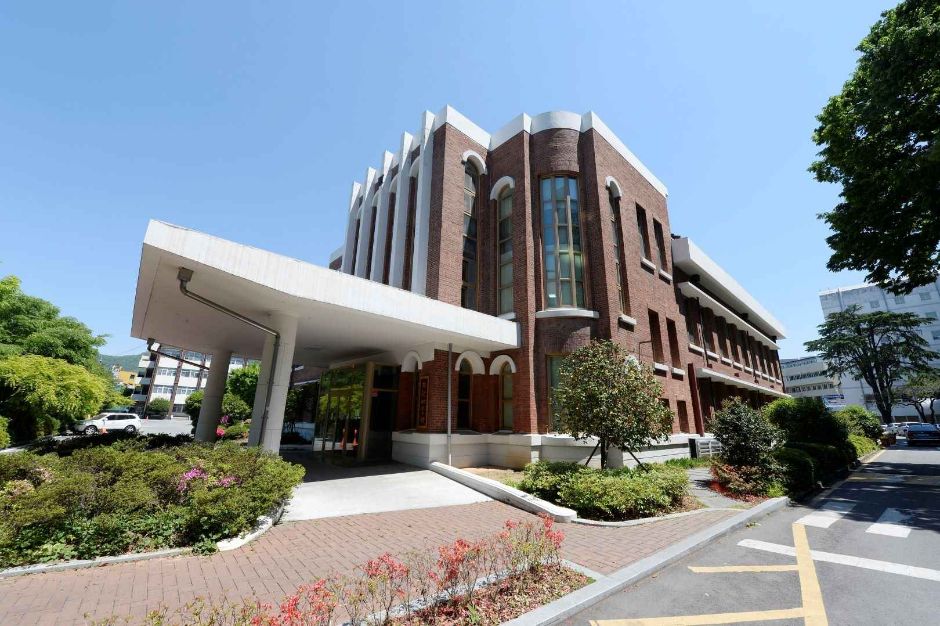
Chonnam National University Medical Museum opened in 2021 at the previous main building for the university’s medical education department, used from 1952 to 1957. It is the oldest building within the university campus, while featuring modern design elements over the exterior.
⊙ Palace Tourist Hotel (파레스 관광호텔)
View detailed guide on Korea Trip Guide →
– Homepage
palace-hotel.kr
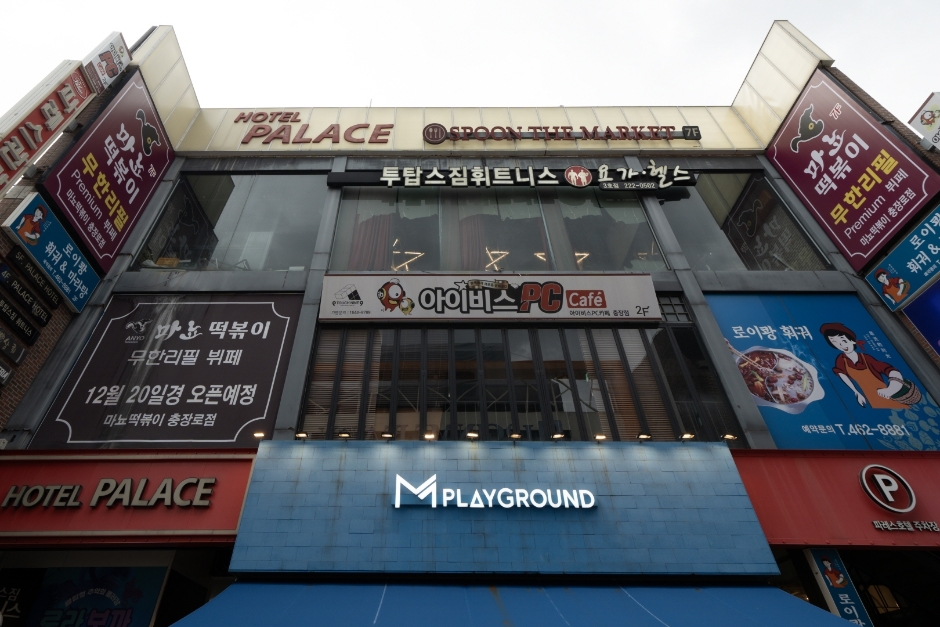
Palace Tourist Hotel is located only a six-minute walk from Geumnamro 4(sa)-ga Station on Gwangju Subway Line 1. Nearby attractions within walking distance include Gwangju Art Street and Yangdong Market.
⊙ May 18 Democratic Uprising Archives (5•18민주화운동 기록관)
View detailed guide on Korea Trip Guide →
– Homepage
www.518archives.go.kr
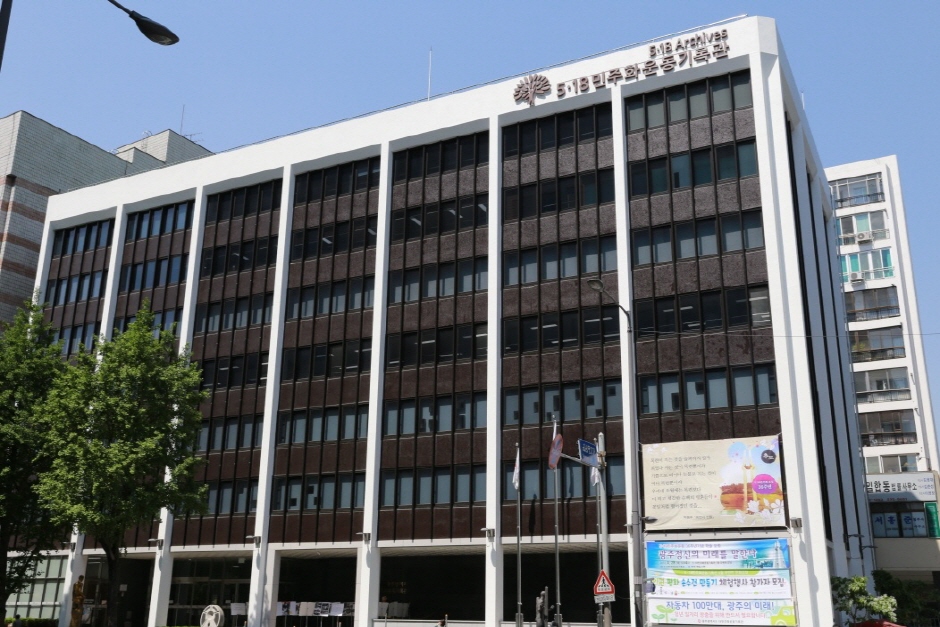
The May 18 Democratization Movement was a righteous uprising by citizens that took place in Gwangju for ten days from May 18 to 27 in 1980. The May 18 Democratic Uprising Archives was established in 2015 at the former Gwangju Catholic Center, a historical site of May 1980, to systematically collect and preserve the May 18 Democratization Movement’s heritage that led to the democracy in Korea today. Through the efforts of Gwangju citizens, visitors can see the original records of the May 18 Democratization Movement, inscribed on the UNESCO Memory of the World in 2011. Visitors can also view the records with a guide or through online exhibitions. The May 18 Democratic Uprising Archives is a place that preserves the history of all Korean citizens.
⊙ Eunam Museum of Art (은암미술관)
View detailed guide on Korea Trip Guide →
– Homepage
eunam.org
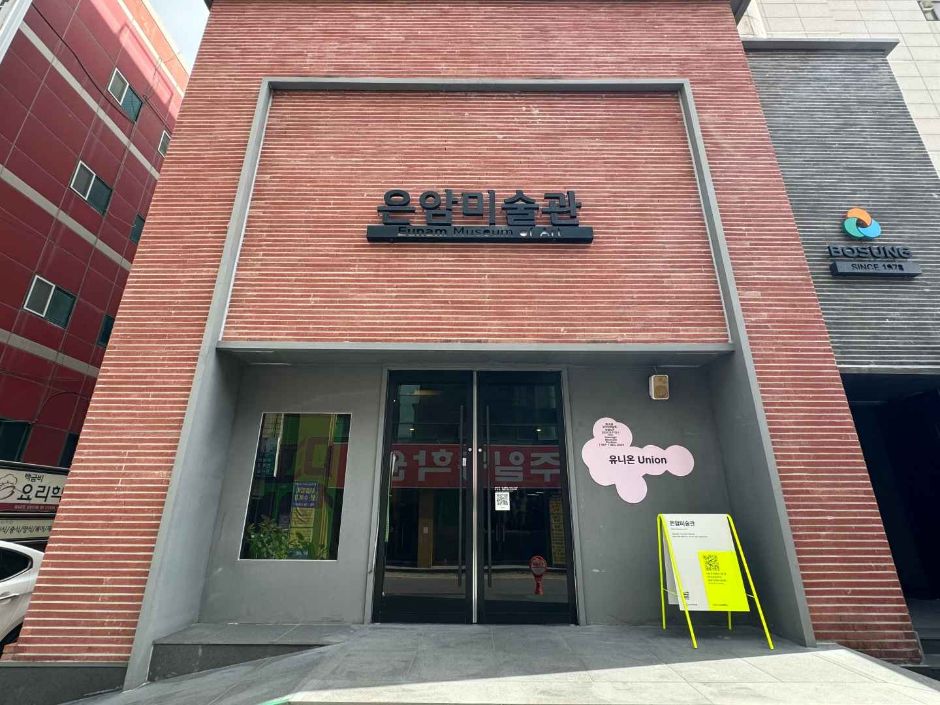
Opened in 2010, the Eunam Museum of Art offers a range of exhibitions, including permanent exhibitions and invitational exhibitions, humanities lectures, and concerts, and provides a cultural space for people to connect. It also runs international exchange exhibitions and residency program inviting artists from the country and abroad.
⊙ Chireunsibill (치른시빌)
View detailed guide on Korea Trip Guide →
– Homepage
studio711.kr
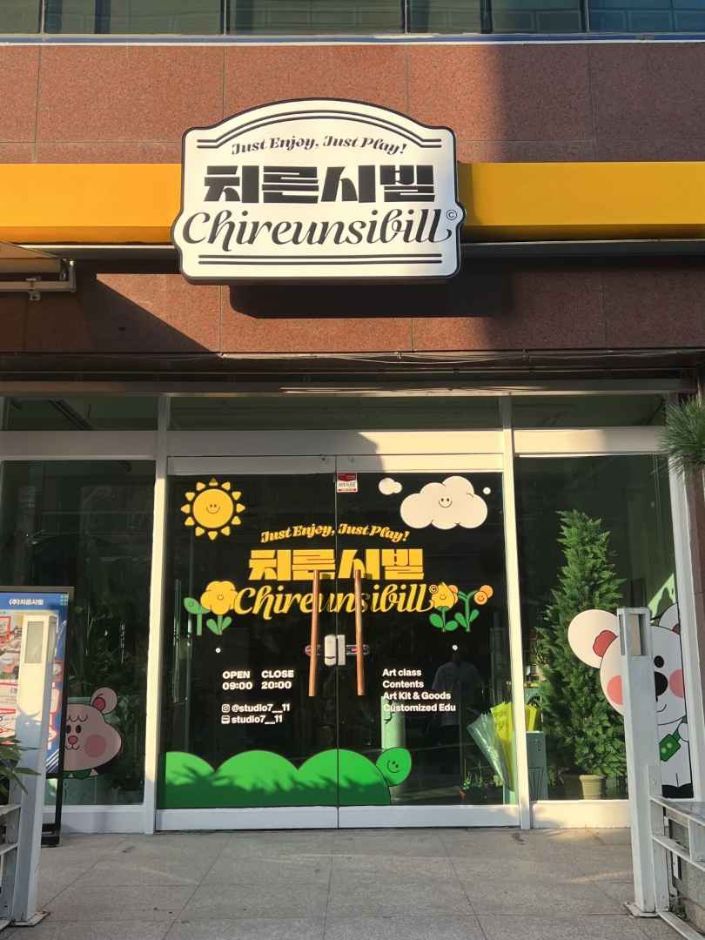
Chireunsibill was founded in 2022, offering educational programs and art kits with young artists both online and offline. The educational programs are open to all , and cover a wide genre of art types, from painting to music. It is a popular attraction for travelers with children.
⊙ Bium Museum (비움박물관)
View detailed guide on Korea Trip Guide →
– Homepage
http://biummuseum.com/
https://blog.naver.com/bium16
https://www.instagram.com/biummuseum/
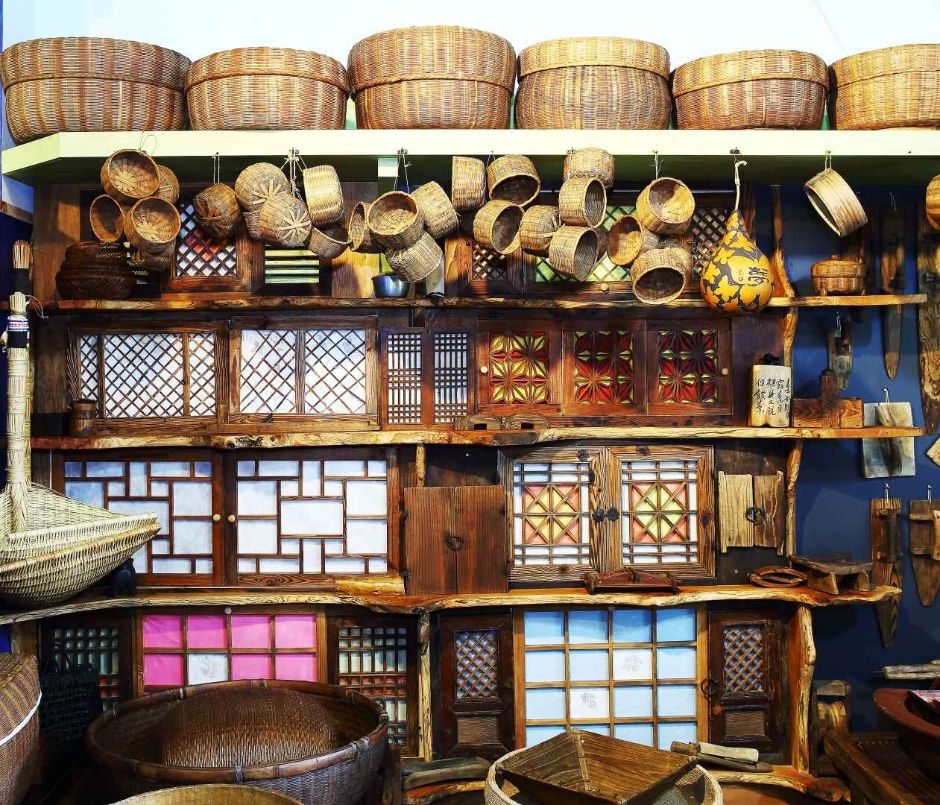
Opened in 2016, the Bium Museum is a folk museum showcasing around 30 thousand Korean modern and traditional artifacts collected by Lee Young-hwa for about 50 years. The art pieces portray the life of poor commoners in the agricultural era before Korea went through industrialization, allowing visitors to get a glimpse of the adaptability and resilience of people in hard times.
⊙ Yangnim History & Culture Village (양림역사문화마을)
View detailed guide on Korea Trip Guide →
– Homepage
visityangnim.kr/
Yangnim History & Culture Village is located in the area where Western items and ideas first entered Gwangju over 100 years ago. As such, the neighborhood has a unique collection of Western architecture mixed with traditional hanok houses. There are also many houses of Christian missionaries, who facilitated the advancement of medicine and education in Gwangju. Some areas, such as Penguin Village, have been decorated with murals and outdoor exhibitions to promote art and tourism, helping the elderly locals to make a living.
⊙ Geumnam Butterfly Garden (금남로공원 금남나비정원)
View detailed guide on Korea Trip Guide →
– Homepage
tour.gwangju.go.kr
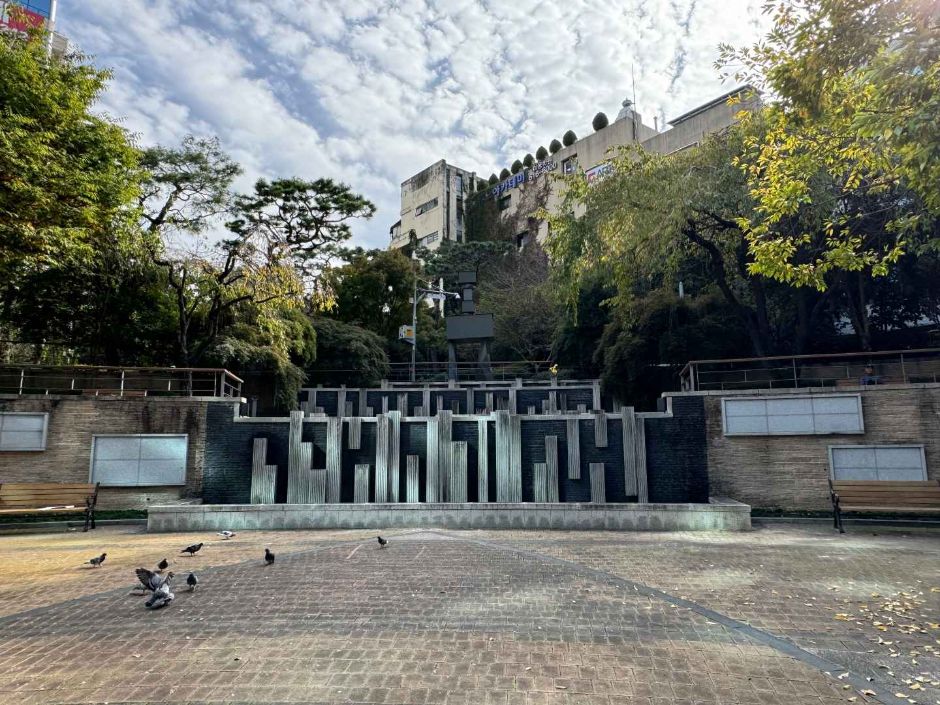
Geumnamro Neighborhood Park, once the site of the Bank of Korea’s Gwangju branch, now hosts the enchanting Geumnam Butterfly Garden. Inspired by the glowing butterflies, the garden is a stunning curation by Gwangju, a UNESCO Creative City of Media Arts. It offers a magical setting for a night tour, transporting visitors into a fantasy world of vibrant colors and purple hues.