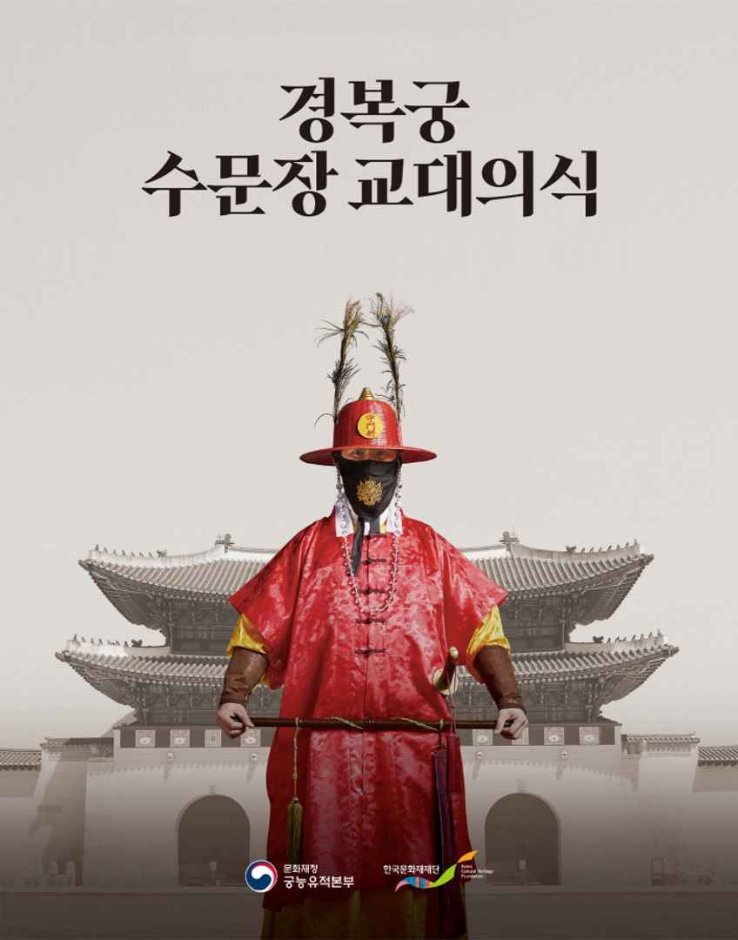
Palace Royal Guard Changing Ceremony (수문장 교대의식)
Palace Royal Guard Changing Ceremony (수문장 교대의식)
 – Homepage
www.chf.or.kr
– Tel
+82-2-3210-1645
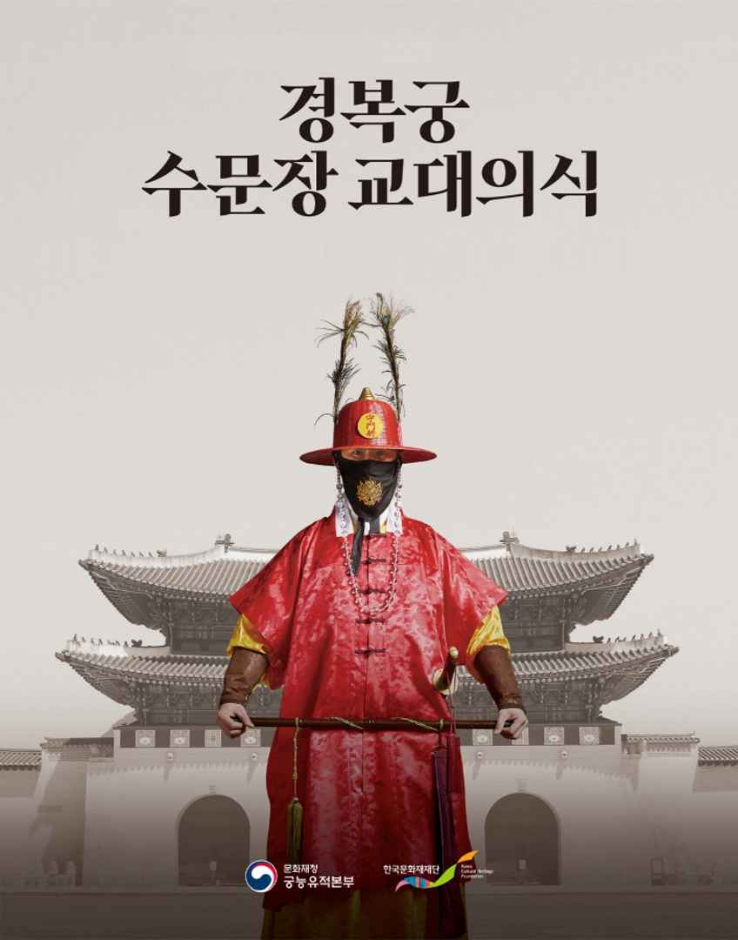
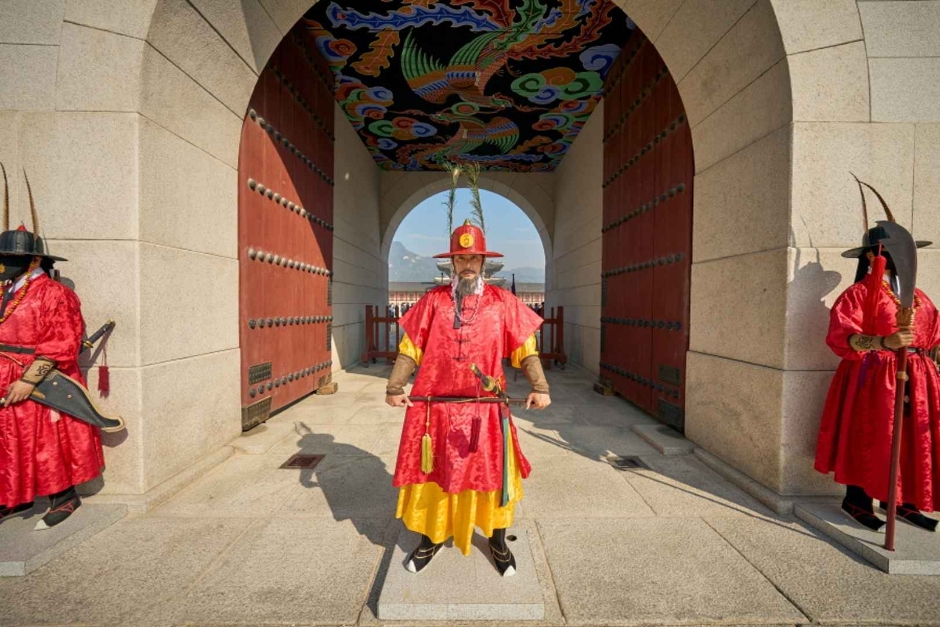
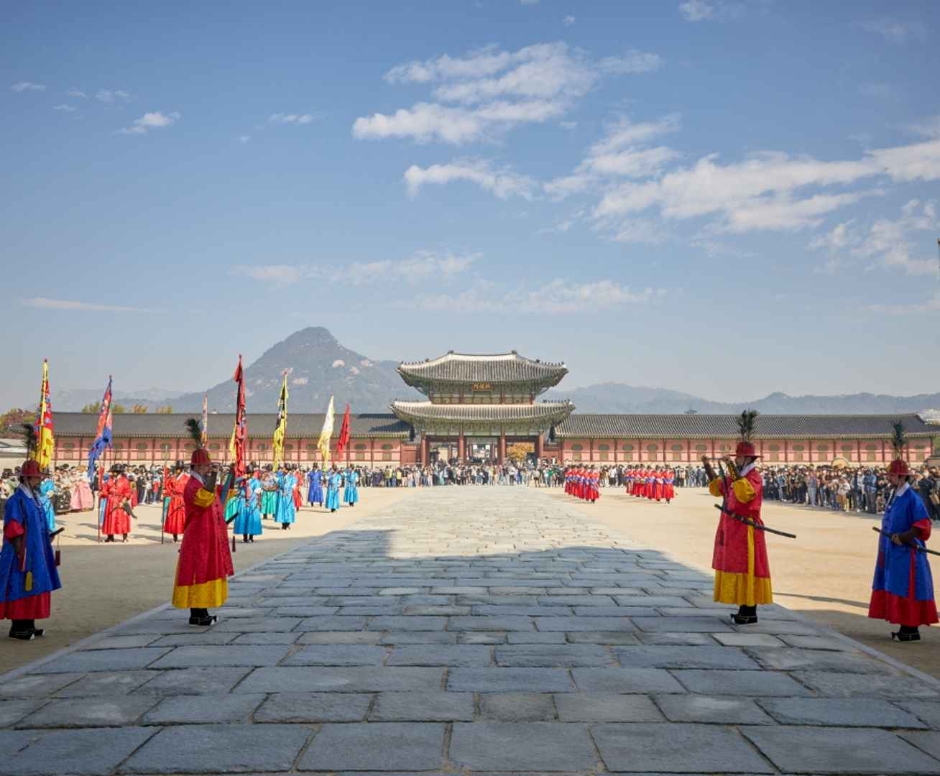
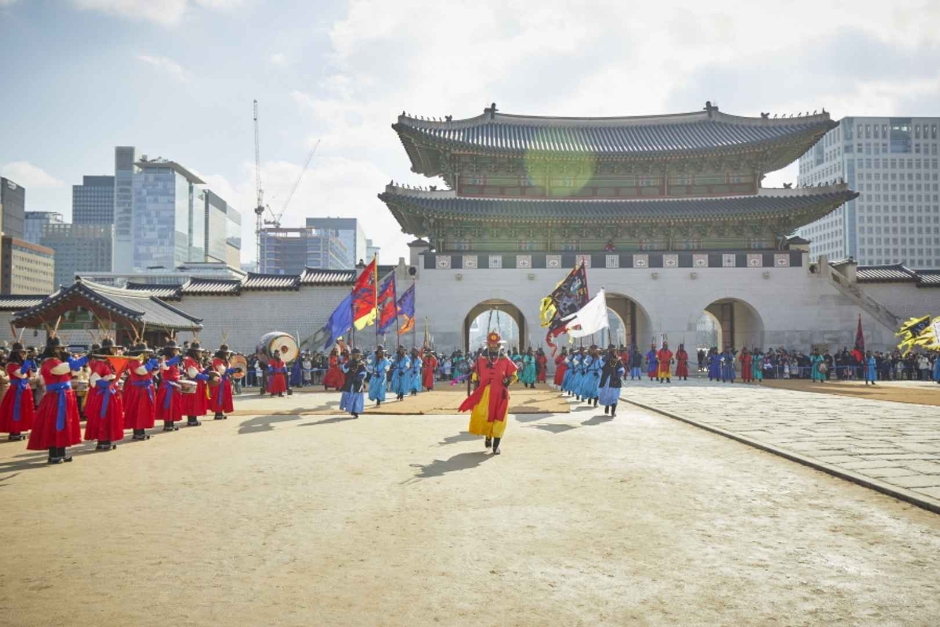
In the Joseon dynasty, the royal guards of the palace were gatekeepers who were responsible for guarding the the main gates of Gyeongbokgung Palace as well as the main gates of the city such as Heunginjimun Gate and Sungnyemun Gate. The royal guards worked in shift duties and were in charge of opening and closing Gwanghwamun Gate. Before the royal guard system was enforced in 1469, the palace gates were protected by soldiers of the central army. The Palace Royal Guard Changing Ceremony held at Gyeongbokgung Palace and the Gwanghwamun area reenacts the guard-changing procedure that took place during the Joseon dynasty, along with the reproduction of costumes and weapons, based on historical records.
– Address : 161 Sajik-ro, Jongno-gu, Seoul
※ Presentation Information
– Age Limit
Open to visitors of all ages
– Event Date
20250101 ~ 20251231
– Schedule
[Royal Guard Changing Ceremony] 10:00, 14:00
[Ceremony of Guarding Gwanghwamun Gate] 11:00, 13:00
[Public Training of the Royal Guard Soldiers] 09:35, 13:35
* Schedule is subject to change; refer to the official website for details.
* Events may be canceled in the case of rain.
– Location
Gyeongbokgung Palace Heungnyemun Gate and Gwanghwamun Gate areas
– Event Duration
Varies by performance
– Sponsor
Korea Cultural Heritage Foundation
– Sponsor Phone
+82-2-3210-1645
– Fees
Free
– Introduction
In the Joseon dynasty, the royal guards of the palace were gatekeepers who were responsible for guarding the the main gates of Gyeongbokgung Palace as well as the main gates of the city such as Heunginjimun Gate and Sungnyemun Gate. The royal guards worked in shift duties and were in charge of opening and closing Gwanghwamun Gate. Before the royal guard system was enforced in 1469, the palace gates were protected by soldiers of the central army. The Palace Royal Guard Changing Ceremony held at Gyeongbokgung Palace and the Gwanghwamun area reenacts the guard-changing procedure that took place during the Joseon dynasty, along with the reproduction of costumes and weapons, based on historical records.
– Programs
Refer to the official website
◎ Nearby Tourism Infobox
⊙ K-Royal Culture Festival (궁중문화축전)
View detailed guide on Korea Trip Guide →
– Homepage
www.kh.or.kr
– Tel
+82-1522-2295
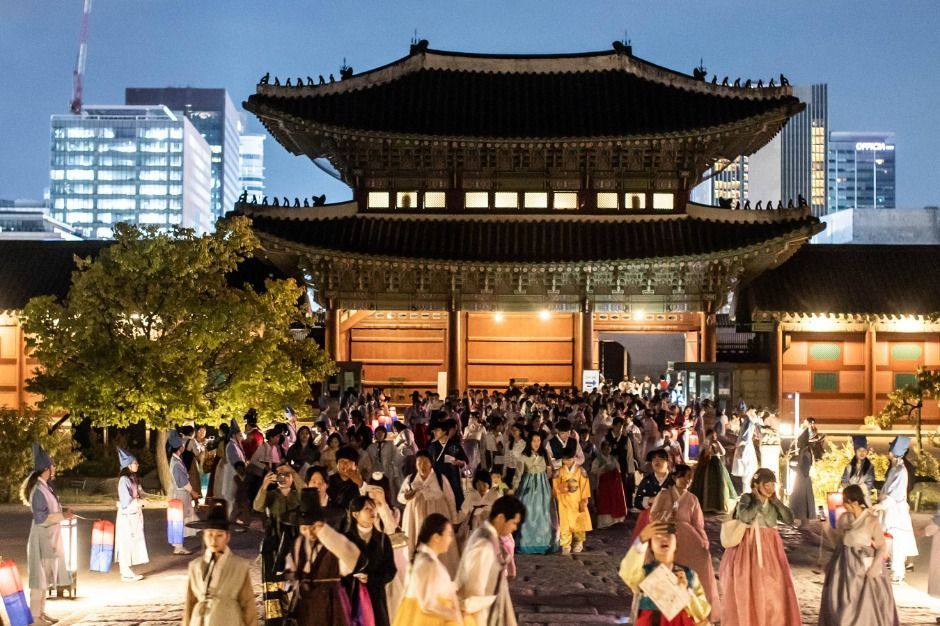
The K-Royal Culture Festival is held at the five Royal Palaces and Jongmyo Shrine. The festival first began in 2014 and provides visitors with first-hand knowledge of these important cultural heritages through unique performances, exhibitions, experiences and programs. The festival expanded in 2021 to be hosted twice a year, in spring and in fall.
⊙ Gyeongbokgung Palace (경복궁)
View detailed guide on Korea Trip Guide →
– Homepage
royal.khs.go.kr
– Tel
+82-2-3700-3900
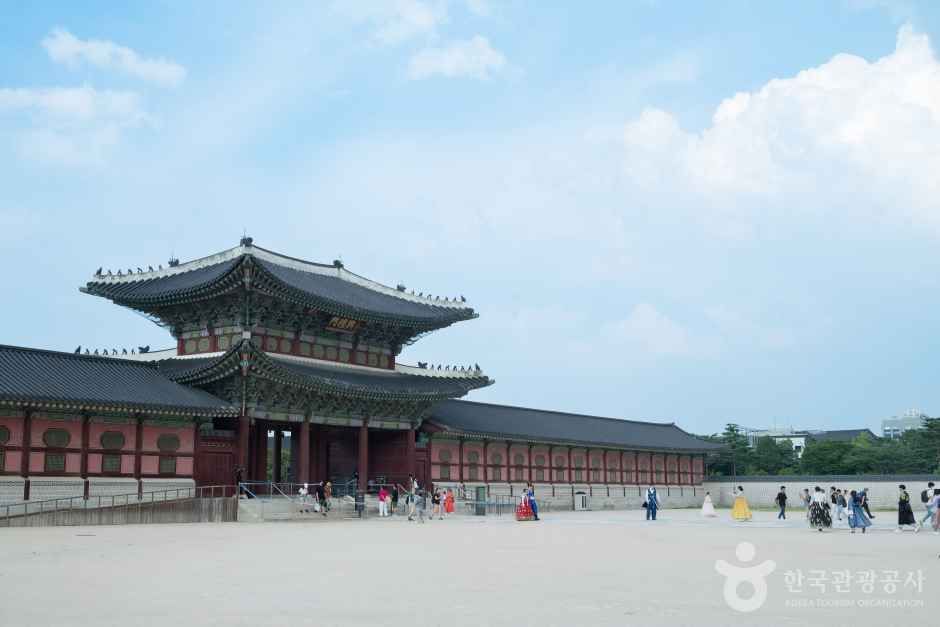
Gyeongbokgung Palace was built in 1395 as the official palace of the Joseon dynasty by Yi Seong-gye, the future King Taejo and founder of the new regime. Gyeongbokgung Palace is commonly referred to as the Northern Palace because of its location to the north, comparied to Changdeokgung Palace in the east and Gyeonghuigung Palace in the west. Gyeongbokgung Palace is arguably the most beautiful and is the largest of all five palaces. Many Joseon kings were crowned here. The premises were once destroyed by fire during the Imjin War (1592-1598). However, all of the palace buildings were later restored under the leadership of Heungseondaewongun during the reign of King Gojong. The assassination of Empress Myeongseong, however, resulted in Gyeongbokgung Palace losing its function as a royal palace, eventually witnessing the downfall of the Joseon dynasty. Gyeongbokgung Palace retains the original Gyeonghoeru Pavilion, a prime example of Joseon architecture, and the Hyangwonjeong Pavilion and pond. The sculptures in the Geunjeongjeon Hall exemplify Joseon-era sculpture techniques. The west side of the area outside Heungnyemun Gate is occupied by the National Palace Museum of Korea, while the eastern side of Hyangwonjeong Pavilion within the Gyeongbokgung Palace is occupied by the National Folk Museum of Korea.
⊙ Beodeul Maru – Korea Cultural Heritage Foundation Branch [Tax Refund Shop] (한국문화재재단 버들마루)
–
⊙ The Children’s Museum of the National Folk Museum of Korea (국립민속박물관&국립민속박물관 어린이박물관)
View detailed guide on Korea Trip Guide →
– Homepage
www.nfm.go.kr
The Children’s Museum of the National Folk Museum of Korea, located within Gyeongbokgung Palace, showcases artifacts related to Korean traditional culture. This interactive museum allows children to experience and learn about various aspects of Korean traditional clothing, food, society, culture, and games firsthand. Especially catering to children from Asian countries, there is a service for renting items, and reservations are required for admission.
⊙ The Great Full Moon Festival (정월대보름 한마당)
View detailed guide on Korea Trip Guide →
– Homepage
www.nfm.go.kr
– Tel
+82-2-3704-3106
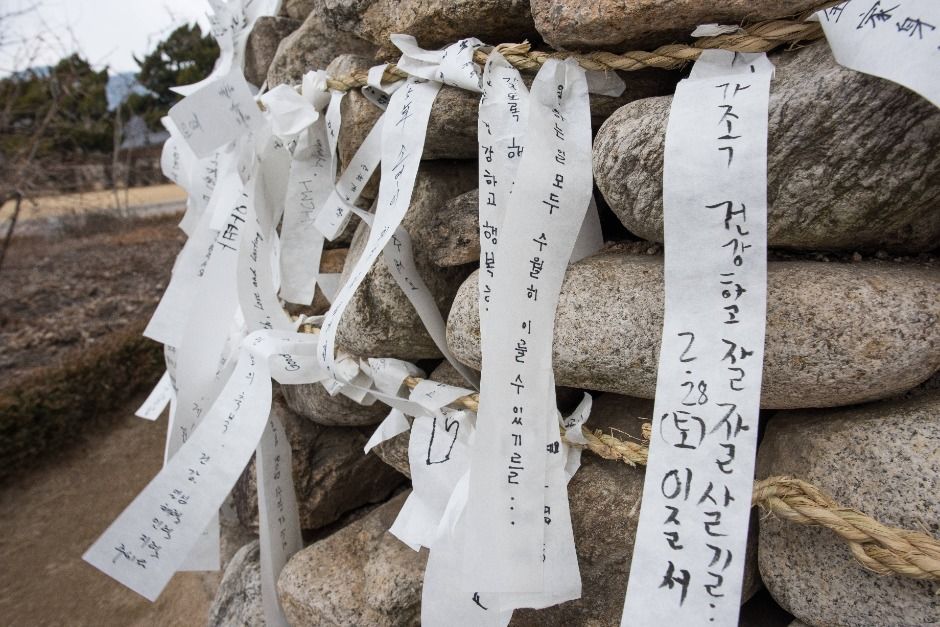
The National Folk Museum is celebrating the first full moon of the Lunar new year, Jeongwol Daeboreum. A variety of experiences are prepared to eliminate bad luck and pray for prosperity and health. The event provides a chance for locals and tourists alike to learn more about the traditional culture of Korea.
⊙ Boan1942 (보안1942)
View detailed guide on Korea Trip Guide →
– Homepage
b1942.com
Prior to becoming an art space in 2007, Tongui-dong Boan served as a place for rest for travelers from 1942 to 2005. After a short suspension, the place was renovated into a cultural space in 2017 to carry on the historical legacy and provide creative inspiration under the concept of “Boanstay.”
Boan1942 is divided into a cultural space consisting of a cafe, project workshop, book shop, and exhibition area, and Boanstay on the 3rd and 4th floors that offer temporary lodging services to the cultural nomads. Located in Seochon, the center of culture, history, and convenient traffic in Seoul, Boanstay offers a splendid view of Seoul’s historical and cultural assets such as Gyeongbokgung Palace, Cheong Wa Dae, and Seochon Hanok Village.
<Credit: Boanstay>
⊙ Osulloc – National Museum of Modern and Contemporary Art Branch [Tax Refund Shop] (오설록 현대미술관)
– Homepage
www.osulloc.com
–
⊙ National Museum of Modern and Contemporary Art, Seoul [MMCA Seoul] (국립현대미술관 서울관)
View detailed guide on Korea Trip Guide →
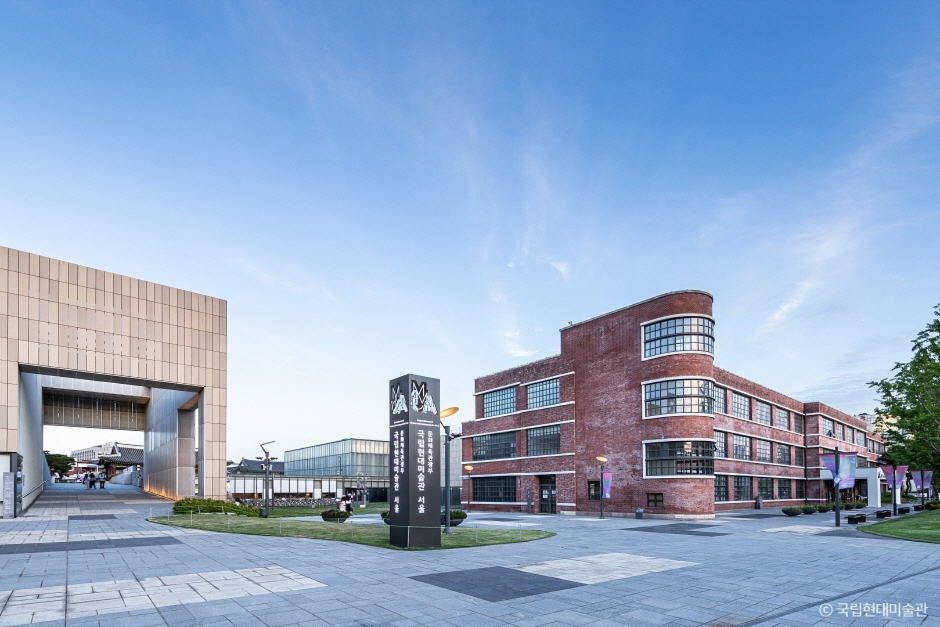
– Homepage
www.mmca.go.kr
– Tel
+82-2-3701-9500
The National Museum of Modern and Contemporary Art, Seoul (MMCA Seoul) opened in 2013 as a city venue of the MMCA, which opened in 1986 in Gwacheon. The museum site was where many of Korea’s historical and political developments were achieved, both during the Joseon dynasty and after the Korean War. The Seoul venue of MMCA stands out from other museums through its use of Korea’s traditional architectural concept of “madang,” a spacious courtyard where people can come and gather to socialize. The exterior of the building stands in harmony with the surrounding landscape. Inside, the museum is equipped with many facilities, including a reference center, project gallery theater, and multipurpose hall. MMCA Seoul strives to accommodate every mode of new artistic endeavor and to communicate with the public.
⊙ Kukje Gallery (국제갤러리)
View detailed guide on Korea Trip Guide →
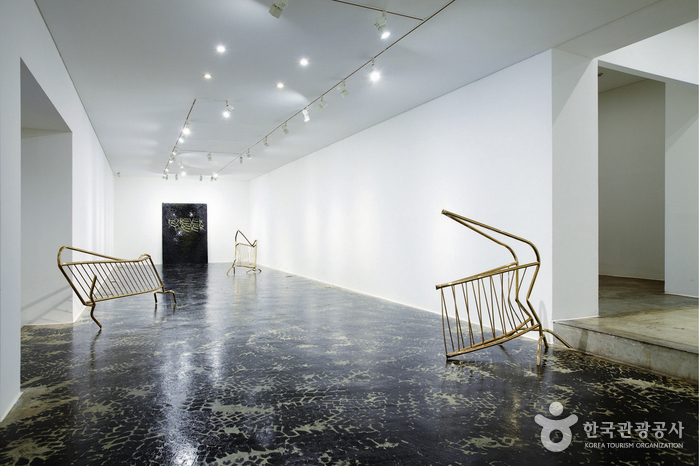
– Homepage
www.kukjegallery.com
– Tel
+82-2-735-8449
The Kukje Galley has been committed to presenting the work of significant Korean and international contemporary artists to the public since 1982. The gallery has established itself as a leading venue for international exhibits such as Helen Frankenthaler, Sam Francis, Jim Dine, Frank Stella, Robert Mangold, Anthony Caro, Cy Twombly, Edward Ruscha, Anselm Kiefer, Joseph Beuys, and Bill Viola, attracting enthusiastic responses from both the public and the media.
The gallery has placed emphasis on collaborations between artists, galleries, and art dealers around the world and nurturing upcoming artists by sponsoring their artwork and giving them international exposure.
![Renoma Kids – 2001 Outlet Junggye Branch [Tax Refund Shop] (레노마키즈 2001아울렛 중계)](https://ktrip.blogsailing.com/wp-content/uploads/2026/01/3313493_image2_1.jpg)
![Onitsuka Tiger – Garosu Branch [Tax Refund Shop] (오니츠카타이거 가로수)](https://ktrip.blogsailing.com/wp-content/uploads/2026/02/2889060_image2_1.jpg)
![Olive Young – Konkuk Univ. Branch [Tax Refund Shop] (올리브영 건대)](https://ktrip.blogsailing.com/wp-content/uploads/2026/02/2878798_image2_1.jpg)
![Lush Korea – Sillim Branch [Tax Refund Shop] (㈜러쉬코리아 신림점)](https://ktrip.blogsailing.com/wp-content/uploads/2026/02/2880488_image2_1-768x576.jpg)
](https://ktrip.blogsailing.com/wp-content/uploads/2026/03/4024582_image2_1.jpg)
![Glam Surgery [Tax Refund Shop] (글램외과)](https://ktrip.blogsailing.com/wp-content/uploads/2026/02/2887939_image2_1-768x576.jpg)
3 Comments