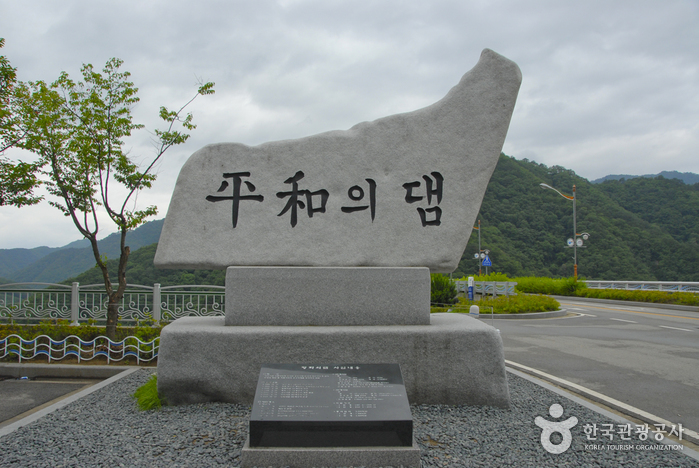
Peace Dam – Hwacheon (평화의댐 (화천))
Peace Dam – Hwacheon (평화의댐 (화천))
 – Homepage
tour.ihc.go.kr
– Tel
+82-33-480-1512
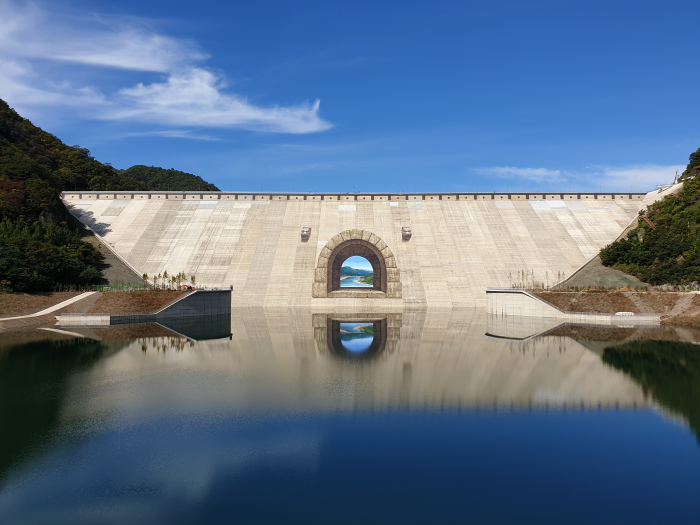
Peace Dam in Hwacheon-gun was built in response to a potential flooding attack from North Korea. The first phase of construction began in 1986, and ended in 1989; the second phase, which entailed raising the x_height of the dam, began in 2002, and ended in 2005.
Over the years, the dam has become a major tourist destination. It has several cultural and recreational facilities including the Water Culture Center, an artificial wall stream, and rest areas. It is also located close to the DMZ, and natural landmarks such as Bimok Park, Bisugumi Valley, and Suhari Fishing Site.
– Address : 3481-18 , Pyeonghwa-ro, Hwacheon-gun, Gangwon-do
※ Presentation Information
– Information and Guides
• 1330 Travel Hotline: +82-2-1330
(Korean, English, Japanese, Chinese)
• For more info: +82-33-480-1512,
+82-33-480-1528
– Parking
Available (50 parking spaces)
– Operating Hours
Open 24 hr
– Available Facilities
Observatory on top of the dam, Peace Plaza, Water Culture Hall, World Bell Park, World Peace Bell, Bimok Park, snack bar, etc.
– Admission Fees
Free
– Parking Fees
Free
– Restrooms
Available


◎ Nearby Tourism Infobox
⊙ Hwacheon Bimok Park (화천 비목공원)
– Homepage
tour.ihc.go.kr
– Tel
+82-33-440-2225
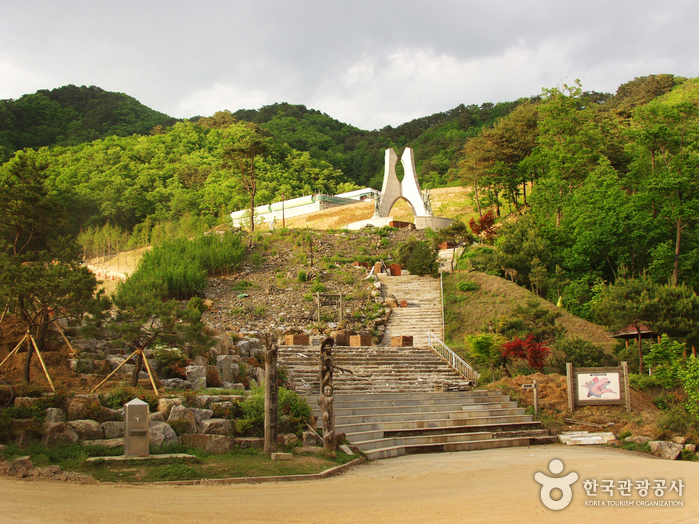
Peace Dam was built over a period of 15 months from February 1987 to May 1988 with funds donated by the general public in response to North Korea’s construction of Geumgangsan Dam and a potential flooding attack. The flood control dam has proved its worth during the floods of 1995, 1996, and 1999 and it has become a major tourist destination over the years. Located in the vicinity of Peace Dam is Bimok Park, which is the origin of the famous national song “Bimok.”
In addition to the war monuments inside the park, there are around a dozen wooden crosses with rusty iron helmets placed on top within the barbed wire entanglements around the hill, thereby reminding visitors of the national tragedy of the Korean War. The county of Hwancheon hosts the Bimok Cultural Festival from June 3 to June 6 every year at Bimok Park, Bungeoseom Island by the town’s riverside, and the surrounding areas. The four-day festival offers a variety of events such as a singing contest, memorial ceremony of poetry reading, bimok tree cutting contest, rice ball eating contest, army life experience, military music parade, and more.
Crossing over to Yanggu County from Peace Dam, there is a national security education place comprised of attractions like the 4th Underground Tunnel and Eulji Observatory. Paroho Lake Battlefield Tourist Park is also worth a visit after looking around Peace Dam. Also known as the “ocean within mountains,” Paroho is a manmade lake created as a result of the Hwacheon Dam construction in 1944. The lake is home to over 70 different species of freshwater fish such as mandarin fish and carp. It also holds the sorrowful history of the water burial of three whole divisions of the Chinese Forces in defending the lake during the Korean War. The name Paroho, meaning “enemy breaking lake,” was given after the late president of Korea, Rhee Syngman, visited the place and designated a plaque in his own handwriting in memory of obtaining victory in fierce battle. There is an observatory, a security hall, and a stone monument engraved with the poetry of Wolha Rhee Taegeuk (1913-2003).
![Hwaam Mineral Spring [National Geopark] (화암약수 (강원고생대 국가지질공원))](https://ktrip.blogsailing.com/wp-content/uploads/2025/12/1948759_image2_1.jpg)

One Comment