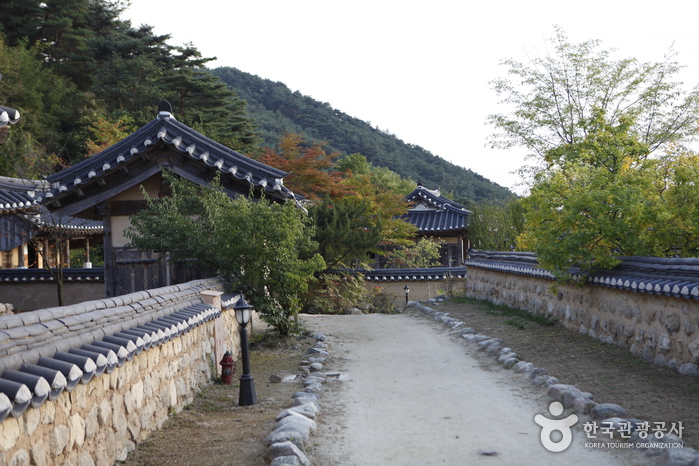
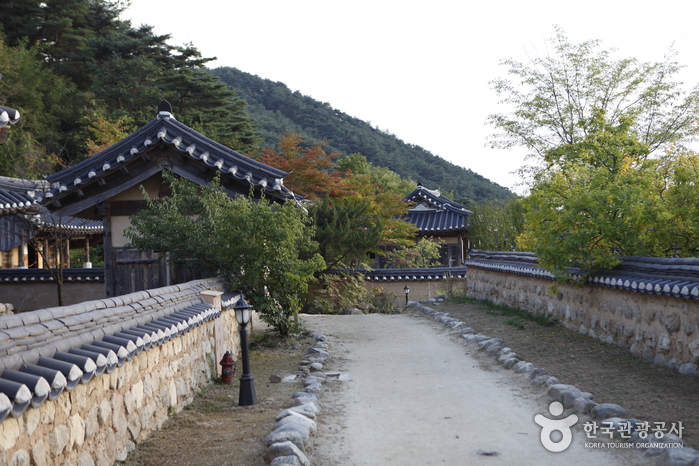
Seonbichon Village (선비촌)
Seonbichon Village (선비촌)
 – Homepage
www.sunbichon.net (Korean only)
– Tel
+82-54-638-6444
Seonbichon Village in Yeongju, Gyeongsangbuk-do, the cradle of Korean Confucianism, is where the spirit and cultural heritage of Korea’s classical scholars are preserved. The village is the perfect place to learn about traditional Korea, and is famous for its classical scholars’ loyalty and filial piety.
Seonbichon village offers a variety of traditional activities for visitors, from pounding rice cake to hanging wish lanterns to attending a traditional wedding ceremony or playing folk games such as yutnori or jegichagi. Visitors can also enjoy traditional dining at Jeojatgeori Street and learn about history through the museum. Guests can also enjoy the unique experience of staying in a hanok house through the overnight program and participate in scholar programs.
– Address : 2796, Sobaek-ro, Yeongju-si, Gyeongsangbuk-do
※ Presentation Information
– Experience Guide
[Individual programs]
– Education: Humanities education, Confucian academy experience, traditional etiquette, traditional tea ceremony, etc.
– Traditional culture: hanji (traditional paper) craft, natural dyeing, dried straw craft, traditional knotting craft, wood craft, etc.
– Traditional cuisine: making tofu, making ginseng-flavored snacks, making injeolmi rice cakes, etc.
[International visitor programs]
– Korean caligraphy, traditional wedding ceremony, making injeolmi rice cakes, hanok stay experience, etc.
* Programs are subject to change; please refer to the official website or make an inquiry before visiting.
– Information and Guides
• 1330 Travel Hotline: +82-54-1330
(Korean, English, Japanese, Chinese)
• For more info: +82-54-638-6444
– Parking
Available (145 total / small vehicles 95 spaces, large vehicles 50 spaces)
– Day Off
N/A (Open all year round)
– Operating Hours
November-February: 09:00-16:00
March-May & September-October: 09:00-17:00
June-August: 09:00-18:00
* Last admission is 1 hour before closing.
– Restrooms
Available
– Admission Fees
Individuals – Adults 3,000 won / Teenagers 2,000 won / Children 1,000 won
Groups – Adults 2,500 won / Teenagers 1,500 won / Children 800 won
* Group: 30 people or more
* Admission includes Seonbichon village, Sosuseowon Confucian Academy, and Sosu Museum
* Separate charges apply to experience programs
– Parking Fees
Free
– Reservation Info. for Natives
Reservation required for Hanok stay overnight experience (Inquiries: +82-54-638-6444)


◎ Nearby Tourism Infobox
⊙ Sosu Museum (소수박물관)
– Homepage
www.yeongju.go.kr
– Tel
+82-54-639-7691
Sosu Museum aims to consolidate and organize the nation’s traditional Confucian legacy and to establish the root of the national spirit through Sosuseowon, the first Confucian academy ever created in Korea. This museum is the only Confucian museum where visitors can experience the very valuable legacy of the Confucian culture and the rise and fall of Confucianism during the Joseon dynasty. The museum opened on September 22, 2004 and since then, it has been a place where one can experience the dynamic historical adventure through valuable Confucian relics and remains. The museum also aims to revitalize the local culture of the Yeongju area by showcasing the region’s well-preserved cultural assets and items.
⊙ Sosuseowon Confucian Academy [UNESCO World Heritage] (소수서원 [유네스코 세계문화유산])
– Homepage
www.yeongju.go.kr
– Tel
+82-54-639-7691
Sosuseowon Confucian Academy is situated at the foothills of Sobaeksan Mountain. Sosuseowon was the first to receive a royal charter as a private Confucian academy along with financial support and acknowledgement by the king. This academy was originally founded under the name Baegundongseowon in 1542 by a Confucian scholar Ju Se-bung, who was also the magistrate of Punggi County at the time. Baegundongseowon first started as an academic institution that enshrined a memorial tablet of An Hyang, a Confucian scholar whom Ju Se-bung had deep respect for. After Ju Se-bung left the county, Toegye Yi Hwang, a renowned Confician scholar, became his successor and made an official request to the king to be granted a royal charter. The request was well received, and the king renamed the institution to its current name, Sosuseowon.
One Comment