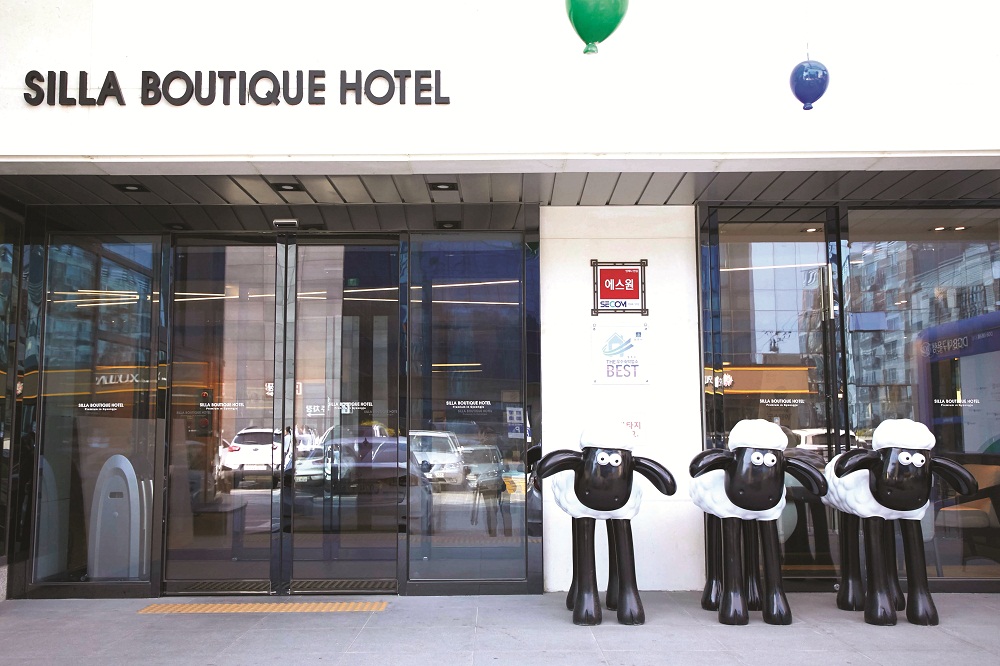
SILLA BOUTIQUE HOTEL PREMIUM (신라부티크호텔 프리미엄)
SILLA BOUTIQUE HOTEL PREMIUM (신라부티크호텔 프리미엄)
 – Homepage
http://sillaboutique.co.kr
– Tel
+82-54-745-3500, +82-54-624-3366
Shilla Boutique Hotel Premium is a family-oriented hotel in Gyeongju, Gyeongsangbuk-do. Dedicated rooms for travellers with young children have low beds to prevent falls, and family customers are provided with free tickets to local playparks. For older guests, screen-golf discount coupons are provided. The hotel is a 5-minute walk from the Gyeongju bus terminal, a 20-minute bus ride from Singyeongju station, and an easy drive to most of the city’s tourist attractions.
– Address : 200 , Gangbyeon-ro, Gyeongju-si, Gyeongsangbuk-do
※ Presentation Information
– Check-in Time
15:00
– Check-out Time
11:00
– Daily Rate
Not available
– Amenities
Yes
– Parking Fee
Yes
– Number of Rooms
31


◎ Nearby Tourism Infobox
⊙ Casa Mini Hotel [Korea Quality]까사미니호텔[한국관광 품질인증]

– Tel
+82-54-777-3355
Casa Mini Hotel in downtown Gyeongju, Gyeongsangbuk-do, is a recently-renovated, clean and tidy hotel that’s well positioned for visits to Gyeongju’s historic sites and tourist attractions. Cheomseongdae Observatory, Donggung Palace and Wolji Pond, Woljeonggyo Bridge and Gyeongju National Museum are all within walking distance. Transport links are good too: Gyeongju Intercity Bus Terminal is a 3-minute walk away.
⊙ Blau [Korea Quality]블라우[한국관광 품질인증]

– Tel
+82-10-8590-5808
Blau is a stylish guest house on Hwangnidan-gil, Gyeongju, Gyeongsangbuk-do, whose wooden furniture and signature blue coloring inside and out (‘blau’ is German for ‘blue’) give it a strong European vibe. The first floor lounge has the feel of a spacious cafe. Blau is 5 minutes’ walk from Gyeongju Express Bus Terminal. Luggage storage and a free breakfast can be provided, but guests should ask in advance.
⊙ Maison Mini Hotel [Korea Quality]메종미니호텔[한국관광 품질인증]

– Tel
+82-54-745-3232, +82-10-3517-6319
The Maison Mini Hotel in Gyeongju, Gyeongsangbuk-do, is 10 minutes’ walk from both Gyeongju Express Bus Terminal and the famous Hwangnidan Street. Rooms are comfortable and clean – they’re inspected by a room manager before each booking – and bedding is changed every day. There is a luggage storage room and a shared kitchen on the first floor.
⊙ Gyeongju Jungang Market (경주 중앙시장)
View detailed guide on Korea Trip Guide →
– Homepage
www.gjcentermarket.com
– Tel
+82-54-743-3696
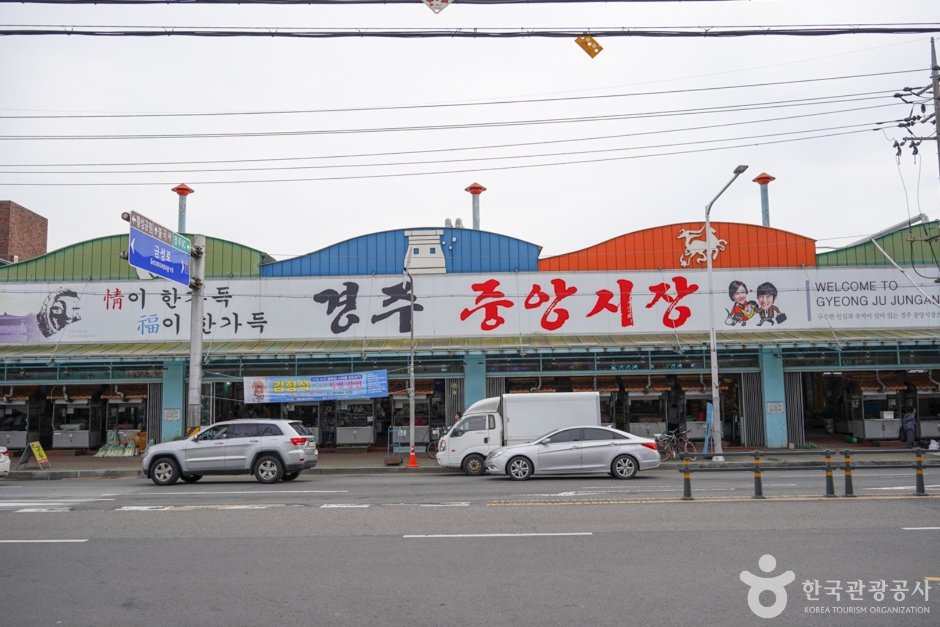
Opened in 1983, Gyeongju Jungang Market is the main marketplace for Gyeongju locals. Nearly 700 stores selling clothing, oils, rice cakes, vegetables, general goods, and meat operate with some 2,000 vendors. The market is open nearly every day, with the busiest days being those ending in a 2 or 7. The night market, open from Thursday to Sunday, is especially popular among both tourists and locals.
⊙ Sugyeongsa (수경사)
View detailed guide on Korea Trip Guide →
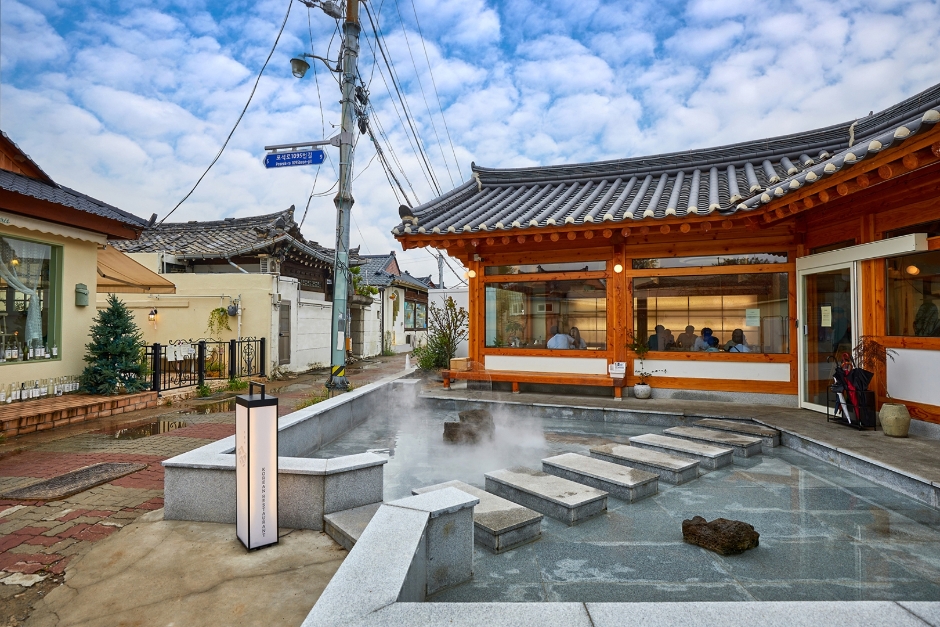
Sugyeongsa is a fusion Korean food restaurant renovated from a temple and a pond. The entrance is paved with marble and stone, creating a mysterious yet neat atmosphere, and the interior is simple, preserving the original form of a hanok and using white tones. The signature dish here is beef bulgogi with lotus leaf rice. The soy sauce-seasoned Gyeongju beef bulgogi, and lotus leaf rice will work up an appetite. The lotus leaf rice is a combination of rice and mixed grains wrapped in lotus leaves and steamed for an even healthier taste. Seasonal vegetables and side dishes are also provided. Also on the menu are Daereungwon deep-fried cheese, made with cheese rind, and beef brisket japchae pasta with seven kinds of vegetables, perilla seeds, and lotus root chips. A delicious meal can be enjoyed by anyone thanks to the restaurant’s reinterpretation of traditional Korean food.
⊙ Daereungmyojji (대릉묘찌)
View detailed guide on Korea Trip Guide →
– Homepage
www.instagram.com/daereung_myochi
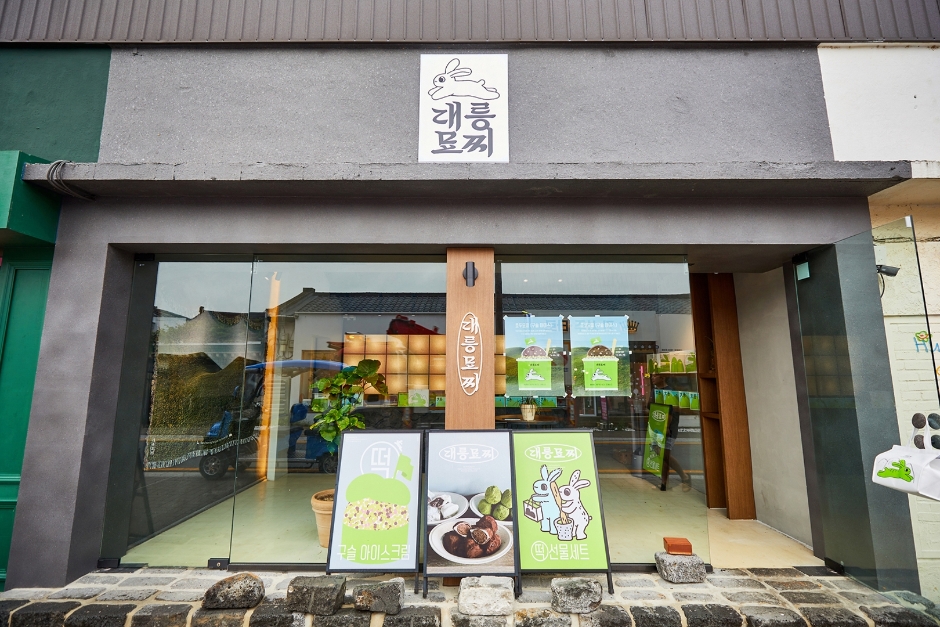
Try the unique combination of beaded ice cream and sweet rice cake, a traditional Korean dessert, at Daereungmyojji on Hwangridan Street near Daereungwon Ancient Tombs. The business offers take-out only, and there are no seats. Three menus are available: mugwort flavor sweet rice cake with pea filling, chocolate flavor sweet rice cake with filling made with Belgian dark chocolate, and sweet rice cake with red bean filling and crispy walnuts. Each serving of sweet rice cakes is cut into three or four pieces and served in a cup. In addition to being a unique dessert, the packaging has a cute rabbit drawing on it. The gift set contains eight pieces, perfect for people who want to enjoy a lot of desserts.
⊙ Neungpo Dawon (능포다원)
View detailed guide on Korea Trip Guide →
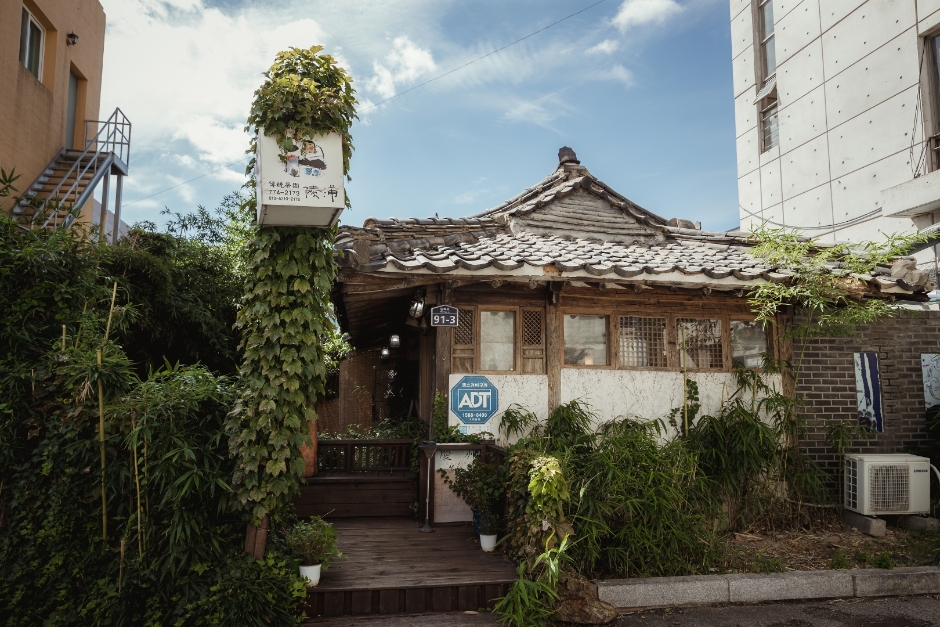
A traditional Hanok tea house subtly nestled among buildings. It served as the filming location for the traditional tea house “Arisol” managed by Gong Yoon-hee in the movie “Gyeongju.” The tea, brewed by the owner, boasts a rich flavor. The painting “Chunhwa” that served as the movie’s motif is a work by the husband of the tea house owner. Various artworks, starting with “Chunhwa,” are displayed throughout the tea house.
⊙ Gyeongju Hanbokpan (경주한복판)
View detailed guide on Korea Trip Guide →
– Homepage
www.instagram.com/gyeongju_hanbokpan
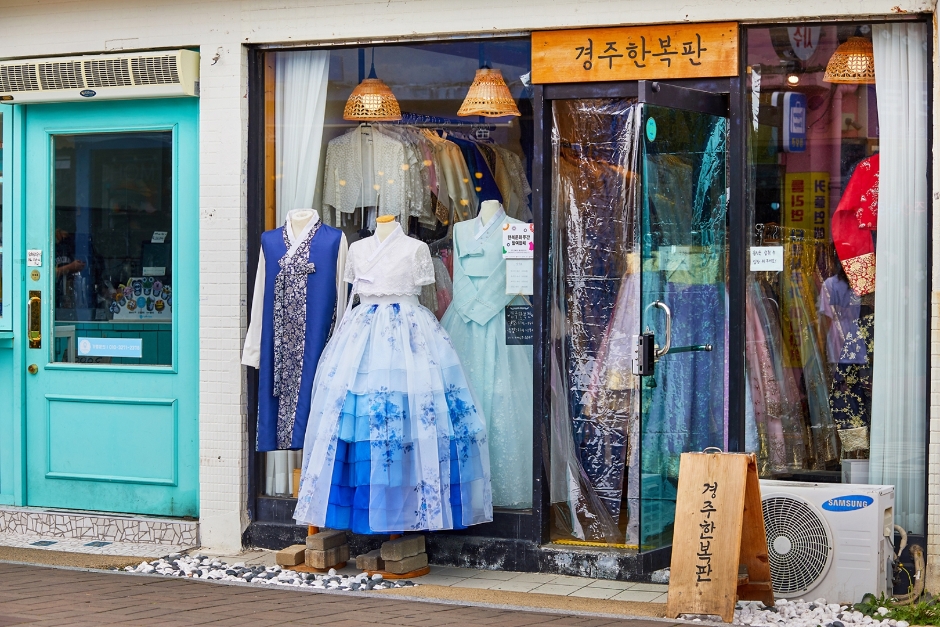
Gyeongju Hanbokpan is a hanbok rental store located in the middle of Hwangnidan Street. Hanbok attires are available in a variety of materials, colors, and seasons. There are many hanbok wears reflecting the latest trends, so they look good on anyone and are easy to wear. Besides changing clothes, the store owner also assists customers with hair accessories. There are many family customers as the store also offers hanbok for both men and children. Customers can also print the photos they took with their smartphone upon retrning the hanbok, making it an even more memorable experience.
⊙ Cheonmachong Tomb (Daereungwon Ancient Tombs) (천마총(대릉원))
View detailed guide on Korea Trip Guide →
– Homepage
www.gyeongju.go.kr
– Tel
+82-54-743-1925
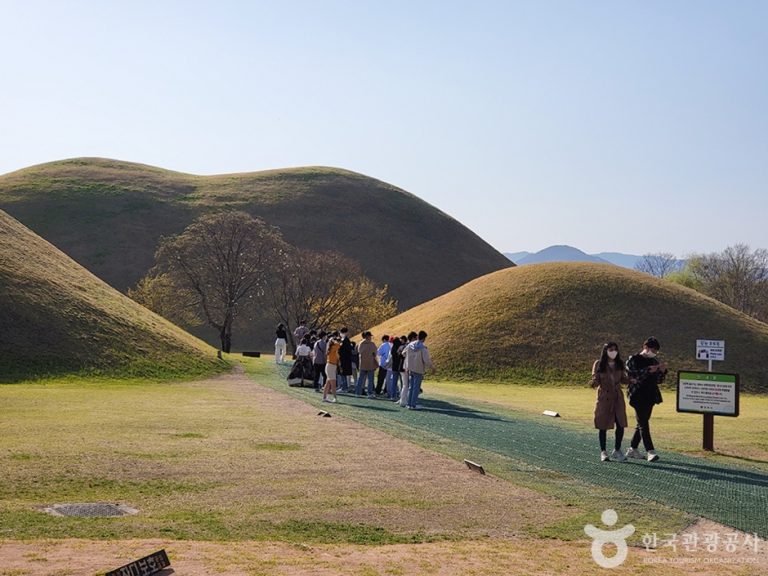
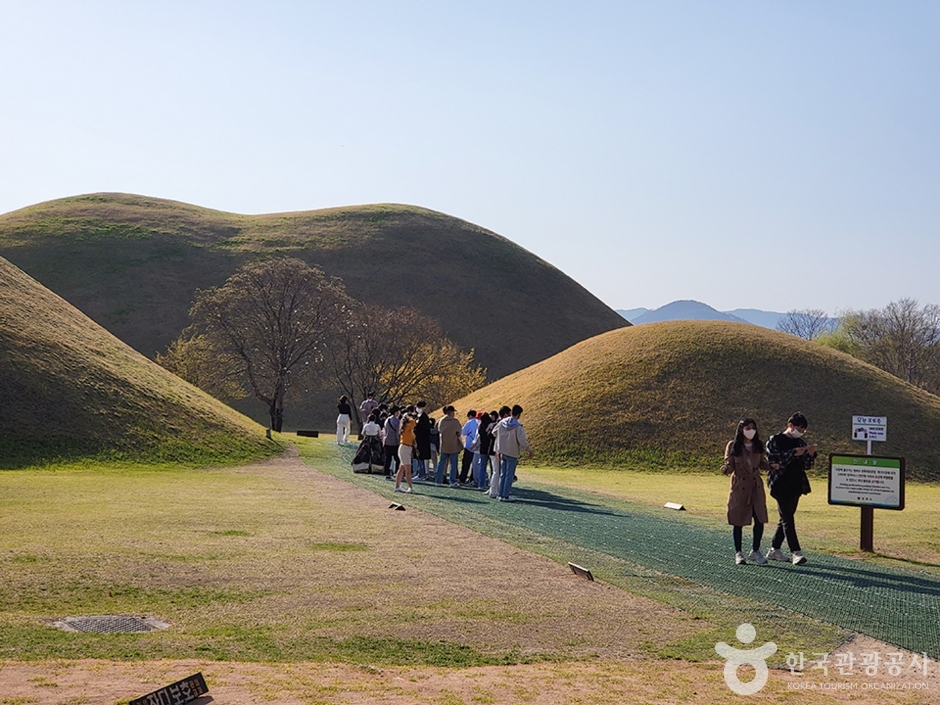
Daereungwon Ancient Tombs are one of the most well-known sights in Gyeongju, a history park home to 23 small and large ancient tombs. The area is dotted with tranquil trails among the tombs like the largest tomb in Hwangnam-dong, Hwangnamdaechong Tomb; Cheonmachong Tomb, the place where Cheonmado, a saddle flap painting, was excavated from; and the tomb of King Michu, nicknamed the “Tomb of the Bamboo Warrior.”
Cheonmachong Tomb, excavated in 1973, has a x_height of 12.7 meters and a diameter of 50 meters. Its excavation unearthed many artifacts, such as the famous Gold Crown from Cheonmachong Tomb. Its name comes from Cheonmado, a mudguard saddle flap with a painting of a heavenly horse. Cheonmachong Tomb is the only tomb in the Daereungwon Ancient Tombs to be opened to the public.
The tomb is thought to have been constructed between the late 5th century and early 6th century. Artifacts excavated from the tomb include a gold crown, gold cap, gold waist belt, gold diadem, and gilt-bronze shoes worn by the buried. The gold crown, in particular, is known as the largest and the most elaborate of all gold crowns unearthed in Korea. The artifacts themselves can be found in Gyeongju National Museum, so don’t miss the chance to see them in person.
Another must-visit site is the Daereungwon Magnolia Photo Area, a lone magnolia tree standing between the beautiful curves of ancient tombs.