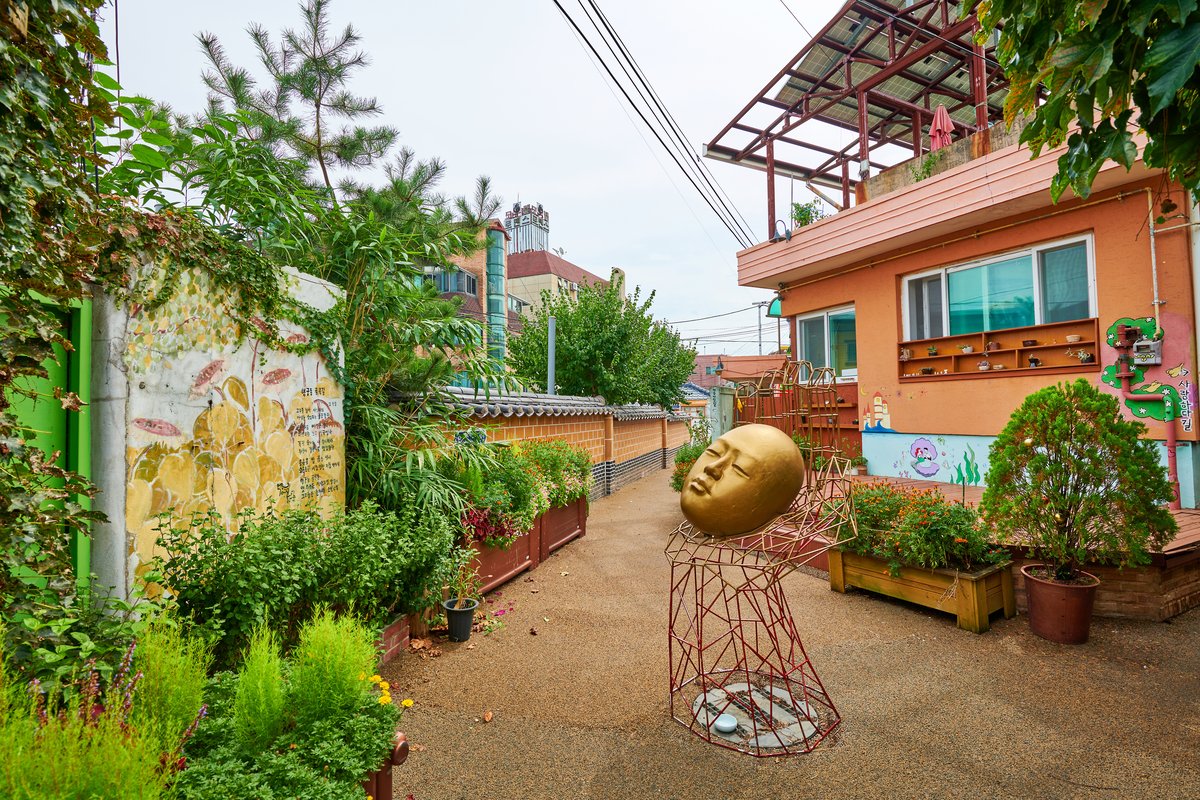
Suwon Jidong Mural Village (수원 지동벽화마을)
Suwon Jidong Mural Village (수원 지동벽화마을)
 – Homepage
https://www.suwon.go.kr
A friendly alley with Kuk Yeonsoo’s house
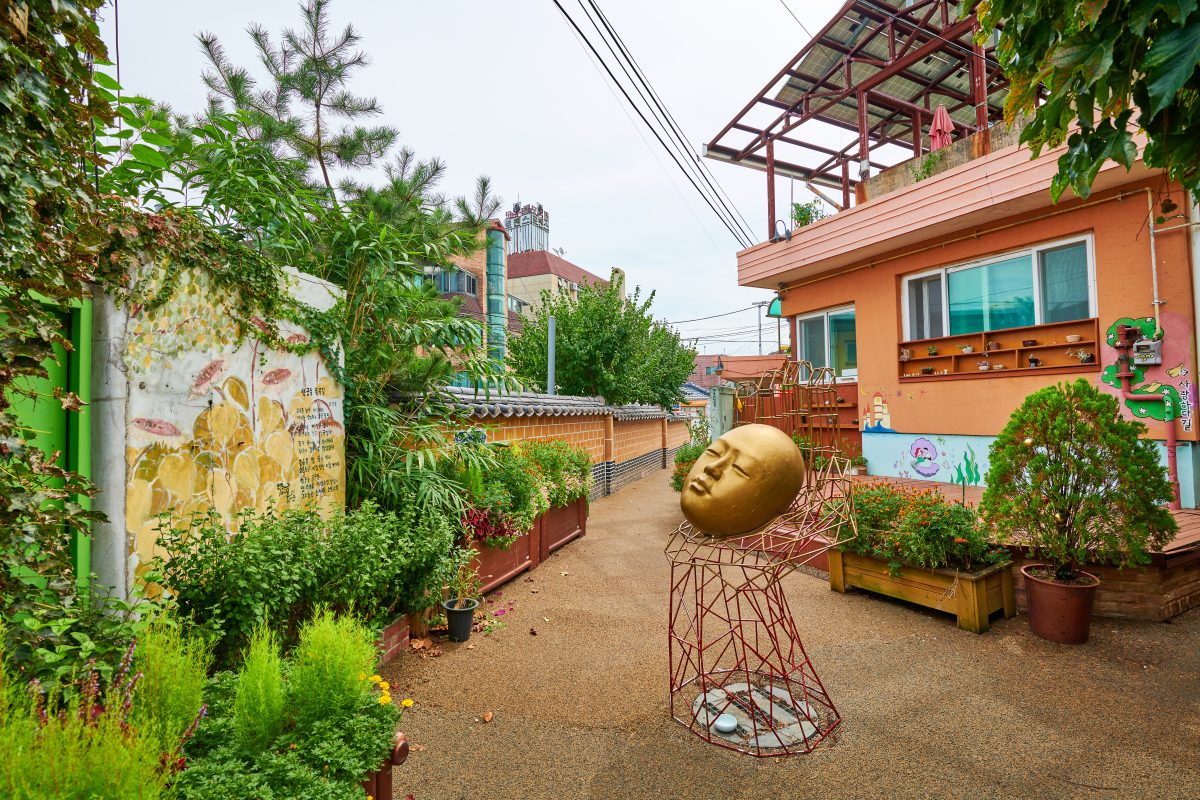
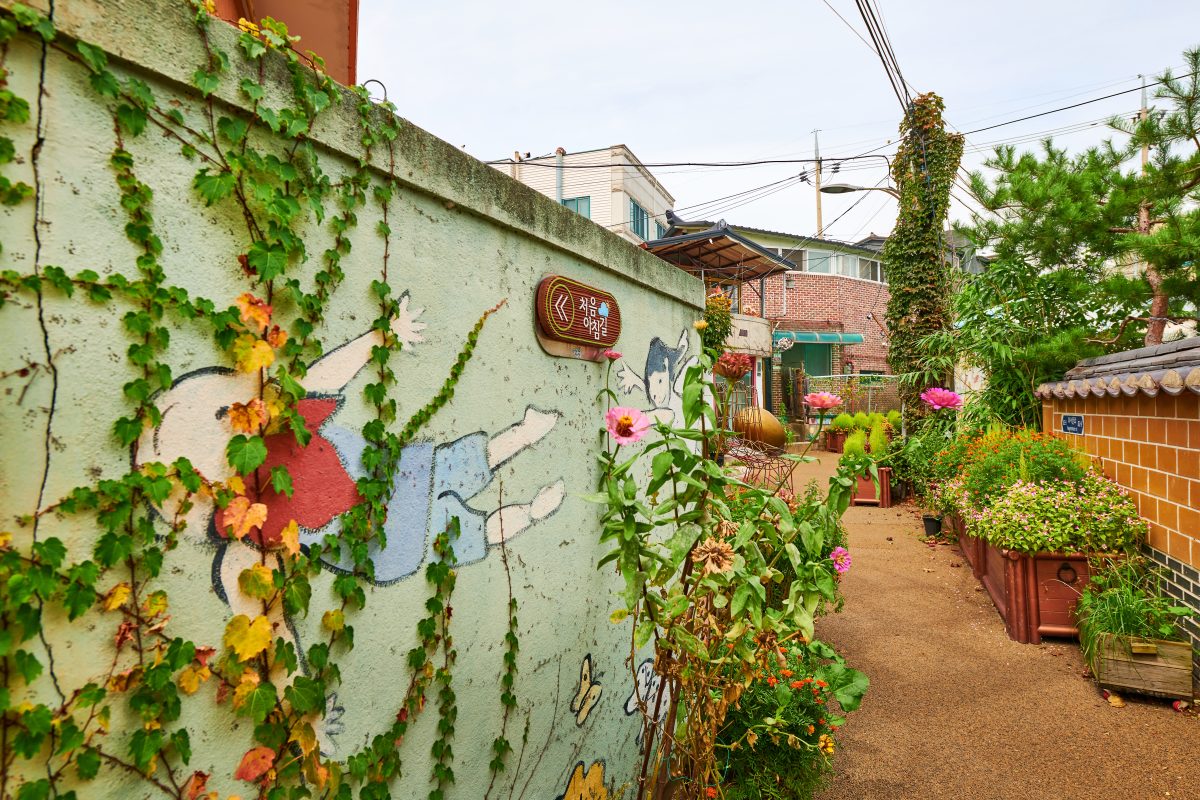
Jidong Mural Village is a neighborhood with many winding alleys where Kuk Yeonsoo lived. Murals with seven themes are painted on the 6km-long road, so just walking along the pictures is as fun as a treasure hunt. As you walk, you will see a familiar green gate next to Jidong Supermarket, which is the house of Kuk Yeonsoo in the drama. As rainbow murals often appeared on the opposite side in the drama, there are many fans who take proof shots here.
– Address : 75-5 Changnyongmun-ro, Paldal-gu, Suwon-si, Gyeonggi-do
※ Presentation Information
– Information and Guides
+82-31-228-4672
– Parking
Not available
– Day Off
N/A (Open all year round)
– Operating Hours
Open 24 hr
◎ Nearby Tourism Infobox
⊙ Hwacheong Galbi (화청갈비)
View detailed guide on Korea Trip Guide →
This restaurant offers galbi jeongsik, a set meal featuring Suwon wanggalbi at a reasonable price. Available only at lunchtime, the set includes grilled galbi, steamed rice, and a variety of side dishes, making for a satisfying and filling meal. Located near Hwaseong Fortress and the vibrant Haenggung-dong area (also known as Haengnidan Street), it’s an ideal spot to enjoy a meal after exploring Suwon’s famous sights.
⊙ Flying Suwon (플라잉 수원)
View detailed guide on Korea Trip Guide →
– Homepage
www.flyingsuwon.com
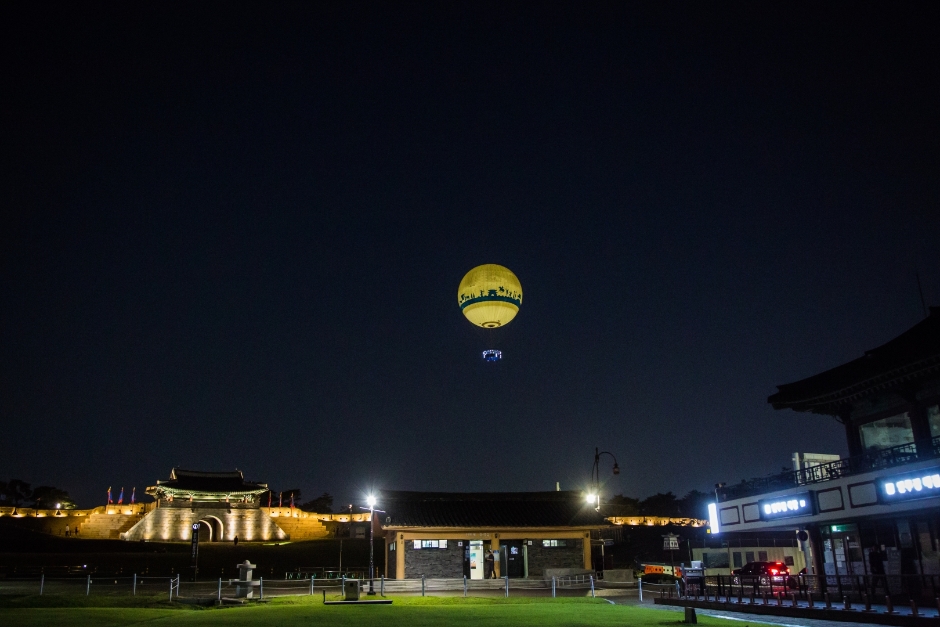
Flying Suwon is a unique moored helium ballon facility to view the entire Hwaseong Fortress from up to 150 m in the air. You can enjoy Hwaseong Fortress, which has new charms every season, right up against the sky. Create wonderful and special memories with your family, friends, or loved ones. The helium balloon can accommodate up to 30 people and is accompanied by a well-trained pilot to ensure passenger safety. In addition, its safety was proven by passing the European Aviation Safety Agency (EASA) regulations, receiving a safety certification from the French Department of Public Health, etc. Boarding time is approximately 10 minutes, including ascending, viewing, and descending.
⊙ Changnyongmun Gate (창룡문)
View detailed guide on Korea Trip Guide →
– Homepage
www.swcf.or.kr
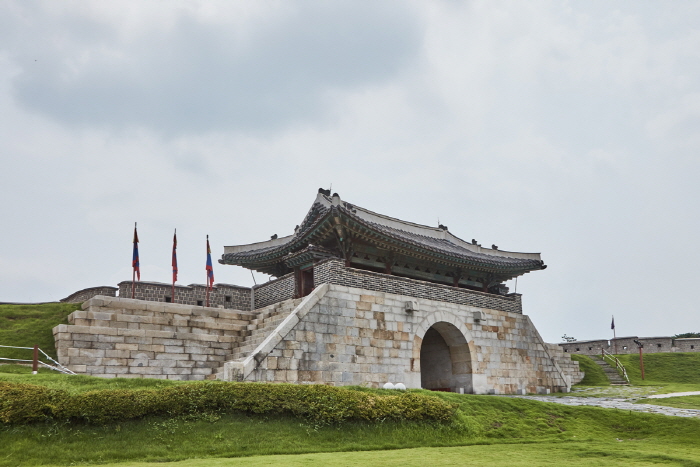
Changnyeongmun Gate, the eastern gate of Hwaseong Fortress, is similar in shape and size to Hwaseomun Gate to the east. Something to take note of is the nameplate carved into the wall left of the gate. While the names on the polished granite at the other three main gates have become obscure over time, the nameplate at Changnyeongmun Gate is still clearly visable.
⊙ Hwaseong Fortress Tourist Trolley (화성어차)
View detailed guide on Korea Trip Guide →
– Homepage
www.swcf.or.kr (Korean, English, Japanese, Chinese)
– Tel
+82-31-228-4686
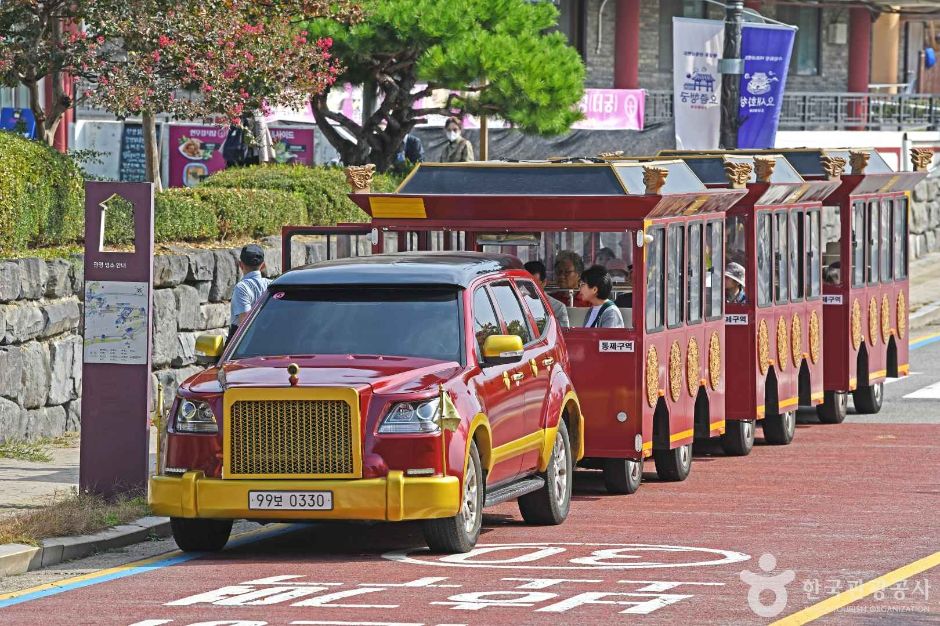
With a design inspired by the royal vehicle used by King Gojong and palanquins of the Joseon dynasty, Hwaseong Fortress Tourist Trolley provides visitors with a comfortable tour around the main attractions of Suwon Hwaseong Fortress. It is divided into a sightseeing course that starts at Hwaseong Temporary Palace and visits the main gates, and a circular course that starts at Yeonmudae Post and visits the main military facilities. Reservations are required on the website. All seats are equipped with an earphone jack offering an audio guide of Suwon Hwaseong Fortress in English, Chinese and Japanese.
⊙ Suwon Hwaseong Museum (수원화성박물관)
View detailed guide on Korea Trip Guide →
– Homepage
hsmuseum.suwon.go.kr
– Tel
+82-31-228-4242
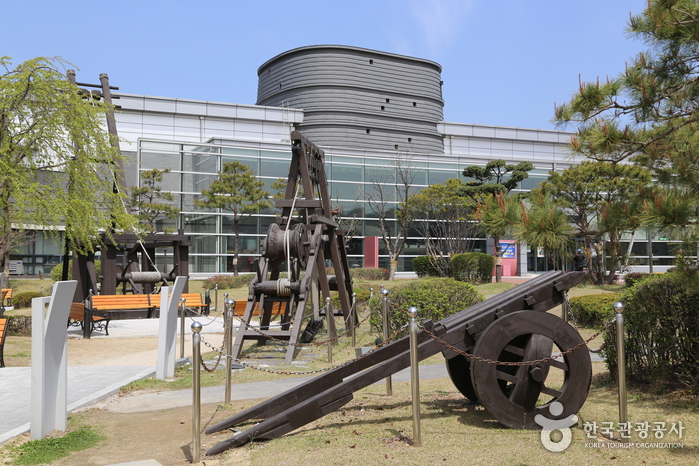
Suwon Hwaseong Museum presents the history and culture of Suwon Hwaseong Fortress, an important Korean cultural asset and UNESCO World Cultural Heritage Site. Visitors to the museum can learn about the formation of the fortress and the city of Suwon itself through detailed, systematically designed exhititions. The museum houses an extensive collection of items that showcase the construction and development of the fortress, as well as gatherings and events that took place within the fortress.
⊙ Suwon Hwaseong Museum Themed Exhibition Banghwasuryujeong Pavilion (수원화성박물관 테마전 방화수류정)
View detailed guide on Korea Trip Guide →
– Homepage
smuseum.suwon.go.kr/a>
– Tel
+82-31-228-4209
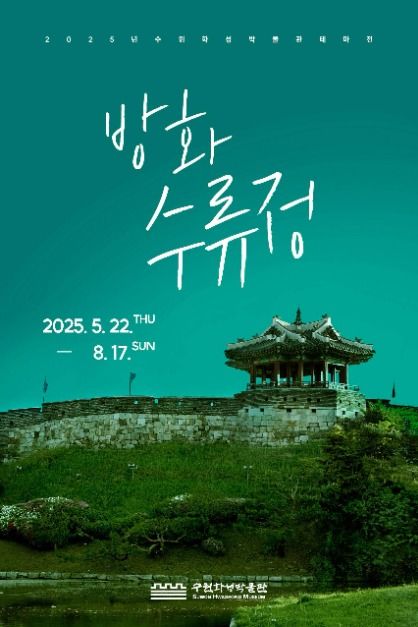
Banghwasuryujeong Pavilion stands looking over the Hwahongmun Gate and Yongyeon Pond and is a place where the aspirations of King Jeongjo live on. Suwon Hwaseong Fortress has a total of four pavilions, and Banghwasuryujeong Pavilion is located on the northwestern side of the fortress. The fortresses were built to act as a watchtower for keeping an eye on outside invasion, with Banghwasuryujeong Pavilion being located at the most strategic point. Although it was built as a military watchtower, it was designed to also act as a pavilion, and Banghwasuryujeong Pavilion was recognized as a National Treasure in 2011 for outstanding techniques and aesthetics that represent the Joseon dynasty in the 18th century.
⊙ Yeonmudae (Dongjangdae) (연무대 (동장대))
View detailed guide on Korea Trip Guide →
– Homepage
www.swcf.or.kr (Korean, English, Japanese, Chinese)
– Tel
+82-31-228-4686
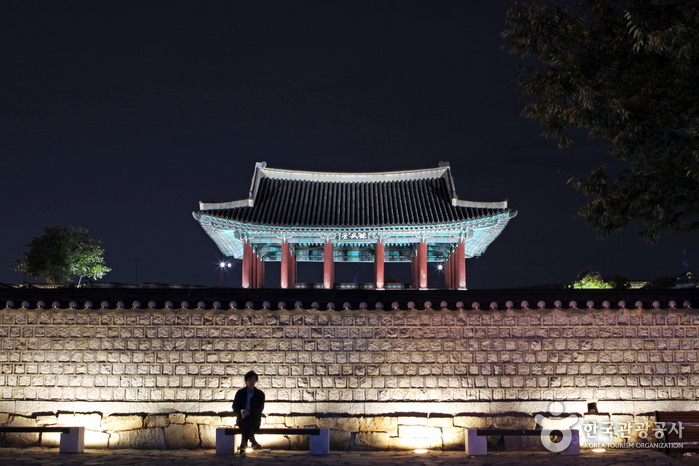
Yeonmudae located inside Suwon’s Hwaseong Fortress, a UNESCO World Heritage site. Situated on a relatively high hill between Changnyongmun (the east gate of the fortress) and Hwahongmun (a north floodgate), Yeonmudae is an excellent military observation post with sweeping views of the inside of the fortress. After the fortress was completed in 1796, Yeonmudae was used as a training ground for troops for over two centuries, where they learned fighting skills involving swords, spears and arrows.
At Yeonmudae, visitors can learn archery while wearing traditional military attire; the fortress also offers a wide array of performances for visitors to appreciate traditional Korean culture. Yeomudae is included in the Suwon City Tour course.
⊙ Banghwasuryujeong Pavilion (방화수류정(동북각루))
View detailed guide on Korea Trip Guide →
– Homepage
www.suwon.go.kr
– Tel
+82-31-228-4672
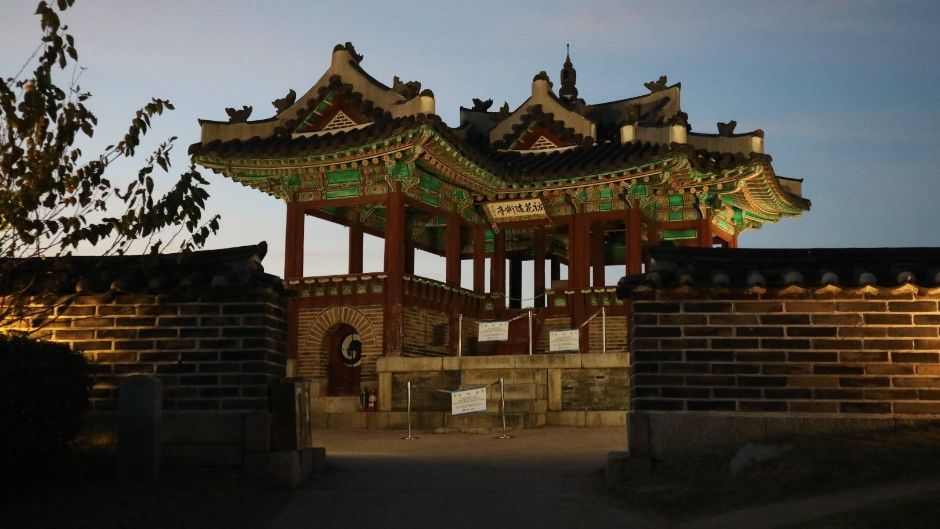
Banghwasuryujeong Pavilion, officially called Dongbukgangnu Pavilion, was built in 1794 during the construction of Suwon Hwaseong Fortress. It sits atop a hill east of Hwahongmun Gate and offers beautiful views of the surrounding scenery. For this reason, the pavilion received the nickname Banghwasuryujeong, meaning a pavilion where one can “find flowers and stroll among willow trees.” The pavilion was once damaged due to flooding and reconstructed in 1848, followed by continuous recovery and preservation efforts. In 2011, the pavilion was designated as Treasure No. 1709. Banghwasuryujeong Pavilion is evaluated as one of the most original architectures in Hwaseong for its unique composition and roof design that offer a different look depending on the viewer’s angle. Known to be the spot where King Jeongjo would stop by to rest on his way to Hwaseong Fortress, the pavilion offers a bird’s-eye-view of Yeonmudae Post to the east and Janganmun Gate to the west with Paldalsan Mountain in the background.
⊙ Haenggung-dong Mural Village (행궁동 벽화마을)
View detailed guide on Korea Trip Guide →
– Homepage
www.suwon.go.kr
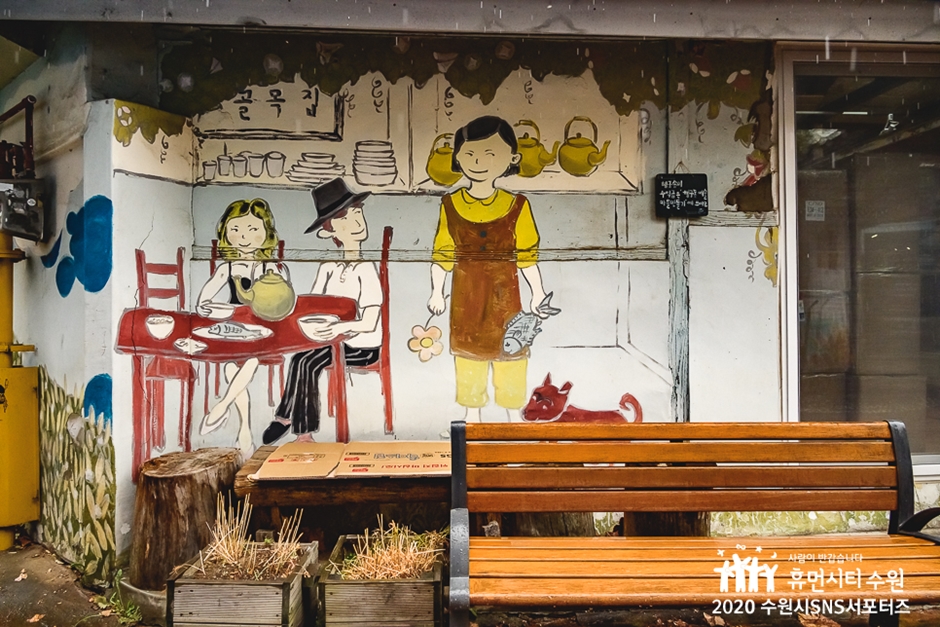
Suwon’s Haenggung-dong is the name for 12 neighborhoods, including Jangan-dong and Sinpung-dong, in the Hwaseong Fortress area. It was the most bustling place in Suwon from when the Hwaseong Fortress was built 220 years ago until just a few decades ago. However, with Hwaseong Fortress being designated as a UNESCO World Heritage Site, time seems to have stopped due to strict development regulations. In the meantime, residents, civic groups, and artists came together to paint murals in effort to make the area become more alive. Due to their efforts, the region has now emerged as a tourist attraction visited by as many people as Hwaseong Fortress.
The Haenggung-dong comprises various alleys connected depending on their characteristics, including the Mural Village, Workshop Street, Suwon Chicken Street, and Jidong Market. The Mural Village is divided into six alleyways by theme, including the Haengbokha (Happy) Road, Saranghada (Love) Road, Nuneuroganeun (to Snow) Road, Cheoeumachim (First Morning) Road, Romance Road, and Dwiroganeun (Backward) Road. A photo zone has been set up in front of the mural, and not only the mural but also the walls, roof, and fence are filled with various sculptures and paintings. Many pretty workshops and cafés nearby are also interesting to look around.
◎ Travel information to meet Hallyu’s charm – TV series “Lovely Runner”
Haenggung-dong Mural Village sets the scene where Sol and Sun-jae walked to school together. It is also where the memorable scene was filmed of Sol dashingly pushing a flustered Sun-jae against the wall. As you stroll along the low stone walls adorned with murals, it’s easy to imagine the couple’s school-day moments, adding a nostalgic charm to your walk.
![OffLabel – Shinsegae Siheung Branch [Tax Refund Shop] (오프라벨 신세계 시흥점)](https://ktrip.blogsailing.com/wp-content/uploads/2026/01/2881971_image2_1.jpg)
![Massimo Dutti – Starfield Hanam Branch [Tax Refund Shop] (마시모두띠 스타필드 하남점)](https://ktrip.blogsailing.com/wp-content/uploads/2026/01/2881559_image2_1-768x576.jpg)
![Himart – Juyeop Branch [Tax Refund Shop] (하이마트 주엽점)](https://ktrip.blogsailing.com/wp-content/uploads/2026/01/2889969_image2_1-768x576.jpg)
![Suitsupply [Tax Refund Shop] (수트서플라이)](https://ktrip.blogsailing.com/wp-content/uploads/2026/01/2880654_image2_1-768x576.jpg)
![Nepa – Lotte Giheung Branch [Tax Refund Shop] (네파 롯데기흥)](https://ktrip.blogsailing.com/wp-content/uploads/2026/01/2889525_image2_1.jpg)
2 Comments