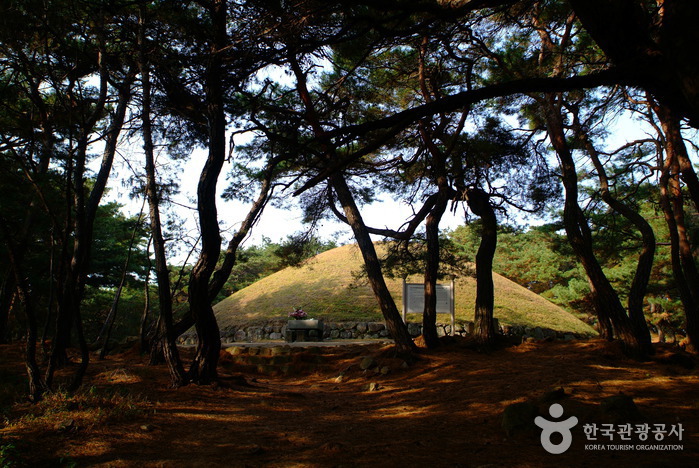
Tomb of Queen Seondeok (경주 선덕여왕릉)
Tomb of Queen Seondeok (경주 선덕여왕릉)
 – Homepage
www.gyeongju.go.kr/tour
– Tel
+82-54-779-6100
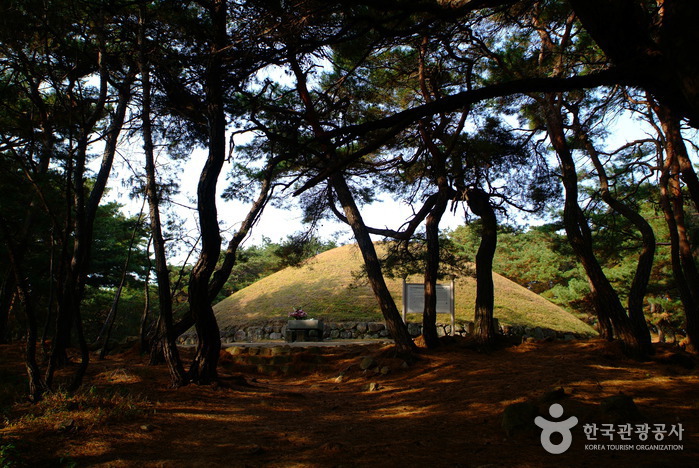
The Tomb of Queen Seondeok is a round tumulus with a circumference of 73 meters. Aside from the fact that it is circled by a protective two-layer rock, the tomb has no other unique features. As the oldest daughter of King Jinpyeong, Queen Seondeok became the first queen of the Silla Kingdom. During the 16th year of her reign, Bunhwangsa Temple and Cheomseongdae Observatory were built. She also ordered the construction of the famous nine-story wooden pagoda of Hwangyongsa Temple, a significant achievement of Buddhist architecture. While many of her efforts laid the foundation for the unification of Three Kingdoms of Korea, Queen Seondeok’s reign was plagued by rebellion and strife and she died in 647 during a rebellion, 23 years before unification was realized.
– Address : Baeban-dong, Gyeongju-si, Gyeongsangbuk-do
※ Presentation Information
– Information and Guides
• 1330 Travel Hotline: +82-2-1330
(Korean, English, Japanese, Chinese)
• For more info: +82-54-779-6100
– Admission Fees
Free


◎ Nearby Tourism Infobox
⊙ Suseokjeong (수석정)

– Tel
054-748-0835
Situated just ten minutes from the Gyeongju National Museum, Suseokjeong offers an opportunity to savor the refined culinary art of Korean table d’hote. Its signature dish is tteokgalbi jeongsik (grilled galbi patties set menu). The meal begins with warm sungnyung (scorched rice soup) served in a yugi bowl, followed by a hearty spread that includes jeonbokjuk (abalone porridge), tteokgalbi, and gungjung japchae (royal japchae). For dessert, guests can enjoy dried fruits and sujeonggwa (cinnamon punch). Nearby attractions include the Neungjitap Pagoda Site, Rock-carved Buddhas in the Tapgok Valley, and the Stone Seated Buddha in the Mireukgok Valley of Namsan Mountain.
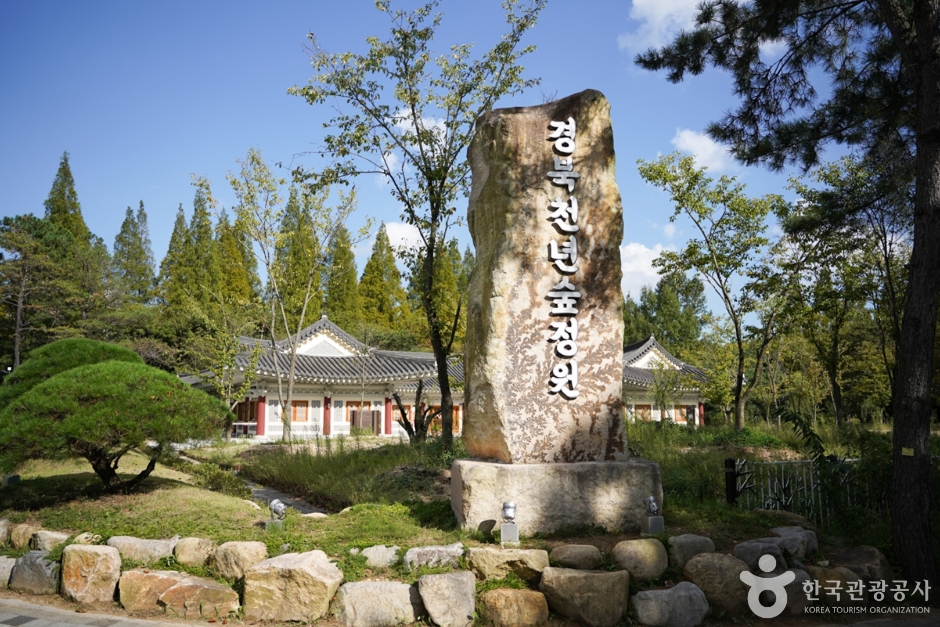
⊙ Gyeongbuk Millennium Forest Garden (경북천년숲정원)
View detailed guide on Korea Trip Guide →
– Homepage
garden.koagi.or.kr
https://www.gb.go.kr/
Located at the foot of Namdongsan Mountain in Gyeongju, the Gyeongbuk Millennium Forest Garden, a part of Gyeongsangbuk-do Forest Environment Research Institute, was officially opened to the public in 2023. It boast a variety of plants and flowers, with different species in each zone. Visitors can enjoy beautiful seasonal changes of diverse plants. The descriptions provided to explain each plant’s unique characteristics create a fun learning environment for kids, making it a perfect destination for a family trip.
◎ Travel information to meet Hallyu’s charm – TV series”Kang Deok-soon’s Love History”
This garden is the place where Deoksun breaks down and cries on a log bridge, overcome with her feelings about Seok-Sam and her parents. The area around the log bridge, which appeared in the show as a laundry site, is a famous photo spot.
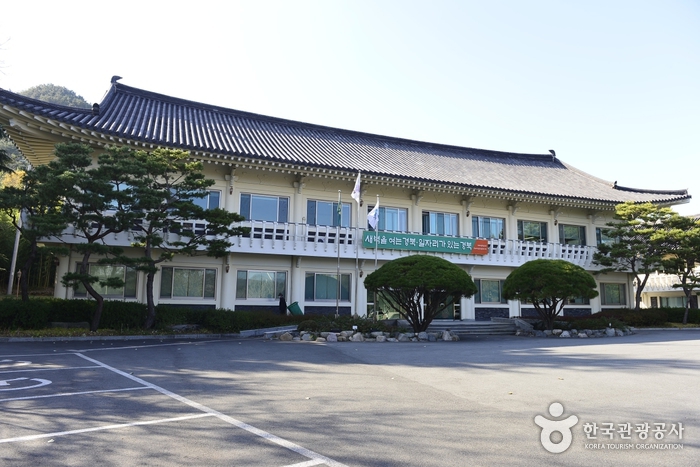
⊙ Gyeongsangbuk-do Forest Research Institute (경상북도 산림환경연구원)
– Tel
+82-54-778-3813
Located at the foot of Namsan Mountain in Gyeongju, Gyeongsangbuk-do Forest Research Institute is a popular spot for field trips and relaxation due to the institute’s rare and rural forestry along with well-preserved endangered plants and wild flowers.
⊙ Gyeongju National Museum (국립경주박물관)
– Homepage
gyeongju.museum.go.kr
Gyeongju National Museum houses numerous historical and cultural artifacts of the Silla dynasty (57 BC-AD 935). The museum provides various programs including at the Children’s Museum School. The newly renovated Silla Art Gallery and Silla History Gallery lobby by Teoyang Studio are popular among visitors. This multi-complex center provides the history of Silla with various artifacts.
⊙ Donggung Palace and Wolji Pond (경주 동궁과 월지)
View detailed guide on Korea Trip Guide →
– Homepage
www.gyeongju.go.kr/tour
– Tel
+82-54-750-8655
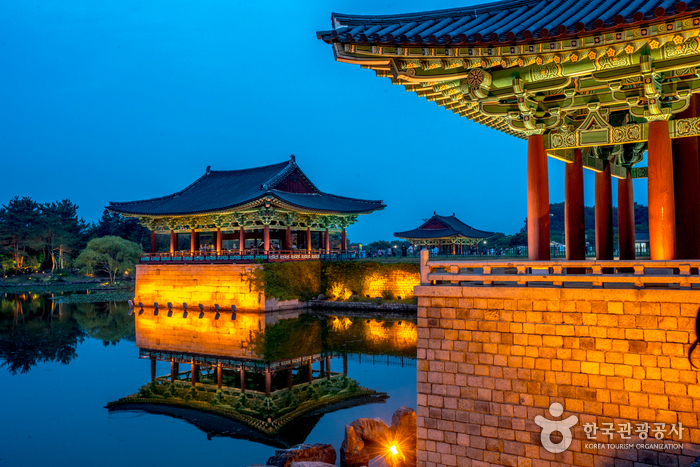
Donggung Palace and Wolji Pond in Gyeongju are secondary palace sites of Silla. The palace, along with other secondary palaces, was used as the eastern palace where the prince lived, and banquets were held during auspicious events or to welcome important guests. It is also where King Gyeongsun of Silla invited King Wang Geon of Goryeo and had a feast to complain about the critical situation in 931 after being invaded by Gyeon Hwon. After unifying the three kingdoms, Silla’s King Munmu dug a large pond in the 14th year of his reign (674), creating three islands in the center of the pond along with a 12-peaked mountain to the northeast. Beautiful flowers and trees were planted here, and rare birds and animals were raised. In the Samguksagi (History of the Three Kingdoms) from the Goryeo dynasty, there is only a record of Imhaejeon Hall and no mention of Anapji Pond. After Silla fell and the place fell into ruins during the Goryeo and Joseon dynasties, poets and calligraphers looked at the pond and recited a line of poetry that says, “The once splendid palace is gone, and only geese and ducks fly in.” That’s why the place is called Anapji, using the letters ‘an’ for wild geese and ‘ab’ for ducks. In the 1980s, pottery fragments with the inscription “Wolji” were excavated, and it was confirmed that this area was originally called “Wolji,” which means “a pond that reflects the moon.” And the name Anapji was changed to Wolji Pond afterwards.
◎ Travel information to meet Hallyu’s charm – “The Beauty Inside”
Se-gye visits this place to refresh her mind after she argues with Do-jae over the contract. Being one of the most famous tourist sites in Gyeongju, the scenery here is enough to help you forget the argument that you’ve just had, especially at night.
⊙ Gyeongju Wolseong Palace Site (Banwolseong Fortress) (경주 월성(반월성))
View detailed guide on Korea Trip Guide →
– Homepage
www.gyeongju.go.kr
– Tel
+82-10-3226-6390
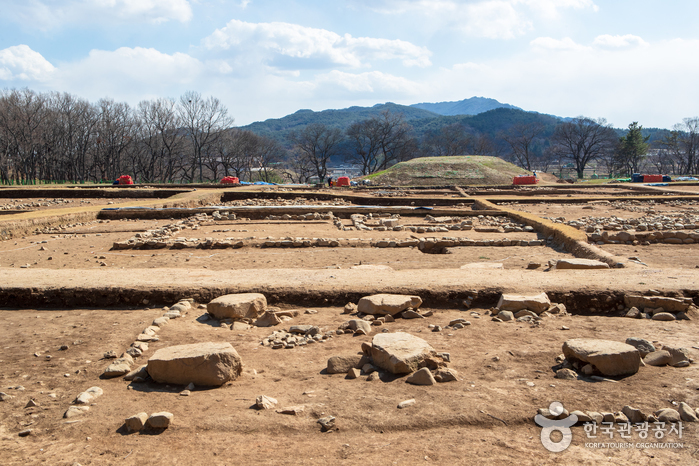
This was the location of the palace-fortress during the Silla dynasty (57 BC ~ AD 935). The fortress takes after its name, which, literally translates to mean a crescent moon shape on top of a hill. The famous history books of Samgukyusa mention that Silla’s 4th King Seoktalhae (AD 57~80) thought this area was an ideal spot for the fortress and bought the land from a nobleman. The 2nd King Namhae (AD 4~24) impressed by Seoktalhae’s actions, took him in as his son-in-law, later, becoming the 4th king. The area was then under Silla’s rule for 900 years, the last king being the 56th, Gyeongsoon (AD 927~935).
Although the magnificent grandeur of the palace is now just an empty lot, it has been told that this area was filled with imperial buildings during the Silla dynasty. Currently, the region of Wolseong has a freezer made out of rocks called Seokbinggo, an archery range, a horse-riding field, and a traditional playground, which resembles the grounds of the Joseon Period (the dynasty that ruled the Korean peninsula from 1392-1910).
⊙ Gyeongju Hwangnyongsa Temple Site (경주 황룡사지)
– Homepage
www.gyeongju.go.kr/tour
– Tel
+82-54-779-6100
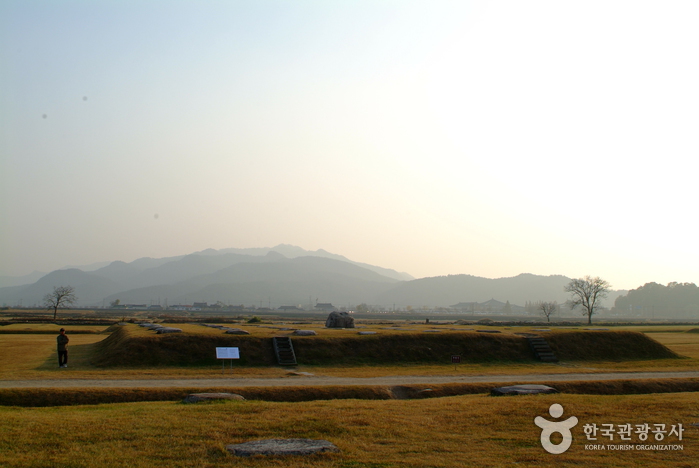
Hwangnyongsa Temple Site is located in front of Bunhwangsa Temple in Guhang-dong, Gyeongju. During the Silla Era, the Hwangnyongsa Temple was the nation’s largest temple and housed the bulk of the country’s major Buddhist treasures.
Construction of the temple began in 553 on a field east of the royal compound under the commission of King Jinheung. The king originally planned to build a palace, but decided to build a temple instead, after receiving reports that a yellow dragon had been spotted on the building site. The temple was thus named Hwangnyongsa (Temple of Yellow Dragon) and was completed in 569, seventeen years after construction began. The temple murals featured an old pine tree drawn by Artist Solgeo. During the Silla Era, the temple was the center of state-sanctioned Buddhism.
Later, when monk Jajang was studying in China during the Tang dynasty, he came across a god as he was passing by Taihe Pond. The god said to him, “The yellow dragon, which is my eldest son, is guarding Hwangnyongsa Temple upon orders of Brahma, the Creator. If you build a nine-story pagoda upon your return to Silla, the neighboring states will surrender and pay tribute, and the royal cause will be stronger. Once the construction of the pagoda is complete, prepare a memorial service for the local gods and pardon any of the country’s criminals. If you follow all I have told you, no other state will dare invade Silla.”
After this encounter, Jajang returned to Silla and convinced Queen Seondeok to build the nine-story pagoda. Master architect Abiji of the neighboring state Baekje designed the pagoda and the project was built by Yongchun and 200 men using wood and stone. The night before the columns were to be erected, Architect Abiji of Baekje dreamed of the fall of Baekje and refused to complete the project. With a peal of thunder, an old monk and a man of great strength suddenly appeared from the temple’s main hall, erected the columns, and magically disappeared. Abiji was so shocked at the sight that he accepted his country’s future demise as the fate of the gods and once again restarted work on the temple. (From Samgungnyusa, the Memorabilia of the Three Kingdoms)
In the twenty-three years following the completion of the pagoda, Queen Seondeok unified the Three Kingdoms; later, numerous scholars pointed to the pagoda as a contributing factor in the unification. Of the three treasures of Silla, two were located at Hwangnyongsa Temple. The largest bell of Silla was also in the temple, but was taken away during the Mongol invasion. The highest monks of Silla preached at the temple, and many kings came to listen to the Buddhist teachings.
During excavation work in July 1969, the massive foundation stones of the sermon hall, auditorium, and pagoda were found. Eight years of archaeological excavations and studies revealed the unique layout of the temple grounds, which consisted of one pagoda and three halls; also found were 40,000 or so ancient artifacts. Though foundation stones and other structures from the bottom of the temple were identified through excavation, there are no historical clues about the temple’s upper design, making the restoration of the temple in its entirety practically impossible. The size of the temple, based on archeological findings, was about 70 acres, roughly eight times larger than that of Bulguksa Temple.