Ullidan Street (운리단길)
Ullidan Street (운리단길)
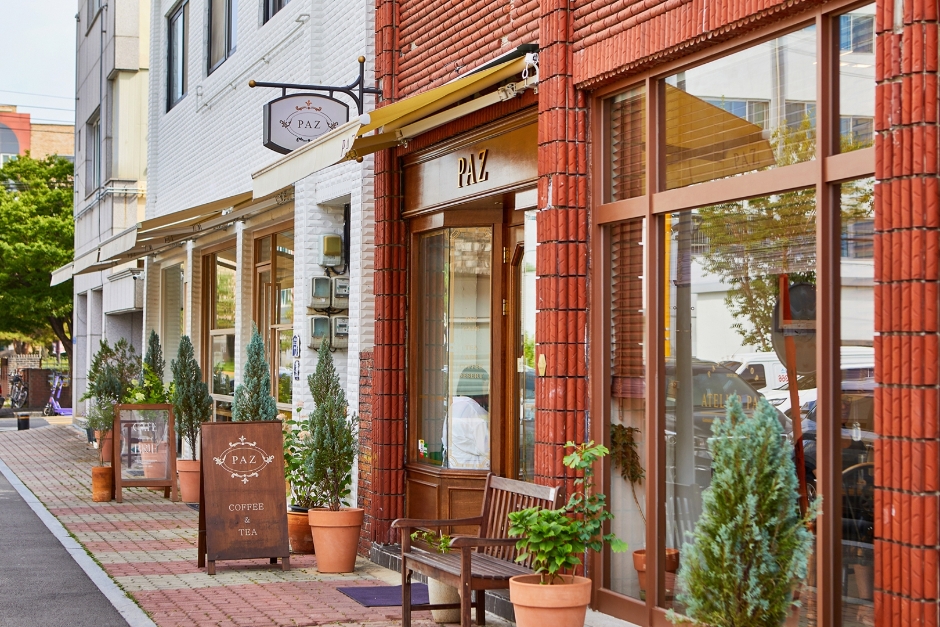
 Ullidan Street connects Cheongju Early Printing Museum with Uncheon & Sinbong-dong Community Center. In less than a kilometer, charming cafes, restaurants, and shops have opened one after another, giving the street its name and elevating it to a popular hangout in Cheongju. This street is also the location of the store Nation’s Best Banchan, which was run by Jeon Do-yeon’s character in “Crash Course in Romance (2023).” Don’t miss the Yennal Yetjip Goldongpum, an antique store and one of the oldest stores on Ullidan Street. True to its name, the store features old furniture, transistor radios, and other antique items full of nostalgia.
– Address : 201-1 Saun-ro, Heungdeok-gu, Cheongju-si, Chungcheongbuk-do
– Film Locations
“Crash Course in Romance (2023)”
– Interpretation Services Offered
Not available

◎ Nearby Tourism Infobox
⊙ BRIE (브리)

– Homepage
www.instagram.com/brie__official_
BRIE is a cafe with an interior design that emphasizes warmth and sentimentality, featuring a warm wood tone and a green space with air-purifying plants. The cafe is famous for its brunch menu, particularly its Fig Ricotta Sandwich and Brie Cheese Sandwich. Brie Cream Velvet, topped with raspberries, impresses in both taste and visuals, making it a popular feature in social media. The cafe also has large tables perfect for meetings. Small dogs can be brought into the premises.
⊙ Cheongju Early Printing Museum(청주고인쇄박물관)
– Homepage
http://cheongju.go.kr/jikjiworld/index.do
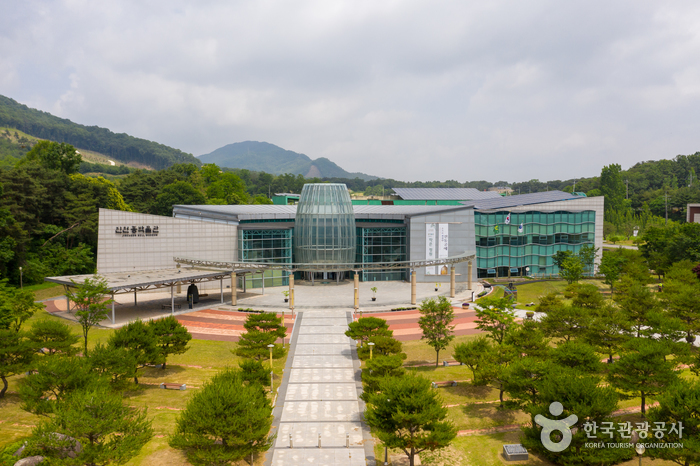
The city of Cheongju, together with UNESCO, commemorates the inscription of “Jikji” onto the UNESCO Memory of the World Register and presents the UNESCO/Jikji Memory of the World Prize to individuals and organizations that have made significant contributions to the preservation and utilization of the UNESCO Memory of the World, thereby promoting the great cultural heritage of Cheongju, the birthplace of movable metal type, and Korea in general. “Jikji,” or Jikji Simche Yojeol: Anthology of Great Buddhist Priests’ Zen Teachings, is the oldest book in the world to be printed with movable metal type.
The Exhibition Center for Modern and Contemporary Printing introduces how the history of Korean printing has developed, starting from the introduction of lead type at the end of the 19th Century to the present-day Korean printing technology and its future directions. It is a place where one can learn how the Korean printing culture came to be in modern times, and what directions it will take as the world moves forward. Printing experience classes for children, families, and adults are available. They are expected to assist the visitors in understanding modern and contemporary printing culture.
⊙ Cheongju Yonghwasa Temple (용화사(청주))
– Homepage
www.yonghwasa.com
This temple was founded in 1902. Yonghwasa Temple can be found about 2 kilometers down the small road from a National Road connecting Judeok-eup, Cheongju, with Eumseong. Unlike other Buddhist temples, which tend to be located in secluded places, Yonghwasa Temple is easily reachable from the city, attracting many visitors. Set against a backdrop of green lawns and forests, the temple’s stupas, stelae, three-story stone pagodas, and guardian trees bring Buddhist culture to life. A Goryeo-era Standing Stone Buddha, a cultural heritage, can be found in the complex. Its elegant and full body, round face, and delicate expression of folds in the Buddha’s clothing all showcase the unique qualities of Goryeo-era Buddhist sculptures. The Buddha holds a medicine bowl in the left hand, which heals all diseases and eliminates all distractions in pursuit of truth.
⊙ Olive Young – Chongju Univ. Branch [Tax Refund Shop] (올리브영 청주대)

–
⊙ Cheongju Cherry Blossom and Food Truck Festival (벚꽃과 함께하는 청주 푸드트럭 축제)

– Homepage
www.cheongju.go.kr/ktour/
– Tel
+82-43-201-2056
A festival held by the Musimcheon Stream, a cherry blossom attraction in Cheongju, for both locals and tourists. The festival aims to go green by reducing the use of disposable waste.
⊙ Cheongju Museum of Art (청주시립미술관)
– Homepage
cmoa.cheongju.go.kr
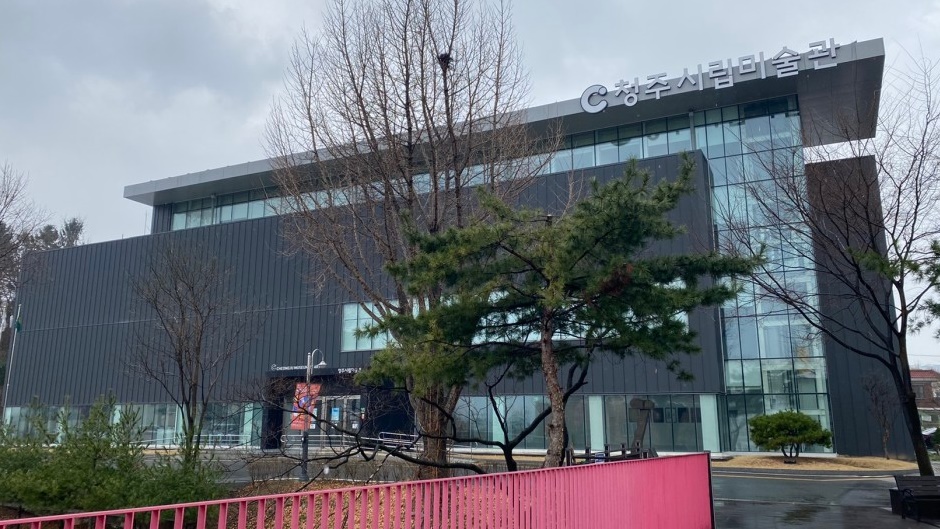
As the cultural space representing Cheongju, Cheongju Museum of Art hosts art exhibitions, lectures, music performances, and more. It features eight exhibition halls, an immersive video experience center, a VR zone, an art shop, and a cafeteria. The space showcases works by artists engaged in experimental creative activities. It also offers a variety of programs, including modern art lectures, dance performances, concerts, and special exhibitions.
⊙ Topten – Cheongju Branch [Tax Refund Shop] (탑텐 청주)

–
⊙ Culture Factory (문화제조창)
– Homepage
www.dbchangko.org
www.cjkcm.org
www.cj-openlibrary.co.kr
– Tel
+82-43-715-6861
Culture Factory was a tobacco manufacturing factory in Cheongju from 1946 to 2004. A culture-centered urban regeneration project in 2021 turned it into a cultural complex equipped with commercial facilities, cultural experience facilities and crafts cluster. Because it was remodeled from an existing structure, columns, walls, overall frame and chimney, the original tobacco manufacturing facility frame can still be seen. As a notable venue in Cheongju, a city of handicraft, the Culture Factory hosts numerous exhibitions related to crafts. The first floor features restaurants and shopping mall, and the third and fourth floors make up the Korean Craft Museum where you can check out free handicraft exhibitions. Cheongju Open Library and a Kids Cafe located on the fifth floor are popular attractions for families. The performing hall frequently stages a variety of plays and concerts to provide Cheongju citizens with more opportunities to enjoy and appreciate culture.
⊙ Museum of Modern and Contemporary Art Cheongju [MMCA Cheongju] (국립현대미술관(청주관))

– Homepage
www.mmca.go.kr
The Museum of Modern and Contemporary Art Cheongju presents the country’s first-ever open storage-formed museum, based on artworks owned by the museum, the government, and Art Bank. The open storage currently stores collections, which are a basic component of an art museum, and not only offers a great volume of works open to the public but also enables visitors to understand even the hidden functions of an art museum, thus acting as an art museum with an expanded concept.
2 Comments