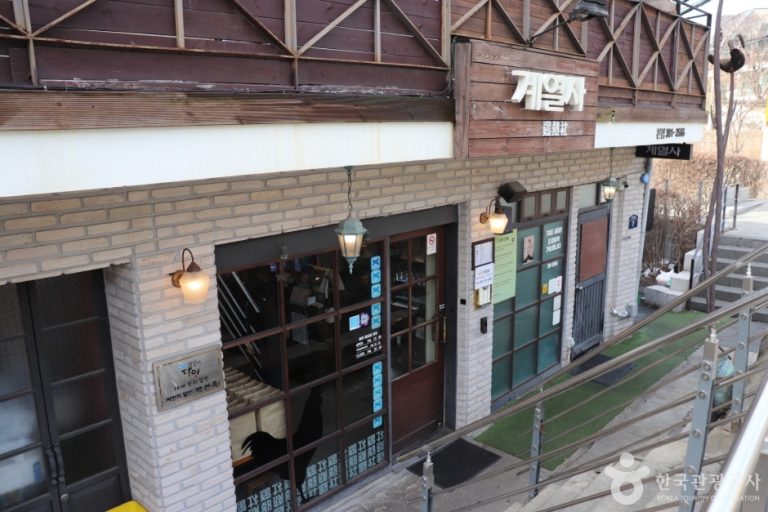
Vestis – Gyeongbokgung Branch [Tax Refund Shop] (베스티스 경복궁)
Vestis – Gyeongbokgung Branch [Tax Refund Shop] (베스티스 경복궁)
–
– Address : 1F, 17, Jahamun-ro 12-gil, Jongno-gu, Seoul
※ Presentation Information
– Fair Day
Monday – Sunday
– Information and Guides
+82-507-1415-9774
– Opening Hours
11:00-23:00
– Parking
Not available
– Items for Sale
Other Fashion & Clothing
– Shop Guide
Refund method (Time-frame) : Claim for refund
◎ Nearby Tourism Infobox
⊙ Jalppajin Memil Seochon Main Store (잘빠진메밀 서촌)
View detailed guide on Korea Trip Guide →
– Homepage
https://www.instagram.com/jalppajin_seochon
– Tel
+82-70-4142-1214
Jalppajin Memil is a traditional Korean restaurant in Seochon where you can enjoy buckwheat noodles, boiled pork slices, and unrefined rice wine. They use 100% buckwheat for their noodles, which are kneaded using a cold water machine and served either mixed with seasoning and sprouts or dipped in broth. Pairing “Jalppajin sulsang” with unrefined rice wine is recommended for a delightful dining experience.
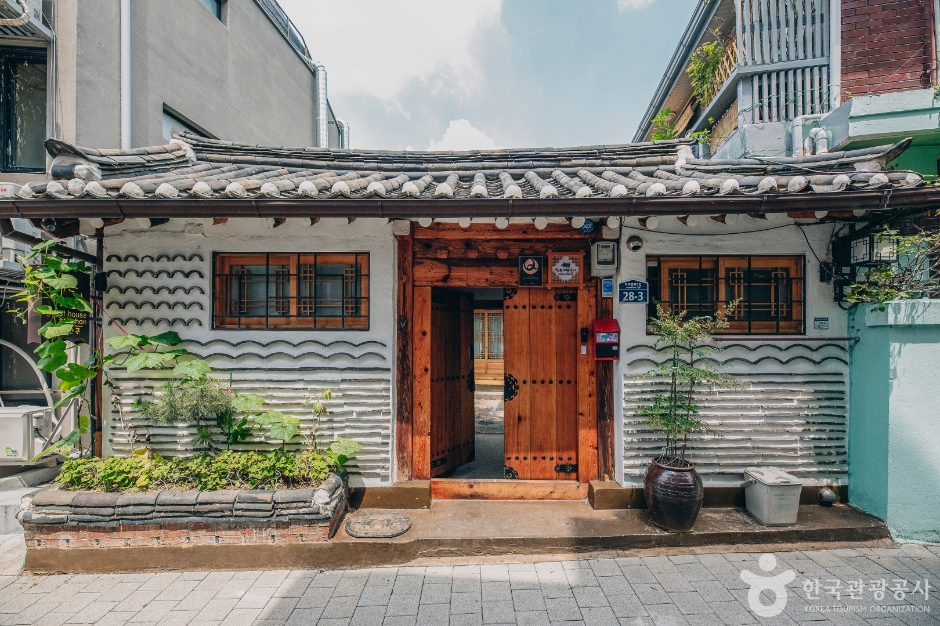
⊙ Seochon Guest House [Korea Quality] / 서촌게스트하우스 [한국관광 품질인증]
– Homepage
http://www.seochonguesthouse.com
– Tel
+82-2-473-9680
Seochon Guest House in Seochon, Jongno, Seoul, consists of a 90 year-old hanok and a two-story Western-style house. A 6-cheop table is provided for meals, and travelers can use the 1st floor rooms and hall at any time. In the yard, Pansori performances are held twice a year, and residents can sample traditional music, wearing hanbok, and making Korean food; the guesthouse’s other name is Pleasure Valley (Jaeminan Gol)! There are programs for visiting Inwangsan-Bukaksan fortress trail, Gyeongbokgung and other royal palaces, and nearby traditional markets.
⊙ Boan1942 (보안1942)
View detailed guide on Korea Trip Guide →
– Homepage
b1942.com
Prior to becoming an art space in 2007, Tongui-dong Boan served as a place for rest for travelers from 1942 to 2005. After a short suspension, the place was renovated into a cultural space in 2017 to carry on the historical legacy and provide creative inspiration under the concept of “Boanstay.”
Boan1942 is divided into a cultural space consisting of a cafe, project workshop, book shop, and exhibition area, and Boanstay on the 3rd and 4th floors that offer temporary lodging services to the cultural nomads. Located in Seochon, the center of culture, history, and convenient traffic in Seoul, Boanstay offers a splendid view of Seoul’s historical and cultural assets such as Gyeongbokgung Palace, Cheong Wa Dae, and Seochon Hanok Village.
<Credit: Boanstay>
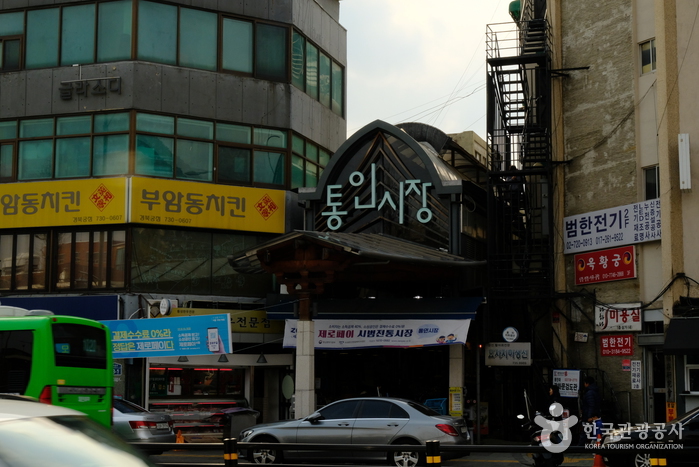
⊙ Tongin Market (통인시장)
View detailed guide on Korea Trip Guide →
– Homepage
tonginmarket.modoo.at
Tongin Market dates back to June 1941, as a public market set up for Japanese residents near the Hyoja-dong neighborhood when Korea was still under Japanese rule. After the Korean War, the nation experienced a swift rise in population, which led to a natural increase in consumption and demand. As a result the area’s street vendors and stores used the former Tongin Market area as their marketplace. Now, Tongin Market consists of 75 stores, most of which are restaurants and grocery stores. There are also some shops selling manufactured goods like underwear and shoes.
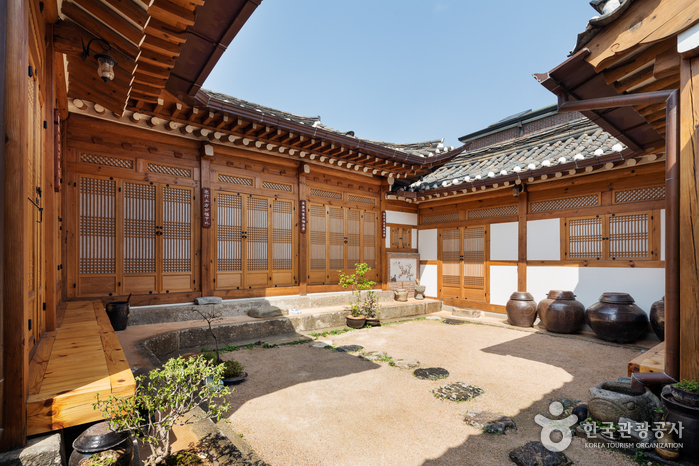
⊙ Hanok Guesthouse Dongchonchae (한옥 게스트하우스 동촌재)
– Homepage
https://dongchonjae.modoo.at
– Tel
+82-10-8561-5227, +82-10-9127-5227
Dongchonjae is a hanok guesthouse in Seochon, Jongno, Seoul. The the Anchae(women’s quarters) consists of four sleeping rooms and a cheongmaru lounge space, plus kitchen and toilet. (There are also shared toilets in the yard.) Cooking is not allowed, but guests are welcome to bring in prepared food. A free breakfast is provided. Guests can watch movies in the yard or main hall, and can use the refrigerator and washing machine. A guided night tour of Seoul City Wall is offered, as is a tea ceremony, and rice-cake making experience.
⊙ Haeunjae (하은재)
– Homepage
http://losthouse.co.kr
– Tel
+82-504-0904-2414
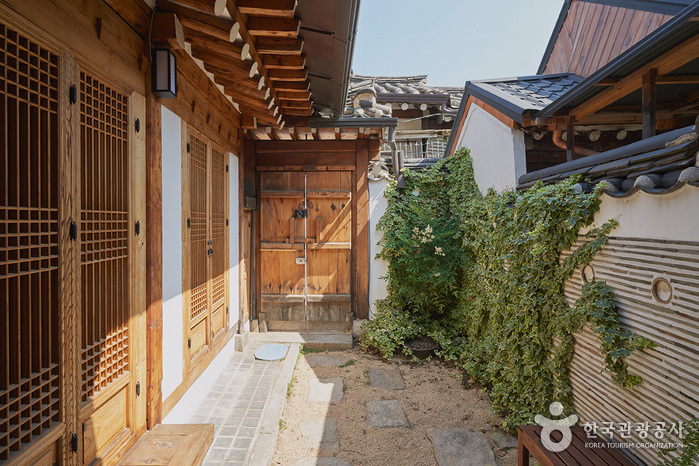
Ha Eunjae is a private hanok stay in Seochon Village, just west of Gyeongbokgung Palace in Seoul. The accommodation comprises a bedroom with queen-size bed, a kitchen, a movie room, and two bathrooms. The movie room is fitted out with a Bose sound system, a beam projector, and a large screen, with a movable footbath as a bonus. The kitchen is equipped for simple cooking. Guests staying 2 nights or more during the week receive a 10% discount, and towel replacement and cleaning services are provided for stays of 3 nights or more. Ha Eunjae is close to major tourist attractions such as Gyeongbokgung Palace and Samcheong-dong.
⊙ Seochon Village (서촌마을)
View detailed guide on Korea Trip Guide →
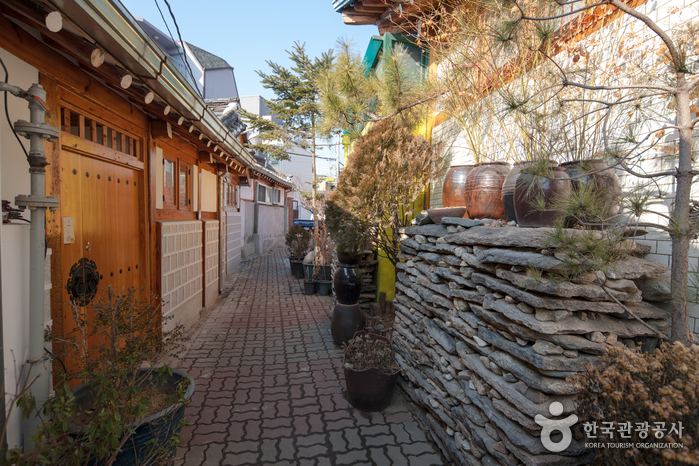
Seochon Village is the name given to the area to the west of Gyeongbokgung Palace. It is a historic village, home to old shops and hanok buildings that have stood the test of time. Korean traditions and contemporary sensibilities coexist within Seochon Village’s maze-like alleyways, creating the unique ambience that makes the district so beloved. One can find shops, guesthouses, cafés, and restaurants in the village.
⊙ Daeo Bookstore (대오서점)
View detailed guide on Korea Trip Guide →
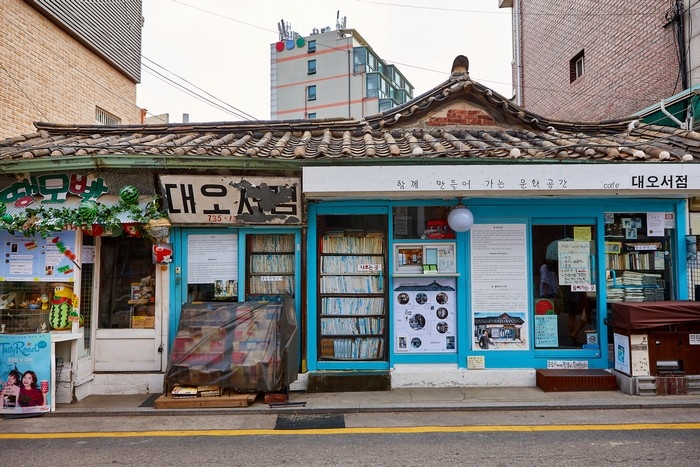
Daeo Bookstore is the oldest bookstore in Seoul that has been maintained in one place since it opened in 1951. Recently, it has been refurbished as a cultural space with a cafe, where one can enjoy coffee, exhibitions, and performances while looking at the yard. Visitors who just want to browse can purchase a souvenir postcard set for admission. Taking a closer look at books that feel the years and objects that have traces of use, they appear to come rather new.
⊙ Gallery Simon (갤러리 시몬)
View detailed guide on Korea Trip Guide →
– Homepage
www.gallerysimon.com
– Tel
+82-2-720-3031
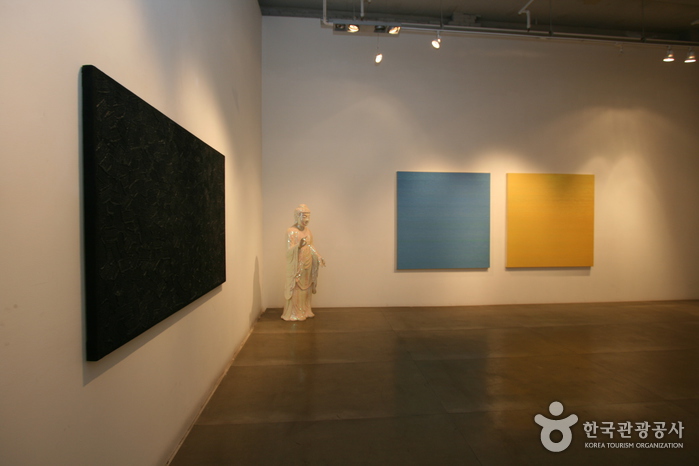
Since its opening in April, 1994, Gallery Simon has continued to focus on promoting the beauty of modern art. Exhibitions include works from experienced artists as well as the works of budding artists, both from Korea and abroad. Select artists, referred to collectively as “Simon’s Friends,” have exhibitions annually. The changing collections allow the museum and featured artists to constantly strive for improvement and follow the changes in art over time.
![Lotte Mart – ToysRus Jamsil Branch [Tax Refund Shop] (롯데마트 토이저러스잠실점)](https://ktrip.blogsailing.com/wp-content/uploads/2026/02/2879228_image2_1-768x576.jpg)
![Olive Young – Hak-dong Station Branch [Tax Refund Shop] (올리브영 학동역)](https://ktrip.blogsailing.com/wp-content/uploads/2026/02/2888021_image2_1.jpg)