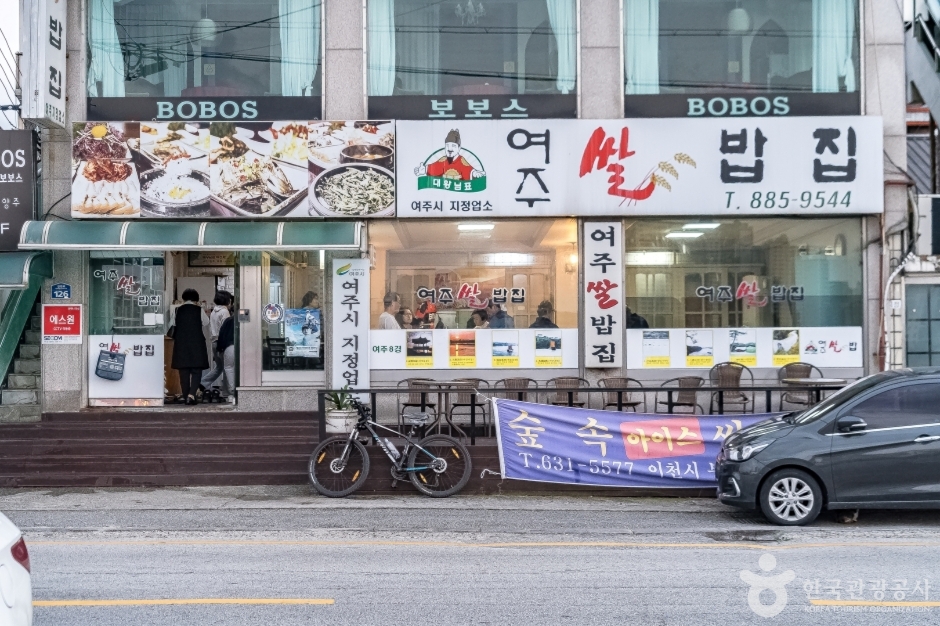
Yeoju Ssalbapjip (여주쌀밥집)
Yeoju Ssalbapjip (여주쌀밥집)
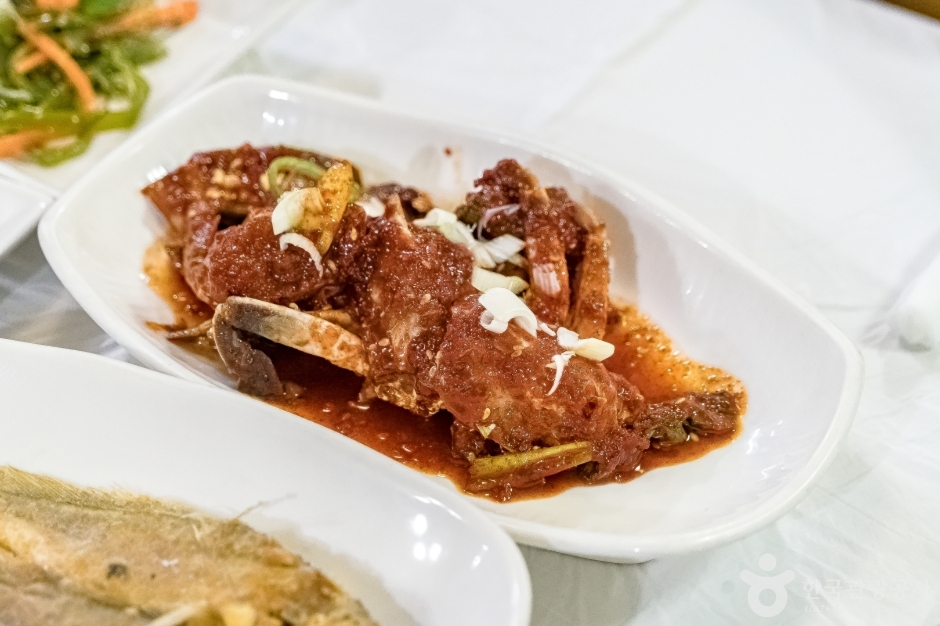
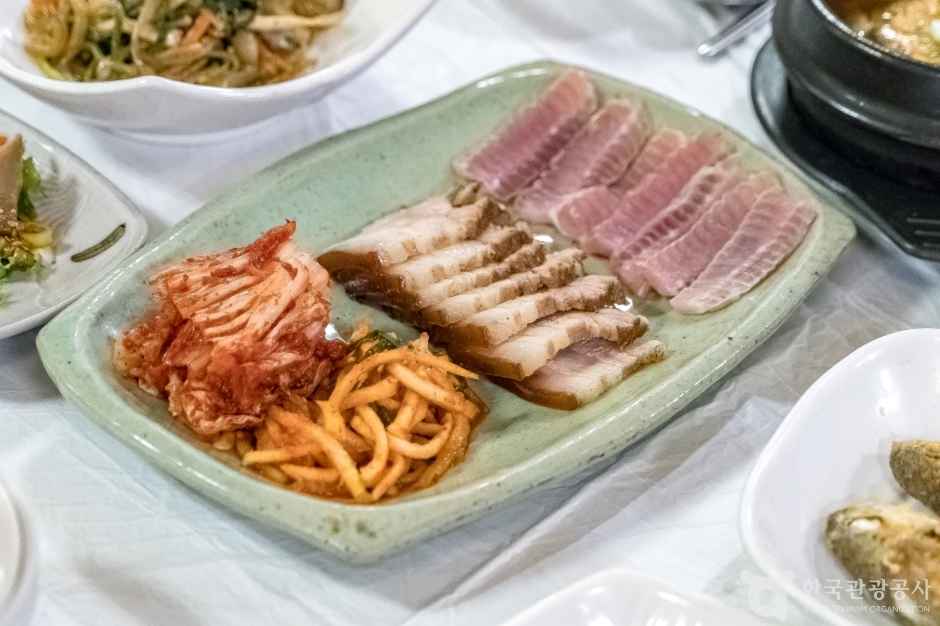
 Yeoju Ssalbapjip, located near Yeoju City Hall, serves dolsotbap (hot stone pot rice) made with rice grown in Yeoju. Visitors can feel the warmth of its hospitality through its generous dishes. In addition to its signature menu, ssalbap jeongsik (steamed rice set menu), visitors can also enjoy a variety of dishes, such as samgyeopsal gui (grilled pork belly), duruchigi (stir-fried pork), pyeonyuk (boiled pork slices), gopchang jeongol (small intestine hot pot), and samhap hongeo (skate, pork, and kimchi combo). Situated in front of the Namhangang River, it also offers an excellent opportunity for a leisurely stroll along the riverbank.
– Address : 126 Gangbyeon-ro, Yeoju-si, Gyeonggi-do
※ Presentation Information
– Main Dish
Ssalbap jeongsik (Steamed rice set menu)
– Information and Guides
+82-31-885-9544
– Menu
Dolsot jeongsik (Hot stone pot rice set menu), Samhap hongeo (Skate, pork, and kimchi combo), Samgyeopsal gui (Grilled pork belly)
– Opening Hours
10:00-21:00
– Parking
Available
– Day Off
N/A (Open all year round)





◎ Nearby Tourism Infobox
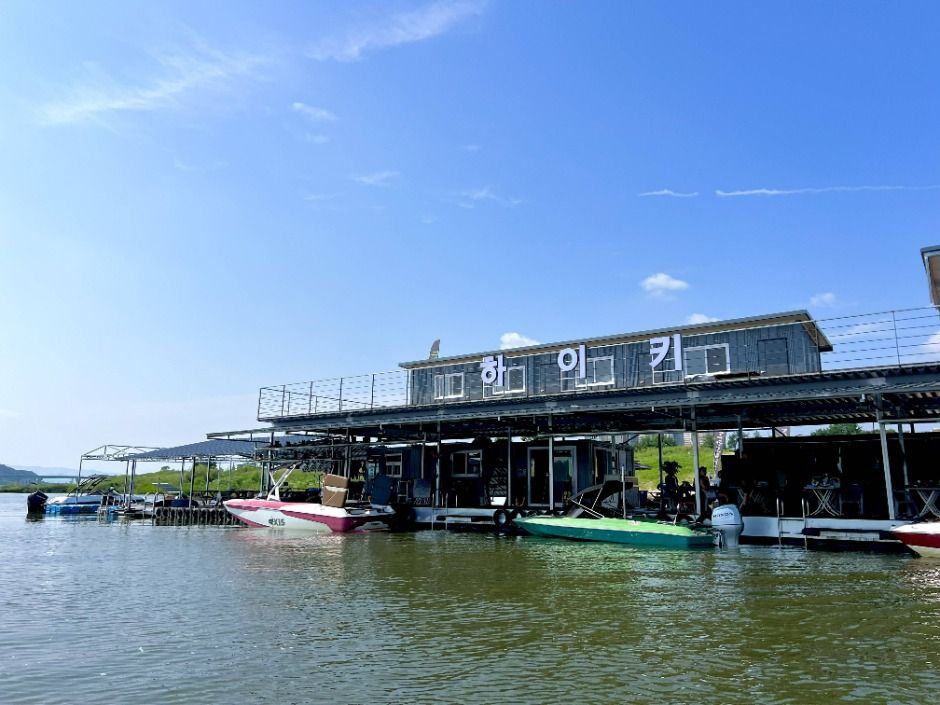
⊙ Highkey Water Leisure (하이키수상레저)
View detailed guide on Korea Trip Guide →
– Homepage
www.instagram.com/highkey.yeoju
Highkey Water Leisure is located by the Namhangang River in Yeoju, Gyeonggi-do, allowing convenient access from Seoul. In addition to convenient water sports facilities, Highkey Water leisues offers a variety of activities such as speedboating, water skiing, wakeboarding, and other fun rides. The calm waters of the Namhangang River and trained instructors provide the ideal environment for beginners to learn wakeboarding and water skiing.
⊙ Ilsung Namhangang Condo & Resort (일성남한강콘도&리조트)
View detailed guide on Korea Trip Guide →

– Tel
+82-1566-8113
Guests can enjoy the beautiful Namhangang River at Ilsung Namhangang Condo & Resort.
⊙ Yeoju Museum (여주박물관)
View detailed guide on Korea Trip Guide →

– Homepage
yeoju.go.kr
Yeoju Museum first opened in 1997 as the Yeoju Folk History Museum, surveying and displaying the history and relics of the area. The name changed to the current Yeoju Museum in 2016 with the addition of the Yeoma-kwan Building. The museum features both permanent exhibitions and planned exhibitions, as well as offering special lectures and educational programs.
⊙ Yeoju Dojasesang (여주세계생활도자관)
View detailed guide on Korea Trip Guide →
– Homepage
www.kocef.org
– Tel
+82-31-884-8644
Yeoju Dojasesang, which opened in March 2002, displays functional ceramics. The museum, with its four exhibition halls, has been displaying ceramics shown at the Korean International Ceramics Biennale for the past 10 years.
⊙ Yeoju Dojasesang (여주도자세상)
View detailed guide on Korea Trip Guide →
– Homepage
www.kocef.org
Yeoju Dojasesang is a multicomplex operated by the Korea Ceramic Foundation that introduces ceramic designs through displays as well as sales in the nation’s largest ceramic shopping mall. Another attractive feature of Yeoju Dojasesang is the craft studio, where artisians and visitors alike can create beautiful and unique works.
⊙ Yeoju Ogoknaru Festival (여주오곡나루축제)
View detailed guide on Korea Trip Guide →

– Homepage
www.yjfestival.or.kr
– Tel
+82-31-881-9692
The Yeoju Ogok Naru Festival celebrates Yeoju’s agricultural products and traditional culture. The festival features a Naru Madang that recreates the market street ambiance around the old traditional quay, an Ogok (five-grain) Madang with various agricultural and specialty products on sale, and traditional activity programs. There is also a food market and a craft market for a festival area.
⊙ Yeoju Silleuksa Temple (신륵사(여주))
View detailed guide on Korea Trip Guide →
– Homepage
www.silleuksa.org
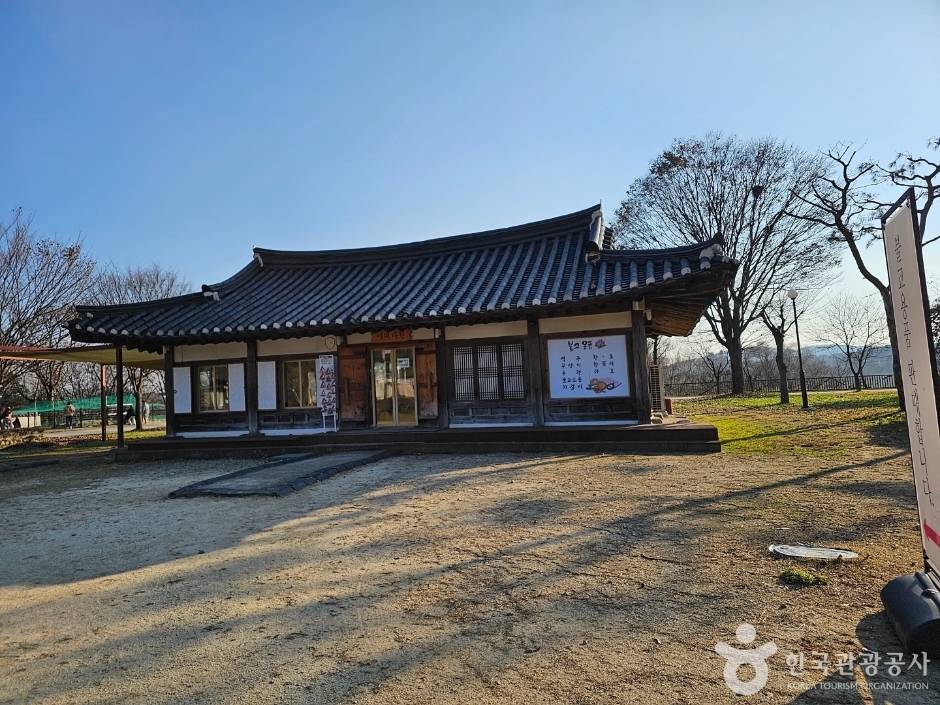
Silleuksa Temple is located along the upper section of the Namhangang River as it flows from Bongmisan Mountain in Yeoju. It is believed that Silleuksa Temple was built by Monk Wonhyo during the reign of Silla King Jinpyeong, but there is no evidence to prove this. The temple is famous for being a place where Naong Hyegeun stopped in 1376. The temple began to be called Boeunsa in 1472, but the name changed back to Silleuksa Temple in 1858.
![Kolon Henry Cotton’s – Shinsegae Paju Branch [Tax Refund Shop] (코오롱 헨리코튼 신세계파주)](https://ktrip.blogsailing.com/wp-content/uploads/2026/01/2888323_image2_1.jpg)
![Bluedog [Tax Refund Shop] (블루독)](https://ktrip.blogsailing.com/wp-content/uploads/2025/12/3314733_image2_1-768x512.jpg)
![Pearly Gates – Hyundai Jungdong Branch [Tax Refund Shop] (파리게이츠 현대중동)](https://ktrip.blogsailing.com/wp-content/uploads/2026/01/2891170_image2_1-768x576.jpg)
![Prelin – Newcore Pyeongchon Branch [Tax Refund Shop] (프렐린 뉴코아 평촌)](https://ktrip.blogsailing.com/wp-content/uploads/2025/12/3313234_image2_1.jpg)