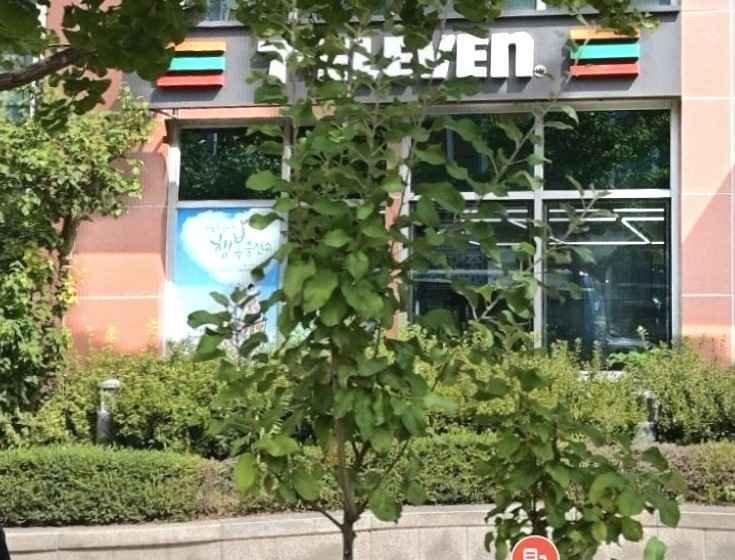
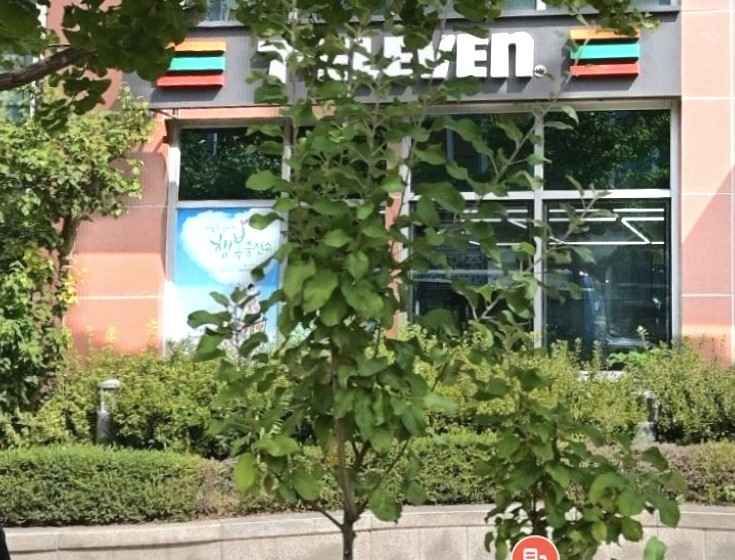
7-Eleven Seodaemun Station Branch[Tax Refund Shop](세븐일레븐 서대문역점)
7-Eleven Seodaemun Station Branch[Tax Refund Shop](세븐일레븐 서대문역점)
 – Homepage
www.7-eleven.co.kr
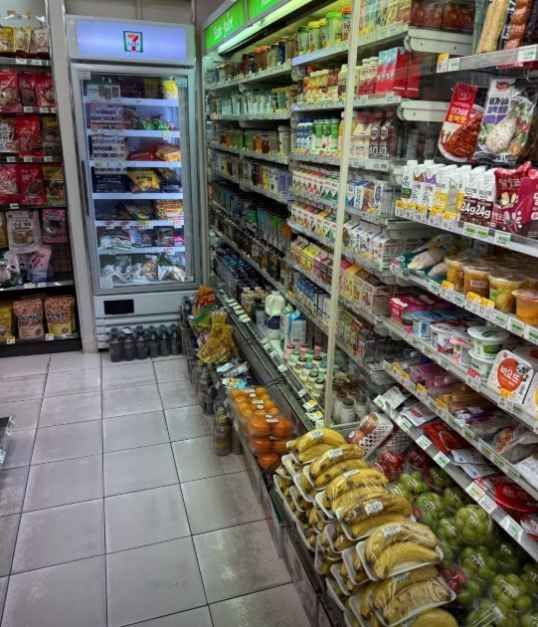
7-Eleven is a global convenience store brand with a worldwide network, prioritizing customers’ convenience around the clock. Through distinctive private-label foods and innovative everyday services, it remains a reliable companion in customers’ daily lives.
– Address : 114, Tongil-ro, Jung-gu, Seoul
※ Presentation Information
– Fair Day
Monday – Sunday
– Information and Guides
02-722-3951
– Opening Hours
00:00~24:00
– Parking
Not available
– Restroom
Available
– Items for Sale
Complex shopping malls (department stores, supermarkets, convenience stores, outlets, etc.)
◎ Nearby Tourism Infobox
⊙ Ewha Centennial Hall (이화여고100주년기념관)
View detailed guide on Korea Trip Guide →
– Homepage
www.junggu.seoul.kr
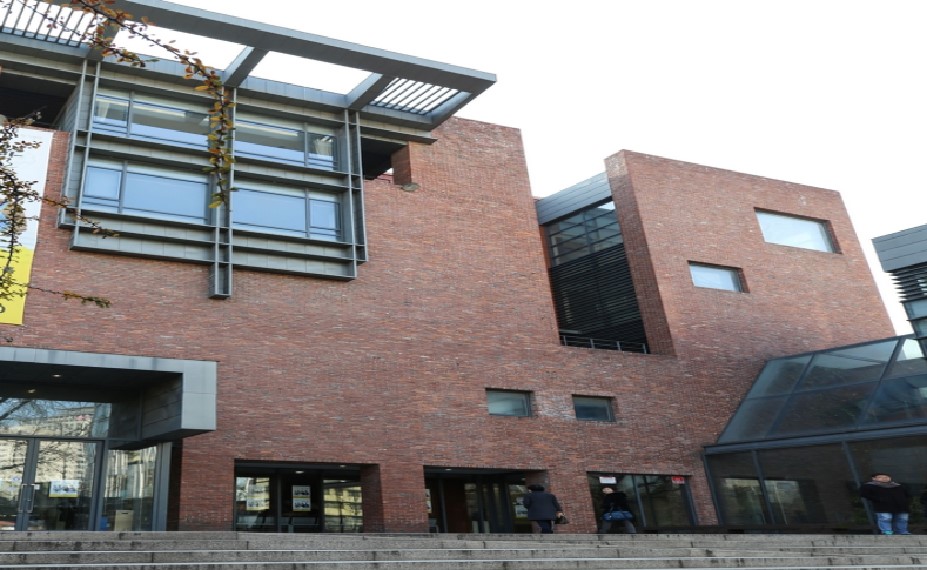
Ewha Centennial Hall is a multimedia education center located next to Ewha Girls’ High School. Spanning underground and five above-ground floors, it features a gallery, a cafe, music rooms, individual practice rooms, and audio-visual rooms. The Hwaham Hall on the first and second floors is utilized for performances such as musicals and concerts, as well as educational events.
⊙ Kangbuk Samsung Hospital (강북삼성병원)
View detailed guide on Korea Trip Guide →
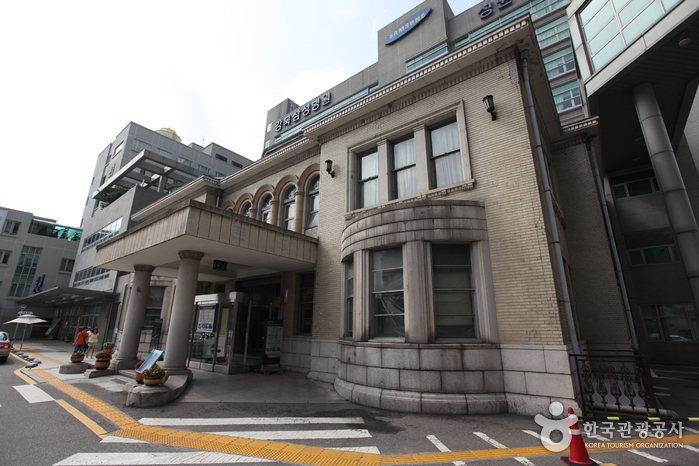
Established in 1968, Kangbuk Samsung Hospital has over 50 years of history and is taking a new leap forward with a vision for its centennial year.
Through partnerships with renowned institutions, such as Johns Hopkins Hospital in the United States and the BBDC in Canada, the hospital delivers advanced medical services while leading the public health arena. It is also committed to systematic research and the development of ICT-integrated digital healthcare, which will be the foundation for future medicine. With an excellent infrastructure that includes clinics and specialized centers (e.g., the Diabetes Center, Breast and Thyroid Cancer Center, Digestive Cancer Center, Musculoskeletal Disease Center, and Prostate Center), Kangbuk Samsung Hospital provides top-quality medical services focused on providing patients with satisfactory treatments.
⊙ Jeongdong-gil Road (정동길)
View detailed guide on Korea Trip Guide →
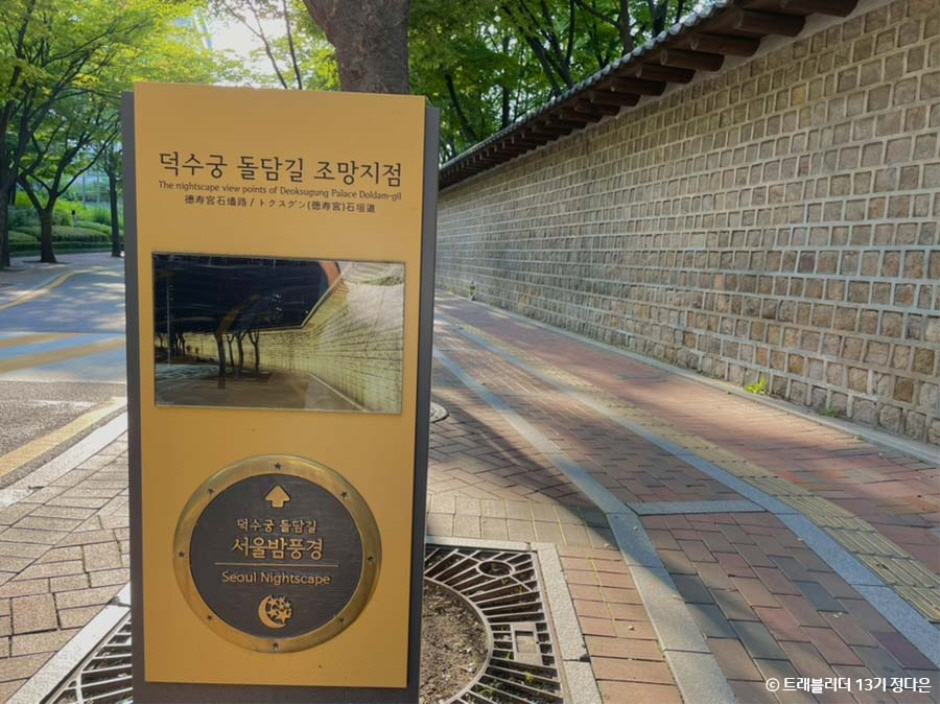
Jeongdong-gil Road is one of Seoul’s most famous walking paths, stretching from the intersection in front of Jeongdong Church to Saemunan-gil Road. The street holds importance in Korea’s modern history, with the surroundings serving as a living museum of this. During the Joseon dynasty, the area developed into a residental space for distant members of the royal family, with a palace and royal tombs in the area. In 1999, the pedestrian walking area was expanded by turning the two-way road into a one-way road. Since then, the road has earned many awards and honors.
⊙ Jeongdong Guksi (정동국시)
View detailed guide on Korea Trip Guide →
– Tel
02-732-0114
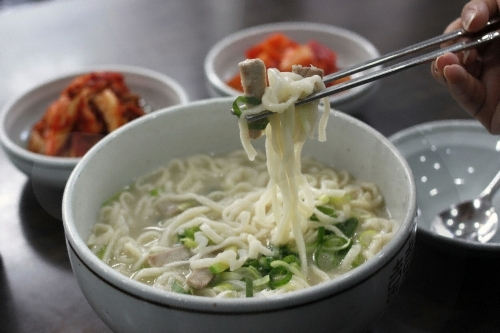
Jeongdong Guksi features a rich soup with a clean taste, created by carefully removing the oil dozens of times while boiling Korean beef bones for 15 hours. The restaurant uses this same beef bone broth in their mandutguk (dumpling soup), something not many restaurants do. The rich flavor of the broth combined with the soft dumplings, made in-house daily, is a must-try. The restaurant is also surrounded by many cultural and artistic spaces, making it a great addition to tours in the area.
⊙ Seoul Gyeonggyojang House (서울 경교장)
View detailed guide on Korea Trip Guide →
– Homepage
www.museum.seoul.kr
– Tel
+82-2-735-2038
Gyeonggyojang House, a designated Historic Site, was the location of the provisional government and the place where Baekbeom Kim Koo passed away. Seoul reproduced the historical site, Gyeonggyojang House, to use the area as an educational site. Also, the house exhibits the history of the provisional government in order to see the history more clearly.
Restoration work included the demolition of the interior that was changed when the building was turned into a hospital facility and embassy after Kim Koo passed away in 1949. During the work, the remaining parts were maintained with the utmost care. Reconstructed parts were based on the building’s floor plan written in Chosun and Architecture (8th edition in 1938). Visitors can see various contents related to the Korean Provisional Government history through relics, video, and information searching corners.
⊙ Jungmyeongjeon Hall (중명전)
View detailed guide on Korea Trip Guide →
– Homepage
https://royal.khs.go.kr/ROYAL/contents/menuInfo-dsg.do?grpCode=dsg
– Tel
+82-2-752-7525
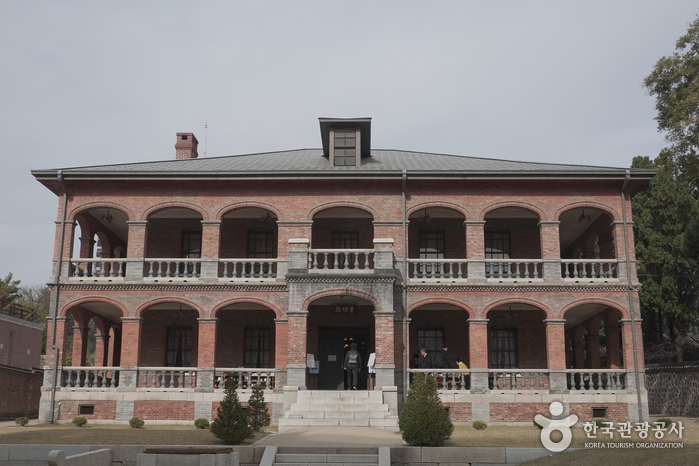
Located near Deoksugung Palace, Jungmyeongjeon Hall is a red-brick modern Western-style building. It was built in 1899 as the imperial library of the Korean Empire. After Deoksugung Palace caught on fire in 1904, the place became the temporary residence of Emperor Gojong. It also witnessed the tragic part of history in which the infamous Eulsa Treaty (Japan-Korea Protectorate Treaty), an illegal treaty forced by Japan, was signed in 1905. Its exhibition hall serves as a place for historical education.
⊙ Jeongdong Theater (국립 정동극장)
View detailed guide on Korea Trip Guide →
– Homepage
www.jeongdong.or.kr
– Tel
+82-2-751-1500
Jeongdong Theater is located along Deoksugung Stone Wall Path and serves as a cultural hub for local citizens. Opened in 1995, Jeongdong Theater is historically significant as it was established to restitute the legacy of Wongaksa, the first modern theater in Korea. Jeongdong Theater features numerous critically-acclaimed productions, such as “Traditional Art Performance,” “Masters Exhibition,” and “Art Frontier,” as well as programs like “Art Stage at Noon” that are geared toward the general public. As a result, Jeongdong Theater has become one of Korea’s representative traditional arts performance theaters and was designated as a Seoul Future Heritage in 2015.
The theater successfully held the performance “Miso” in 2010, featuring the traditional musical “Love Songs from Chunhyang,” written and created by Jeongdong Theater. The musical attracted many international visitors from all over the world, passing on Korean cultural values and beauty, as well as gaining the attention of critics worldwide. In addition, the theater also produced “The 2nd Story of Miso: Baebijang-jeon,” offering a modern interpretation of the fundamental values found in Korea’s culture and art.
⊙ Appenzeller Noble Memorial Museum (배재학당 역사 박물관)
View detailed guide on Korea Trip Guide →
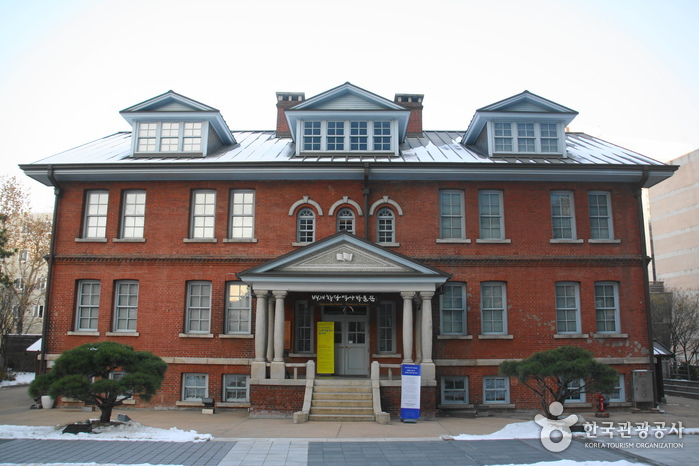
– Homepage
appenzeller.pcu.ac.kr
– Tel
+82-2-319-5578
The Appenzeller Noble Memorial Museum is dedicated to Henry Gerhart Appenzeller, the missionary who opened the first Western-style educational institution in Korea in 1885. The school started with English and core subjects, but expanded into the Pai Chai University, Pai Chai High School, and Pai Chai Middle School and has many famous alumni, including Rhee Syng-man. The memorial hall opened in 2008 in the east wing of the original school building, which was built in 1916 and designated as a Seoul Monument. With dynamically arranged permanent exhibitions, annual special exhibitions and special lectures, the museum offers a unique learning experience to visitors and people with an interest in the history of education in Korea.
⊙ Korean National Police Heritage Museum (경찰박물관)
View detailed guide on Korea Trip Guide →
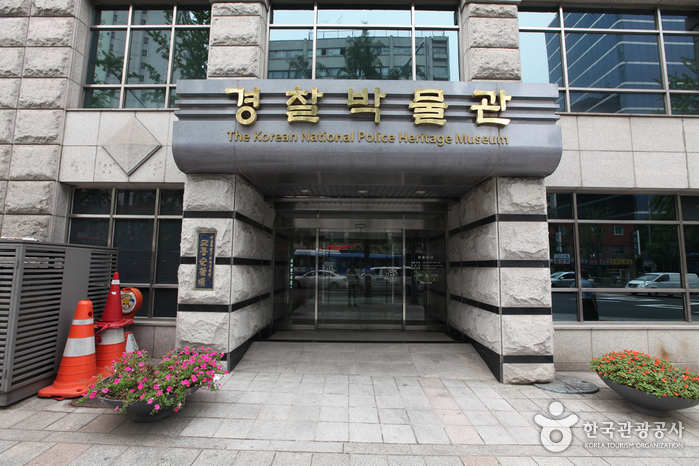
– Homepage
www.policemuseum.go.kr
– Tel
+82-2-3150-3681
The police museum opened on October 14, 2005 to give a better understanding of the job of the police and to offer a formal education to children who wish to become police officers in the future. The history hall of the museum is designed for visitors to learn about the history of Korean police at a glance, exhibiting information on the police force from the Joseon dynasty up until current times.
Visitors to the museum can pretend to be police officers by touching actual equipment and learning about an officer’s daily tasks. Visitors can also get in patrol cars, wear a police uniform, experience shooting a gun through a simulation, and learn self-defense martial arts and arrest techniques. Visitors can also go to the museum jail.
⊙ The Dresser(더 드레서)
View detailed guide on Korea Trip Guide →
![Kakao Friends – Starfield COEX Mall Branch [Tax Refund Shop] (카카오프렌즈 스타필드 코엑스몰점)](https://ktrip.blogsailing.com/wp-content/uploads/2026/04/4045468_image2_1.jpg)
](https://ktrip.blogsailing.com/wp-content/uploads/2026/05/4018135_image2_1.jpg)
](https://ktrip.blogsailing.com/wp-content/uploads/2026/05/4045083_image2_1.jpg)
![Mountia – Mario Outlet Building 2 Branch [Tax Refund Shop] (마운티아 마리오아울렛 2관점)](https://ktrip.blogsailing.com/wp-content/uploads/2026/03/4021427_image2_1.jpg)
![Vans – LOTTE Department Store Konkuk Univ. Star City Branch [Tax Refund Shop] (반스 롯데백화점 건대스타시티점)](https://ktrip.blogsailing.com/wp-content/uploads/2026/03/4017356_image2_1.jpg)