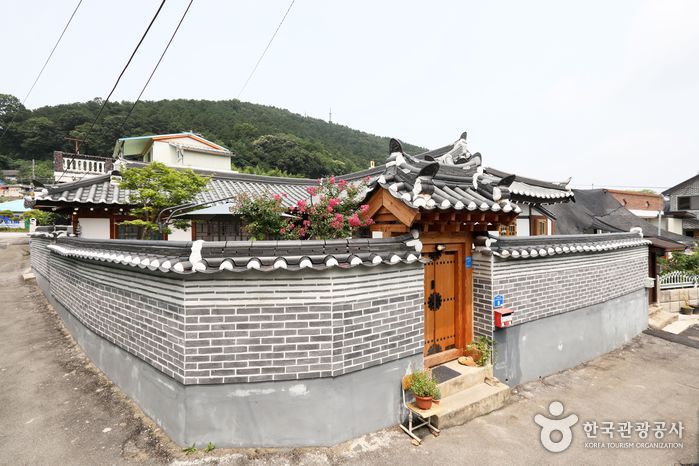
Bonghwangjae Hanok Guesthouse (봉황재 한옥 게스트하우스)
Bonghwangjae Hanok Guesthouse (봉황재 한옥 게스트하우스)
 – Homepage
https://blog.naver.com/bonghwangjae
– Tel
+82-41-960-5525
Bonghwangjae is a hanok guesthouse is in Gongju, Chungcheongnam-do. It has four guestrooms, including a master bedroom with an attic that is mainly used by families. The other rooms are smaller in size, but one has a wooden veranda. Each room has a bathroom and toilet, and the big wooden-floored hall, the kitchen, and of course the yard are shared spaces. A simple free breakfast is provided. A walking tour round the old city of Gongju is offered by the owner – as is advice on where and how to take the best photos. The main tourist attractions of Gongju can all be reached on foot.
– Address : 8 , Keunsaem 3-gil, Gongju-si, Chungcheongnam-do
※ Presentation Information
– Check-in Time
15:00
– Check-out Time
11:00
– Daily Rate
Not available
– Amenities
Yes
– Parking Fee
No
– Number of Rooms
4


◎ Nearby Tourism Infobox
⊙ Restaurant Gomgol (곰골식당)
View detailed guide on Korea Trip Guide →

This renowned restaurant in Gongju is always bustling. Upon passing through its old, time-honored main gate, one is greeted by a tastefully minimalist garden leading to the eatery itself. The restaurant boasts a carefully selected main menu, offering just three specialty dishes: charcoal-grilled spicy pork, grilled fish, and braised cutlassfish. Each meal is accompanied by an abundant array of ssam (wrap) vegetables and delicious side dishes, available for unlimited refills at the self-service bar. The charcoal-grilled spicy pork is expertly cooked for immediate enjoyment, without the need for diners to grill it themselves. The smoky aroma of the charcoal complements the subtle seasonings perfectly. The grilled fish offers a delightful contrast with its crispy skin and succulent flesh. An additional perk is the option to order single servings of all menu items.
⊙ Former Gongju-eup Office (옛 공주읍사무소)
View detailed guide on Korea Trip Guide →
– Homepage
www.khs.go.kr
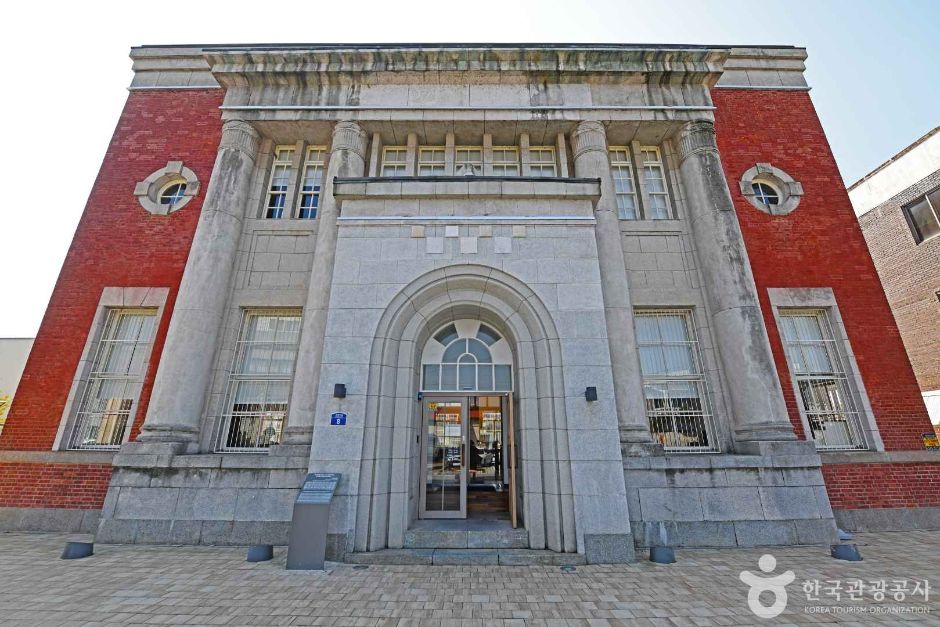
The Former Gongju-eup Office, a two-story Western-style red brick building built in 1923, stands as a symbol of Gongju’s modern history. Its interior showcases old photographs of Gongju, antique furniture, and a model of the current city. It also serves as a central venue for the annual Gongju Culture Night, held every fall, featuring performances, hands-on activities, and a flea market.
⊙ Chungcheongnam-do Museum of History (충청남도역사박물관)
View detailed guide on Korea Trip Guide →
– Homepage
▪ museum.cihc.or.kr
The Chungcheongnam-do History Museum displays historical artifacts, everyday items, folk traditions, crafts, documents, paintings, and sculptures from the Middle Ages to the modern era found in Chungcheongnam-do. Its facilities include exhibition halls, a lounge, an experience room, a performance hall, and an outdoor garden. Visitors can enjoy traditional Korean games like yunnori (traditional Korean board game) and tuho (arrow-throwing). In spring, the museum hosts a cherry blossom festival in the outdoor garden during the blooming season.
⊙ Gongju Jungdong Catholic Church (공주 중동성당)
View detailed guide on Korea Trip Guide →

– Homepage
tour.gongju.go.kr
Jungdong Catholic Church, the first of its kind in the Gongju, was constructed in 1897 in the Western medieval Gothic style. The church features a cruciform layout with a red brick exterior. A tall bell tower crowns the central entrance, while pointed arches adorn the upper parts of the doorways and windows. Inside, the simple decorations and stained glass windows create a serene and graceful ambiance.
⊙ Gongju Sanseong Market (공주산성시장)
View detailed guide on Korea Trip Guide →

– Homepage
blog.naver.com/sansung8657
www.gongju.go.kr
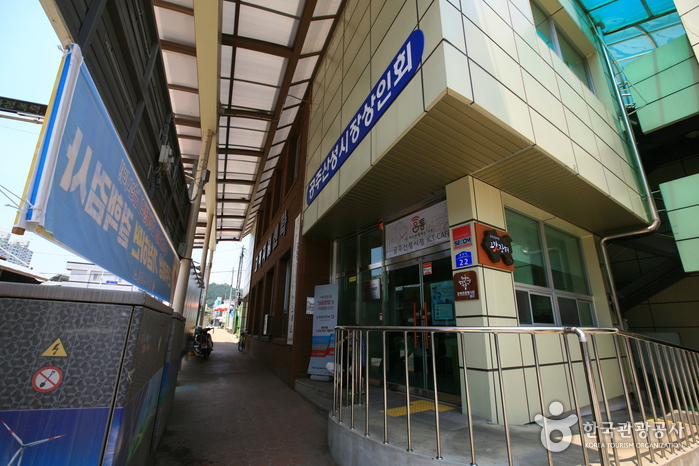
Opened in 1937, this expansive market features a variety of items across its five sections. It’s conveniently located near tourist attractions like Gongju National Museum, Gongsanseong Fortress, and Tomb of King Muryeong. The arcade-style roof allows for comfortable exploration in any weather or season. The Food Alley offers an irresistible selection of local delicacies, making it hard to choose from options like gimbap, banquet noodles, and bulgogi. Not to be missed are Gongju’s specialties: chestnut makgeolli (rice wine) and chestnut sweet rice cake, made from local chestnuts.
⊙ Gongju Tomb of King Muryeong and Royal Tombs [UNESCO World Heritage] (공주 송산리 고분군과 무령왕릉 [유네스코 세계문화유산])
View detailed guide on Korea Trip Guide →

– Homepage
www.gongju.go.kr
www.cha.go.kr
The Songsan-ri Tombs and Royal Tomb of King Muryeong (r. 462-523) contain representative relics of the Baekje period (234-678). The Songsan-ri Tombs contain the graves of kings from the period when Baekje’s capital was Gongju, and it is believed to contain 17 such graves. Only seven graves have been discovered so far. There are two types of tomb designs: traditional Baekje-style rock and earth fortification tomb and Chinese-influenced rock tomb. The tombs number one to five were made using the traditional Baekje-style design while tomb number six and the Royal Tomb of King Muryeong were made using the Chinese-influenced design. Even though many artifacts were stolen from the tombs, the tombs serve as an important evidence of Baekje culture and the foreign exchanges from during that period.
⊙ Gongju Gongsanseong Fortress [UNESCO World Heritage] (공주 공산성 [유네스코 세계문화유산])
View detailed guide on Korea Trip Guide →

– Homepage
www.gongju.go.kr
– Tel
+82-41-856-7700
Gongsanseong Fortress is a fortification situated at the heart of Gongju, which served as the capital of the ancient Baekje kingdom (18 BCE – 660 CE) from 475 to 538. Even after Baekje’s fall, subsequent dynasties such as Silla (57 BCE – 935 CE), Goryeo (918-1392), and Joseon (1392-1897) continued to use Gongju as a regional administrative center. As a result, numerous historical sites have accumulated in the area over time. From the fortress, visitors can enjoy a panoramic view of Gongju’s city center and the Geumgang River.
⊙ Baekje Experience Center (백제오감체험관)
View detailed guide on Korea Trip Guide →
– Homepage
www.gongju.go.kr
The Baekje Experience Center offers a rich array of activities that allow visitors to engage with the history they have observed at the nearby ancient tombs in Songsan-ri and the Gongju National Museum in a tactile manner. This center features eight themed halls across the first basement, and the first and second above-ground floors, offering interactive and gaming programs designed to stimulate all five senses. Activities such as rubbing pattern experience and luminous stamps allow visitors to learn about and appreciate the culture and history of Woongjin Baekje in an intuitive way. One of the center’s highlights is the Window of Sympathy in the first-floor lobby. This impressive two-story panel changes its color in response to sound and touch, promising to attract significant attention from tech-savvy visitors. It showcases content that guests have captured within the center and shared on social media, complete with hashtags. Additionally, the Window of Creation on the same floor offers a unique creative outlet. Here, visitors can color Baekje-era relics with crayons. These artworks are then transformed into graphic mapping images on the wall via a scanner, allowing for a personalized and immersive historical experience.
⊙ Gomanaru 1999 (고마나루1999)
View detailed guide on Korea Trip Guide →

– Tel
+82-41-857-9999
Gomanaru 1999 is a Korean restaurant located near Gongsanseong Fortress. Their menu features a single set meal called gomanaru bapsang (rice and side dishes), which includes a hearty spread of pot rice, boiled pork slices, grilled marinated pork shoulder, and grilled dried pollack. Using rice from Gongju, the rice is flavorful and nourishing, complemented by fresh vegetables from Jirisan Mountain, making for a healthy meal. Rice is considered a staple in Korean cuisine, and Jirisan Mountain is renowned as a pristine region, making the food here particularly special.
![KODAK – Lotte Outlets Buyeo Branch [Tax Refund Shop] (코닥 롯데아울렛 부여점)](https://ktrip.blogsailing.com/wp-content/uploads/2025/12/3313339_image2_1-768x576.jpg)
![Onyun Private Villa [Korea Quality]온연 프라이빗 빌라[한국관광 품질인증]](https://ktrip.blogsailing.com/wp-content/uploads/2025/12/2817492_image2_1-768x512.jpg)
![Tandy [Tax Refund Shop] (탠디)](https://ktrip.blogsailing.com/wp-content/uploads/2025/12/2883514_image2_1-768x432.jpg)
![Jigott – Lotte Buyeo Branch [Tax Refund Shop] (지고트 롯데부여)](https://ktrip.blogsailing.com/wp-content/uploads/2025/12/2883450_image2_1-768x576.jpg)