Cheonmachong Tomb (Daereungwon Ancient Tombs) (천마총(대릉원))
Cheonmachong Tomb (Daereungwon Ancient Tombs) (천마총(대릉원))
 – Homepage
www.gyeongju.go.kr
– Tel
+82-54-743-1925
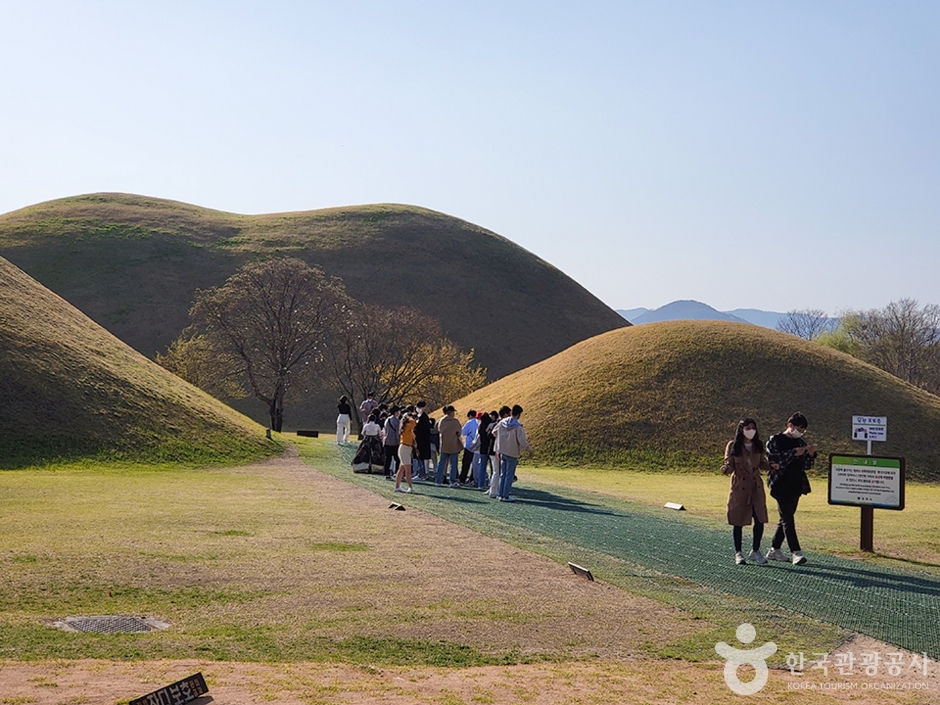
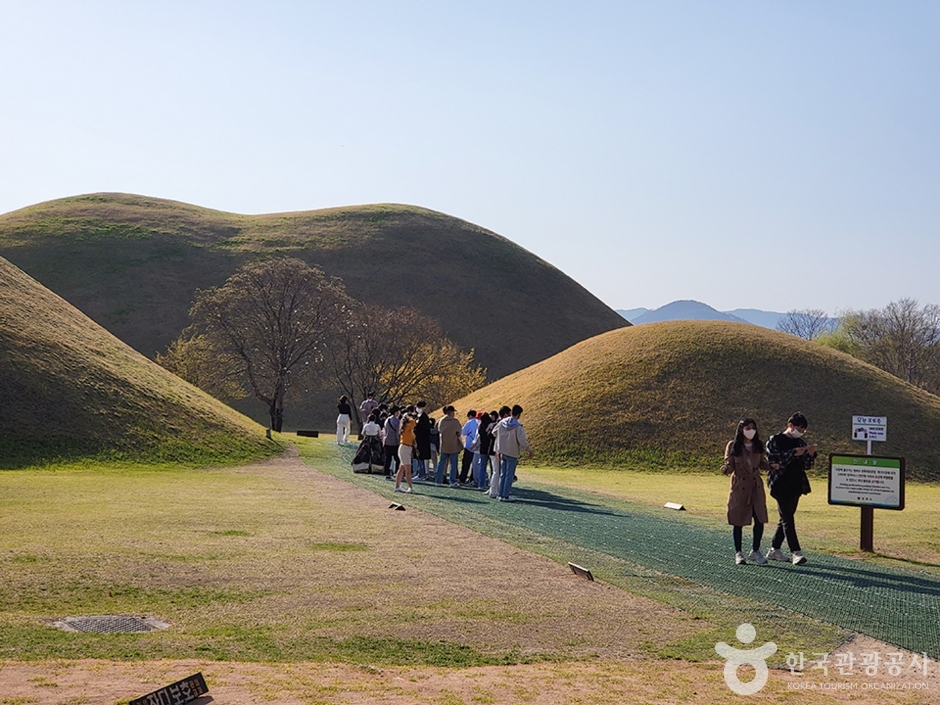
Daereungwon Ancient Tombs are one of the most well-known sights in Gyeongju, a history park home to 23 small and large ancient tombs. The area is dotted with tranquil trails among the tombs like the largest tomb in Hwangnam-dong, Hwangnamdaechong Tomb; Cheonmachong Tomb, the place where Cheonmado, a saddle flap painting, was excavated from; and the tomb of King Michu, nicknamed the “Tomb of the Bamboo Warrior.”
Cheonmachong Tomb, excavated in 1973, has a x_height of 12.7 meters and a diameter of 50 meters. Its excavation unearthed many artifacts, such as the famous Gold Crown from Cheonmachong Tomb. Its name comes from Cheonmado, a mudguard saddle flap with a painting of a heavenly horse. Cheonmachong Tomb is the only tomb in the Daereungwon Ancient Tombs to be opened to the public.
The tomb is thought to have been constructed between the late 5th century and early 6th century. Artifacts excavated from the tomb include a gold crown, gold cap, gold waist belt, gold diadem, and gilt-bronze shoes worn by the buried. The gold crown, in particular, is known as the largest and the most elaborate of all gold crowns unearthed in Korea. The artifacts themselves can be found in Gyeongju National Museum, so don’t miss the chance to see them in person.
Another must-visit site is the Daereungwon Magnolia Photo Area, a lone magnolia tree standing between the beautiful curves of ancient tombs.
– Address : 9 Gyerim-ro, Gyeongju-si, Gyeongsangbuk-do
※ Presentation Information
– Information and Guides
+82-54-743-1925
– Parking
Available (Nearby Public Parking Lot)
– Day Off
N/A (Open all year round)
– Operating Hours
09:00-22:00
– Parking Fees
2,000 won
– Admission Fees
Individuals: Adults 3,000 won / Teenagers 2,000 won / Children 1,000 won
Groups: Adults 2,400 won / Teenagers 1,600 won / Children 800 won
– Restrooms
Available


◎ Nearby Tourism Infobox
⊙ Gyeongju Daereungwon Ancient Tomb Complex (경주 대릉원 일원)
View detailed guide on Korea Trip Guide →
– Homepage
www.gyeongju.go.kr
– Tel
+82-54-750-8650
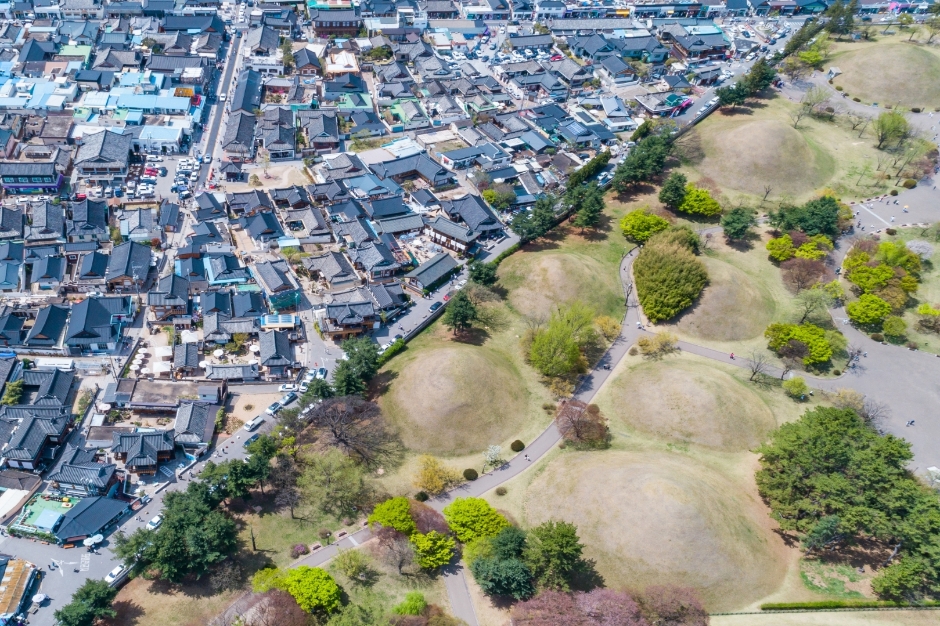
Gyeongju Daereungwon Tomb Complex consists of five tombs, Ancient Tombs of Gyeongju Nodong-ri, Noseo-ri, Hwangnam-ri, Hwango-ri, and Inwang-ri. The tombs are distributed in Hwangnam-dong, Gyeongju-si, and are located in the Daereungwon area. Within Daereungwon Tomb Complex is Cheonmachong Tomb, which was excavated in 1973. Furthermore, Hwangnamdaechong Tomb was excavated between 1973 and 1975, and is a set of twin tombs belonging to a presumed married couple.
⊙ Gyeongju Ssambap Street (경주 쌈밥거리)
View detailed guide on Korea Trip Guide →
– Homepage
www.gyeongju.go.kr
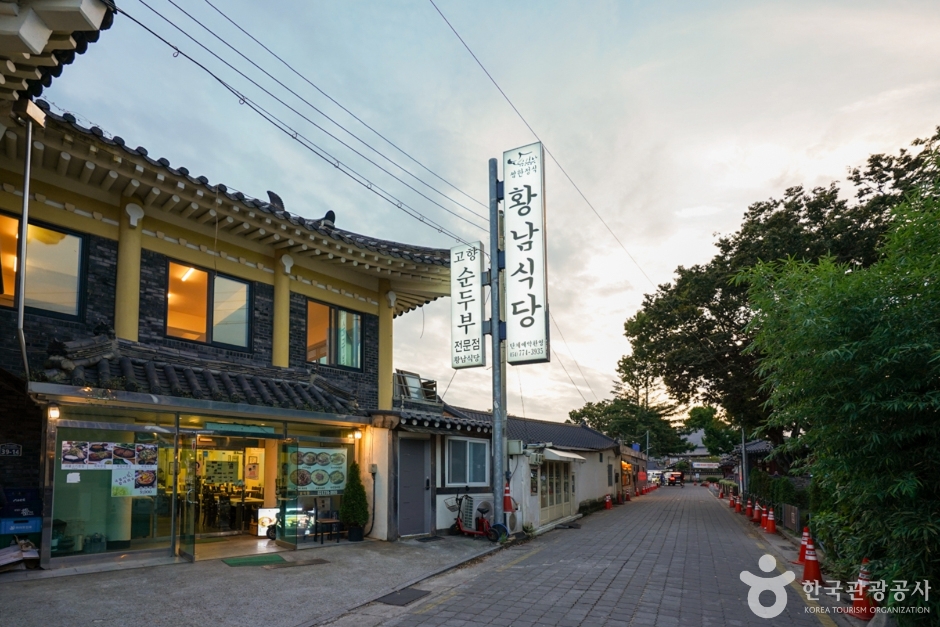
Gyeongju Ssambap Street, developed around the Daereungwon Ancient Tomb Complex in Gyeongju, offers a diverse culinary experience. A highlight is ssambap (leaf wraps and rice), a dish featuring fresh vegetables accompanied by substantial side dishes like fish, meat, and doenjang jjigae (soybean paste jjigae) made from homemade soybean paste. Additionally, this street presents a variety of snacks, including Hwangnam ppang (Hwangnam bread) prepared with red beans and flour, and jjondeugi, a traditional chewy snack made from cornmeal and sugar. Nearby attractions include the Cheomseongdae Observatory, Donggung Palace and Wolji Pond, Woljeonggyo Bridge, and the Gyeongju National Museum.
⊙ Daereungmyojji (대릉묘찌)
– Homepage
www.instagram.com/daereung_myochi
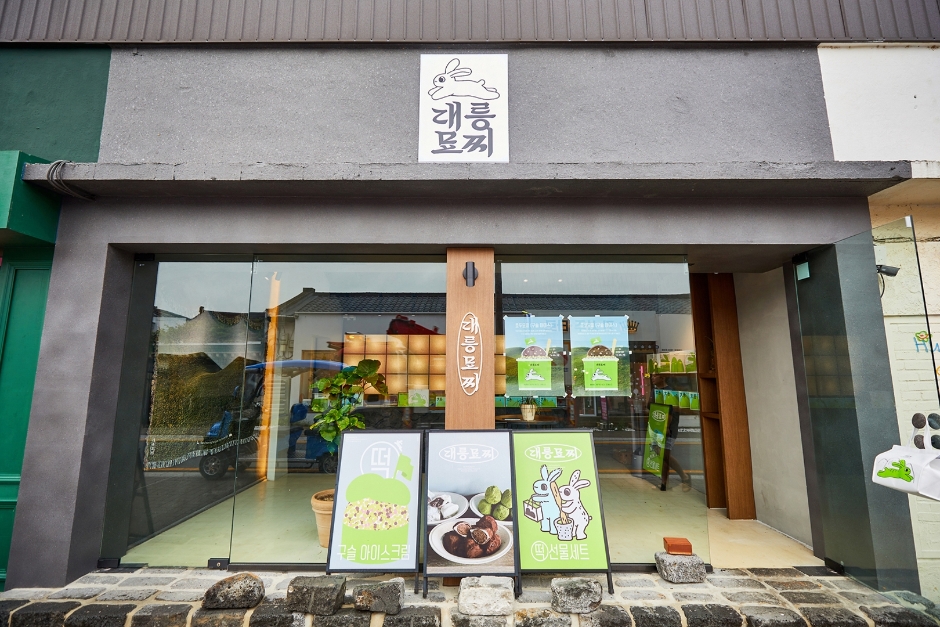
Try the unique combination of beaded ice cream and sweet rice cake, a traditional Korean dessert, at Daereungmyojji on Hwangridan Street near Daereungwon Ancient Tombs. The business offers take-out only, and there are no seats. Three menus are available: mugwort flavor sweet rice cake with pea filling, chocolate flavor sweet rice cake with filling made with Belgian dark chocolate, and sweet rice cake with red bean filling and crispy walnuts. Each serving of sweet rice cakes is cut into three or four pieces and served in a cup. In addition to being a unique dessert, the packaging has a cute rabbit drawing on it. The gift set contains eight pieces, perfect for people who want to enjoy a lot of desserts.
⊙ Sugyeongsa (수경사)
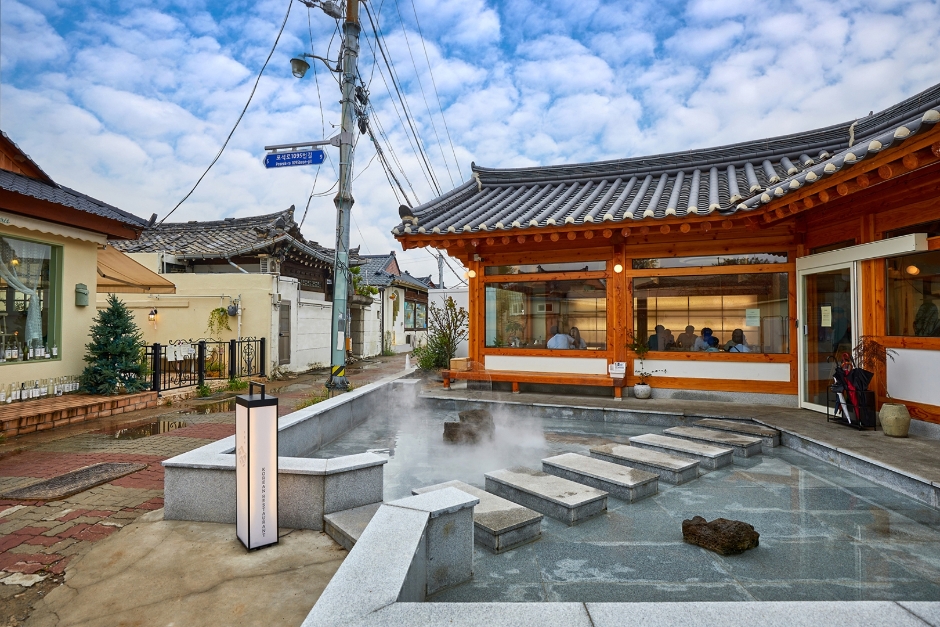
Sugyeongsa is a fusion Korean food restaurant renovated from a temple and a pond. The entrance is paved with marble and stone, creating a mysterious yet neat atmosphere, and the interior is simple, preserving the original form of a hanok and using white tones. The signature dish here is beef bulgogi with lotus leaf rice. The soy sauce-seasoned Gyeongju beef bulgogi, and lotus leaf rice will work up an appetite. The lotus leaf rice is a combination of rice and mixed grains wrapped in lotus leaves and steamed for an even healthier taste. Seasonal vegetables and side dishes are also provided. Also on the menu are Daereungwon deep-fried cheese, made with cheese rind, and beef brisket japchae pasta with seven kinds of vegetables, perilla seeds, and lotus root chips. A delicious meal can be enjoyed by anyone thanks to the restaurant’s reinterpretation of traditional Korean food.
⊙ Gyeongju Hwangnidan Street (경주 황리단길)
View detailed guide on Korea Trip Guide →
– Homepage
www.gyeongju.go.kr
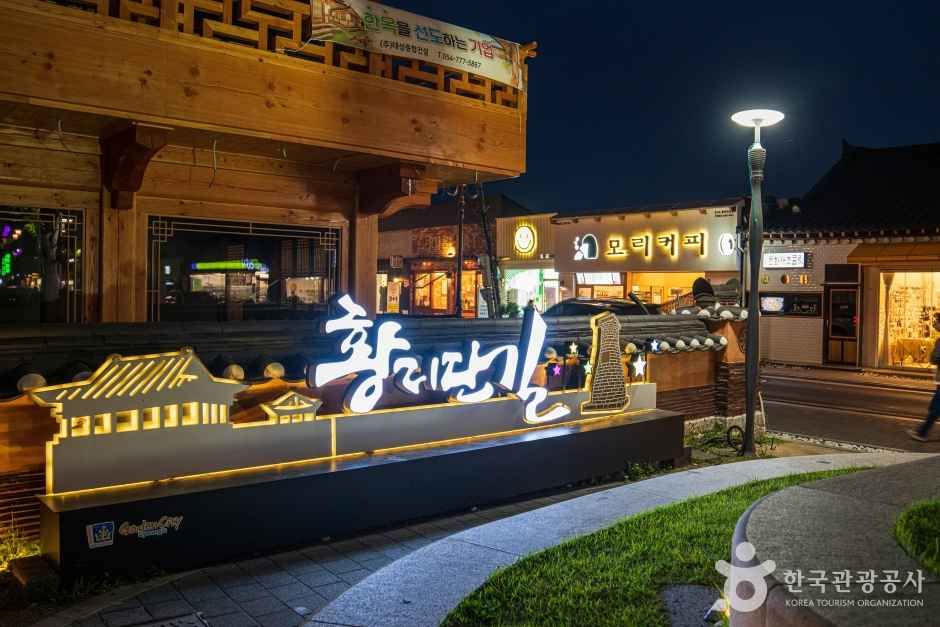
Hwangnidan Street was originally known as “Hwangnam Keungil” near Poseok-ro, Hwangnam-dong. Its name comes from the combination of Hwangnam-dong and Gyeongnidan Street in Itaewon, Seoul, meaning the “Gyeongnidan Street of Hwangnam-dong.” The street is home to numerous restaurants, cafes, photo studios, and shops housed in traditional hanok buildings, making it popular among the younger generations in Korea. The street also demonstrates newtro aesthetics due to the remaining old and worn buildings built during the 1960s and the ’70s. Hwangnidan Street is near Cheomseongdae Observatory, Daereungwon Ancient Tombs, and other major tourist sites, allowing the street to become a popular Gyeongju attraction as well.
⊙ Gyeongju Historic Area [UNESCO World Heritage] (경주역사유적지구 [유네스코 세계문화유산])
– Homepage
www.gyeongju.go.kr
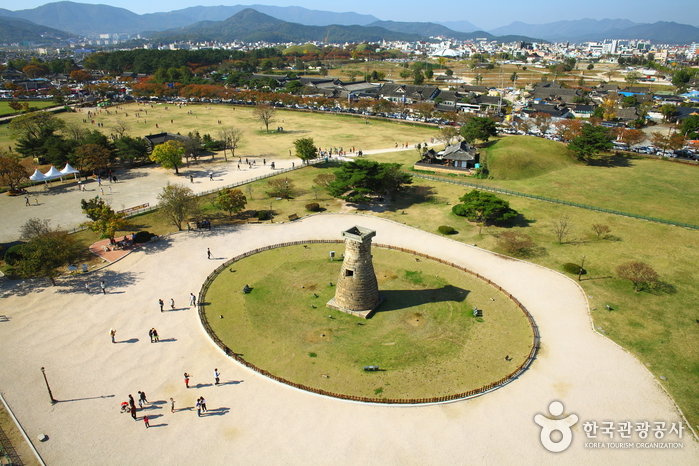
The Gyeongju Historic Area, registered as a UNESCO World Cultural Heritage on November 2000, is an area that embodies the time-honored history and culture of Gyeongju, the ancient capital of the Silla Kingdom (57 BC-AD 935).
The Gyeongju Historic Area can be divided into 5 major sections. The first section is the Namsan Area, a treasure trove of Buddhist art masterpieces dating back to the Silla Kingdom. Gyeongju Namsan Mountain (often referred to as an ‘outdoor museum’) is home to many historical heritage sites from the Silla Kingdom. Major attractions include: Poseokjeong Pavilion Site (Historic Site), Rock-carved Buddhas in Tapgok Valley (Treasure), Three-story Stone Pagoda in Cheollyongsa Temple Site (Treasure), Rock-carved Buddhas at Chilburam Hermitage (Treasure), Rock-carved Seated Buddha in Bulgok Valley (Treasure), and 37 other Buddhist relics
The second section is the Wolseong Area, one of the former palace sites of the Silla Kingdom. The area consists of Gyerim Forest (Historic Site); Donggung Palace and Wolji Pond (Historic Site), a Silla Royal Palace site; and Cheomseongdae Observatory (National Treasure), the oldest observatory in Asia.
Daereungwon Ancient Tomb Complex, the third area, features a cluster of the royal graves of the kings and queens of Silla. Also in the same area are Ancient Tombs in Nodong-ri (Historic Site), Ancient Tombs in Noseo-ri (Historic Site), Ancient Tombs in Hwangnam-ri (Historic Site), and Five Royal Tombs (Historic Site), among others. Archaeologists have discovered a number of invaluable relics and historic items in this area such as Geumgwan (golden crown), Cheonmado (a painting of flying horses), and numerous pottery pieces. These finds are perhaps the greatest clues into the life of the people of the Silla dynasty.
Area number four, the Hwangnyongsa Temple Site, is where the former site of the Hwangnyongsa Temple (Historic Site) and Bunhwangsa Stone Pagoda are located. Last is the Sanseong Area, housing remnants of the major defense system for the capital city. The site consists of Myeonghwalsanseong Fortress (Historic Site) which is estimated to be around 400 years old.
The Gyeongju Historic Area has a total of 52 designated cultural assets that are registered as World Cultural Heritages.
⊙ Gyeongju Hanbokpan (경주한복판)
– Homepage
www.instagram.com/gyeongju_hanbokpan
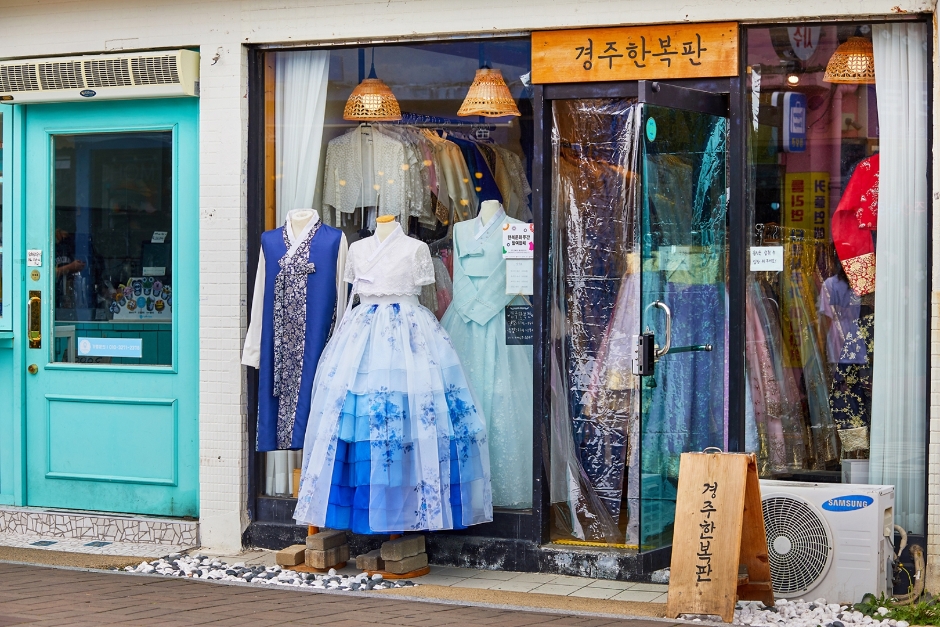
Gyeongju Hanbokpan is a hanbok rental store located in the middle of Hwangnidan Street. Hanbok attires are available in a variety of materials, colors, and seasons. There are many hanbok wears reflecting the latest trends, so they look good on anyone and are easy to wear. Besides changing clothes, the store owner also assists customers with hair accessories. There are many family customers as the store also offers hanbok for both men and children. Customers can also print the photos they took with their smartphone upon retrning the hanbok, making it an even more memorable experience.
⊙ Gyeongju Soohojeong (경주수호정)
– Homepage
http://msoohj.dgweb.kr
– Tel
+82-54-772-5871, +82-10-2379-7248
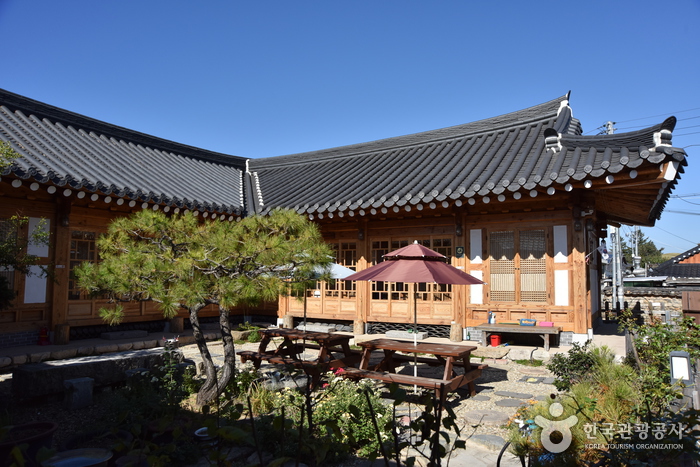
Suhojeong hanok guesthouse stands right in front of the Daereungwon Silla tombs, in Gyeongju, Gyeongsangbuk-do. The house is constructed of traditional materials – pinewood, red clay and straw – and each guestroom has a bathroom with toilet. In the spacious yard is a stone table where visitors can rest and chat. Transport links are excellent, with Gyeongju Station and Intercity Bus Terminal just 5 minutes away on foot. Nearby tourist attractions include Cheomseongdae, Banwol Fort, and Anapji Pond.
⊙ Olive Young – Gyeongju Hwangnam Branch [Tax Refund Shop] (올리브영 경주황남점)
– Homepage
www.oliveyoung.co.kr
![Second Face – Gyeongju Jungang Branch [Tax Refund Shop] (세컨페이스 경주중앙점)](https://ktrip.blogsailing.com/wp-content/uploads/2025/12/2883747_image2_1.jpg)
![Nike – Gumi Town Branch [Tax Refund Shop] (나이키 구미타운점)](https://ktrip.blogsailing.com/wp-content/uploads/2025/12/2883770_image2_1-768x576.jpg)
2 Comments