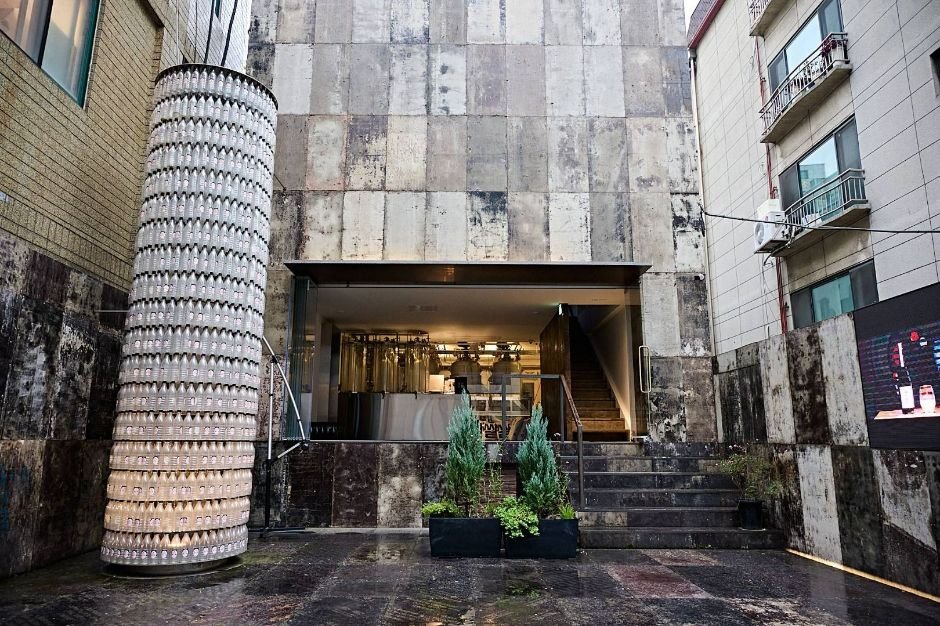
Chunpoong Brewery (춘풍양조장)
Chunpoong Brewery (춘풍양조장)
 – Homepage
www.chunpoong.co.kr
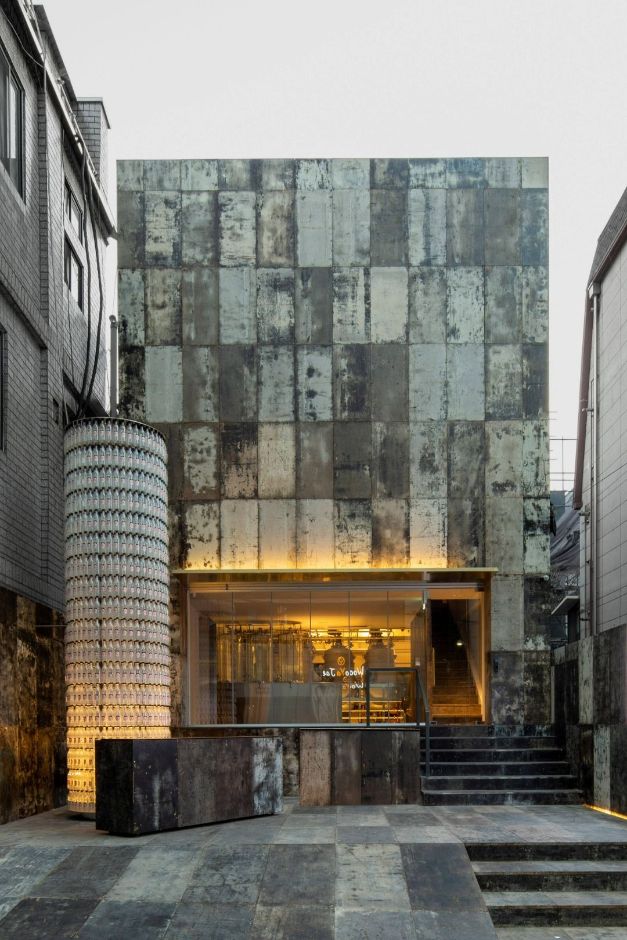
Chunpoong Brewery, a specialized brewery producing makgeolli, offers brewery tours and tasting sessions, conveying the value of Korean alcohol. Through these programs, the brewery shares Korean alcohol culture and provides information about traditional Korean alcohol. Visitors can also enjoy a dining and alcohol experience here.
– Address : 101-3 Dasan-ro, Jung-gu, Seoul
※ Presentation Information
– Age Range
Open to visitors ages 19 and older
– Experience Guide
Brewery tour
– Information and Guides
+82-1899-8876
– Parking
Not available
– Day Off
Sundays and Mondays * Inquire in advance for tours on closed days
– Operating Hours
[Business hours] 11:00-19:00 [Tour schedule] 11:00 / 15:00 / 17:00 * Inquire in advance for other available times



◎ Nearby Tourism Infobox
⊙ Geumdwaeji Sikdang (금돼지식당)
View detailed guide on Korea Trip Guide →
– Homepage
https://www.instagram.com/gold_pig1982/
Geumdwaeji Sikdang is renowned as one of the top three pork restaurants in Seoul, specializing in pork dishes. Its signature menu item is the nunkkon moksal (grilled pork shoulder), known for its marbled appearance resembling snowflakes. Bonsamgyeop (grilled bone-in pork belly) and deungmoksal (short loin and pork shoulder) are also popular choices. They offer fragrant basil wraps as a side dish, which perfectly complements the slightly grilled basil with the juicy and flavorful meat, creating a harmonious taste sensation that is considered a delicacy at this establishment.
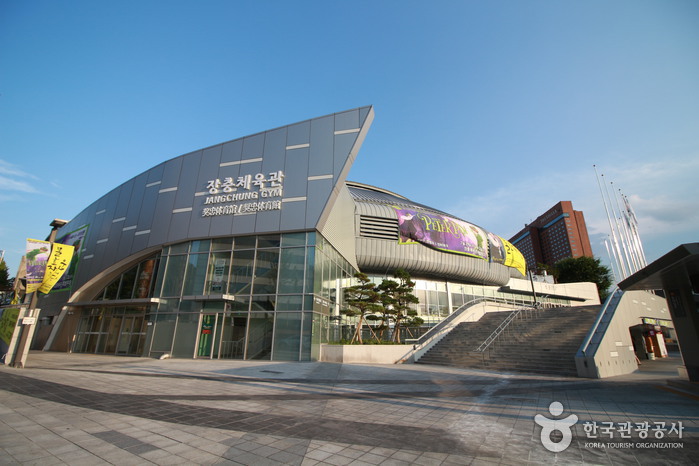
⊙ Jangchung Gymnasium (장충체육관)
View detailed guide on Korea Trip Guide →
– Homepage
new.sisul.or.kr
Jangchung Gymnasium is Korea’s first domed gymnasium and opened in 1963. It was renovated in 2015 to become what it is today. It is famous for hosting the Korean Professional Volleyball League during the winter months. The gymnasium also boasts a variety of athletic competitions, cultural performances, and events. Nearby are Jangchungdan Park, Jangchung-dong Jokbal Street, and Dongdaemun Historical and Cultural Park, which are all worth exploring.
⊙ Yejiwon (예지원)
View detailed guide on Korea Trip Guide →
– Homepage
www.yejiwon.or.kr/
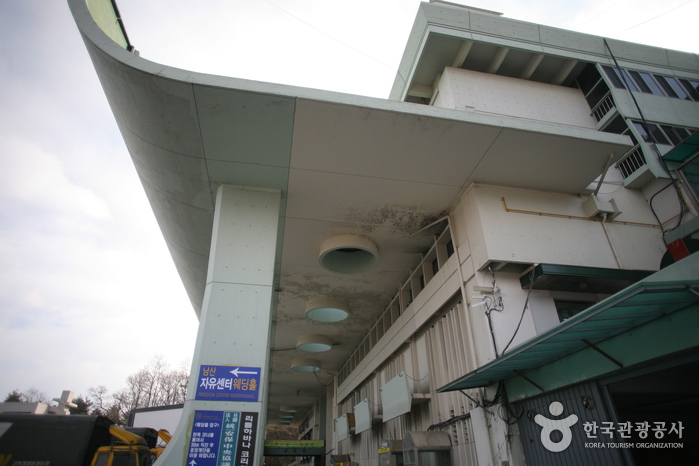
The Yejiwon is located in Seoul Jung-gu Jangchung-dong and has been offering traditional Korean etiquette education programs since its inception on September 16th, 1974. Furthermore, the Yejiwon also serves to introduce the traditional cultures and living cultures of Korean etiquettes to foreigners.
Most programs offered are short-term classes, and reservations can be made on the homepage up to 15 days in advance. Reservations are only available for groups of 10 or more and classes are instructed in Korean only, so it may be a good idea to be accompanied by a guide.
⊙ National Theater of Korea (국립극장)
View detailed guide on Korea Trip Guide →
– Homepage
www.ntok.go.kr
The National Theater of Korea opened in 1950 as the first national theater in Asia. It is the only production theater that takes traditional arts to recreate them as contemporary art. It offers various types of theaters, such as Haeoreum Grand Theater, Daloreum Theater (middle-size), Immersive Studio ByeolByeol (small-size), and Haneul Round Theater with a circular stage structure. In addition, the Museum of Performing Arts, Cultural Plaza, and other convenience stores and coffe shops offer pleasure and relax to its visitors.
⊙ Ebookers Korea Inc. ((주)이부커스코리아)
View detailed guide on Korea Trip Guide →
We strive for a special kind of tourism that combines wellness tourism (healing) and medical tourism (treatment).
We are a Korean wellness and medical tourism company leading the country’s safe and healthy travel culture.
* Products and Services
Wellness medical tourism programs that uniquely combine wellness and medical tourism
Referral and reservation service for selected wellness destinations and Korean hospitals with excellent medical technology
Guidance services provided at local partner companies
Content creation and reservation based on our personalized service system
Convenient tourism programs catering to each patient’s health conditions
Medical tourism visa application and referral services on C33VISA site
* A medical tourism product brand
Medi Well Come products: Health checkup / general practice (minor / major / female / preventive / eye problems)
⊙ Sindang-dong Tteokbokki Town (신당동떡볶이골목)
View detailed guide on Korea Trip Guide →
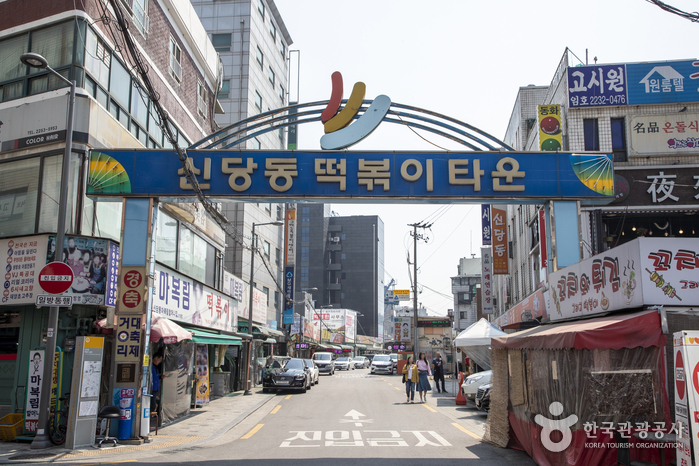
Sindang-dongTteokbokki Town started in the late ’70s, although the alley did not become famous until the ’80s. At that time, each restaurant had its own DJ booth, with the image of the “cool DJ” who played the music becoming a symbol of Sindang-dong Tteokbokki Town. In addition, this period also marked the prime time of high school baseball where students would crowd the streets on days when Duksoo Commercial High School and Sunrin Commercial High School (now Sunrin Internet High School) played against one another. Although these high school students have aged, they continue to visit the area, reliving their youth and continuing to indulge in the specialty tteokbokki.
However, some claim the history of this alley began in the 1950s. The owner of Mabongnim Halmeoni Tteokbokki restaurant says tteokbokki was being sold as early as 1953 as the area used to be home to Donga Theater and she sold tteokbokki, corn and potatoes to those visiting the theater. At first, tteokbokki was simply made with gochujang (red chili paste) but as time went by, cooks decided the dish could be more than just a snack. By adding ingredients like eggs, cellophane noodles, fish cakes, instant noodles and more recently squid, prawn and cheese, tteokbokki can be made more delicious and turns this beloved snack into a full meal.
⊙ The Souvenir Fair (2025 대한민국 관광기념품 박람회)
View detailed guide on Korea Trip Guide →
– Homepage
kto.visitkorea.or.kr
– Tel
+82-10-8315-5434
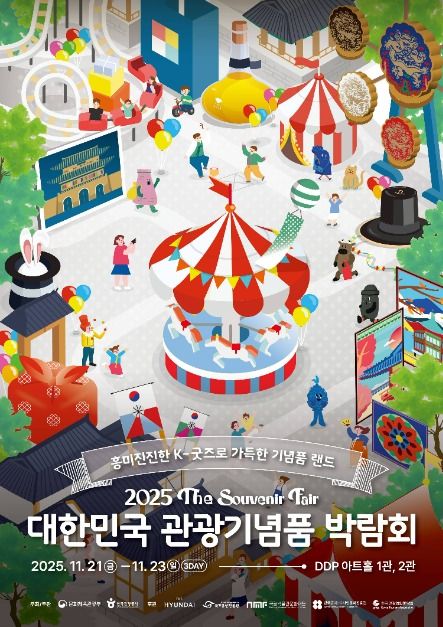
The Souvenir Fair brings together various companies and local governments to showcase a variety of souvenirs, both traditional and trendy. Visitors can freely explore the exhibition space, enjoy souvenir shopping, and take part in various programs. Highlights of the fair include an exhibition of competition-winning works, a zone featuring outstanding local souvenirs, and a special exhibition of overseas souvenirs.
⊙ Haepungbuwongun Yun Taekyeong’s Jaesil (해풍부원군윤택영댁재실)
View detailed guide on Korea Trip Guide →
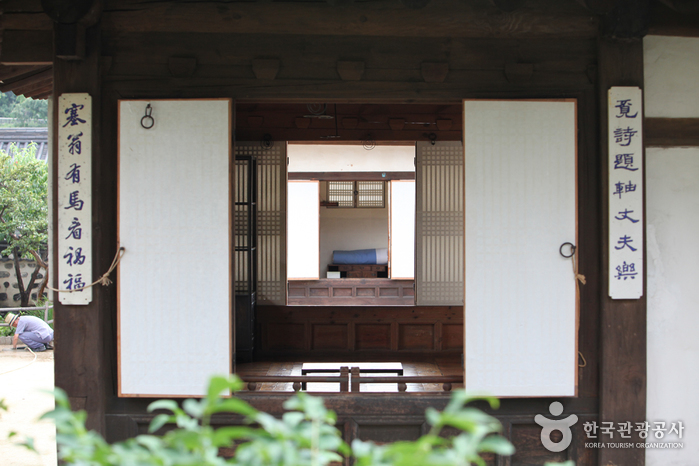
Haepungbuwongun Yun Taekyeong’s Jaesil is a shrine house built by the father-in-law of King Sunjong of Joseon dynasty in 1906 when his daughter was proclaimed the crowned princess of Joseon and entered Changdeokgung Palace to later become Queen Sunjeong. Red pine trees salvaged from the demolition of Gyeongungung Palace were used to construct the house. It was originally located in Jegi-dong, Dongdaemun-gu, but was later restored and moved to its present location. The shrine of the house that was destroyed in 1960 was also restored.
Because the house is more of a shrine rather than residential living quarters, it has many unique features. For example, unlike other houses, it has the anchae (women’s quarters) located across from sarangbang (men’s quarters) with daecheong (living room) positioned between them.
⊙ Chungmu Arts Center (충무아트센터)
View detailed guide on Korea Trip Guide →
– Homepage
www.caci.or.kr
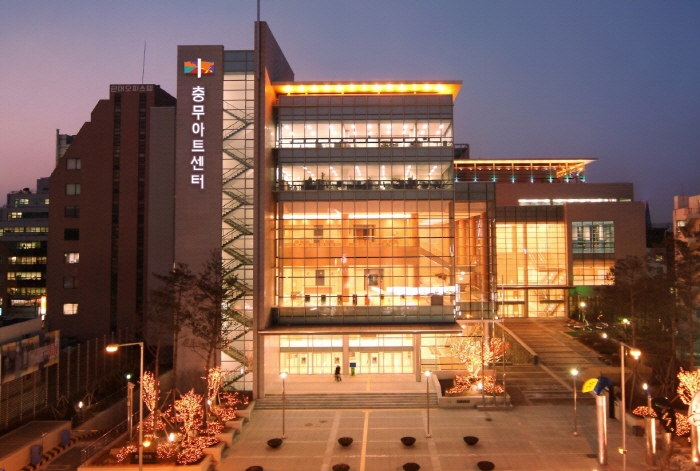
Chungmu Arts Center is a complex cultural facility with an optimal conditions for watching performances. It has a large theater, a medium theater (black), and a small theater (blue). It also boasts great galleries, studios, and a swimming pool, attracting numerous visitors. In addition, one can enjoy performances of various genres, including classical music, plays, musicals, and concerts. Located close to Dongdaemun, it has good accessibility.
⊙ Namsangol Hanok Village (남산골한옥마을)
View detailed guide on Korea Trip Guide →
– Homepage
hanokmaeul.or.kr
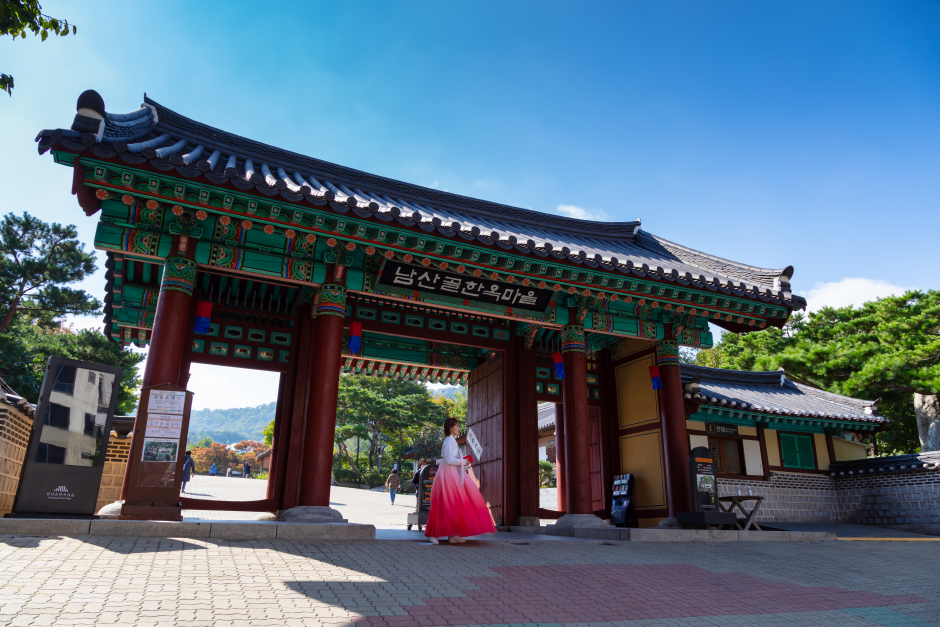
Namsangol Hanok Village opened in 1998 on the northern side of Namsan Mountain in the center of the capital. This village has five restored hanok (traditional Korean house) premises, a pavilion, a traditional garden, a performance art stage, and a time capsule plaza, making it a perfect spot for locals and tourists to take a leisure walk. Upon entering from the front gate, visitors will get a taste of Korea’s traditional life while escaping from bustling city life. The traditional garden with its pavilion and old houses creates a peaceful ambiance before the forested Namsan Mountain. A time capsule commemorating Seoul’s 600th anniversary was buried in 1994 at the highest point of the village and is scheduled to be reopened 400 years later in 2394.
The five hanok premises at Namsangol Hanok Village once belonged to aristocrats and government officials of the Joseon dynasty. Each house was originally located in a different neighborhood, but they were all moved to this area and restored to their original form. The houses were rebuilt using their original materials, except for one house, where the materials were too old and deteriorated to be reused. The premises were carefully restored and replicated according to their original form to depict the owners’ social class and personality. These buildings are now used as an exhibit to portray the living environment during the Joseon dynasty and as a venue for educational and cultural programs for children and tourists.
Some of the unique programs and activities to participate in include wearing hanbok, folding hanji (traditional Korean paper), writing in Korean, traditional tea ceremony, traditional etiquette school, and herbal medicine experience. There are also taekwondo demonstrations and other various performances held around the village. Visitors can also try traditional games such as yunnori (traditional board game), or understand more about the area through a guided tour.
](https://ktrip.blogsailing.com/wp-content/uploads/2026/05/4021645_image2_1.jpg)
](https://ktrip.blogsailing.com/wp-content/uploads/2026/05/4045155_image2_1.jpg)
![Kolon Sport – Hyundai Department Store Cheonho Branch [Tax Refund Shop] (코오롱스포츠 현대백화점 천호점)](https://ktrip.blogsailing.com/wp-content/uploads/2026/04/4024179_image2_1.jpg)
](https://ktrip.blogsailing.com/wp-content/uploads/2026/03/4022249_image2_1.jpg)
![Beanpole – Tower Palace Branch [Tax Refund Shop] (빈폴 타워팰리스)](https://ktrip.blogsailing.com/wp-content/uploads/2026/02/2890143_image2_1.jpg)
3 Comments