
Deoksugung Palace (덕수궁)
Deoksugung Palace (덕수궁)
 – Homepage
royal.khs.go.kr: Visit site
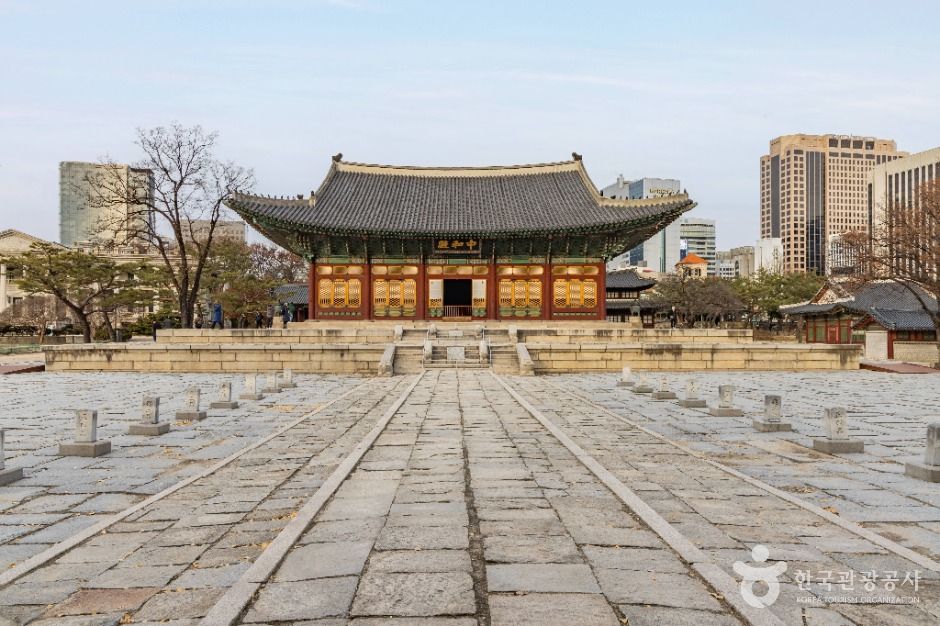
Registered as a Historic Site, Deoksugung Palace was initially not a royal palace, but the residential home of Grand Prince Wolsan (1454-1488), the older brother of King Seongjong (1469-1494) of the Joseon dynasty. It wasn’t until 1593 that the palace was used as a temporary palace of the royal family after their home was burned down during the Imjin War. King Seonjo also stayed at Deoksugung Palace after returning to the city. It became a proper palace when Gwanghaegun (1575-1641) ascended to the throne and gave this royal residence the name Gyeongungung Palace in 1611. Over the following decades, the palace alternated between being an official palace and a temporary residence. The name did not change officially to Deoksugung Palace, meaning the “palace of virtuous longevity,” until 1907. While the palace once encompassed a vast area with many buildings, the current palace grounds are just a small shadow of the prior splendor, with very few structures remaining.
– Address : 99 Sejong-daero, Jung-gu, Seoul
※ Presentation Information
– Information and Guides
+82-2-771-9951
– Parking
Not available
– Day Off
Mondays (Closed the following business day in the case of Monday being a national holiday)
– Operating Hours
[General admission] 09:00-21:00 (Last admission 20:00)[Exhibition] Seokjojeon Hall 09:30-17:30 (Last docent 16:30)Dondeokjeon Hall 09:00-17:30 (Last admission 17:00)Jungmyeongjeon Hall 09:30-17:30 (Last admission 17:00)


◎ Nearby Tourism Infobox
⊙ Deoksugung Palace’s Daehanmun Gate (덕수궁 대한문)
View detailed guide on Korea Trip Guide →
– Homepage
Visit site
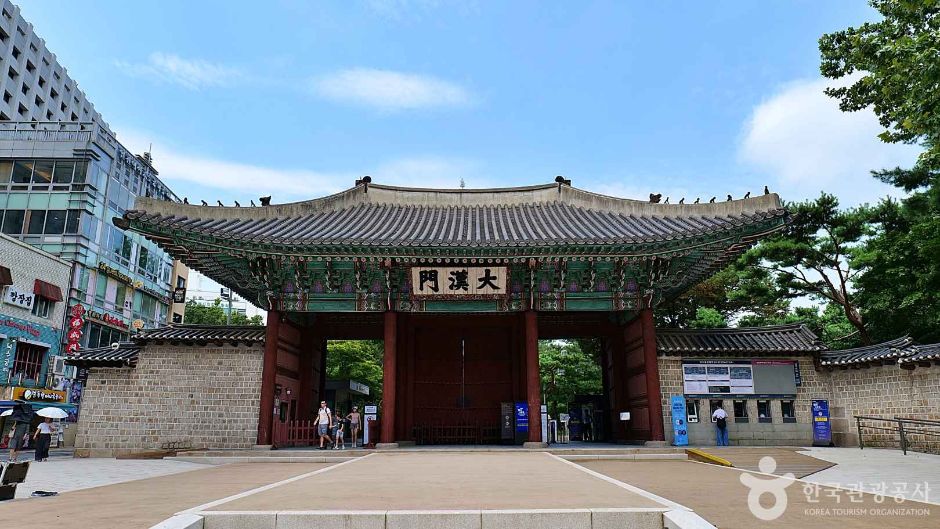
Located near City Hall station, Daehanmun Gate is the main gate of Deoksugung Palace, one of the princiapl five palaces of Joseon dynasty. The name “Daehan” means wish for eternal prosperity of the Korean Empire. In front of the gate, the Palace Royal Guard Changing Ceremony is held twice daily, along with the reproduction of costumes and style throughout the year.
⊙ Jeongdong Observatory (정동전망대)
View detailed guide on Korea Trip Guide →
Jeongdong Observatory is located on the 13th floor of Seoul City Hall Seosomun building. The observatory has a cafe inside where visitors can enjoy a drink while gazing upon the magnificent view of Deoksugung Palace from above. In addition, the walls of the cafe are decorated with photos of old Jeongdong.
⊙ Seoul Plaza (서울광장)
View detailed guide on Korea Trip Guide →
– Homepage
plaza.seoul.go.kr: Visit site
Seoul Plaza in front of Seoul City Hall is a historic site where the March 1, 1919 (Samil) Independence Movement and the pro-democracy movement in June 1987 were held. It is also a well-known place where tens of thousands of Korean soccer fans gathered together to watch the 2002 World Cup Games. Being located within the center of the city and surrounded by many historic attractions, including Deoksugung Palace, Seoul Plaza has become a representative attraction of Seoul.
⊙ Deoksugung Stone Wall Path (덕수궁 돌담길)
View detailed guide on Korea Trip Guide →
– Homepage
Visit site
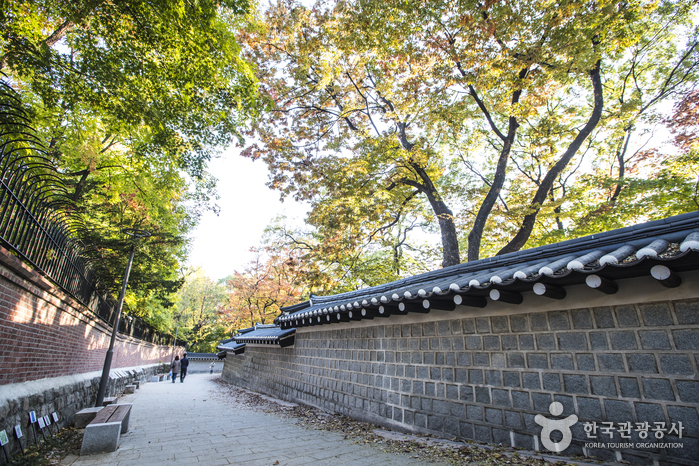
The Deoksugung Stone Wall Path runs along the wall of Deoksugung Palace. It is beautifully lit and landscaped, giving it a romantic atmosphere even at night. There are street performances and flea markets, and the area boasts many famous cafes and restaurants along Jeongdong street. In autumn, the ginkgo trees and walls form a stunning scene. Close to major cultural facilities such as the Seoul Museum of Art and Seoul Museum of History, it attracts numerous visitors come for a stroll.
⊙ Seoul Metropolitan Library (서울도서관)
View detailed guide on Korea Trip Guide →
– Homepage
lib.seoul.go.kr: Visit site
Seoul Library provides access to a wide range of documents and materials about Seoul Metropolitan City. Visitors will find diverse resources related to the city including history, culture, urban planning, transportation, environmental issues, administration, reports on outbound visitors, research documents, video clips, and e-data.
⊙ Seoul Museum of Art (서울시립미술관(서소문본관))
View detailed guide on Korea Trip Guide →
– Homepage
sema.seoul.go.kr: Visit site
The Seoul Museum of Art (SeMA) is a space for all to meet and experience the joy of art. Located in the center of Jeong-dong, a district that retains traces of Seoul’s modern and contemporary history, the museum integrates the historical facade of the former Supreme Court with modern architecture. In addition to various programs―encompassing exhibitions, educational outreach initiatives, screenings, workshops, performances, and talks, communal spaces including SeMA Cafe, the artbook store, the open space lobby, and the outdoor sculpture park SeMA WALK provide a rich range of ways for visitors to experience art.
⊙ Seopyeonje; The Original(서편제; The Original)
View detailed guide on Korea Trip Guide →
⊙ Jeongdong Theater (국립 정동극장)
View detailed guide on Korea Trip Guide →
– Homepage
www.jeongdong.or.kr: Visit site
Jeongdong Theater is located along Deoksugung Stone Wall Path and serves as a cultural hub for local citizens. Opened in 1995, Jeongdong Theater is historically significant as it was established to restitute the legacy of Wongaksa, the first modern theater in Korea. Jeongdong Theater features numerous critically-acclaimed productions, such as “Traditional Art Performance,” “Masters Exhibition,” and “Art Frontier,” as well as programs like “Art Stage at Noon” that are geared toward the general public. As a result, Jeongdong Theater has become one of Korea’s representative traditional arts performance theaters and was designated as a Seoul Future Heritage in 2015.
The theater successfully held the performance “Miso” in 2010, featuring the traditional musical “Love Songs from Chunhyang,” written and created by Jeongdong Theater. The musical attracted many international visitors from all over the world, passing on Korean cultural values and beauty, as well as gaining the attention of critics worldwide. In addition, the theater also produced “The 2nd Story of Miso: Baebijang-jeon,” offering a modern interpretation of the fundamental values found in Korea’s culture and art.
⊙ Jungmyeongjeon Hall (중명전)
View detailed guide on Korea Trip Guide →
– Homepage
Visit site
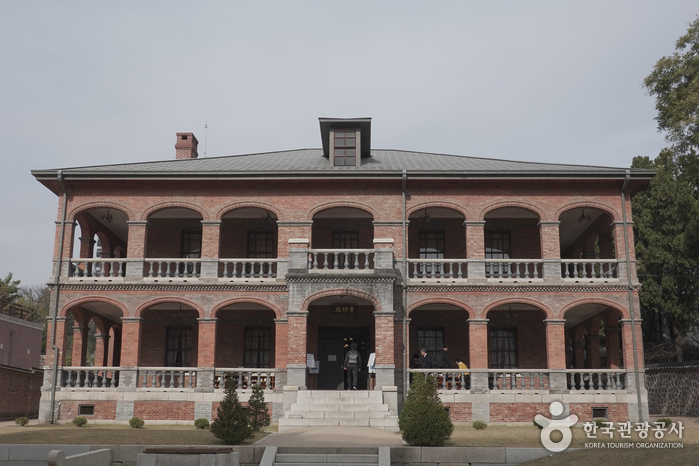
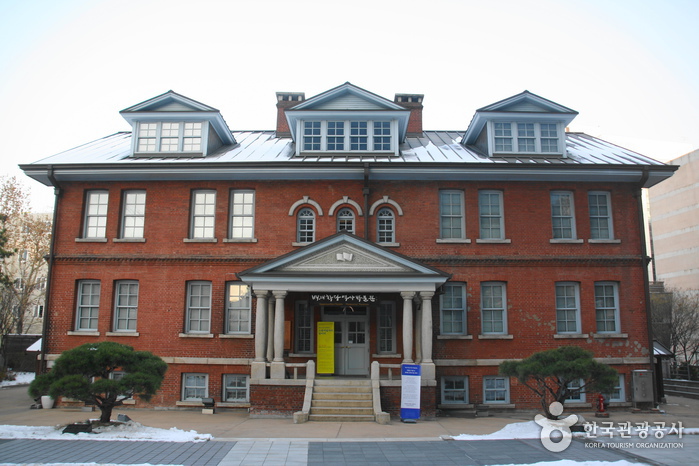
Located near Deoksugung Palace, Jungmyeongjeon Hall is a red-brick modern Western-style building. It was built in 1899 as the imperial library of the Korean Empire. After Deoksugung Palace caught on fire in 1904, the place became the temporary residence of Emperor Gojong. It also witnessed the tragic part of history in which the infamous Eulsa Treaty (Japan-Korea Protectorate Treaty), an illegal treaty forced by Japan, was signed in 1905. Its exhibition hall serves as a place for historical education.
⊙ Appenzeller Noble Memorial Museum (배재학당 역사 박물관)
View detailed guide on Korea Trip Guide →
– Homepage
appenzeller.pcu.ac.kr: Visit site
The Appenzeller Noble Memorial Museum is dedicated to Henry Gerhart Appenzeller, the missionary who opened the first Western-style educational institution in Korea in 1885. The school started with English and core subjects, but expanded into the Pai Chai University, Pai Chai High School, and Pai Chai Middle School and has many famous alumni, including Rhee Syng-man. The memorial hall opened in 2008 in the east wing of the original school building, which was built in 1916 and designated as a Seoul Monument. With dynamically arranged permanent exhibitions, annual special exhibitions and special lectures, the museum offers a unique learning experience to visitors and people with an interest in the history of education in Korea.
](https://ktrip.blogsailing.com/wp-content/uploads/2026/04/4044740_image2_1.jpg)
](https://ktrip.blogsailing.com/wp-content/uploads/2026/04/4020078_image2_1.jpg)

](https://ktrip.blogsailing.com/wp-content/uploads/2026/03/4024850_image2_1.jpg)

4 Comments