Jeonju Hanok Village Traditional Performance Parade (한옥마을전통연희 퍼레이드-노상놀이야)
Jeonju Hanok Village Traditional Performance Parade (한옥마을전통연희 퍼레이드-노상놀이야)
 – Homepage
www.hapgood.kr: Visit site
– Tel
+82-63-236-1577
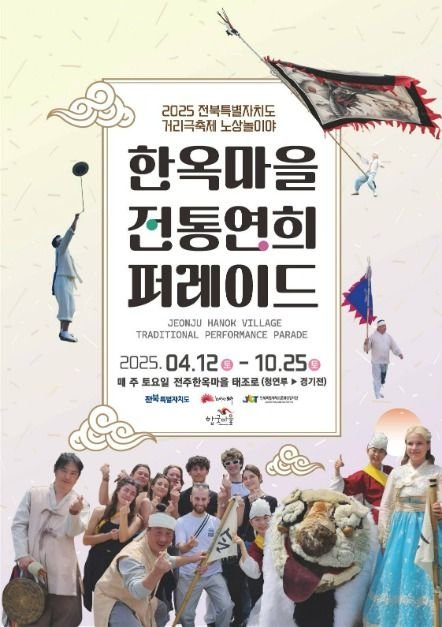
The Jeonju Hanok Village Traditional Performance Parade is packed with various street performances, allowing visitors to experience Jeonju’s folk culture on the streets. During the parade, visitors can witness Jeonju gijeopnori, a representative traditional performance of Jeonju; madangnori, a traditional performance featuring dance, music, and storytelling through various forms, or sing along to folk labor songs.
– Address : 44 Taejo-ro, Wansan-gu, Jeonju-si, Jeonbuk-do
※ Presentation Information
– Event Date
20260418 ~ 20261031
– Schedule
Saturdays 14:30-15:30
– Location
Jeonju Hanok Village Taejo-ro Street (Namcheongyo Bridge – Gyeonggijeon Shrine)
– Sponsor
Jeonju-si, Jeonbuk Culture & Tourism Foundation
– Sponsor Phone
+82-63-236-1577
– Fees
Free


◎ Nearby Tourism Infobox
⊙ Jeonju Jeondong Catholic Cathedral (전주전동성당)
View detailed guide on Korea Trip Guide →
– Homepage
www.jeondong.or.kr: Visit site
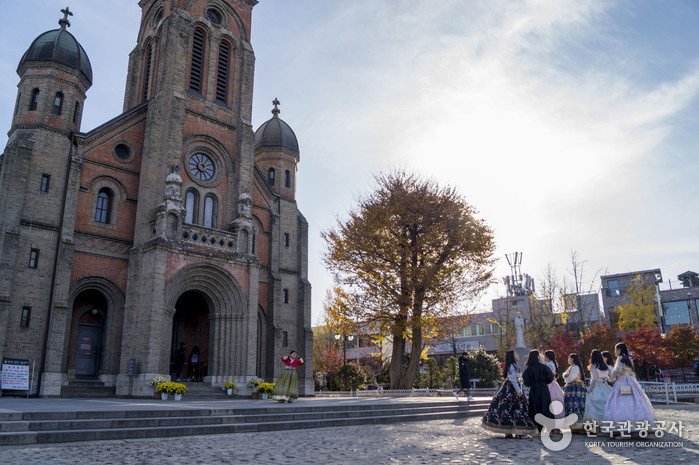
Jeondong Catholic Cathedral in Jeonju was built in honor of Roman Catholic martyrs of the Joseon dynasty on the very same spot the martyrs lost their lives. The land was purchased by French Priest Baudenet in 1891 (28th year of King Gojong), but construction of the church did not begin until 1908. Construction was completed in 1914, a time during which Korea was under Japanese rule. Though originally built just outside of Pungnammun Gate, the site of the martyrs, the church was later moved to its current location for expansion.
The first Romanesque building in the Honam region, Jeondong Catholic Cathedral is made of gray and red bricks and bears a striking resemblance to the Myeongdong Cathedral in Seoul, also designed by Priest Poinel. Not only considered one of the most beautiful Catholic churches in Korea, some even go so far as to say it is one of the most beautiful structures in all of Korea, citing the church’s unique combination of Byzantine and Romanesque architectural styles. The rectangular building is topped with three Byzantine bell towers (to the right, center, and left) and boasts arched ceilings, several of which meet in the form of a cross.
It is interesting to note that some of the bricks used in construction of the church were made using materials from the Jeonjueupseong Walled Town, which was torn down by the Japanese. It is also said that the cornerstone of the church came from a wall of Jeonjueupseong Walled Town near Pungnammun Gate.
⊙ Jeonju Pungnammun Gate (전주 풍남문)
View detailed guide on Korea Trip Guide →
– Homepage
tour.jb.go.kr: Visit site
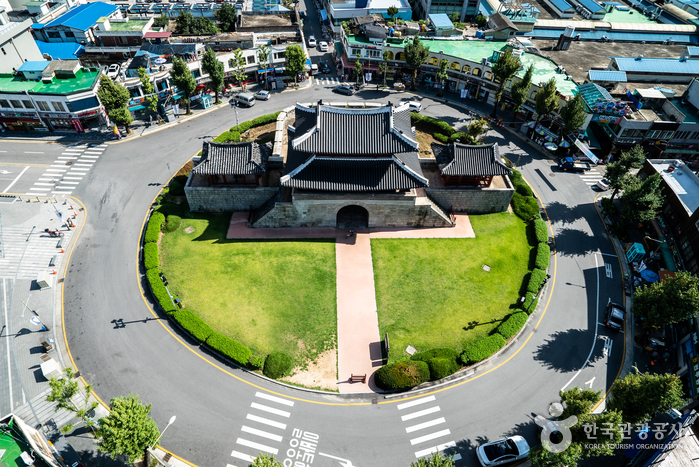
Pungnammun Gate was built during the Joseon dynasty in 1734 and is a designated Treasure. Pungnammun Gate was the southernmost gate among the four city gates of Jeonju. The structure was severely damaged by fire in 1767, followed by the restoration of the gate tower afterward. The gate was burnt down once again during the Imjin War and was restored to the gate that is seen today.
⊙ Veteran Kalguksu (베테랑칼국수)
View detailed guide on Korea Trip Guide →
– Homepage
Visit site
Veteran Kalguksu, located in Jeonju Hanok Village, has been operating since 1977, attesting to the great taste of their broth, made using sesame, meal, and eggs. The noodles are also cut much thinner than other restaurants, while maintaining their chewy texture. Another popular menu at the restaurant is their kongguksu.
◎ Travel information to meet Hallyu’s charm
The restaurant was a favorite spot for the cast of the drama “Twenty Five Twenty One.” Lead actress Kim Tae-ri, who played Na Hee-do, even visited for breakfast during her vlog shoots. She drew attention for enthusiastically finishing a bowl of noodles down to the last strand. Nearby is the private rental house “2521,” which was featured as Hee-do’s home in the drama, making it worth visiting after enjoying a meal at the restaurant.
⊙ Jeonju Nambu Traditional Market (전주 남부시장)
View detailed guide on Korea Trip Guide →
– Homepage
jbsj.kr: Visit site
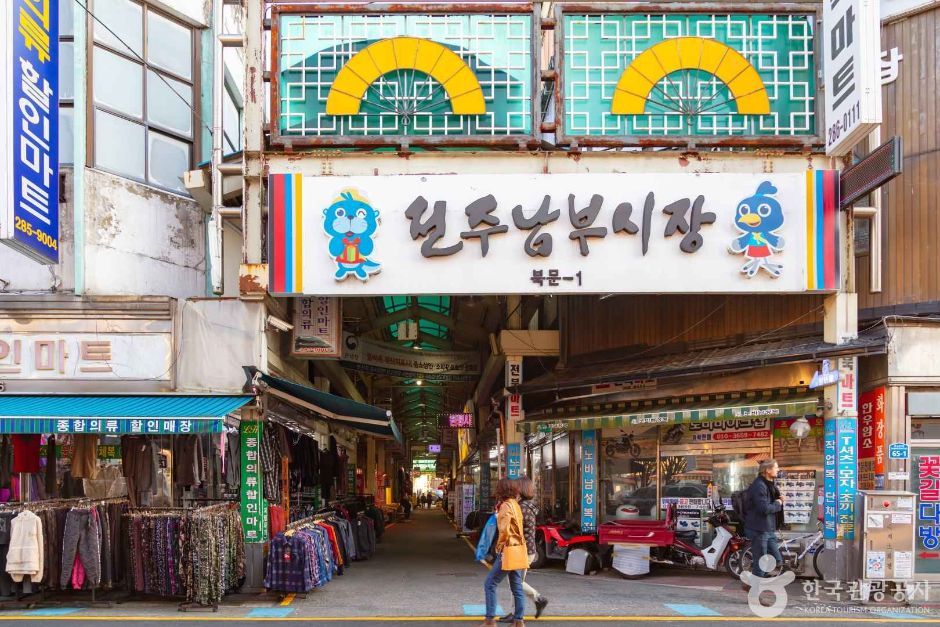
Jeonju Nambu Traditional Market opened as a regular public market in 1905 at the site of the Joseon-era Nammunbakk Market, located just outside the Southern gate to the city. Currently the market is comprised of about 800 stores with 1,200 workers selling vegetables, fruits, food, dried fish, furniture, silk goods, and general goods.
The market was revitalized with the creation of the Youth Market, located in the previously empty shops on the second floor of 6-dong. An influx of young shopkeepers and entrepreneurs has given the marketplace an exciting vibe like that found in Hongdae or Samcheong-dong.
The night market held on Fridays and Saturdays also draws in many visitors with a multitude of delicious treats, ranging from traditional dishes such as nokdujeon (mung bean pancake) to fusion treats like bibimbap served in rice paper like a spring roll.
⊙ Han Kook Jib (한국집)
View detailed guide on Korea Trip Guide →
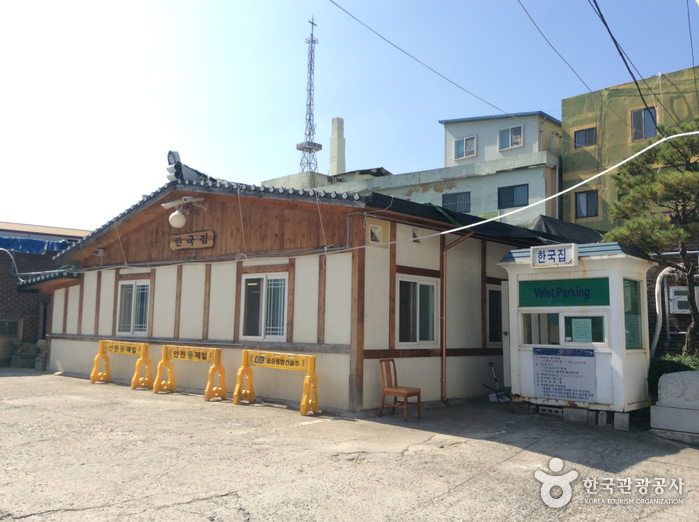
Opened in 1952, Han Kook Jib has upheld its tradition for three generations. It is housed in a renovated hanok with a beautiful courtyard. Han Kook Jib is conveniently located near major tourist sites in Jeonju, such as Jeonju Hanok Village and Gyeonggijeon Shrine.
⊙ Ilrakdang sarangchae (일락당사랑채)
View detailed guide on Korea Trip Guide →
– Homepage
Visit site
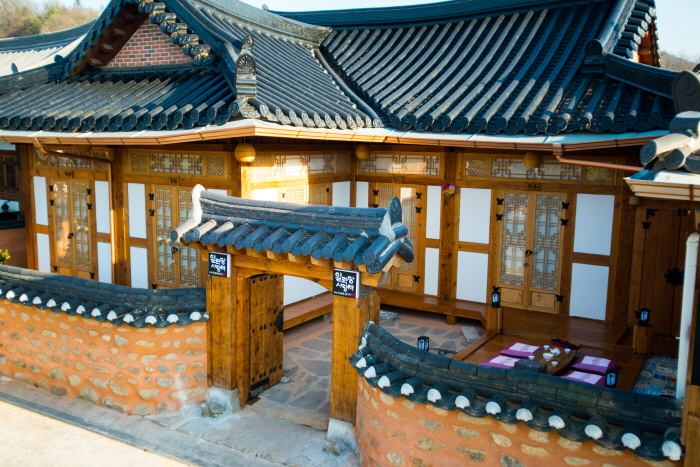
A must visit place for tourists in Jeonju, Ilrakdang Sarangchae is located in the middle of the traditional Korean house village of Jeonju. The very first of three enjoyments for noble man, as indicated by Menicus, the existence of parents and brothers with no troubles is what the place is named after. Standing in the garden, you can easily see the stone walls of Gyeonggijeon and also you are within the range of walking distance to Jeondong catholic church, Omokdae, Southern market, Jeonju Hyanggyo, and the wall painting village of Jaman.
The rooms are called, Haengbokchae, Sarangbang, Mitum band, Monday, Tuesday, Wednesday, Thursday, Friday, Saturday, Sunday and so on. Haengbok room 1/2, a living room with furnace, a big sized attic above the living room are shared together, which makes it most suitable for big families or a small group of tourists. The Monday/Tuesday/Friday/Saturday/Sunday rooms all have a small, cozy attic and in every guest room’s wall, column and doors are mainly made of woods which makes them feel very warm. On every morning, in the shared kitchen, simple breakfasts mainly consisting of toasts, jams, coffee and juice are served. All guests are provided with discounts on Korean costume rental(30%), motor bikes(30%) and waengi bean sprout soup with rice (1000KRW). Besides, there are various services such as introduction to tasty restaurants in partnerships with traditional Korean house villages, as well as discounts, and try out of Korean rice cake making experiences and so on.
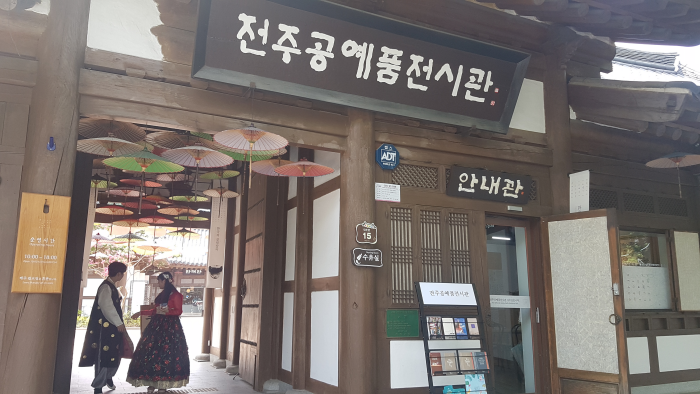
⊙ Jeonju Crafts Exhibition Hall (전주공예품전시관)
View detailed guide on Korea Trip Guide →
– Homepage
www.jeonjucraft.or.kr: Visit site
Jeonju Crafts Exhibition Hall promotes the beauty of traditional Korean crafts, and is made up of a Craft Hall, Special Exhibition Hall, and Experience Hall, Visitors can see traditional art works from master artisans as well as creative works from up-and-coming artists and designers. Visitors can also create their own handcrafted items in one of their many programs.
⊙ Omokdae and Imokdae Historic Sites (오목대와 이목대)
View detailed guide on Korea Trip Guide →
– Homepage
tour.jeonju.go.kr: Visit site
Omokdae Historic Site is located on top of a steep hill and is one of the places where Yi Seong-gye, who later became King Taejo, the first king of the Joseon dynasty, stopped to celebrate his victory on his way home from a war against the Japanese army at Unbong Peak of Hwangsan Mountain. Across the bridge from Omokdae is Imokdae Historic Site, situated at the foot of Seungamsan Mountain. Approximately 80 meters downhill from Imokdae are memorial stones and a building where Mokjo, the great-great-grandfather of King Taejo, once used to live. The engraved letters on the stones are the handwritings of Emperor Gojong. Mokjo moved to Hamgyeongdo as a result of a dispute with the then minister of Jeonju, an incident which King Taejo believed to have laid the foundation for him to shape the Joseon dynasty.
⊙ Jeonju Traditional Liquor Museum (전주 전통술박물관)
View detailed guide on Korea Trip Guide →
– Homepage
urisul.net: Visit site
Jeonju Traditional Liquor Museum offers visitors the unique chance to explore the world of traditional Korean liquor and engage in related hands-on experience programs. At the museum, visitors can see the tools, machines, and the process used in the making of home-made traditional liquor and even taste them. Guests can also try their hand at making homemade wine and rice wine after making a reservation.
⊙ Jeonju Waengi Kongmulgukbap Specialty Restaurant (전주 왱이콩나물국밥전문점)
View detailed guide on Korea Trip Guide →
Jeonju Waengi Kongmulgukbap Restaurant, located next to Dongmun Art Street in Jeonju, is a local favorite. The restaurant serves only one dish, kongnamul gukbap, rice soup with bean sprouts. With the crunchy texture of bean sprouts and a rich broth made with anchovy and seafood, this hearty meal is perfect to enjoy after exploring nearby tourist attractions.