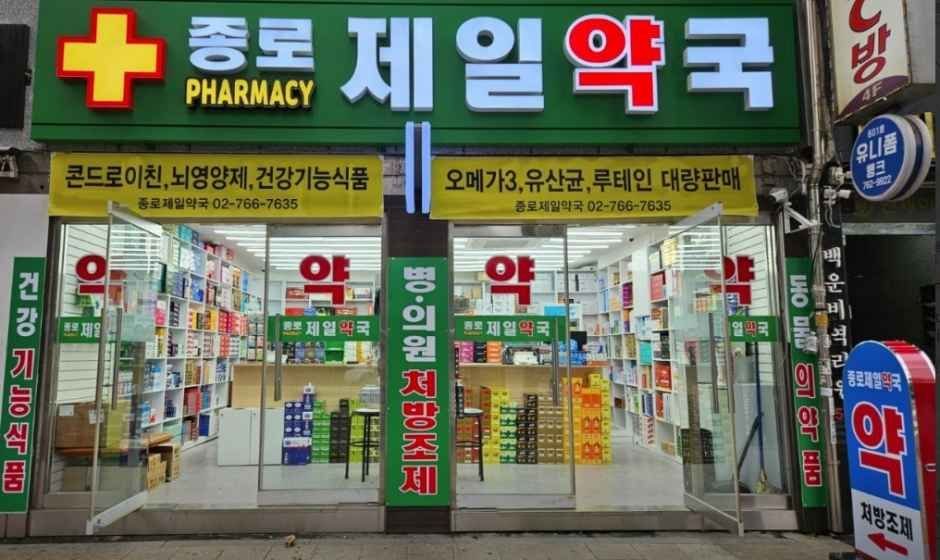
Jongno Jeil Pharmacy[Tax Refund Shop](종로제일약국)
Jongno Jeil Pharmacy[Tax Refund Shop](종로제일약국)
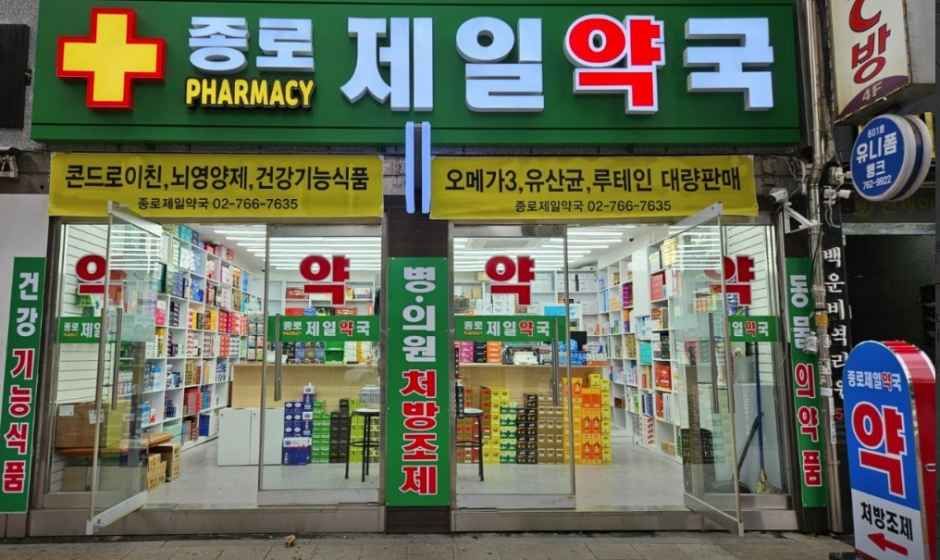 Jongno Jeil Pharmacy promises the region’s best pharmaceutical services and does its best for customers’ speedy recovery. We strive to be a health hub trusted by local residents through meticulous prescription analysis and clear health consultations.
– Address : 1F, 233, Jong-ro, Jongno-gu, Seoul
※ Presentation Information
– Fair Day
Monday – Sunday
– Information and Guides
0507-1364-7635
– Opening Hours
09:00~19:00
– Day Off
Seollal (Lunar New Year’s Day) & Chuseok (Korean Thanksgiving Day) holidays, Designated Closing Day
– Parking
Not available
– Restroom
Not available
– Items for Sale
Medicines / medical devices
◎ Nearby Tourism Infobox
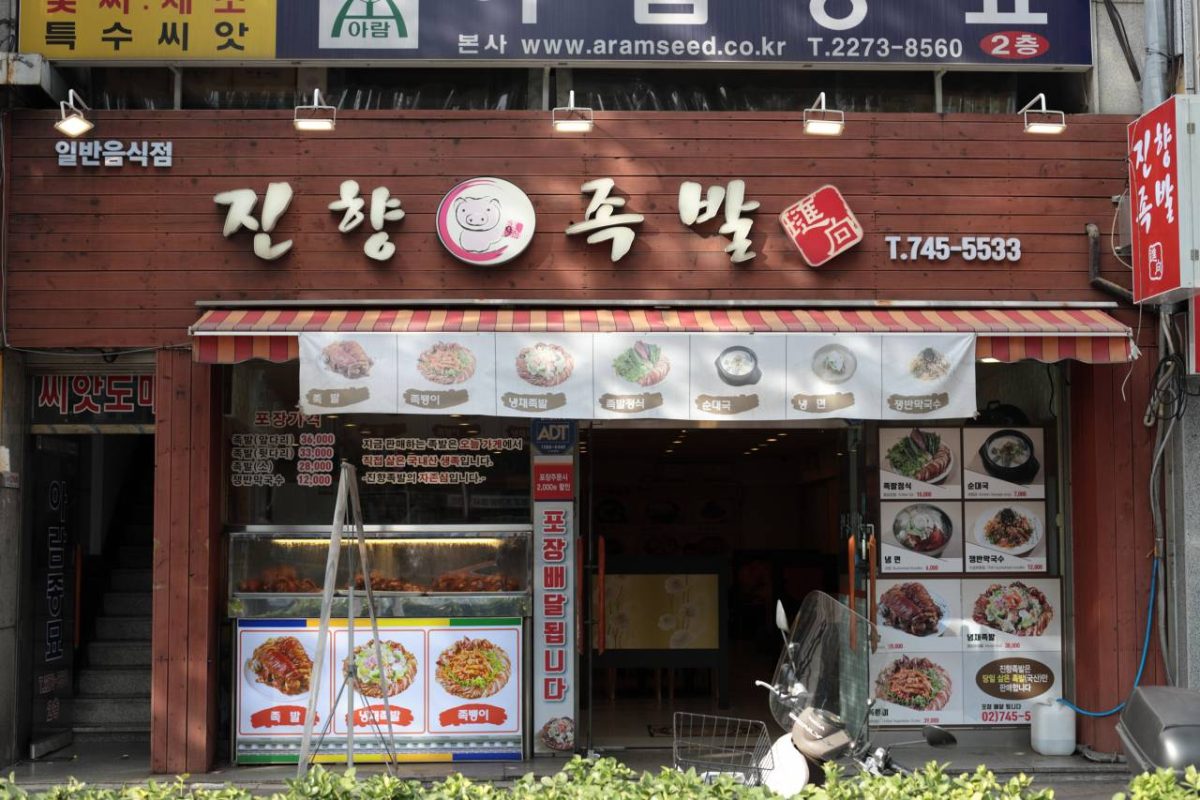
⊙ Jinhyang Jokbal (진향족발)
View detailed guide on Korea Trip Guide →
– Tel
+82-2-745-5533
A pig’s trotter(s) specialty restaurant located near Jongno 5(o)ga Station in Seoul. One of the top 5 jokbal (pig’s trotter) restaurants in Seoul. This restaurant’s signature menu is braised pigs’ feet.
⊙ Cheonggyecheon Stream (청계천)
View detailed guide on Korea Trip Guide →
– Homepage
www.sisul.or.kr
– Tel
+82-2-2290-7111
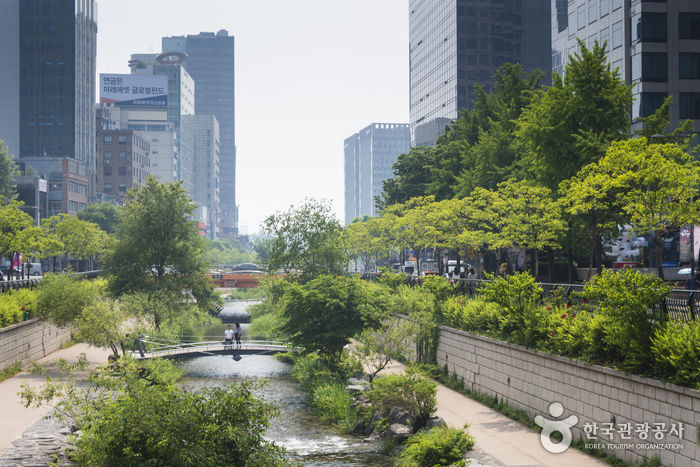
Cheonggye Plaza was built on Sejong-ro Street, where Cheonggyecheon Stream begins. It was built between Dong-A Ilbo, the starting point of the Cheonggyecheon Stream restoration, and Sindap Railroad Bridge, with a length of 160 meters, a x_width of 50 meters, and a total area of 6,962 meters squared. The plaza is decorated with fountains, waterfalls, and walking paths. It was created as a place for meetings, harmony, peace, and unification, to celebrate the significance of the restoration of Cheonggyecheon Stream. A miniaturized version of Cheonggyecheon Stream is displayed here, providing an overview of the restored stream. There are also interpretive panels about the 22 bridges that cross Cheonggyecheon stream. Fountains of various shapes create beautiful scenery. Cheonggyecheon Stream is accessible from the square through stairs on the left and Cheonggye Trail on the right. There is also an 18-meter tunnel on the Cheonggye Trail, providing a unique experience for citizens entering Cheonggyecheon Stream from the plaza. After constructing Cheonggyecheon Plaza, the Seoul Metropolitan Government made it a car-free street on public holidays so that the plaza, waterside area, and streets could be used as cultural spaces for citizens to relax. A spectacular sight is created by three-color lights illuminating the fountains and a two-tiered waterfall coming down from a x_height of four meters. Palseokdam, made of eight stones from eight provinces in Korea, was laid along the waterfall’s sides.
⊙ Dongdaemun Dak Hanmari Alley (서울 동대문 닭한마리 골목)
View detailed guide on Korea Trip Guide →
– Homepage
tour.jongno.go.kr
– Tel
+82-2-2236-9135
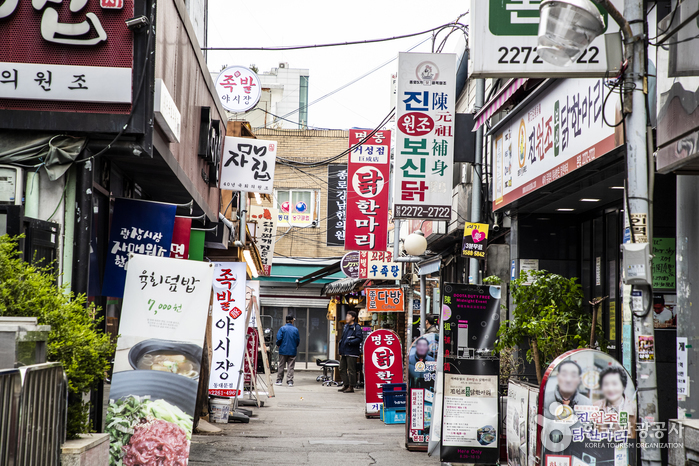
Located near the Dongdaemun Market, Dongdaemun Dak Hanmari Alley gets its name from the restaurants serving dak hanmari (whole chicken soup) that line the alley. Dak hanmari (whole chicken soup), literally “one whole chicken” in Korean, is a dish where a whole chicken is boiled in a soup and served with the alley’s special sauce. After the diners eat the meat, the broth is used to make kalguksu (noodle soup). Because the area is home to large-scale apparel and fashion material markets of the Dongdaemun Market, the district is always lively and bustling.
⊙ Doosan Art Center (두산아트센터)
View detailed guide on Korea Trip Guide →
– Homepage
www.doosanartcenter.com
– Tel
+82-2-708-5001
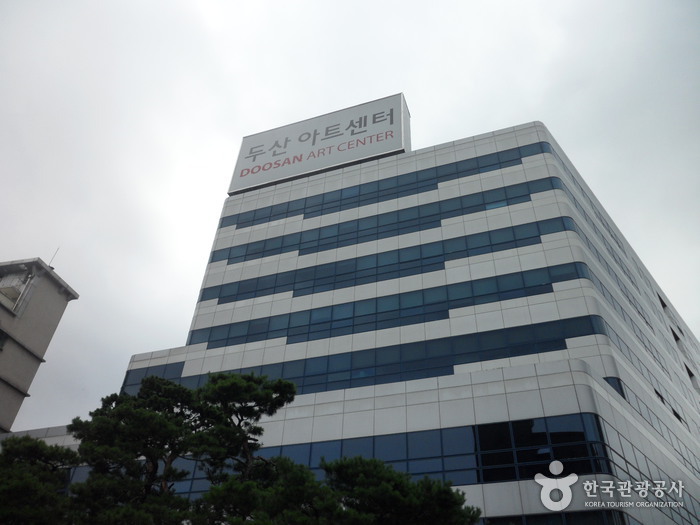
Doosan Art Center, which opened on October 1, 2007, is structured around three different spaces: The Yonkang Hall, exclusively designed for musical performances, Space 111, a “space for art incubation,” and the Doosan Gallery, built for installations.
The Yongang Hall, a theater with 620-person seating capacity, has specially designed lightings and a world-class audio-visual system to provide a second-to-none sensory experience.
Space 111 can accommodate a broad range of performing arts, from theater and dance to film and music concerts. The Doosan Gallery is open to the public, and art exhibitions and performances here can be enjoyed free of charge.
All three theaters include spacious lobbies with handicapped access, designated seating for parents with infants, and meeting areas. Rest rooms are also available nearby, in order to avoid long queues and long walks during intermission.
⊙ Dongdaemun Shopping Complex·Dongdaemun Shopping Town (동대문 종합시장·동대문 쇼핑타운)
View detailed guide on Korea Trip Guide →
– Homepage
www.ddm-mall.com (Korean, English, Japanese, Chinese)
– Tel
+82-2-2262-0114
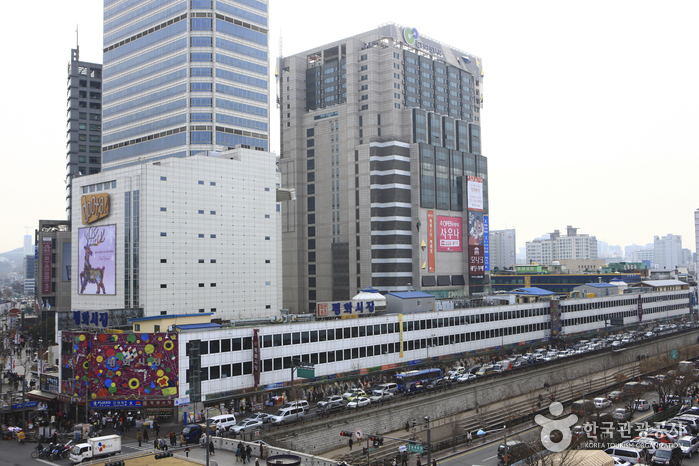
Dongdaemun Shopping Complex is one of Korea’s most well-known markets. It was founded in December 1970 as the largest of its kind in Asia and has maintained that status for the last 40 years. Browsing the plethora of shops, you can find fabric and clothing following all the latest global fashion trends. Dongdaemun Shopping Complex continues to build up its reputation as a hub of international design.
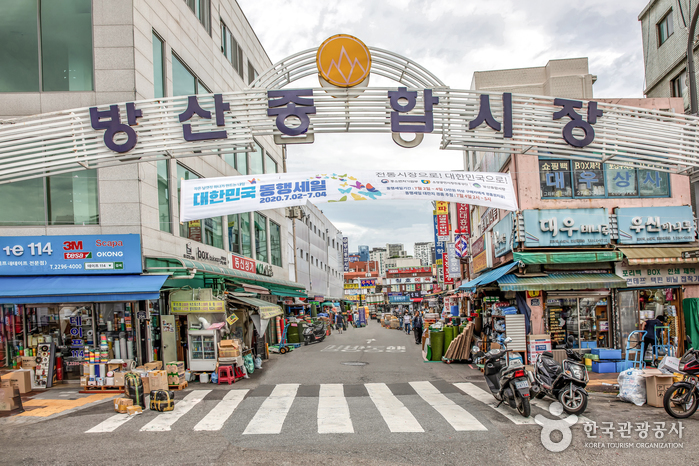
⊙ Bangsan Wholesale Market (방산 종합시장)
View detailed guide on Korea Trip Guide →
– Homepage
http://www.bangsanmarket.net/
– Tel
+82-2-2268-6691
Bangsan Market is a wholesale market with approximately 250 stores that sells packaging and promotional materials. The market was popular with patissiers in the past and is currently more famous for being a bakery street.
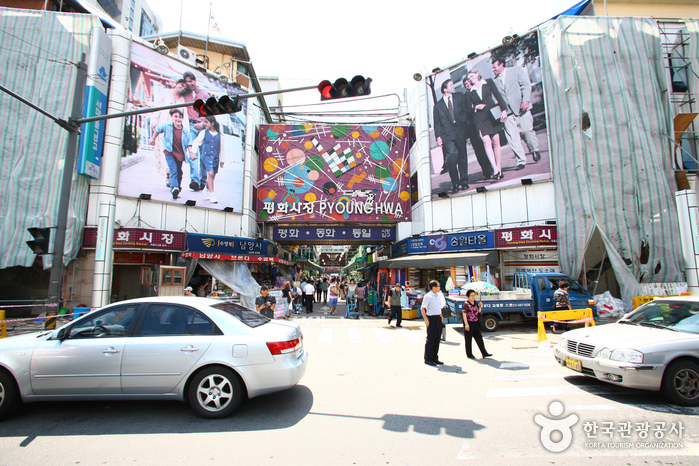
⊙ Pyounghwa (Pyeonghwa) Fashion Town (서울 평화시장)
View detailed guide on Korea Trip Guide →
– Homepage
http://www.pyounghwa.com
비짓서울 https://korean.visitseoul.net
– Tel
+82-2-2265-3531~3
The Pyounghwa Fashion Town market in Dongdaemun has been selling fashion clothing and accessories for over 50 years ever since the end of the Korean War. It was here that in 1953 North Korean refugees started selling clothes made from US army uniforms. Their market was then named Pyounghwa, which means peace, in the hope that no other wars would be fought on Korean soil. The Pyounghwa Fashion Town was therefore the beginning of the 30,000 stores that now make up Dongdaemun Fashion Town, which is seen as one of the global centers of the fashion industry.
Spread over a large area, this historical fashion market is divided into several districts, the ‘Gu Pyounghwa Fashion Town’ is the oldest, and there is also the ‘Shin Pyounghwa Fashion Town’, ‘Dong Pyounghwa Fashion Town’, and ‘Cheong Pyounghwa Fashion Town’.
⊙ Cheonggyecheon Old Books Street (청계천헌책방거리)
View detailed guide on Korea Trip Guide →
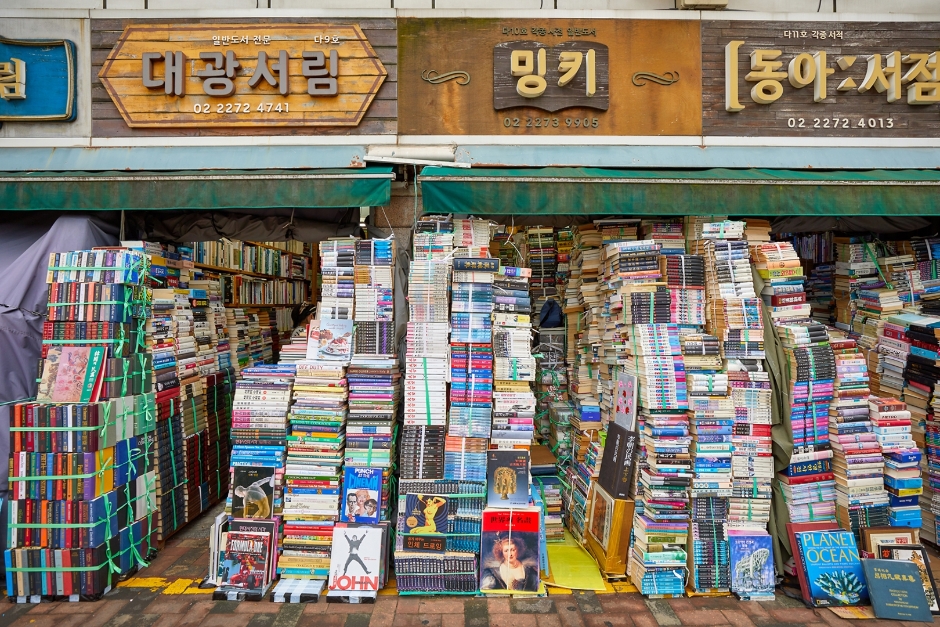
Walking east along Cheonggyecheon Stream, which flows near Sewoon Plaza, you will see a cluster of small bookstores. Books published 30 to 50 years ago, and various out-of-date magazines are piled up in about ten bookstores. You can indirectly experience the old culture and history that formed the basis of K-content, and sometimes you can also find foreign books. Nearby is Dongdaemun Market, a wholesale market selling various subsidiary materials, and Pyounghwa Market (open from night to early morning), where you can browse clothing fabrics, which are excellent places to visit together.
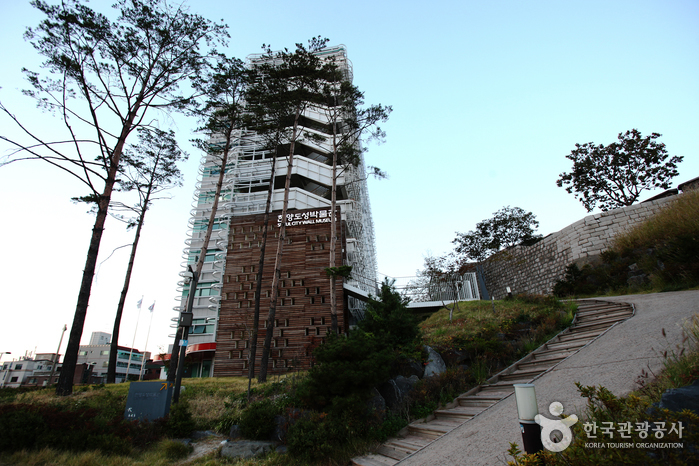
⊙ Seoul City Wall Museum (한양도성박물관)
View detailed guide on Korea Trip Guide →
– Homepage
www.museum.seoul.kr
– Tel
+82-2-724-0243
Hanyangdoseong, the Seoul City Wall, built in 1396, was the city fortress wall that protected the capital city Seoul for over 600 years. The fortress wall was built along the terrains and although it became partially damaged during the modernization process, its original form remains well to this day, making it a cultural heritage that coexists with the modern city. The Seoul City Wall Museum, located in Heungjinjimun Park, is a museum containing the history and culture of city wall from the Joseon dynasty to the present. It is a cultural space with a permanent exhibition hall, special exhibition hall, city wall information center, and study room.
⊙ Heunginjimun Gate – Dongdaemun Gate (흥인지문)
View detailed guide on Korea Trip Guide →
– Homepage
tour.jongno.go.kr
– Tel
+82-2-2148-1842
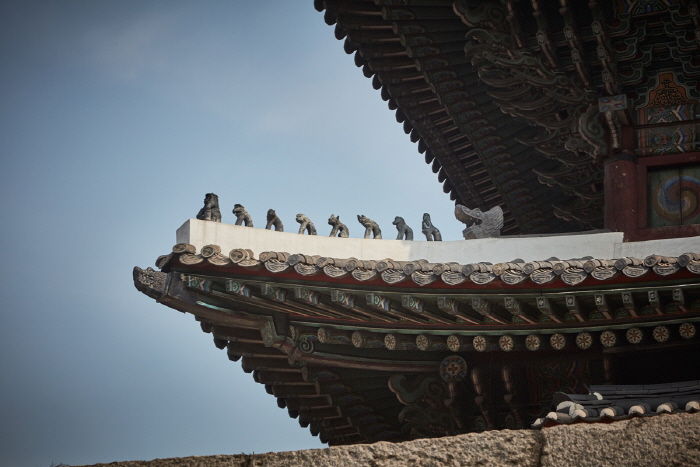
Heunginjimun Gate was built to protect Hanseongbu, which historically housed essential government facilities. Heunginjimun Gate was the gate on the east side of the outer wall of Seoul Fortress among eight gates. It is referred to as Dongdaemun Gate as well. The gate was constructed during King Taejo’s 5th year in 1396, remodeled during the reign of King Danjong in 1453, and was newly built in 1869 during the sixth year of King Gojong’s reign in 1869.
The gate features a hipped roof with five front and two side compartments on a two-storied building. The thin and weak bracket system supports the eaves and is excessively decorated, reflecting the construction features of the late Joseon period. Also, outside of the fortress is the half-circle-shaped Ongseong, a small wall, to protect the gate.
One of the unique factors of Heunginjimun Gate is that it is the only gate among Seoul’s eight to have Ongseong, further exhibiting the style of construction used during the late Joseon period.
](https://ktrip.blogsailing.com/wp-content/uploads/2026/04/4023241_image2_1.jpg)
](https://ktrip.blogsailing.com/wp-content/uploads/2026/03/4024481_image2_1.jpg)
](https://ktrip.blogsailing.com/wp-content/uploads/2026/03/4017831_image2_1.jpg)
![8 Seconds – Mario Outlet Building 3 Branch [Tax Refund Shop] (에잇세컨즈 마리오아울렛 3관점)](https://ktrip.blogsailing.com/wp-content/uploads/2026/04/4021242_image2_1.jpg)