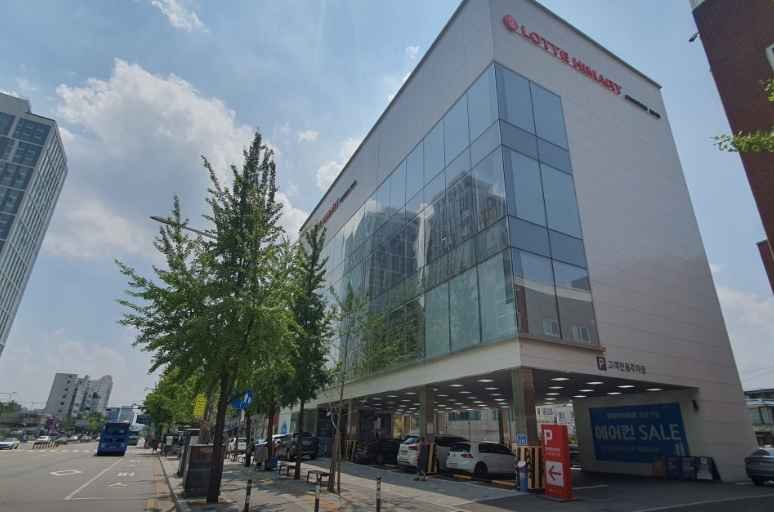
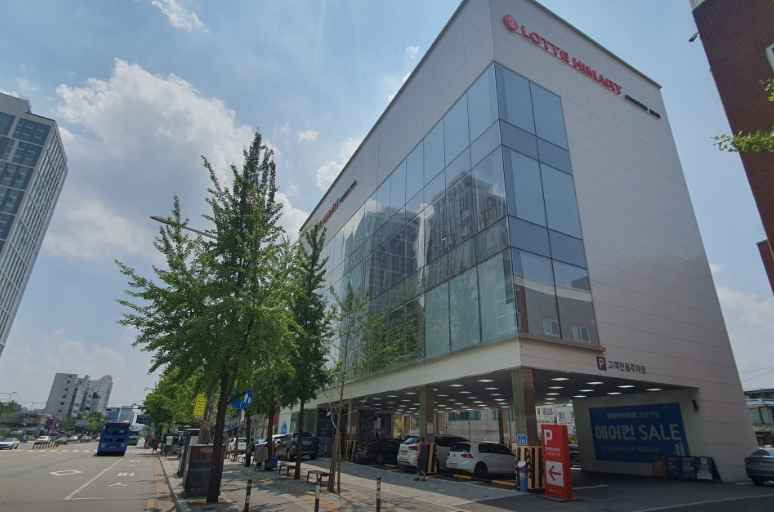
LOTTE Hi-Mart Cheonho Station Branch[Tax Refund Shop](롯데하이마트 천호역점)
LOTTE Hi-Mart Cheonho Station Branch[Tax Refund Shop](롯데하이마트 천호역점)
 – Homepage
e-himart.co.kr
LOTTE HIMART is Korea’s leading electronics and home-appliance retailer, offering everything from everyday appliances to smart devices in one place. With over 300 stores nationwide and an online mall, it’s known for competitive prices and professional in-store support.
– Address : 619, Olympic-ro, Songpa-gu, Seoul
※ Presentation Information
– Fair Day
Monday – Sunday
– Information and Guides
02-2039-0761
– Opening Hours
10:00~20:00
– Day Off
Seollal (Lunar New Year’s Day) & Chuseok (Korean Thanksgiving Day) holidays
– Parking
Available
– Restroom
Available
– Items for Sale
Electronic / digital products
◎ Nearby Tourism Infobox
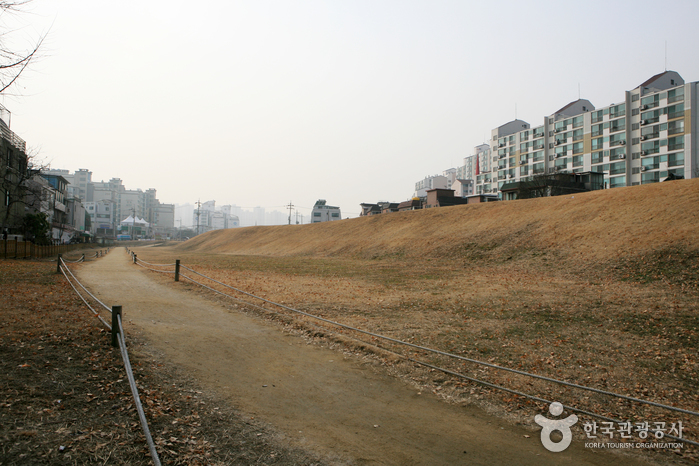
⊙ Pungnap-dong Toseong Fortress (서울 풍납동 토성)
View detailed guide on Korea Trip Guide →
– Homepage
culture.songpa.go.kr (Korean, English, Japanese, Chinese)
– Tel
+82-2-2147-2800
Onjo, the progenitor of Kingdom Baekje, first settled in Wiryeseong Hanam. But exact location is still unknown. One thing for sure, however, is that Pungnaptoseong Fortress, Mongchontoseong Fortress, Bangidong Ancient Tombs of Baekje, Seokchondong Stone Mound Tomb of Early Baekje are the remains of Baekje. Pungnaptoseong Fortress faces Hangang River to its west and connects to Mongchontoseong Fortress to the south. To the northwest faces Achasanseong Fortress over Hangang River and far to the southeast is Namhansanseong Fortress.
Pungnaptoseong Fortress, located at the south end of Cheonhodaegyo Bridge over Hangang River, is one of the remains of Early Baekje. Originally, the fortress was 4km in circumference, but due to massive overflowing of Hangang River during flood season in 1925, most of the fortress was lost and only 2.7km of it remains. To the east of the fortress are 4 vestiges of the fortress gates. The remains from the prehistoric era through the Samguk (Three States) era have been unearthed, indicating that this place was a residential area well before the Baekje Era. Through vigorous excavation, some people suggest that there used to be a palace located here during the Baekje Era.
⊙ Seoul Miz Hospital (서울미즈병원)
View detailed guide on Korea Trip Guide →
Seoul Miz Hospital is a women’s specialized hospital located in Gangdong-gu, Seoul. It provides medical services in obstetrics and gynecology, breast and thyroid surgery, internal medicine, dermatology and plastic surgery, and pediatrics, while also operating a health promotion center. With its newly expanded building, the hospital has established an International Medical Center to support the treatment of foreign patients.
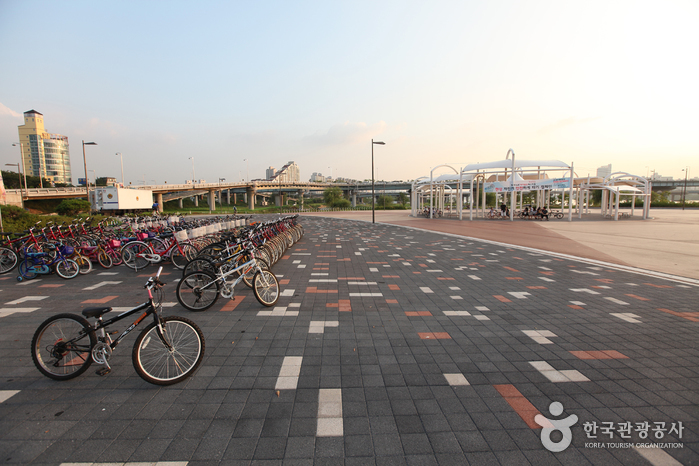
⊙ Gwangnaru Hangang Park (광나루한강공원)
View detailed guide on Korea Trip Guide →
– Homepage
hangang.seoul.go.kr
– Tel
+82-2-3780-0501
Hangang Citizen’s Park, composed of 12 areas including Jamsil, Ttukseom and Jamwon, is an eco-friendly park providing areas for sports and leisure. The park is equipped with various cultural and recreational facilities and also has an ecological park. Gwangnaru Hangang Park formed naturally through rich silt that flowed in from the upper Hangang River that was then filled with reeds, creating an ideal habitat for groups of migratory birds.
⊙ Mongchon Museum of History (몽촌역사관)
View detailed guide on Korea Trip Guide →
– Homepage
baekjemuseum.seoul.go.kr
– Tel
+82-2-2152-5900
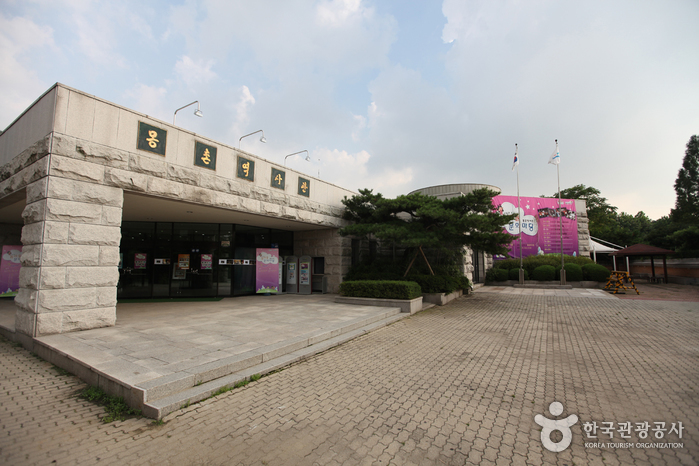
The Mongchon Museum of History, located within Olympic Park, displays artifacts from the excavations of Mongchontoseong Fortress, such as earthen fortifications as well as other artifacts of the Baekje Kingdom period, offering a glimpse into Baekje culture. A model of a Baekje dugout hut site reveals ancient dwelling patterns. Also, the facility displays a perfectly preserved model of ancient houses and tombs, giving visitors the feel of traveling back to prehistoric ages.
⊙ Namu Hotel (나무호텔)
View detailed guide on Korea Trip Guide →
– Homepage
https://www.stayfolio.com/findstay/namu-hotel
– Tel
+82-2-456-3271
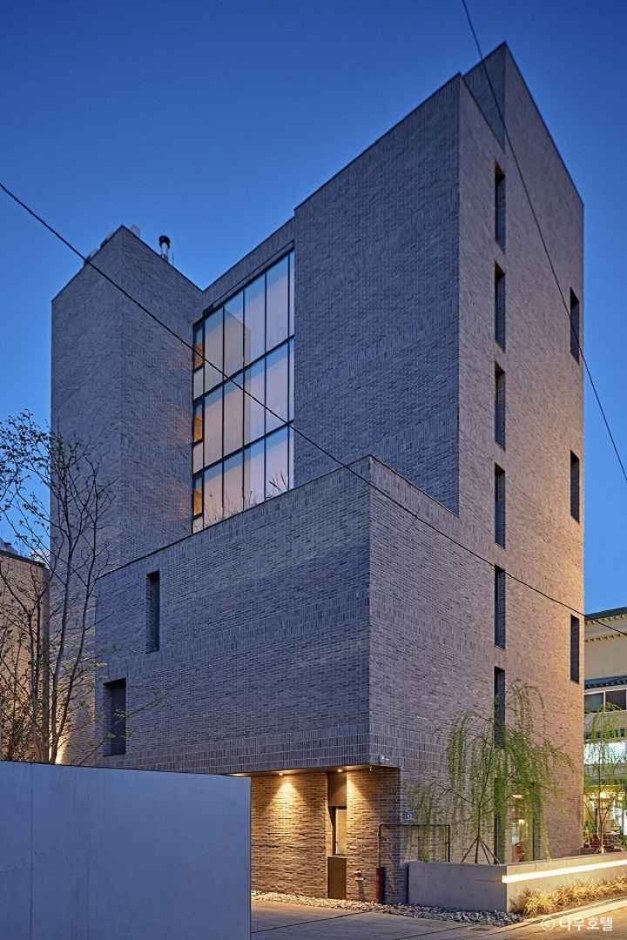
Namu Hotel, which received the Institute of Architects Award, is a hotel with a distictive design. Rather than having the main entrance on a main road, the hotel must be entered through the alley. Each room has its own unique style in terms of structure and furniture arrangement. Most rooms also feature a blacony that allows guests to be one with nature while also being protected from outside forces. Enjoy a soak in the outdoor bathtub to relax.
⊙ Soma Museum of Art (소마미술관)
View detailed guide on Korea Trip Guide →
– Homepage
soma.kspo.or.kr
– Tel
+82-2-425-1077
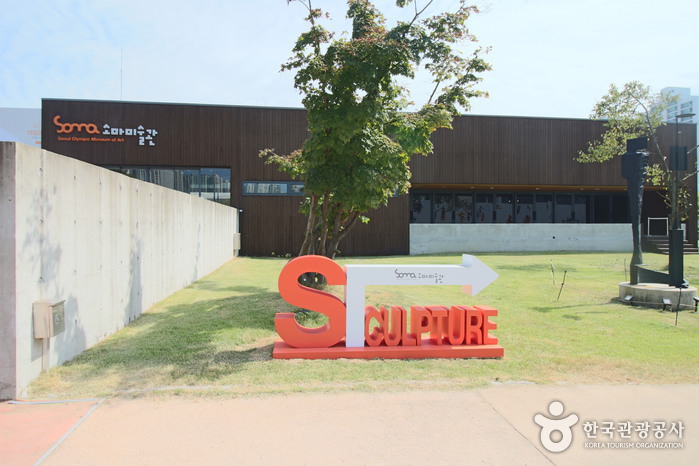
Soma Museum of Art was opened in September 2004 as a cultural space amid the nature of Seoul Olympic Park. The museum displays over 222 sculptures, and offers a variety of cultural and educational programs, including the nation’s first drawing center and archive.
⊙ Olympic Park Stadium (올림픽공원 경기장)
View detailed guide on Korea Trip Guide →
– Homepage
olympicpark.kspo.or.kr
– Tel
+82-2-410-1114
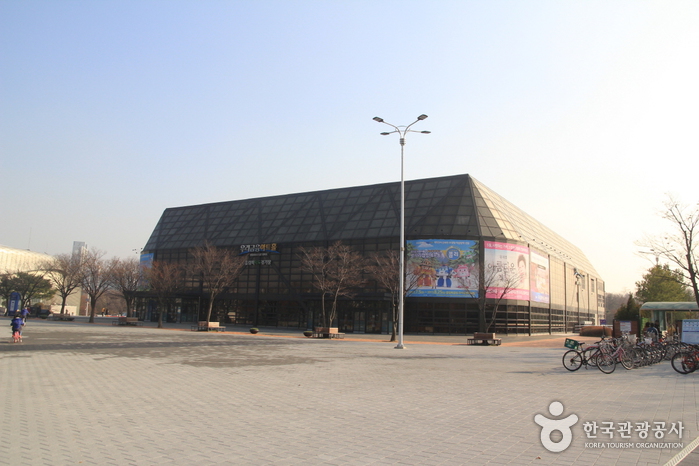
Olympic Park is an expansive outdoor area for Seoul residents to enjoy, offering facilities and venues for a range of events including athletic competitions, concerts and other performances. The park houses athletic facilities including the gymnasium of the ’88 Seoul Olympic Games, a fencing stadium, weightlifting stadium, swimming pool and tennis courts. Moreover, those venues are multi-purpose facilities that can host a wide range of events and performances.
⊙ Seoul Mongchontoseong Earthen Fortification (서울 몽촌토성)
View detailed guide on Korea Trip Guide →
– Homepage
korean.visitseoul.net
– Tel
+82-2-2147-2814
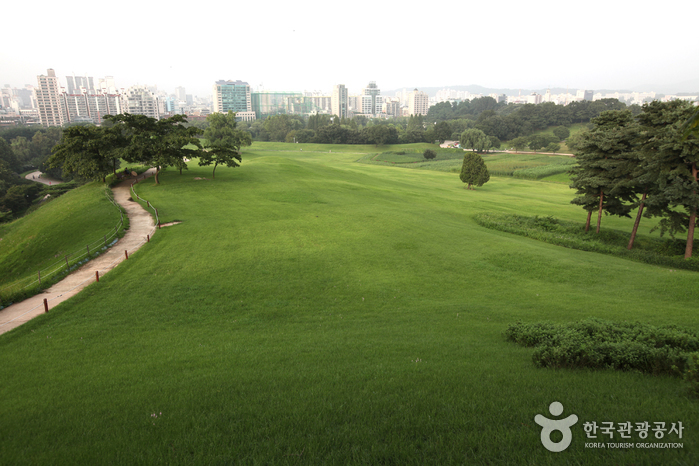
Mongchontoseong Earthen Fortification is an ancient earthen fortress built during the Hanseong period of the ancient Korean kingdom of Baekje (BC 18-AD 660). It is believed to have been constructed in the 3rd to 4th centuries. Utilizing the natural advantages of the Hangang River, it served defensive purposes with its trench and log barrier. Excavated relics from the Baekje era are on display at the Seoul Baekje Museum. The site is situated within the Olympic Park in Songpa, Seoul.
⊙ Asan Medical Center (서울아산병원)
View detailed guide on Korea Trip Guide →
Opened in June 1989, Asan Medical Center is the largest tertiary hospital in Korea with 2,764 beds. In 2023, we treated an average of 13,260 outpatients and 2,539 inpatients per day, and performed 70,892 surgeries throughout the year.
With three specialty hospitals–Cancer Institute, Heart Institute, and Children’s Hospital–and more than 50 specialized centers, we lead the world in cancer, organ transplantation, and cardiac care. In recognition of our efforts, we have topped the list of Korea’s Most Admired Hospitals for 18 consecutive years and ranked NO. 1 in Korea for six consecutive years in U.S. Newsweek’s World’s Best Hospitals.
As a “quarternary hospital” serving critically ill patients from Korea and abroad who come to us as their last hope, Asan Medical Center treats more than 20,000 international patients from around 100 countries, including the United States, United Arab Emirates, and Mongolia. Medical professionals from developed countries visit us to learn our advanced medicine. Over the past decade, more than 3,700 professionals from nearly 90 countries have visited us to learn the latest medical techniques.
⊙ KSPO Dome (Olympic Gymnastics Arena) (올림픽공원체조경기장)
View detailed guide on Korea Trip Guide →
– Homepage
www.ksponco.or.kr
The KSPO Dome was the arena built for gymnastic events during the 1988 Seoul Summer Olympics, but has been remodeled to host concerts, including for many K-pop stars and international pop stars. The dome can also serve as venue to a range of other events, including showcases, exhibitions, and business events. It is accessible via public transit using Olympic Park Station on Seoul Subway Lines 5 and 9.
](https://ktrip.blogsailing.com/wp-content/uploads/2026/05/4043910_image2_1.jpg)
](https://ktrip.blogsailing.com/wp-content/uploads/2026/03/4017836_image2_1.jpg)
![Beanpole [Tax Refund Shop] (빈폴)](https://ktrip.blogsailing.com/wp-content/uploads/2026/01/3313902_image2_1.jpg)
![Roger Vivier – LOTTE Department Store Jamsil Avenuel Branch [Tax Refund Shop] (로저비비에 롯데백화점 잠실 에비뉴엘점)](https://ktrip.blogsailing.com/wp-content/uploads/2026/04/4043439_image2_1.jpg)