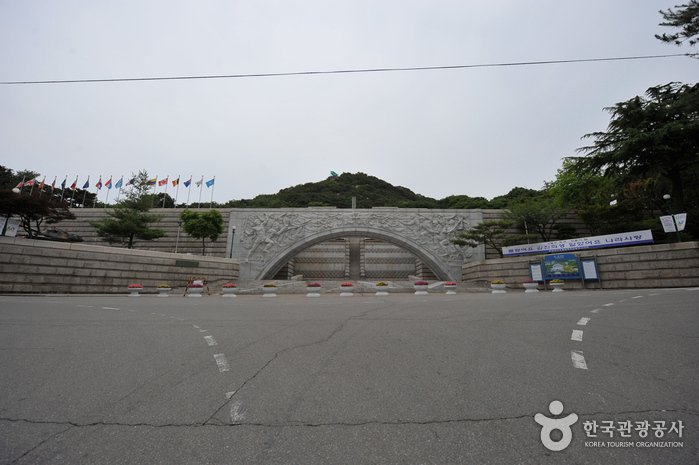
Memorial Hall for Incheon Landing Operation (인천상륙작전기념관)
Memorial Hall for Incheon Landing Operation (인천상륙작전기념관)
 – Homepage
www.landing915.com
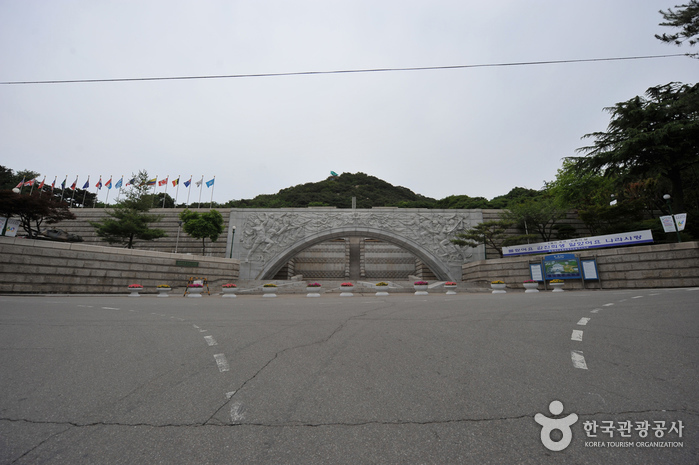
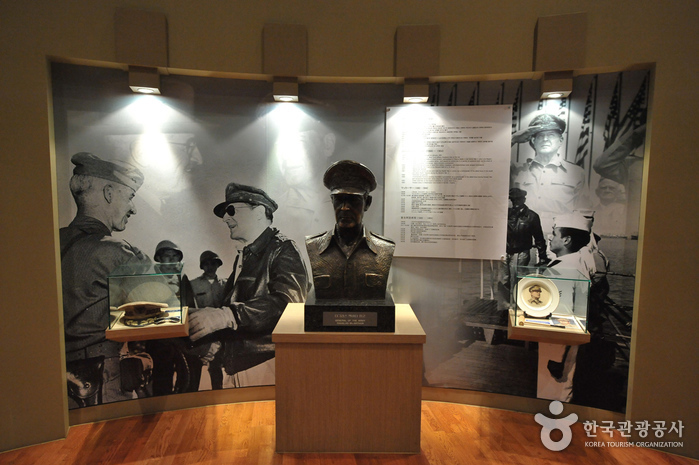
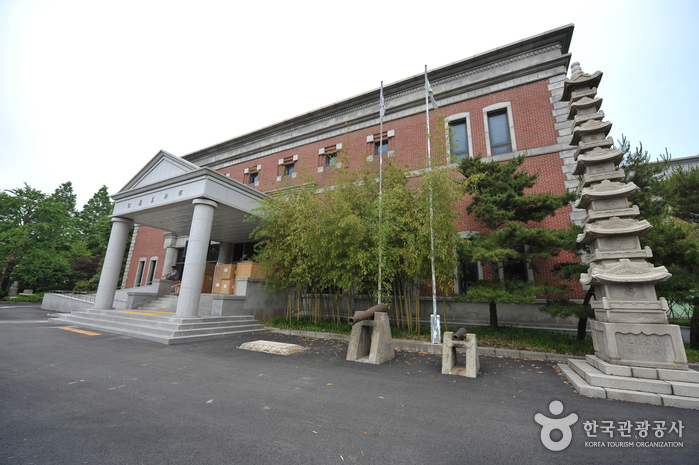
Memorial Hall for Incheon Landing Operation is a museum commemorating the event where during the early stages of the Korean War (1950-1953), South Korean and UN forces, although initially pushed back by North Korean forces, landed in Incheon on September 15, 1950, under the command of General MacArthur (1880-1964), thereby reversing the tide of the conflict. The memorial hall features exhibitions related to the Korean War and sculptures depicting the Incheon Landing Operation. From the observatory, visitors can enjoy views of the Hwanghae Sea and the city of Incheon.
– Address : 138 Cheongnyang-ro, Yeonsu-gu, Incheon
※ Presentation Information
– Information and Guides
+82-32-832-0915
– Parking
Available
– Parking Fee
Free
– Day Off
Mondays, New Year’s Day, Day of Seollal (Lunar New Year’s Day) & Chuseok (Korean Thanksgiving Day)
– Usage Fee
Free
– Operating Hours
09:00-18:00 (last admission 17:30)
– Scale
Total area: 24,347 ㎡ / Structure area: 1,793 ㎡
– Tour Duration
Approx. 2 hr
– Program Information
Not available
– Foreign Language Intepretation Services
Available (English, Chinese, Japanese)
* Visitors using these services must make reservations at least 3 days in advance.
Inquiries: +82-32-440-4055
Website: culture-tour.incheon.go.kr




◎ Nearby Tourism Infobox
⊙ Heungnyunsa Temple (Incheon) (흥륜사(인천))
View detailed guide on Korea Trip Guide →
– Homepage
www.hrt.kr
www.yeonsu.go.kr
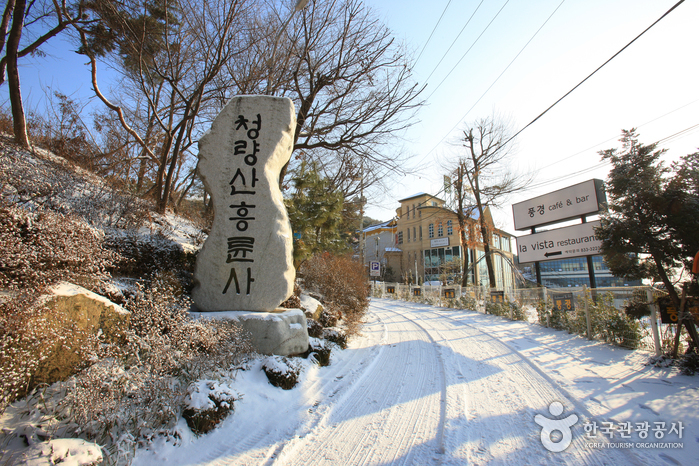
Heungnyunsa Temple is a temple located on Cheongnyangsan Mountain in Incheon. Although originally built in 1376, it was destroyed by fire and reconstruction began in 1927. The temple’s buildings and sculptures are adorned with elaborate gold paint, lending them a splendid appearance. The temple’s bell is also gilded, and its 40-meter-high Great bronze Buddha pagoda shines in gold. Heungnyunsa Temple is also renowned for its panoramic views and sunsets. Visitors can overlook the direction of Songdo in Incheon and even catch a glimpse of the distant Incheondaegyo Bridge spanning over the sea.
⊙ Nasaret International Hospital (나사렛국제병원)
View detailed guide on Korea Trip Guide →
Originating from Yi Gang-il Korean Medicine Clinic, which opened in Jeonju in 1973, Nasaret International Hospital is continuing its 49-year treatment history. Its medical care system offers one-stop services, encompassing systemized health checkups, emergency responses, surgeries, and rehabilitation treatments all in one place.
With a cooperation system that combines advanced modern medicine, traditional Korean medicine, and integrated functional medicine, Nasaret International Hospital has secured global competitiveness. It offers differentiated medical services through 12 specialized treatment centers, including the Cardiovascular Center, Cerebrovascular Center, Spine Center, Joint Center, Gastroenterology Center, and the Korean Medicine Center.
The hospital has also enhanced its medical services by creating dedicated routes for international patients. Its international cooperation center supports treatment and hospital administration services in multiple languages.
⊙ Songam Art Museum (송암미술관)
View detailed guide on Korea Trip Guide →
– Homepage
https://www.incheon.go.kr
With a scenic view overlooking the West Sea, Songam Art Museum is a French-style building located along the coastal road at the foot of Cheongnyangsan Mountain in Incheon.
The gallery was built to house a private collection of antiques collected by the late Chairman Lee Hoerim. The gallery, together with all its relics and real-estate, was later donated to Incheon Metropolitan City and introduced as Songam Art Museum.
Even before being donated, the gallery has been making contributions to the progress of research regarding the art and culture of Korea and China by displaying both Korean and Chinese antiques related to Korean culture. After its renovation and conversion into a museum, Songam Art Museum added a repository of Korean paintings and ceramic wares. Through continuous investment and research work, the museum is now a cultural space well-appreciated by citizens and tourists alike.
](https://ktrip.blogsailing.com/wp-content/uploads/2026/06/4043340_image2_1.jpg)
![Columbia – MODA Outlet Incheon Branch [Tax Refund Shop] (컬럼비아 모다아울렛 인천점)(컬럼비아 모다아울렛 인천점)](https://ktrip.blogsailing.com/wp-content/uploads/2026/06/4021175_image2_1.jpg)
![VERSACE – LOTTE Department Store Incheon Branch [Tax Refund Shop] (베르사체 롯데백화점 인천점)](https://ktrip.blogsailing.com/wp-content/uploads/2026/06/4042406_image2_1.jpg)