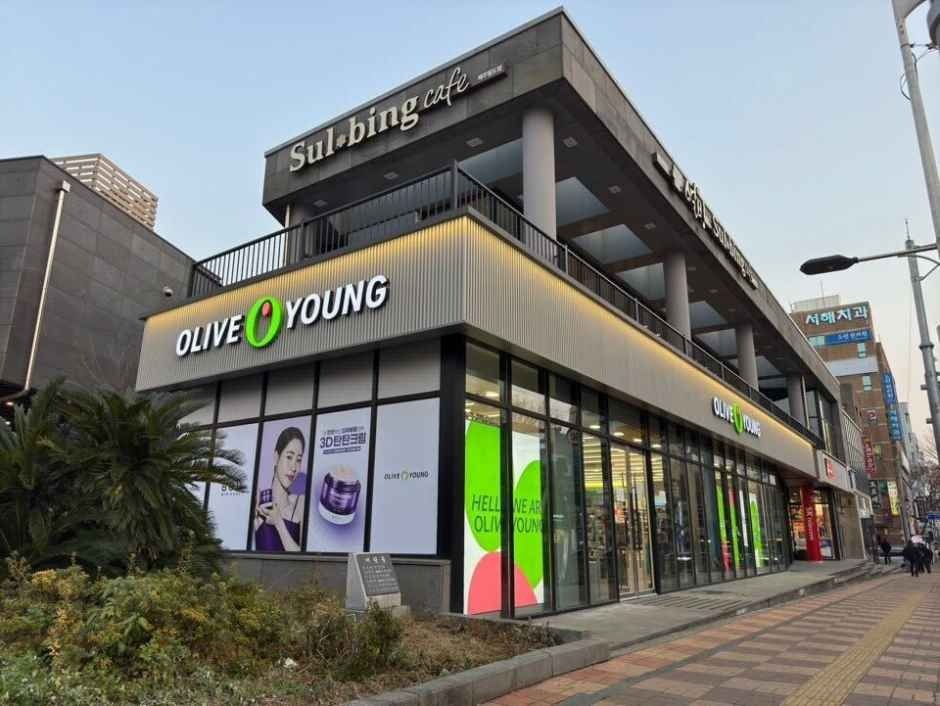
Olive Young – Jeju Ildo-2dong Branch [Tax Refund Shop](올리브영 제주일도이동점)
Olive Young – Jeju Ildo-2dong Branch [Tax Refund Shop](올리브영 제주일도이동점)
 – Homepage
www.oliveyoung.co.kr
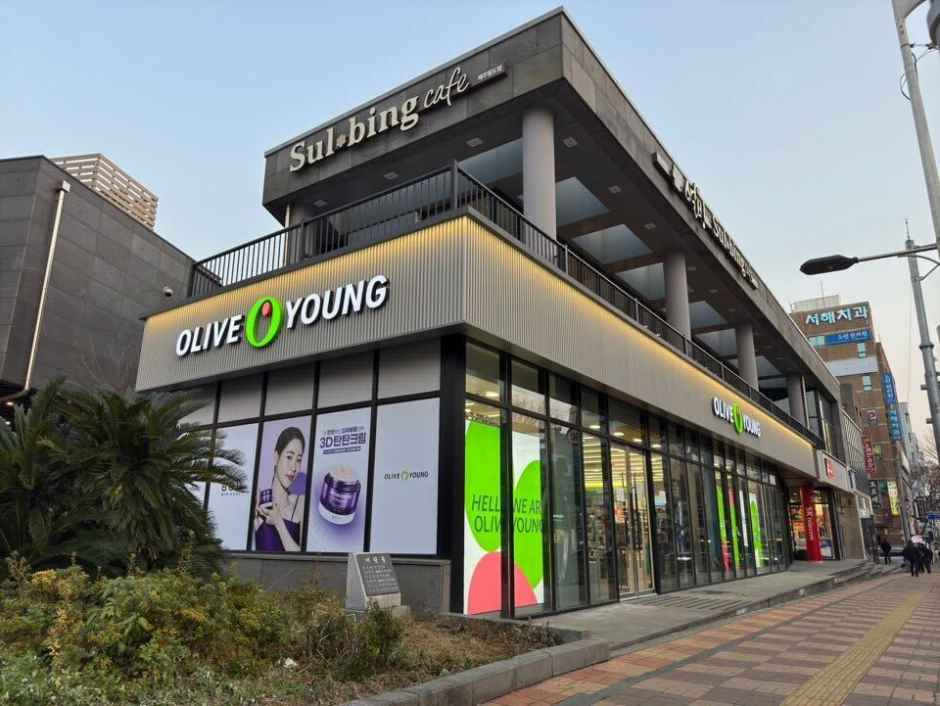
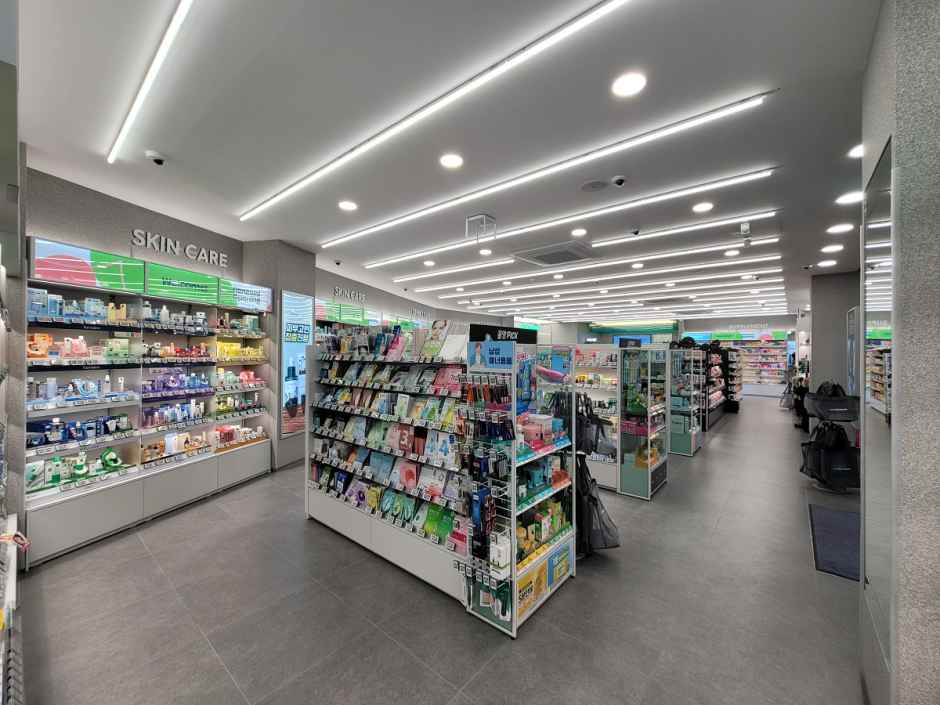
Olive Young is a popular health and beauty store showcasing the latest K-beauty trends. It offers a wide selection of skincare, makeup, and health products at affordable prices, making it a favorite among international visitors.
– Address : 81, Goma-ro, Jeju-si, Jeju-do
※ Presentation Information
– Fair Day
Monday – Sunday
– Information and Guides
064-722-9543
– Opening Hours
10:00~22:00
– Parking
Not available
– Restroom
Available
– Items for Sale
Perfume / cosmetics, Miscellaneous goods, Ginseng / herbal medicines / health supplements, Food products
– Shop Guide
Refund method (Time-frame) : Immediate tax refund / Claim for refund
◎ Nearby Tourism Infobox
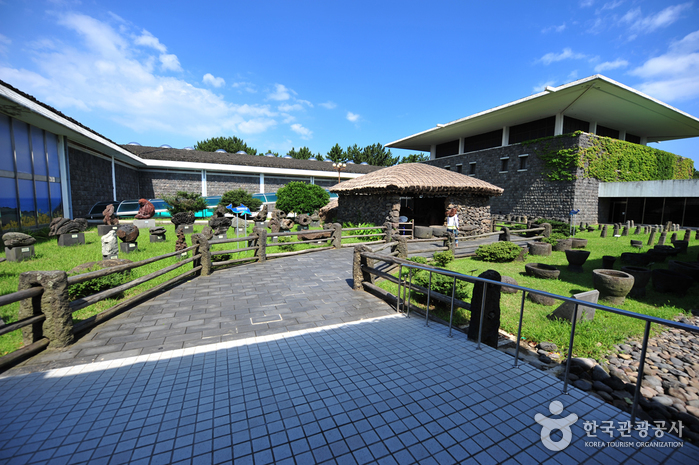
⊙ Jeju Folklore & Natural History Museum (제주민속자연사박물관)
View detailed guide on Korea Trip Guide →
– Homepage
museum.jeju.go.kr (Korean, English, Japanese, Chinese)
The Jeju Folklore & Natural History Museum showcases the island’s unique traditional culture and natural environment. It features exhibits on Jeju’s natural history, folklore, marine life, and an interactive Jeju Experience Center. Enhancing visitor engamgent, the museum includes dioramas and animated films. A highlight of the Sea Exhibition Hall is the 13m-long skeleton of a Bryde’s whale, discovered dead on a jeju beach in 2004.
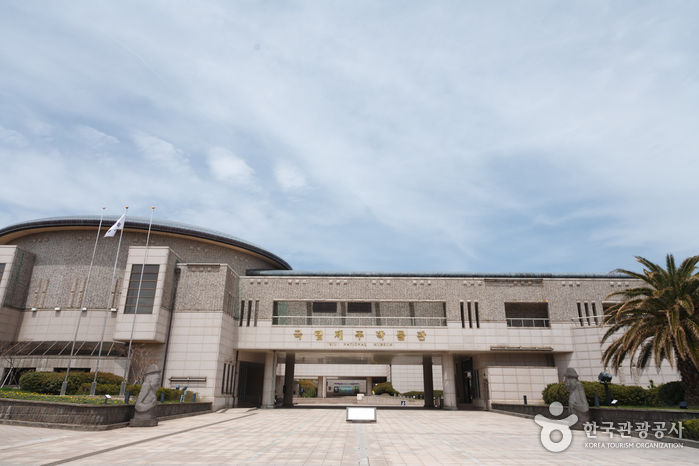
⊙ Jeju National Museum (국립제주박물관)
View detailed guide on Korea Trip Guide →
– Homepage
jeju.museum.go.kr
Opened on June 15, 2001, Jeju National Museum is a history museum that displays, preserves and studies Jeju Island’s historical and cultural assets. Jeju National Museum houses various remains excavated from ruins, including meaningful relics from the prehistoric age through to the Joseon dynasty. It boasts unique traditional culture and holds special exhibitions each year.
⊙ Jeju Samseonghyeol (제주 삼성혈)
View detailed guide on Korea Trip Guide →
– Homepage
www.samsunghyeol.or.kr (Korean only)
Samseonghyeol is a revered site featuring three mythical holes, believed to be the origin of Jeju island’s mythical founders: Go, Yang, and Bu. This sacred location is enveloped by ancient trees, standing for centuries, and remarkably, the holes are known to never fill with water, no matter how hard it rains or snows. Adjacent to these remarkable natural phoenomena, visitors will find an exhibition hall and a media gallery dedicated to telling the lore of Samseonghyeol. Additionally, the site is surrounded by historical structures dating back to the Joseon period.
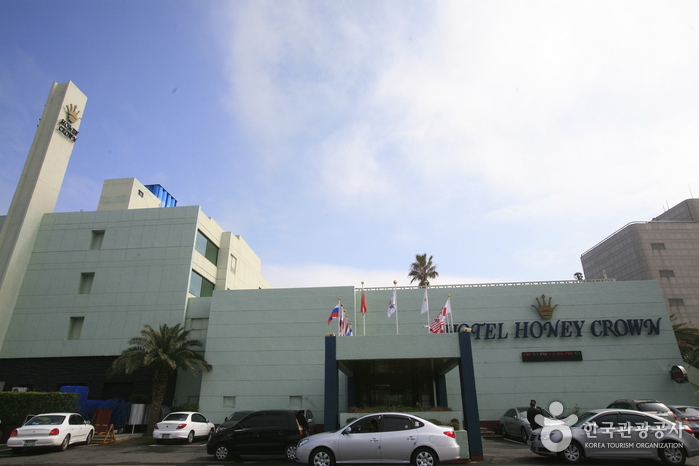
⊙ Honey Crown Hotel (하니크라운호텔)
– Homepage
http://honeycrown.kr/
Honey Crown Hotel features guestrooms with a view of Hallasan Mountain as well as of the ocean. The hotel has a tropical garden walking trail for guests to enjoy. Other facilities include a banquet hall, an outdoor wedding hall, an annex housing seminar rooms, and restaurants.
⊙ Rolling Brewing (롤링브루잉)
View detailed guide on Korea Trip Guide →

The espresso bar Lee Hyori fell in love with
If you are a coffee maniac or are looking for a cafe where you can focus on coffee, we recommend Rolling Brewing. Depending on the production area, the roasting that makes use of the characteristics of each specialty coffee bean is very outstanding. In addition to the espresso menu, cold brew, latte, iced tea, and ice cream are also available. The cat walking around the hip store is the mascot of this store. You can also see the autographs that Lee Hyori and Lee Sangsoon left on the book.
⊙ Dongmun Traditional Market (동문재래시장)
View detailed guide on Korea Trip Guide →
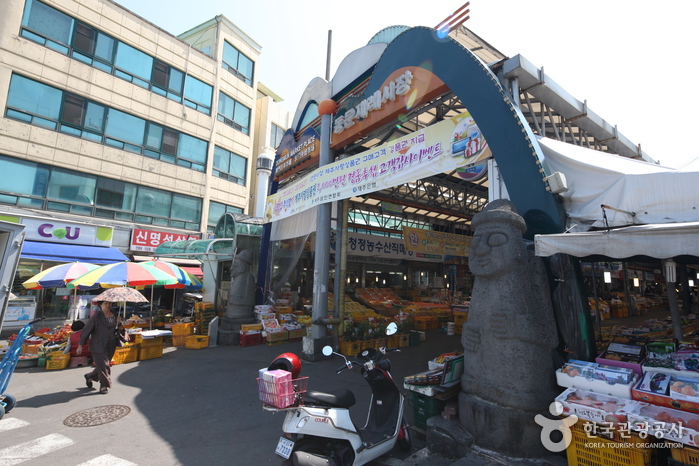
Dongmun Traditional Market, steeped in history, stands a quintessential market of Jeju Island. Together with the adjacent Dongmun Traditional Fish Market, it forms the core of Jeju’s most significant and expansive permanent market, established right after Korea’s liberation in August 1945. Originally the island’s only permanent marketplace and a hub for its commercial activities, the market was relocated to its present site after a devastating fire in March 1954. It offers an array of goods such as vegetables, fruits, seafood, medicinal herbs, grains, and clothing. Known for its fresh catch, the market is a go-to place for seafood lovers, offering delicacies like sliced raw cutlassfish at reasonable prices. It’s also gaining popularity for its innovative dishes, including samhap (skate, pork, and kimchi combo) served with rice and abalone intestines, as well as tteokgalbi (grilled galbi patties) accompanied by whole abalone.
⊙ Sanjicheon Stream (산지천)
View detailed guide on Korea Trip Guide →
– Homepage
www.visitjeju.net
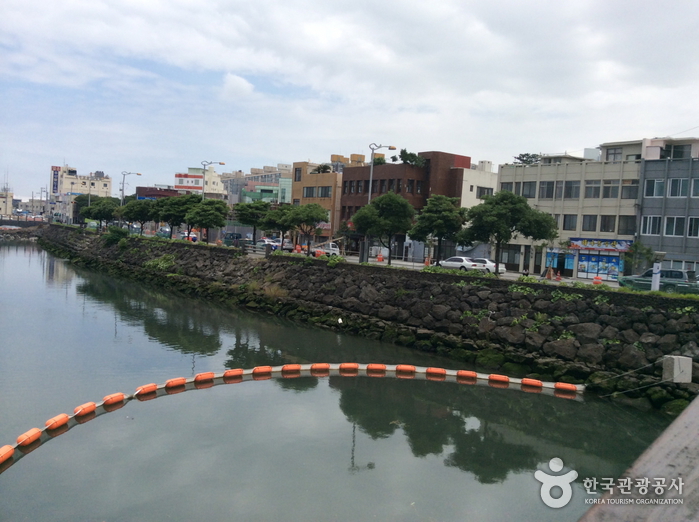
Running across from Dongmun Market in Jeju City, Sanjicheon Stream is home to a rich array of freshwater fish (e.g. sweetfish, gray mullets, Amur goby, and carps). In summer, it attracts hundreds of thousands of anglers as well as children.
The port, downstream from Sanjicheon Stream, is renowned for picturesque views of fishing boats, egrets, and seagulls. A restored Chinese sailing vessel is exhibited at the end of the stream for visitors. Along the stream are walking paths, a park, and music fountains, in which Sanjicheon Art Festival and a slew of cultural events and performances are held every summer and winter, attracting many visitors.
⊙ Byeoldobong Peak (Beri Oreum) (별도봉(베리오름))
View detailed guide on Korea Trip Guide →
– Homepage
www.visitjeju.net
(Korean, English, Japanese, Chinese, Malay)
Situated in the east of Hwabuk 1-dong and along the coast, Byeoldobong is a parasitic mountain made of siliciclastic sedimentary rocks and lava. Its northern slope is dominated by steep cliffs where a large rock called Jasalbawi Rock (Suicide Rock) is located. At the bottom of the cliffs are Goraegul Cave (Whale Cave) and an oddly-shaped rock that looks like a mother carrying her child on her back.
Despite being only 136m high, Byeoldobong is home to Jangsu Trail, a walking path that stretches over 1.8km around coastal cliffs, overlooking the ocean. Considered the most pleasant trail on Jeju Island, it offers a spectacular view of numerous peaks, Jeju Port and its nearby villages, and the emerald-blue sea. Naturally, it is a popular tourist destination for family visitors and couples.
⊙ Gwandeokjeong Pavillion (Jeju) [관덕정(제주)]
View detailed guide on Korea Trip Guide →

– Homepage
www.visitjeju.net
www.cha.go.kr
One of the oldest buildings in Jeju, Gwandeokjeong Pavilion was established in 1448 by the magistrate of Jeju with the purpose of training local soldiers. This historical edifice is renowend for its intricately painted girders, adorned with murals depicting the ten symbols of longevity, scenes from the Battle of Red Cliffs, and hunting imagery. Additionally, the pavilion’s signboard is reputed to feature the handwriting of Prince Anpyeong, a notable figure from the Joseon era. Gwandeokjeong Pavillion is part of the Jeju-mok Government Office complex.
⊙ Jeju-mok Government Office (제주목관아)
View detailed guide on Korea Trip Guide →
– Homepage
www.cha.go.kr
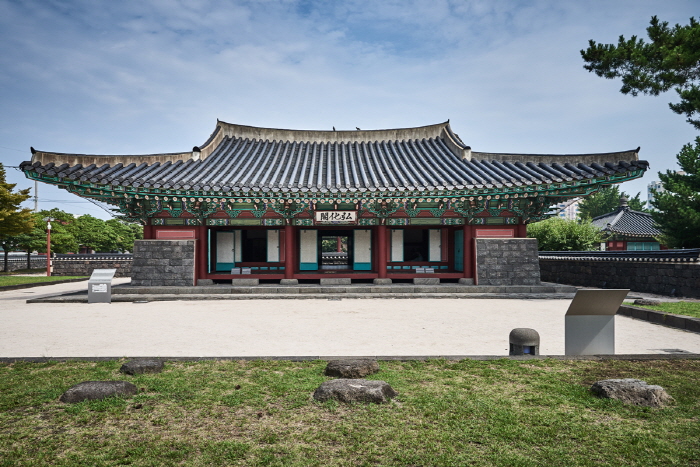
The Jeju-mok Government Office was a gwana, or regional government office, that historically served as the center of Jeju Island’s political, administrative, and cultural activities, spanning from its early days as the State of Tamna through the Joseon period. A significant portion of the structure was destroyed in a fire in 1434, leading to subsequent rebuilding efforts. From 1991, archeological excavations were conducted in four stages, enabling the meticulous restoration of several key buildings within the complex. These include the Honghwagak Pavilion, Yeonhuigak Pavilion, Uyeondang Pavilion, Gyullimdang Pavilion, and Gwandeokjeong Pavillion, all of which were restored by December 2002. Additionally, the complex is known for hosting annual nighttime events.
](https://ktrip.blogsailing.com/wp-content/uploads/2026/06/4020345_image2_1.jpg)
](https://ktrip.blogsailing.com/wp-content/uploads/2026/06/4029065_image2_1.jpg)
](https://ktrip.blogsailing.com/wp-content/uploads/2026/06/4029081_image2_1.jpg)
One Comment