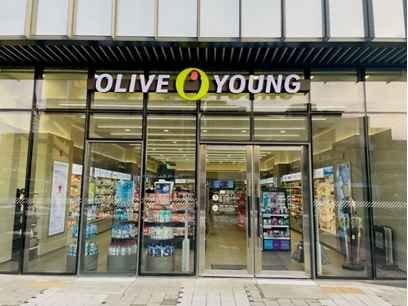
Olive Young Junggok Station Branch [Tax Refund Shop](올리브영 중곡역점)
Olive Young Junggok Station Branch [Tax Refund Shop](올리브영 중곡역점)
 – Homepage
www.oliveyoung.co.kr
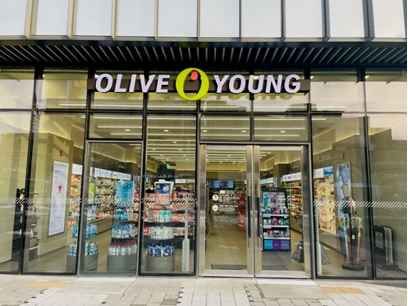
Olive Young is a popular health and beauty store showcasing the latest K-beauty trends. It offers a wide selection of skincare, makeup, and health products at affordable prices, making it a favorite among international visitors.
– Address : 400, Neungdong-ro, Gwangjin-gu, Seoul
※ Presentation Information
– Fair Day
Monday – Sunday
– Information and Guides
02-2201-6143
– Opening Hours
09:00~22:00
– Parking
Available
– Restroom
Available
– Items for Sale
Perfume / cosmetics, Miscellaneous goods, Ginseng / herbal medicines / health supplements, Food products
◎ Nearby Tourism Infobox
⊙ Junggok-dong Furniture Street (중곡동 가구거리)
View detailed guide on Korea Trip Guide →
Junggok-dong Furniture Street stretches between Achasan Subway Station and Gunjagyo Bridge, hosting a concentration of furniture stores on either side of the main road. This area accommodates a diverse range of furniture stores, featuring well-known domestic and international brands alongside smaller and medium-sized furniture shops. It serves as a convenient destination for customers to compare and purchase various furniture items, including beds, sofas, dining tables, wardrobes, chairs, and interior accessories, all within close proximity. The accessibility to Gunja Subway Station makes it easily reachable via public transportation.
⊙ Yongma Falls Park (용마폭포공원)
View detailed guide on Korea Trip Guide →
– Homepage
www.jungnang.seoul.kr
Yongma Falls Park is situated on the mid-slope of Yongmasan Mountain, established following the closure of an aggregate collection plant. The park showcases three artificial waterfalls: Cheongnyongpokpo Falls, Baengmapokpo Falls, and Yongmapokpo Falls. Each waterfall comprises two tiers, with x_heights ranging from 21m to 51.4m. The park is equipped with various amenities, including ponds, tennis courts, soccer fields, a wildflower garden, walking trails, and a barefoot walking trail.
⊙ Gwangnaru Safety Experience Center (광나루안전체험관)
View detailed guide on Korea Trip Guide →
– Homepage
fire.seoul.go.kr
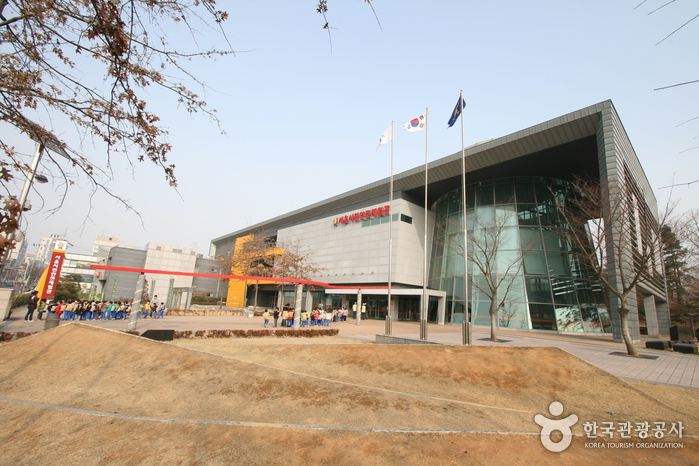
Gwangnaru Safety Experience Center was founded in 1999 after two fire accidents in which many children lost their lives. These tragedies emphasized the necessity of establishing a disaster training center for common citizens.
Gwangnaru Safety Experience Center is a three-story building with one basement floor, covering an area of more than 5,000 m². The basement floor includes a small theater. The first floor is set up for natural disaster training and consists of an orientation hall, storm simulation training room, earthquake simulation room, computer tests on fire safety knowledge and others. The second floor is a place for artificial catastrophe training. It consists of a smoke escape training room, fire extinguisher training room, first-aid (CPR) training room and practice place for calling 119. The third floor is used for rescue training and consists of a rescue training room, screening room, training for professionals and video examples of the five biggest disasters that have occurred in Seoul. Overall there are about 20 training areas established, so citizens can experience the imitation of a disaster by themselves and learn easily and in an interesting way how to cope with a disaster.
⊙ Universal Arts Center (유니버설아트센터)
View detailed guide on Korea Trip Guide →
– Homepage
www.uac.co.kr (Korean only)
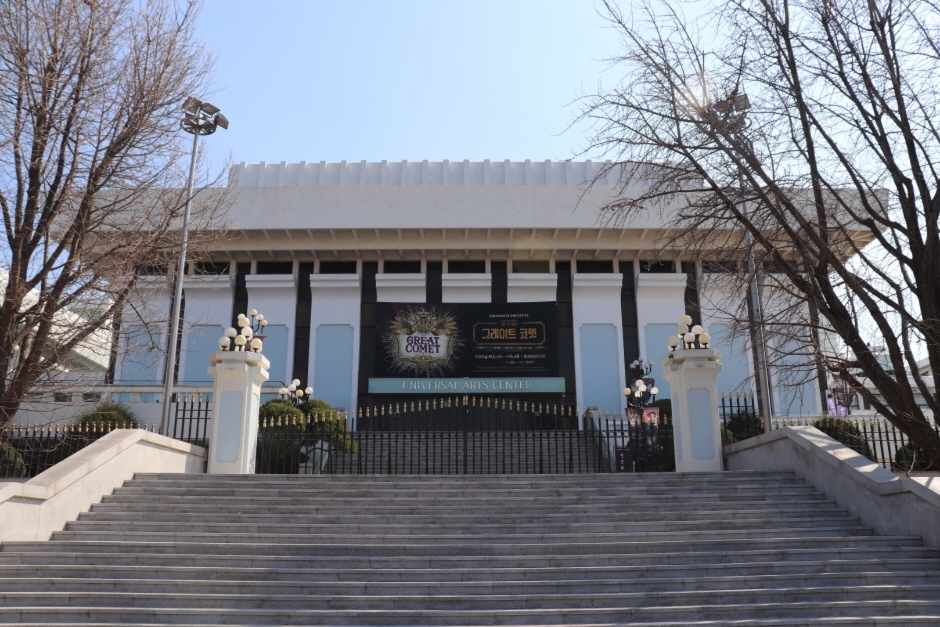
Universal Arts Center, inaugurated in 1981, stands as a prominent venue for performances. Renowned for its splendid and classic architectural interior, it is celebrated for its distinctiveness. Its main facilities include the Grand Theater, the Luna Hall capable of accommodating up to 300 guests for banquets, and an audience lounge. It serves as a harmonious space where performance venues, artistic community, and art educational institutions converge. Here, visitors can enjoy a diverse array of performances ranging from ballet and musicals to concerts.
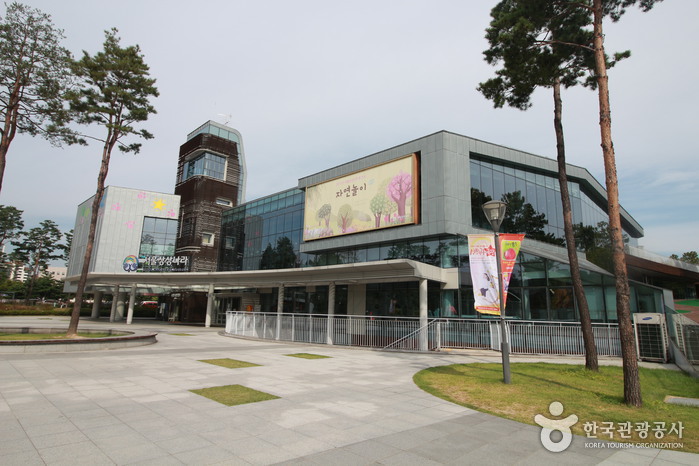
⊙ Seoul Children’s Museum (서울상상나라)
View detailed guide on Korea Trip Guide →
– Homepage
www.seoulchildrensmuseum.org
Seoul Children’s Museum is a multifaceted cultural space established in 2013 to foster children’s creativity and imagination. Spanning from the basement floor to the third floor, it boasts over a hundred interactive exhibits. These exhibits cover a wide range of areas including art, imagination, thought, and physical play, organized into ten distinct zones. It’s a popular destination where children can learn and expand their imagination through play. Advanced booking is required, and reservations can be made through the website.
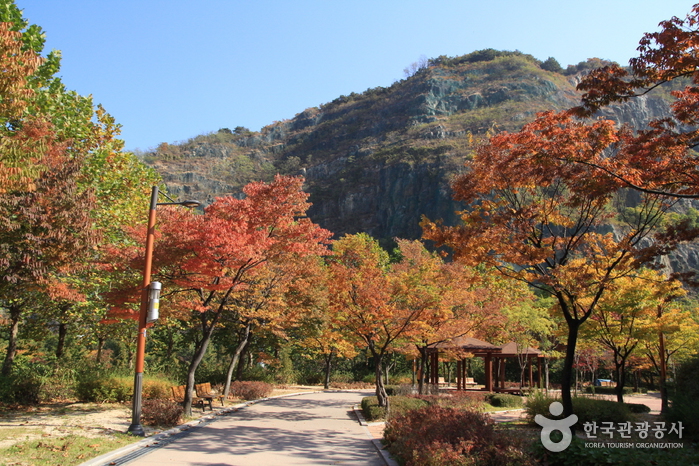
⊙ Yongmasan Mountain (용마산)
View detailed guide on Korea Trip Guide →
– Homepage
www.jungnang.go.kr
With an altitude of 348 meters, Yongmasan Mountain is the highest peak of Achasan Mountain. The mountain stretches through the ridges of Manguri Park and Junggok-dong, with trails connecting to Achasan Mountain Fortress and the back gate of Children’s Grand Park. Nearby parks include Yongmapokpo Park and Yongmasan Sagajeong Park.
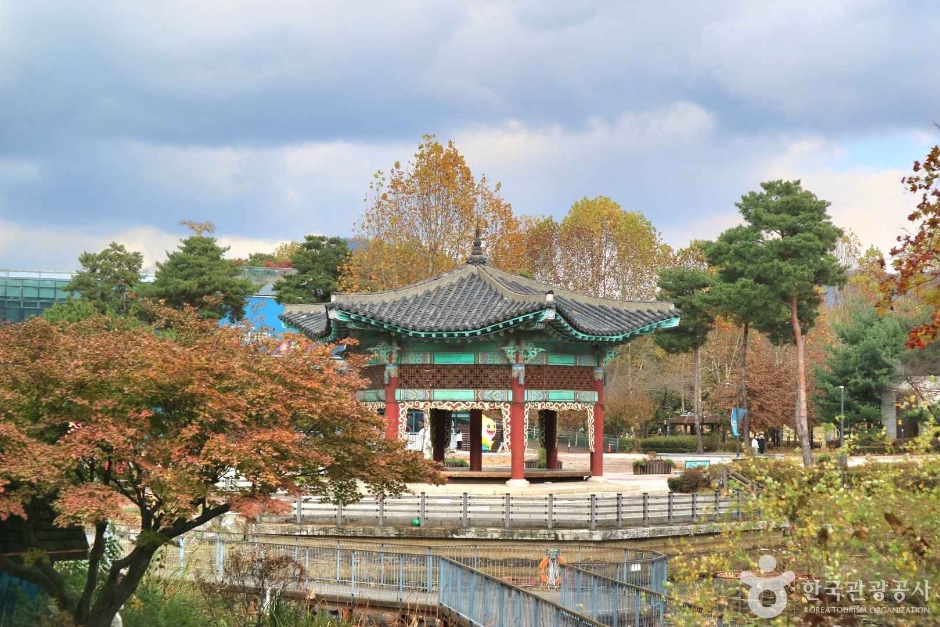
⊙ Seoul Children’s Grand Park (서울어린이대공원)
View detailed guide on Korea Trip Guide →
– Homepage
www.sisul.or.kr
Opened in May 1973, Seoul Children’s Grand Park is a theme park situated among green forests and fields with a total area of 56,552㎡. It contains a zoo, arboretum, amusement park, and performance venues. Seoul Children’s Grand Park has been a beloved part of Seoul, a paradise for children and a living venue for education. For grown-ups, it functions as an area of refuge and culture within the city. The Grand Park offers facilities that everyone in the family can enjoy, so everyone can find their own fun in the Grand Park.
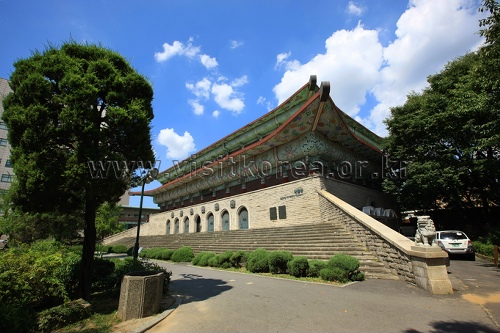
⊙ Sejong University Museum (세종대학교 박물관)
View detailed guide on Korea Trip Guide →
– Homepage
museum.sejong.ac.kr
Sejong University Museum exhibits folk art, wooden crafts, clothing, accessories, pottery, paintings and calligraphy collected for over 40 years by the couple who founded the present day Sejong University, Dr. Ju Young-ha and Dr. Choi Ok-ja. This museum has its origins in the Soodo Gallery, which was built in Chungmuro, the campus’ original location, in 1959. Needing more space to house additional artifacts, the museum moved to its current location, which first opened on May 5, 1973 in a four-story concrete building inspired by traditonal tower design from the Baekje era. This building was later expanded on May 20, 1977.
After the university’s name was changed to Sejong University in 1979, the museum was also renamed the Sejong University Museum. The museum showcases unique artifacts to both scholars and students from home and abroad in contribution to the research of Korea’s culture, arts, and archeology.
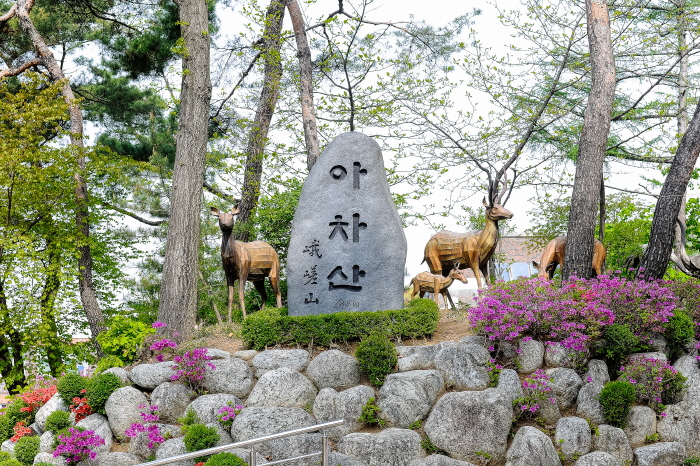
⊙ Achasan Mountain (아차산)
View detailed guide on Korea Trip Guide →
– Homepage
www.visitseoul.net
Achasan Mountain is a 295m-high mountain that stretches across Seoul and the city of Guri. Its proximity to the city makes it an accessible destination for hiking in Seoul. The hiking trails are maintained quite well, so even beginners can enjoy hiking in the mountain. From the summit of Achasan Mountain, one can enjoy the beautiful view of Seoul and the Hangang River. In fall, the mountain is famous for its fall colors as well.
![KNH ART [Tax Refund Shop] (KNHART)](https://ktrip.blogsailing.com/wp-content/uploads/2025/12/3312776_image2_1.jpg)
](https://ktrip.blogsailing.com/wp-content/uploads/2026/05/4020440_image2_1.jpg)
![Liberclassy – Mario Outlet Building 1 Branch [Tax Refund Shop] (리버클래시 마리오아울렛 1관점)](https://ktrip.blogsailing.com/wp-content/uploads/2026/03/4021420_image2_1.jpg)
![R Ziozia [Tax Refund Shop] (R.지오지아)](https://ktrip.blogsailing.com/wp-content/uploads/2026/01/3314341_image2_1.jpg)
](https://ktrip.blogsailing.com/wp-content/uploads/2026/05/4028832_image2_1.jpg)