Sejong Cheongansa Temple (청안사(세종))
Sejong Cheongansa Temple (청안사(세종))
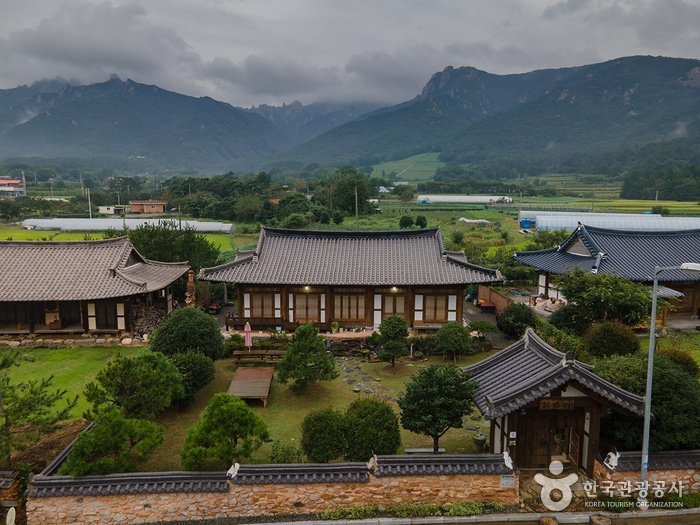
Sitting at the foot of a mountain near Ganeusil Village, Cheongansa Temple belongs to the Jogye Order of Korean Buddhism. It had been believed to have been built in 1900, but the roof tile and white porcelain pieces from the mid-Joseon dynasty period found near the temple suggested that it might have been built even earlier. Cheongsansa had also been thought to be a branch of Biamsa Temple, which is presumably built in the 7th century during the late Baekje kingdom period.
– Address : 128-23, Ganeusil-gil, Jeonui-myeon, Sejong-si
※ Presentation Information
– Information and Guides
• 1330 Travel Hotline: +82-2-1330 (Korean, English, Japanese, Chinese)
• For more info: +82-44-867-3407
– Parking
Available
– Operating Hours
Open 24 hr
– Restrooms
Available
– Interpretation Services Offered
Not available
◎ Nearby Tourism Infobox
⊙ Geumisanseong Fortress (금이성)
– Homepage
www.sejong.go.kr (Korean, English, Japanese, Chinese)
Geumiseong is a mountain fortress built on the summit of Geumseongsan Mountain, which rises 430 meters above sea level. It overlooks Jeonui and Cheonan to the north and Geumgang River to the south. The architecture style of Geumiseong Fortress is a combination of the
styles of the Baekje dynasty and the early Unified Silla. Based on the relics found inside the fortress, it is thought to have been built in the Goryeo period. The robustness of the fortress takes advantage of the rugged topography, so much so that it had been known as ironclad bastion among common people.
The eastern side of the fortress has considerably collapsed, but the southern part is in a relatively good condition. The western and northern walls are also in bad conditions.
Some earthenware pieces were found where there once stood a watchtower. Also, some pieces of roof tiles were found where there was a fortress building in the central part of the fortress on mountain summit. The earthenware pieces are hard porcelain and soft glass wares like bowls and pots. The tile pieces mostly feature fishbone patterns in dark gray color.
](https://ktrip.blogsailing.com/wp-content/uploads/2026/07/4028868_image2_1.jpg)
One Comment