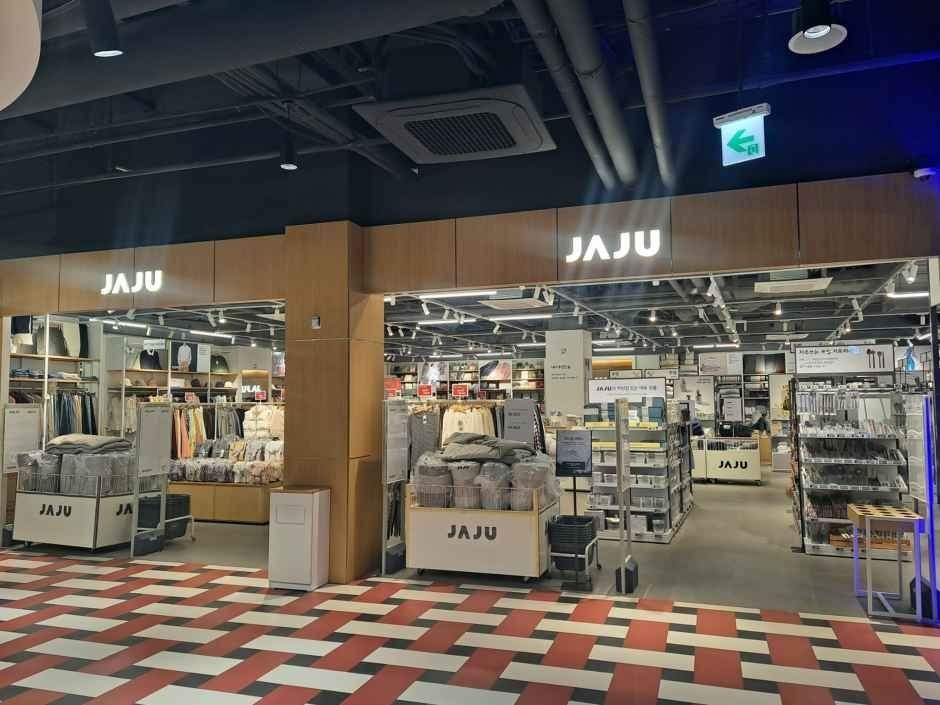
JAJU Shinsegae Simon Premium Outlets Paju Branch [Tax Refund Shop](JAJU 신세계사이먼프리미엄아울렛 파주점)
JAJU Shinsegae Simon Premium Outlets Paju Branch [Tax Refund Shop](JAJU 신세계사이먼프리미엄아울렛 파주점)
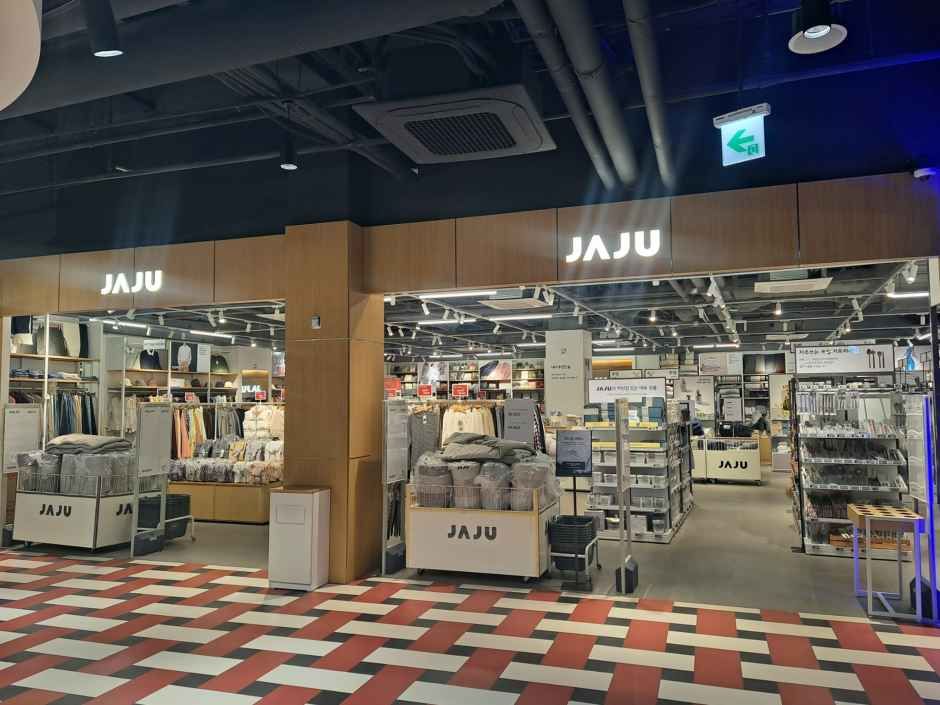 JAJU is a lifestyle brand that reinterprets Korean living in a modern way. Through practical, simple design in products for the kitchen, bathroom, and home, it adds comfort and value to customers’ lives.
– Address : 200, Pilseung-ro, Tanhyeon-myeon, Paju-si, Gyeonggi-do
※ Presentation Information
– Fair Day
Monday – Sunday
– Information and Guides
031-8071-7358
– Opening Hours
10:00~20:00
– Parking
Available
– Restroom
Available
– Items for Sale
Clothing, Footwear, Bags, Miscellaneous goods
– Shop Guide
Refund method (Time-frame) : Claim for refund
◎ Nearby Tourism Infobox
⊙ Paju Jangneung Royal Tomb [UNESCO World Heritage] (파주 장릉(인조, 인열왕후) [유네스코 세계문화유산])
View detailed guide on Korea Trip Guide →
– Homepage
tour.paju.go.kr
royaltombs.cha.go.kr
Located in Paju, Jangneung is the tomb of King Injo (1595-1649, reign 1623-1649), the 16th ruler of the Joseon dynasty, and Queen Inyeol.
King Injo took the throne in 1623 after having overthrown the previous king, Gwanghaegun, in a military revolt. During his reign, King Injo faced challenges from two foreign invasions in 1627 and 1637. He died in 1649 in Changdeokgung Palace.
⊙ Museum HEI (뮤지엄헤이)
View detailed guide on Korea Trip Guide →
– Homepage
www.museumhei.com
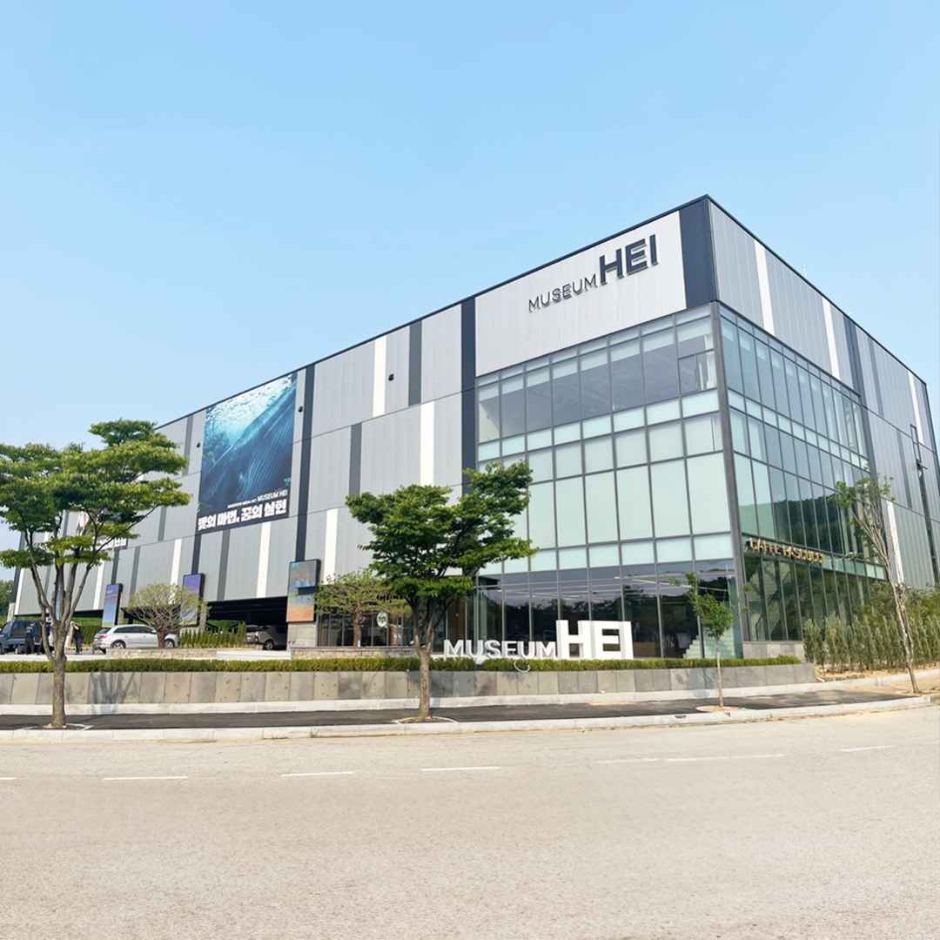
Museum HEI is a large media art gallery located in Paju, named after the common greeting in Finland, the world’s happiest country. The gallery features 20 different themed contents, all under the overarching concept of “beautiful moments in life.”
⊙ Odusanseong Fortress (파주 오두산성)
View detailed guide on Korea Trip Guide →
– Homepage
tour.paju.go.kr
www.cha.go.kr
www.jmd.co.kr
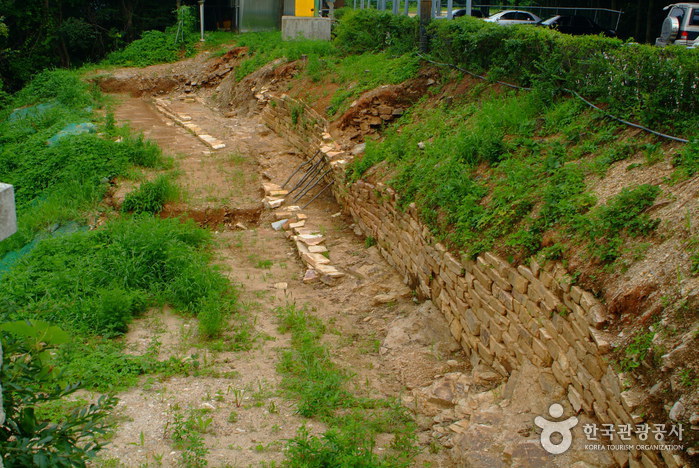
Odusanseong Fortress is built around the strategic summit of Odusasn Mountain. The walls stretch across roughly 620 meters and were built during the Baekje dynasty. The fortress is built on the intersection of the Imjingang River and the Hangang River on the summit of Odusan Mountain (119 meters). The mountain’s slope is steep and stones used in the construction of the fortress walls are scattered here and there at the summit. These scattered stones are evidence that the fortress underwent repairs several times during the Samguk (Three Kingdoms) era and the Joseon dynasty, as these stones were evidently quarried and used to mend the fortress walls. Excavations have discovered a great deal of earthenware, white porcelain, tile, and iron arrowheads. Topographically, the fortress sits on a prime strategic junction and the Unification Observatory has been situated there as well. The fortress stands as an important object of study concerning fortifications and structures from the Baekje dynasty. It has been recorded on the stele of King Gwanggaeto, Samguksagi (History of the Three Kingdoms), in the Naekjebongi (Baekje Annals) and on Daedongyeojido (Map of Korea) that the fortress was the Gwanmi Fortress of Baekje, attracting many scholars and researchers interested in this period.
![Loro Piana – Shinsegae Simon Premium Outlets Yeoju Branch [Tax Refund Shop] (로로피아나 신세계사이먼프리미엄아울렛 여주점)](https://ktrip.blogsailing.com/wp-content/uploads/2026/06/4021956_image2_1.jpg)
](https://ktrip.blogsailing.com/wp-content/uploads/2026/06/4021894_image2_1.jpg)
](https://ktrip.blogsailing.com/wp-content/uploads/2026/06/4023774_image2_1.jpg)
](https://ktrip.blogsailing.com/wp-content/uploads/2026/06/4021697_image2_1.jpg)