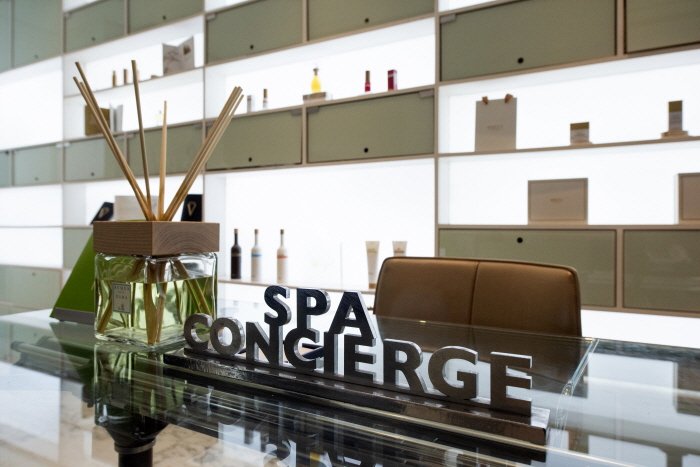
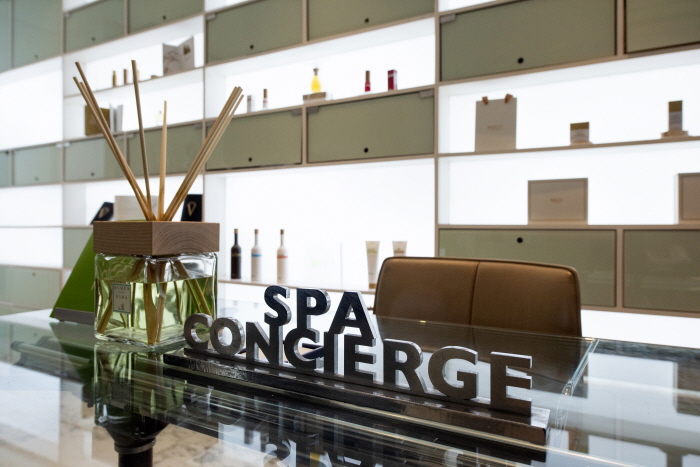
Vista Walkerhill Seoul, Wellness Club (비스타 워커힐 서울, 웰니스클럽)
Vista Walkerhill Seoul, Wellness Club (비스타 워커힐 서울, 웰니스클럽)
Vista Walkerhill Seoul is nestled in Achasan Mountain like a cloud overlooking the Hangang River. It offers beautiful natural sceneries that cannot be found in downtown. A combination of high technology and nature adds vitality while allowing guests to relax surrounded by nature. A new space where humans, nature, and the future coexist. Vista Walkerhill Seoul leads a sustainable and luxurious culture through differentiated and creative lifestyle experiences.
– Address : 177, Walkerhill-ro, Gwangjin-gu, Seoul
※ Presentation Information
– Check-in Time
15:00
– Check-out Time
11:00
– Daily Rate
Not available
– Parking Fee
Available
– Number of Rooms
253 rooms
◎ Nearby Tourism Infobox
⊙ Grand Walkerhill Riverpark (Outdoor swimming pool) (그랜드 워커힐 리버파크 수영장(야외수영장))
View detailed guide on Korea Trip Guide →
– Homepage
www.walkerhill.com
Grand Walker Hill Riverpark is a swimming pool using water comprised of alkali ingredients such as sodium and potassium from underground granite. Since it opened in 1994, the Riverpark is one of Seoul’s most popular summer getaways to enjoy swimming. Located by the Hangang River and Achasan Mountain, it provides fresh air as well as the beautiful nature scenery. People can use any of the various facilities, including the main pool, lazy river, swimming pool for children, pool-side restaurant offering special summer lunch, and sun tanning beds.
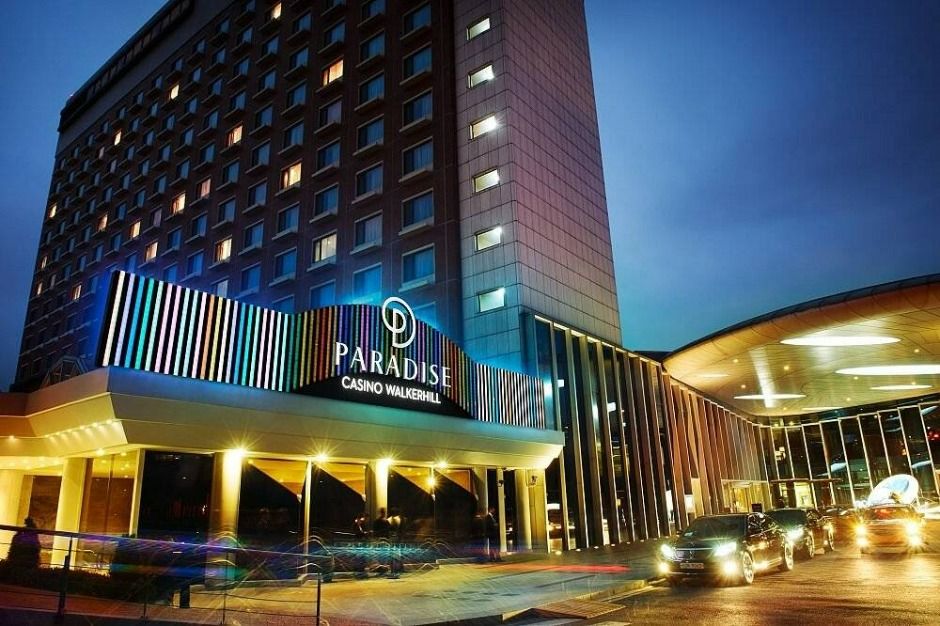
⊙ Paradise Casino Walker Hill (파라다이스 카지노 워커힐)
View detailed guide on Korea Trip Guide →
– Homepage
www.paradisecasino.co.kr
Paradise Casino Walker Hill is a foreigner-exclusive casino operating inside Walker Hill Hotel, from where guests can enjoy a fine view of the Hangang River nearby. The casino is open 24 hours a day, all year round, and offers baccarat, blackjack, roulette, and tai-sai tables among others, and a variety of slot machines as well. The game tables are run by expert dealers, and staff members are fluent in many languages to serve the customers’ needs.
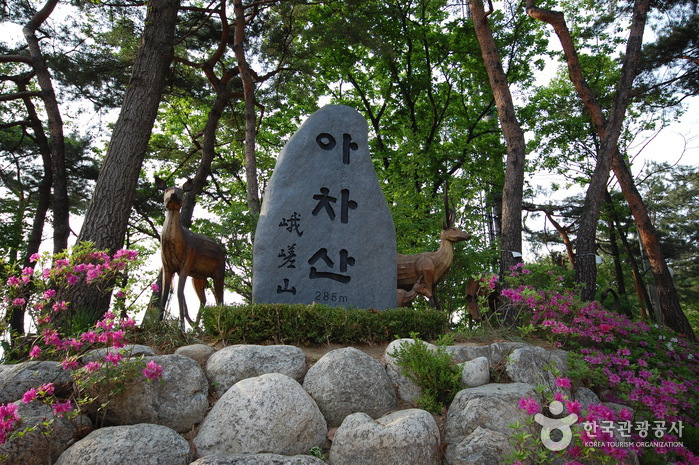
⊙ Achasanseong Fortress (아차산성)
View detailed guide on Korea Trip Guide →
– Homepage
www.gwangjin.go.kr (Korean, English, Japanese, Chinese)
www.cha.go.kr (Korean, English, Japanese, Chinese)
Achasanseongseong Fortress boasts magnificent views of the Hangang River and skyline. The 200m-high mountain fortress wall was built to face southeast, towards the Hangang River. It is also called Janghan-seong or Gwangjang-seong. A fierce battle was once fought here among Gogury, Baekje and Silla because of its strategic location during the period of the Three Kingdoms. King Gae-Ro of Baekje (r. 455-475) died in the war by the Goguryeo forces sent by King Jang-Su (r. 413-491) and General Ondal of Goguryeo was also killed in a battle with the Silla army in 590.
Achasan Mountain is popular as a citizens’ resting place with a historical trail and a natural park including various facilities such as walkway, mountain walkway, a badminton court, a wrestling range, an archery range, various amusement facilities for children, benches, and pavilion.
⊙ Namu Hotel (나무호텔)
View detailed guide on Korea Trip Guide →
– Homepage
https://www.stayfolio.com/findstay/namu-hotel
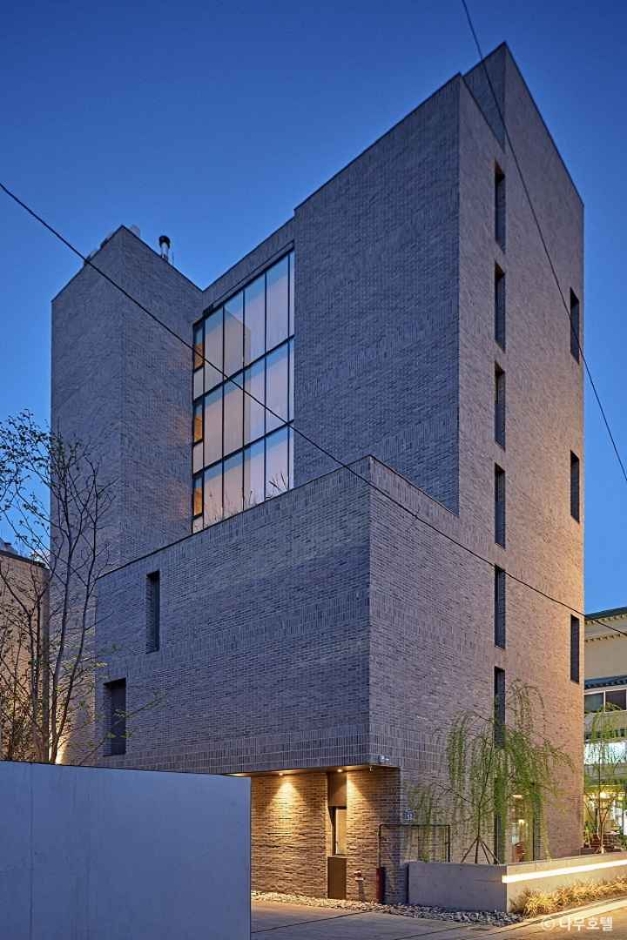
Namu Hotel, which received the Institute of Architects Award, is a hotel with a distictive design. Rather than having the main entrance on a main road, the hotel must be entered through the alley. Each room has its own unique style in terms of structure and furniture arrangement. Most rooms also feature a blacony that allows guests to be one with nature while also being protected from outside forces. Enjoy a soak in the outdoor bathtub to relax.
⊙ Achasan Mountain (아차산)
View detailed guide on Korea Trip Guide →
– Homepage
www.visitseoul.net
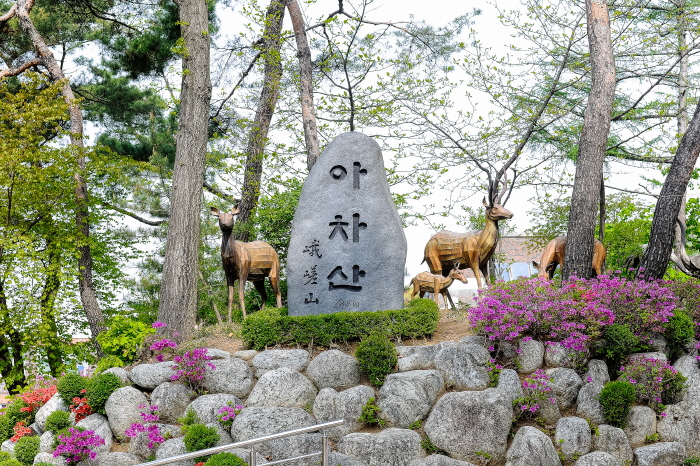
Achasan Mountain is a 295m-high mountain that stretches across Seoul and the city of Guri. Its proximity to the city makes it an accessible destination for hiking in Seoul. The hiking trails are maintained quite well, so even beginners can enjoy hiking in the mountain. From the summit of Achasan Mountain, one can enjoy the beautiful view of Seoul and the Hangang River. In fall, the mountain is famous for its fall colors as well.
⊙ Gwangnaru Hangang Park (광나루한강공원)
View detailed guide on Korea Trip Guide →
– Homepage
hangang.seoul.go.kr
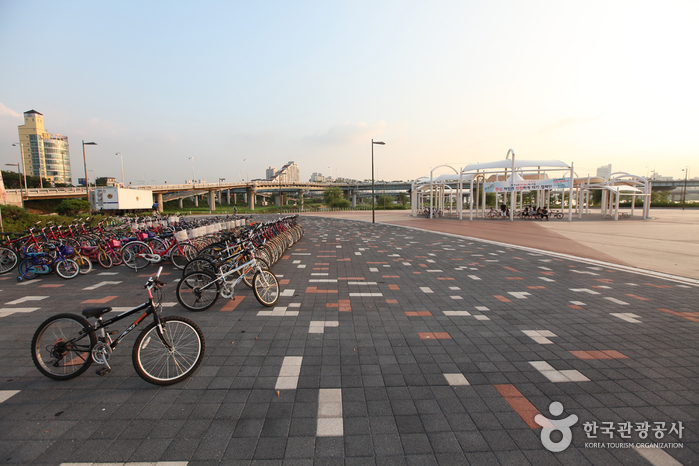
Hangang Citizen’s Park, composed of 12 areas including Jamsil, Ttukseom and Jamwon, is an eco-friendly park providing areas for sports and leisure. The park is equipped with various cultural and recreational facilities and also has an ecological park. Gwangnaru Hangang Park formed naturally through rich silt that flowed in from the upper Hangang River that was then filled with reeds, creating an ideal habitat for groups of migratory birds.
⊙ Amsa-dong Prehistoric Site Museum (암사동선사유적박물관)
View detailed guide on Korea Trip Guide →
– Homepage
http://sunsa.gangdong.go.kr
The archaeological sites in Amsa-dong, Seoul, were a collective settlement where people lived during the Neolithic Age about 6,000 years ago and became known to the world after the sand dunes along the Hangang River caved in during the great flood of 1925, exposing numerous pieces of comb-patterned pottery. The area designated as a historic site in 1979, and excavation of the site took place from 1981 to 1988. The cultural heritage protection area was expanded to a total area of 78,133㎡. Currently, nine Neolithic dugout huts and one experiential dugout hut have been restored. The exhibitions currently open to the public are Exhibition Hall 1, which displays a restoration of a Neolithic Age dugout, and Exhibition Hall 2, which displays various panels and models to help understand the prehistoric era as a whole.
⊙ Archaeological Site in Amsa-dong, Seoul (서울 암사동 유적)
View detailed guide on Korea Trip Guide →
– Homepage
www.sunsa.gangdong.go.kr
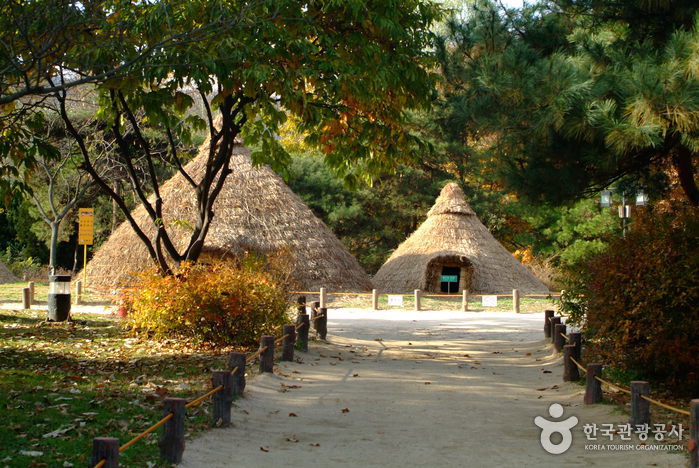
The Archaeological Site in Amsa-dong reproduces the lifestyle of the Neolithic Era. Even the entrance gate is shaped like a huge dolmen and the trash cans are ancient diagonal-line patterned earthenware. Archaeological Site in Amsa-dong was excavated in 1925 when a flood washed away the soil on the banks of the Hangang River and exposed a large number of diagonal-line patterned earthenware. After several excavations, the Archaeological Site in Amsa-dong was established.
The site was a location for a massive colony, thus many ancient buildings, stone axes and stone arrows have been uncovered as well as countless diagonal-line patterned earthenware. The housing site is round with a spot in the center for fire. The site is colossal and possesses nine mud huts, two exhibition halls displaying ancient artifacts and an open mud hut where visitors can experience life in the Neolithic Era. The site offers many attractions such as mud huts and promenades. Archaeological Site in Amsa-dong is also very educational for children and families who want to learn and experience the Neolithic Age.
](https://ktrip.blogsailing.com/wp-content/uploads/2026/05/4028675_image2_1.jpg)
](https://ktrip.blogsailing.com/wp-content/uploads/2026/03/4021118_image2_1.jpg)
](https://ktrip.blogsailing.com/wp-content/uploads/2026/03/4029363_image2_1.jpg)
](https://ktrip.blogsailing.com/wp-content/uploads/2026/05/4021649_image2_1.jpg)
![Zerogram [Tax Refund Shop] (제로그램)](https://ktrip.blogsailing.com/wp-content/uploads/2026/01/3313797_image2_1.jpg)
3 Comments