Beautiful Life(뷰티풀 라이프)
Beautiful Life(뷰티풀 라이프)
– Address : 서울특별시 종로구 이화장길 26 (이화동) 6층 JTN아트홀 4관
※ Presentation Information
– Age Limit
8 years old or older
– Booking Place
https://world.nol.com/en/ticket/places/17000056/products/18001569
– Location
6F, JTN Art Hall 4, 26, Ihwajang-gil, Jongno-gu, Seoul
– Program
“A play that deserves ten stars!!!” “A whole life in 90 minutes!” These are some of the reviews of Beautiful Life posted on a theater booking website. You may have some doubts before seeing the show, but you may find yourself writing the same review afterward.
Beautiful Life won the “Fine Art Award” in the theatre/music category at the 2019 Korean Wave Awards. It is given to the work that best represents South Korea in the year, proving that the play is worthy of global acclaim and that people around the world can relate to.
Two lead roles, Chun-shik and Soon-ok, fall in love from the first moment they meet. They drift apart for a while but eventually start a family and grow old together as an old couple. One day, Soon-ok falls ill and decides to get a divorce for the sake of her husband, Chun-sik. The film moves back and forth between the couple’s present and past. You might expect the story to be depressing or sad, but it is both funny and touching, making you laugh and cry at the same time. The two actors are excellent in their performances. They play an old couple, their younger versions, and even extras. It’s hard to believe that this is a two-person play. It is a multicasting work, and writer Kim Won-jin and director Cho Joon also appear alternatively to play the role of Chun-sik.
– Event Duration
90 minutes
– Sponsor
(주)지안컴퍼니
– Co-Sponsor Phone
02-719-0988
◎ Nearby Tourism Infobox
⊙ ARKO Art Center (아르코미술관)
View detailed guide on Korea Trip Guide →
– Homepage
www.arko.or.kr: Visit site
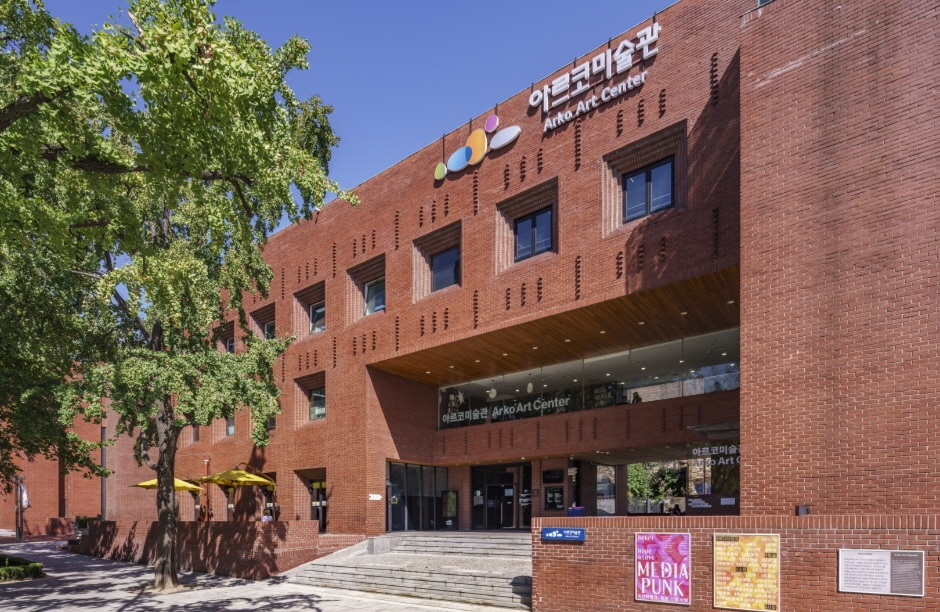
ARKO Art Center was founded in 1974 as Misulhoegwan in a building of former Deoksu Hospital in Gwanhun-dong, Jongno-gu to offer much-needed exhibition space for artists and arts groups. In 1979, Misulhoegwan moved to its present building, designed by preeminent Korean architect Kim Swoo-geun (1931-1986) and located in Marronnier Park, the former site of Seoul National University. The two neighboring brick buildings accommodating ARKO Art Center and ARKO Arts Theater are the major landmarks of the district of Daehakro.
As more public and private museums and commercial galleries came into the art scene in the 1990s, Misulhoegwan shifted to curating and presenting its own exhibitions. Renamed as Marronnier Art Center in 2002, ARKO Art Center assumed a full-fledged art museum system and played an increasingly prominent role as a public arts organization leading the contemporary art paradigm. When The Korea Culture and Arts Foundation was reborn as Arts Council Korea, Marronnier Art Center became ARKO Art Center named after the abbreviation for Arts Council Korea in 2005.
ARKO Art Center is committed to working as a platform where research, production, exhibitions and the exchange of creative activities grow and develop in connection with one another in addition to having a diversity of programs including thematic exhibitions addressing social agenda and public programs widely promoting various discourses in art.
⊙ Leather Craft Shop (손놀림공방)
View detailed guide on Korea Trip Guide →

The leather workshop featured in the drama ‘Boyfriend’
It is a leather workshop that appeared in the scene where Cha Soohyeon (Song Hyekyo) and Kim Jinhyeok (Park Bogum) reunite in the drama ‘Boyfriend’. It is run by leather craft artist Kim Yeongae and is known for its many cute items. You can experience making leather knotted string bracelets and rings at a low cost.
⊙ Seoul National University Hospital (서울대학교병원)
View detailed guide on Korea Trip Guide →
Seoul National University Hospital, a national central hospital that has led Korean medicine for over 130 years, is a top-tier hospital equipped with world-class medical professionals and cutting-edge systems. For 25 consecutive years, it has ranked first in brand power in the hospital sector. The hospital is renowned for its cancer research, the most comprehensive pediatric care in the country, and treatments for rare and intractable diseases. Through patient-centered, personalized services, it has established itself as a trusted healthcare institution.
⊙ Wasted (웨이스티드)
View detailed guide on Korea Trip Guide →
⊙ Cheonhamu-Bbong(천하무뽕)
View detailed guide on Korea Trip Guide →
⊙ The Museum of Medicine (서울대학교병원의학박물관)
View detailed guide on Korea Trip Guide →
– Homepage
Visit site
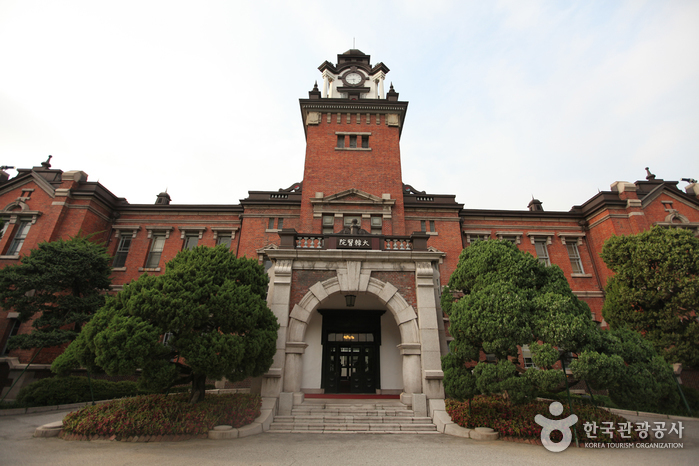
The Museum of Medicine is located in the building of the former Daehan Medical Center, the oldest modern hospital in Korea. It is a medical museum that provides a comprehensive view of the development of modern medicine in Korea, the history of medical devices, and the transformation of Seoul National University Hospital. Through permanent and special exhibitions, the museum showcases medical artifacts and documents related to the history of medicine.
⊙ Seoul Daehan Hospital (서울 대한의원)
View detailed guide on Korea Trip Guide →
– Homepage
tour.jongno.go.kr www.cha.go.kr: Visit site · Visit site
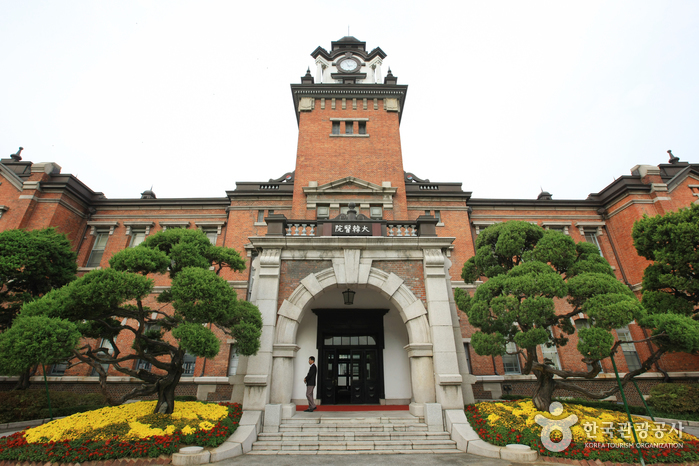
Daehanuiwon (Daehan Medical Center) is an antique two-story brick building within the grounds of Seoul National University Hospital. It was established under the direct administration of the Uijeongbu (State Council), combining the Gwangjewon (under the Home Ministry), Gyeongseong Medical School and the Korean Red Cross Hospital (under the Royal Household).
Built in the Madubong Hill area, this location where Hamchunwon, the outer garden of Changgyeonggung Palace, once stood in 1484 (15th year of King Seongjong), was also once the site of Gyeongmogung Palace, where King Jeongjo enshrined the mortuary tablet of his birth father Crown Prince Sado Seja in 1776 (the year King Jeongjo ascended to the throne).
These places that held importance for the royal family were destroyed as the Japanese built Gyeongseong Empire University in its place. In 1907, with the announcement of the plan to establish Daehan Medical Center, construction began on the main building, seven wards and affiliated buildings. Construction was completed in November 1908.
The Daehan Medical Center opened in Gwangjewon, but upon Japanese colonization in 1910, its name was changed to the Japanese Viceroyalty Hospital. In 1926, it was included as a part of Gyeongseongjeguk University to become a university hospital. Since the liberation of Korea in 1945, it has been a hospital affiliated with Seoul National University.
⊙ Seoul City Wall Museum (한양도성박물관)
View detailed guide on Korea Trip Guide →
– Homepage
www.museum.seoul.kr: Visit site
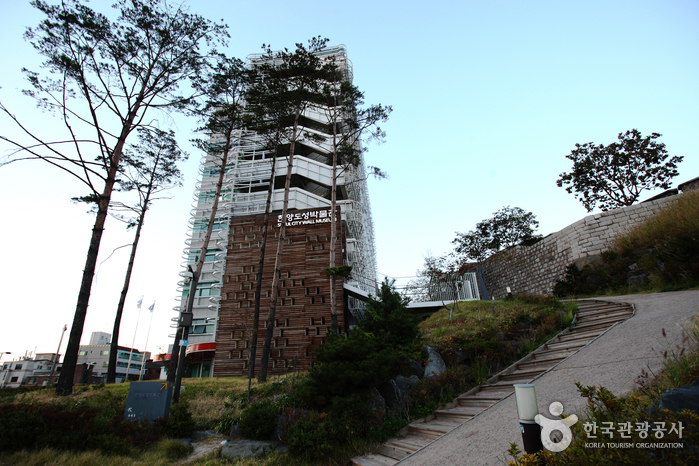
Hanyangdoseong, the Seoul City Wall, built in 1396, was the city fortress wall that protected the capital city Seoul for over 600 years. The fortress wall was built along the terrains and although it became partially damaged during the modernization process, its original form remains well to this day, making it a cultural heritage that coexists with the modern city. The Seoul City Wall Museum, located in Heungjinjimun Park, is a museum containing the history and culture of city wall from the Joseon dynasty to the present. It is a cultural space with a permanent exhibition hall, special exhibition hall, city wall information center, and study room.
⊙ Jinhyang Jokbal (진향족발)
View detailed guide on Korea Trip Guide →
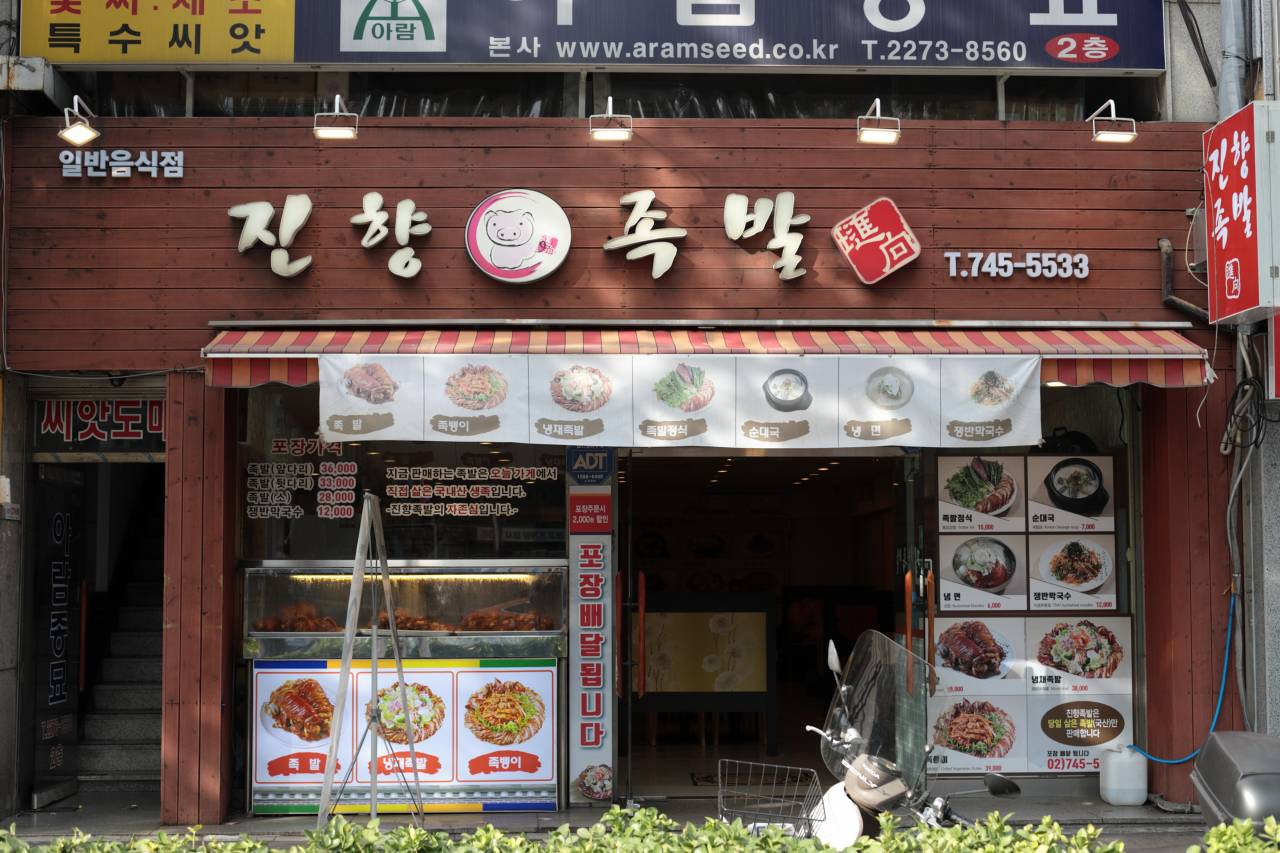
A pig’s trotter(s) specialty restaurant located near Jongno 5(o)ga Station in Seoul. One of the top 5 jokbal (pig’s trotter) restaurants in Seoul. This restaurant’s signature menu is braised pigs’ feet.
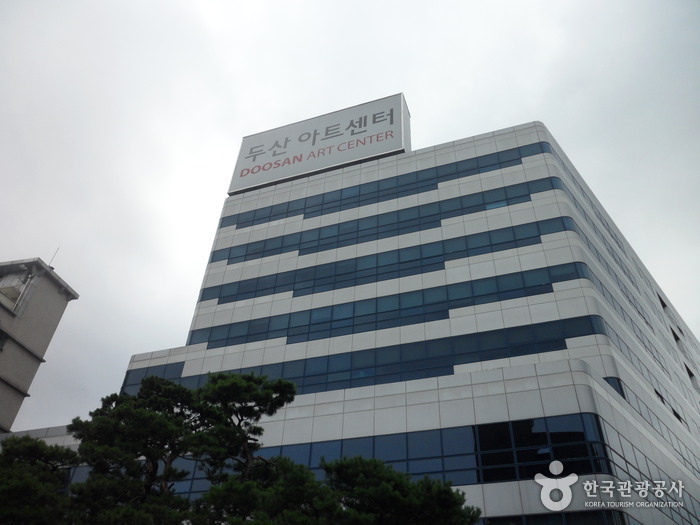
⊙ Doosan Art Center (두산아트센터)
View detailed guide on Korea Trip Guide →
– Homepage
www.doosanartcenter.com: Visit site
Doosan Art Center, which opened on October 1, 2007, is structured around three different spaces: The Yonkang Hall, exclusively designed for musical performances, Space 111, a “space for art incubation,” and the Doosan Gallery, built for installations.
The Yongang Hall, a theater with 620-person seating capacity, has specially designed lightings and a world-class audio-visual system to provide a second-to-none sensory experience.
Space 111 can accommodate a broad range of performing arts, from theater and dance to film and music concerts. The Doosan Gallery is open to the public, and art exhibitions and performances here can be enjoyed free of charge.
All three theaters include spacious lobbies with handicapped access, designated seating for parents with infants, and meeting areas. Rest rooms are also available nearby, in order to avoid long queues and long walks during intermission.
](https://ktrip.blogsailing.com/wp-content/uploads/2026/05/4043255_image2_1.jpg)
](https://ktrip.blogsailing.com/wp-content/uploads/2026/05/4019396_image2_1.jpg)
](https://ktrip.blogsailing.com/wp-content/uploads/2026/05/4044909_image2_1.jpg)
](https://ktrip.blogsailing.com/wp-content/uploads/2026/05/4018214_image2_1.jpg)
](https://ktrip.blogsailing.com/wp-content/uploads/2026/03/4024744_image2_1.jpg)
4 Comments