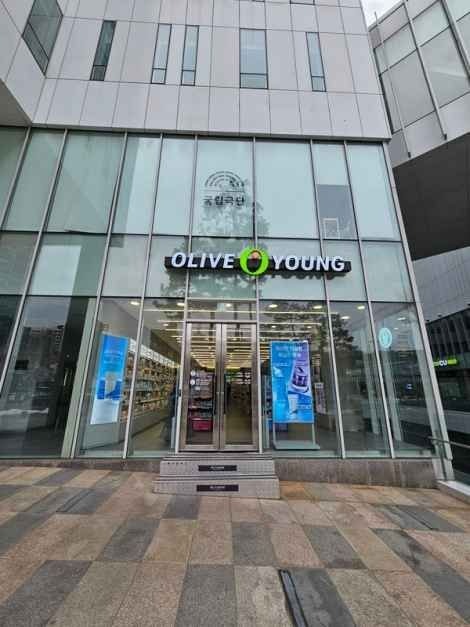
Olive Young – Hongdae Daehangno Branch [Tax Refund Shop](올리브영 홍대대학로점)
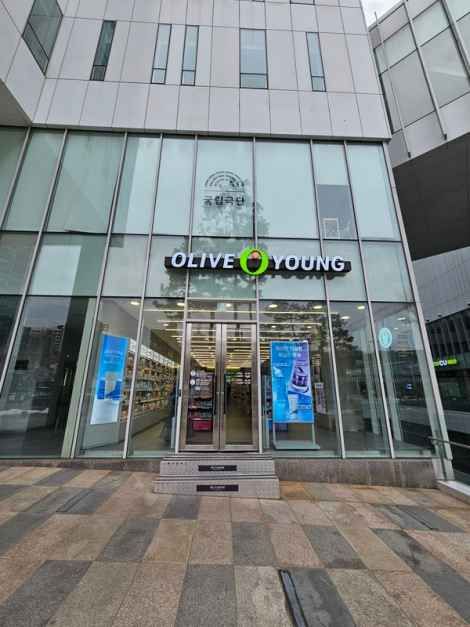
Olive Young – Hongdae Daehangno Branch [Tax Refund Shop](올리브영 홍대대학로점)
 – Homepage
www.oliveyoung.co.kr
Olive Young is a popular health and beauty store showcasing the latest K-beauty trends. It offers a wide selection of skincare, makeup, and health products at affordable prices, making it a favorite among international visitors.
– Address : 1F, 57, Daehak-ro, Jongno-gu, Seoul
※ Presentation Information
– Fair Day
Monday – Sunday
– Information and Guides
02-744-5290
– Opening Hours
10:00~22:00
– Parking
Not available
– Restroom
Available
– Items for Sale
Perfume / cosmetics, Miscellaneous goods, Ginseng / herbal medicines / health supplements, Food products
– Shop Guide
Refund method (Time-frame) : Immediate tax refund / Claim for refund
◎ Nearby Tourism Infobox
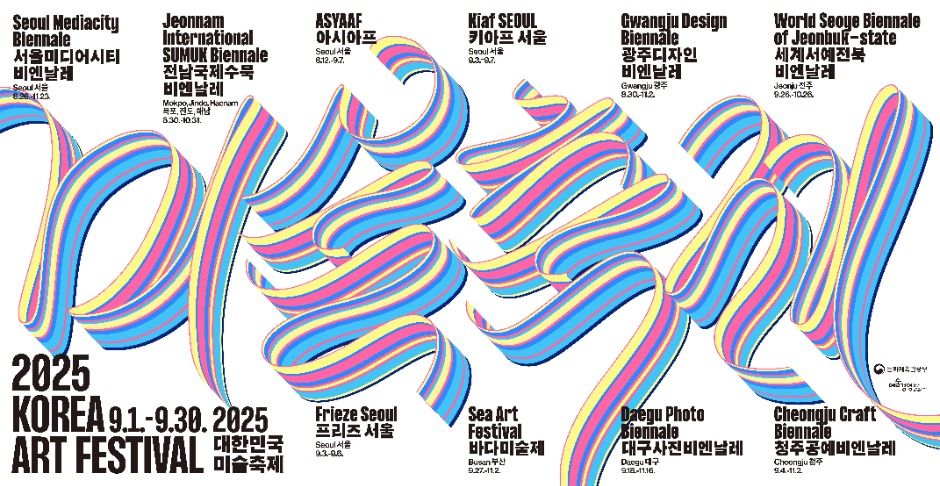
⊙ Korea Art Festival (대한민국 미술축제)
View detailed guide on Korea Trip Guide →
– Homepage
k-artfestival.com
– Tel
+82-70-7575-0980
Korea Art Festival is the nation’s largest art festival that connects the 12 major art fairs and biennales taking place nationwide. The 2025 festival takes place in September, inviting visitors to enjoy the world of art.
⊙ Beautiful Life(뷰티풀 라이프)
View detailed guide on Korea Trip Guide →
⊙ Inside Me(인사이드 미)
View detailed guide on Korea Trip Guide →
⊙ Sunny Ten (써니텐)
View detailed guide on Korea Trip Guide →
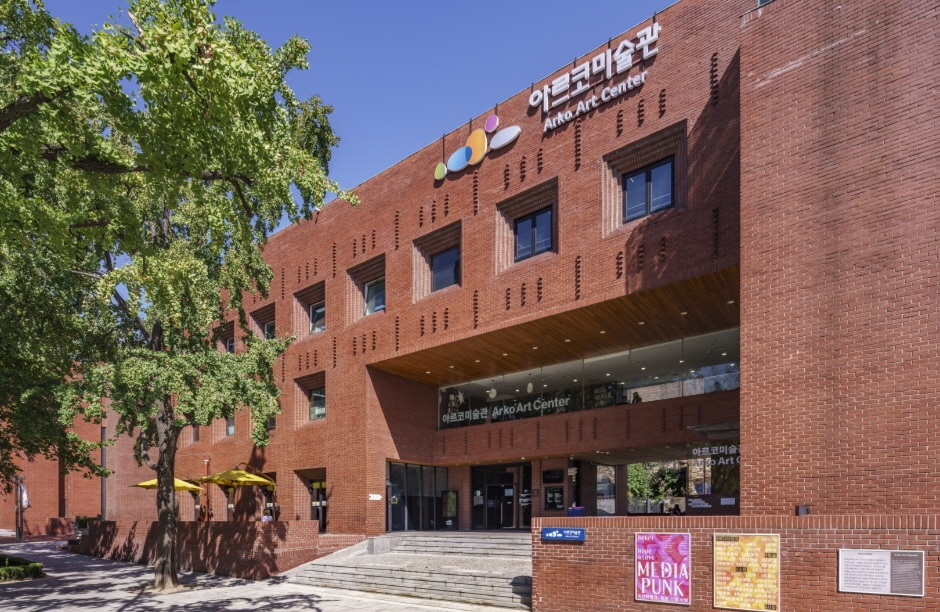
⊙ ARKO Art Center (아르코미술관)
View detailed guide on Korea Trip Guide →
– Homepage
www.arko.or.kr
ARKO Art Center was founded in 1974 as Misulhoegwan in a building of former Deoksu Hospital in Gwanhun-dong, Jongno-gu to offer much-needed exhibition space for artists and arts groups. In 1979, Misulhoegwan moved to its present building, designed by preeminent Korean architect Kim Swoo-geun (1931-1986) and located in Marronnier Park, the former site of Seoul National University. The two neighboring brick buildings accommodating ARKO Art Center and ARKO Arts Theater are the major landmarks of the district of Daehakro.
As more public and private museums and commercial galleries came into the art scene in the 1990s, Misulhoegwan shifted to curating and presenting its own exhibitions. Renamed as Marronnier Art Center in 2002, ARKO Art Center assumed a full-fledged art museum system and played an increasingly prominent role as a public arts organization leading the contemporary art paradigm. When The Korea Culture and Arts Foundation was reborn as Arts Council Korea, Marronnier Art Center became ARKO Art Center named after the abbreviation for Arts Council Korea in 2005.
ARKO Art Center is committed to working as a platform where research, production, exhibitions and the exchange of creative activities grow and develop in connection with one another in addition to having a diversity of programs including thematic exhibitions addressing social agenda and public programs widely promoting various discourses in art.
⊙ Going to the End(끝까지 간다)
View detailed guide on Korea Trip Guide →
⊙ Book’s Art Journey(북극곰예술여행)
View detailed guide on Korea Trip Guide →
⊙ The Museum of Medicine (서울대학교병원의학박물관)
View detailed guide on Korea Trip Guide →
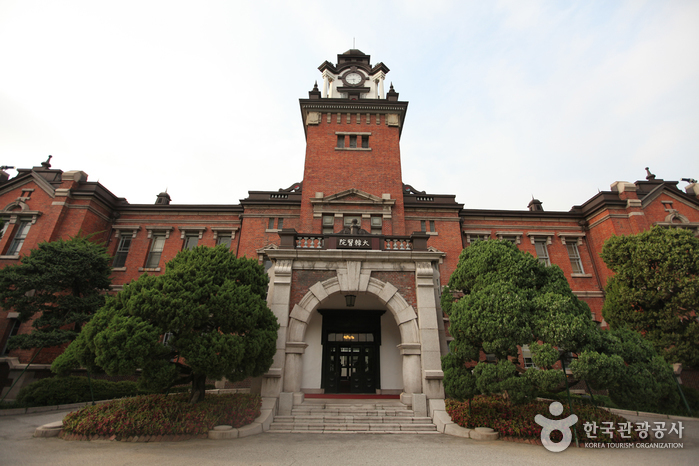
– Homepage
http://medicalmuseum.org
The Museum of Medicine is located in the building of the former Daehan Medical Center, the oldest modern hospital in Korea. It is a medical museum that provides a comprehensive view of the development of modern medicine in Korea, the history of medical devices, and the transformation of Seoul National University Hospital. Through permanent and special exhibitions, the museum showcases medical artifacts and documents related to the history of medicine.
⊙ Seoul National University Hospital (서울대학교병원)
View detailed guide on Korea Trip Guide →
Seoul National University Hospital, a national central hospital that has led Korean medicine for over 130 years, is a top-tier hospital equipped with world-class medical professionals and cutting-edge systems. For 25 consecutive years, it has ranked first in brand power in the hospital sector. The hospital is renowned for its cancer research, the most comprehensive pediatric care in the country, and treatments for rare and intractable diseases. Through patient-centered, personalized services, it has established itself as a trusted healthcare institution.
⊙ Seoul Daehan Hospital (서울 대한의원)
View detailed guide on Korea Trip Guide →
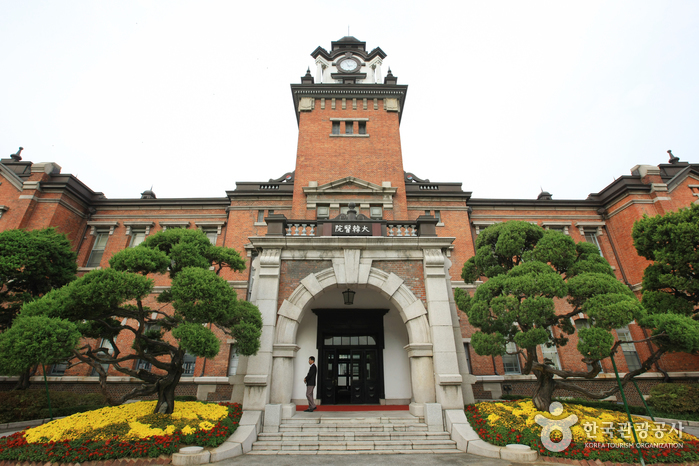
– Homepage
tour.jongno.go.kr
www.cha.go.kr
Daehanuiwon (Daehan Medical Center) is an antique two-story brick building within the grounds of Seoul National University Hospital. It was established under the direct administration of the Uijeongbu (State Council), combining the Gwangjewon (under the Home Ministry), Gyeongseong Medical School and the Korean Red Cross Hospital (under the Royal Household).
Built in the Madubong Hill area, this location where Hamchunwon, the outer garden of Changgyeonggung Palace, once stood in 1484 (15th year of King Seongjong), was also once the site of Gyeongmogung Palace, where King Jeongjo enshrined the mortuary tablet of his birth father Crown Prince Sado Seja in 1776 (the year King Jeongjo ascended to the throne).
These places that held importance for the royal family were destroyed as the Japanese built Gyeongseong Empire University in its place. In 1907, with the announcement of the plan to establish Daehan Medical Center, construction began on the main building, seven wards and affiliated buildings. Construction was completed in November 1908.
The Daehan Medical Center opened in Gwangjewon, but upon Japanese colonization in 1910, its name was changed to the Japanese Viceroyalty Hospital. In 1926, it was included as a part of Gyeongseongjeguk University to become a university hospital. Since the liberation of Korea in 1945, it has been a hospital affiliated with Seoul National University.
](https://ktrip.blogsailing.com/wp-content/uploads/2026/05/4024266_image2_1.jpg)
![Liberclassy – LOTTE Department Store Konkuk Univ. Star City Branch [Tax Refund Shop] (리버클래시 롯데백화점 건대스타시티점)](https://ktrip.blogsailing.com/wp-content/uploads/2026/03/4017342_image2_1.jpg)
](https://ktrip.blogsailing.com/wp-content/uploads/2026/04/4020053_image2_1.jpg)
](https://ktrip.blogsailing.com/wp-content/uploads/2026/05/4021123_image2_1.jpg)