Gloomy Day(사의 찬미)
Gloomy Day(사의 찬미)
– Address : 서울특별시 종로구 대학로14길 29 (혜화동) 링크아트센터 페이코홀
※ Presentation Information
– Age Limit
13years old or older
– Event Date
20240702 ~ 20241027
– Location
LINK Arts Center, PAYCO Hall, 29, Daehak-ro 14-gil, Jongno-gu, Seoul
– Program
* The show has closed.
On August 4, 1926, Yun Sim-deok, Korea’s first soprano, and Kim Woo-jin, a genius playwright, committed suicide together by throwing themselves into the Korea Strait. As a true love story, it has been the subject of countless films and dramas in Korea.
The play originates from Death Song, a popular Korean song released in 1926. Its lyricist and singer, Yun Sim-deok, rearranged Iosif Ivanovici’s Waves of the Danube. The song ends with the line: “In this world made of tears, will my death truly be the end of it all? Those of you in search of happiness, only futility awaits you.”
The musical Gloomy Day is based on the true story of Yun Sim-deok and Kim Woo-jin. However, it differs from other works by introducing a fictional character, “the guy,” to increase the tension of the play. The guy introduces Yun to Kim and urges him to write the play Death Song. Meanwhile, the male and female protagonists are getting closer and closer to death. Her song particularly attracts the audience’s attention and is played in many scenes of the show. There’s even a scene where Yun sings it. In addition, a live trio of piano, violin, and cello delicately orchestrates each character’s emotions.
– Event Duration
110minutes
– Sponsor
주식회사 네오
– Co-Sponsor Phone
02-766-7667
◎ Nearby Tourism Infobox
⊙ Wiliams: Wiliam and Wiliam’s Williams(윌리엄과 윌리엄의 윌리엄들)
View detailed guide on Korea Trip Guide →
⊙ Korean Museum of Straw and Life (짚풀생활사박물관)
View detailed guide on Korea Trip Guide →
– Homepage
www.jipul.com: Visit site
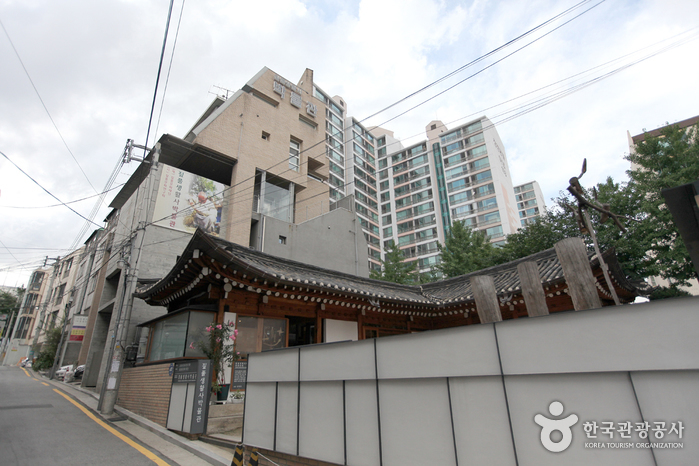
Korean Museum of Straw and Life is a private museum dedicated to the collection, research, and display of materials and historical accounts of diverse straws and their uses in Korea. As Koreans’ lifestyle in the past heavily depended on agriculture and cultivation of crops, straws and grasses were easily found and had many uses. The museum aims to educate the general public of how different straw were produced and used by Korean ancestors as well as their significance in connection with today’s lifestyle.
⊙ Detective K(탐정 케이)
View detailed guide on Korea Trip Guide →
⊙ Ostrich Boys(타조소년들)
View detailed guide on Korea Trip Guide →
⊙ Art Center K (아트센터 K)
View detailed guide on Korea Trip Guide →
– Homepage
www.artcenterk.com/: Visit site
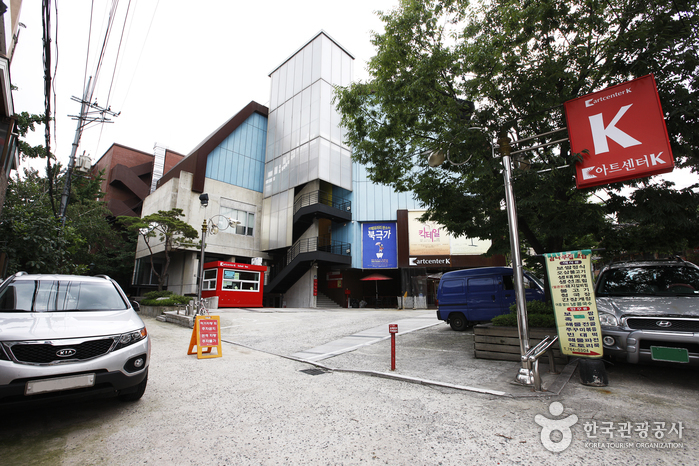
Art Center K (formerly Wonder Space) opened in February 2012, offers art programs in Daehangno, a neighborhood of youth, romance and culture. It also supports artists through creative activities, exchanges, and trainings, while serving as a performing art hall where people can participate in artistic and creative activities.
Art Center K’s three theaters feature unique stages and audience spaces: Donggeurami (Circular) Theater, Semo (Triangle) Theater, and Nemo (Square) Theater. One stage hosts fun and educational open-run performances for children, while the other two theaters offer popular plays, musicals, concerts, and other cultural events.
⊙ Le Masque(르 마스크)
View detailed guide on Korea Trip Guide →
⊙ Cheonhamu-Bbong(천하무뽕)
View detailed guide on Korea Trip Guide →
⊙ Wasted (웨이스티드)
View detailed guide on Korea Trip Guide →
⊙ Seoul National University Hospital (서울대학교병원)
View detailed guide on Korea Trip Guide →
Seoul National University Hospital, a national central hospital that has led Korean medicine for over 130 years, is a top-tier hospital equipped with world-class medical professionals and cutting-edge systems. For 25 consecutive years, it has ranked first in brand power in the hospital sector. The hospital is renowned for its cancer research, the most comprehensive pediatric care in the country, and treatments for rare and intractable diseases. Through patient-centered, personalized services, it has established itself as a trusted healthcare institution.
⊙ ARKO Art Center (아르코미술관)
View detailed guide on Korea Trip Guide →
– Homepage
www.arko.or.kr: Visit site
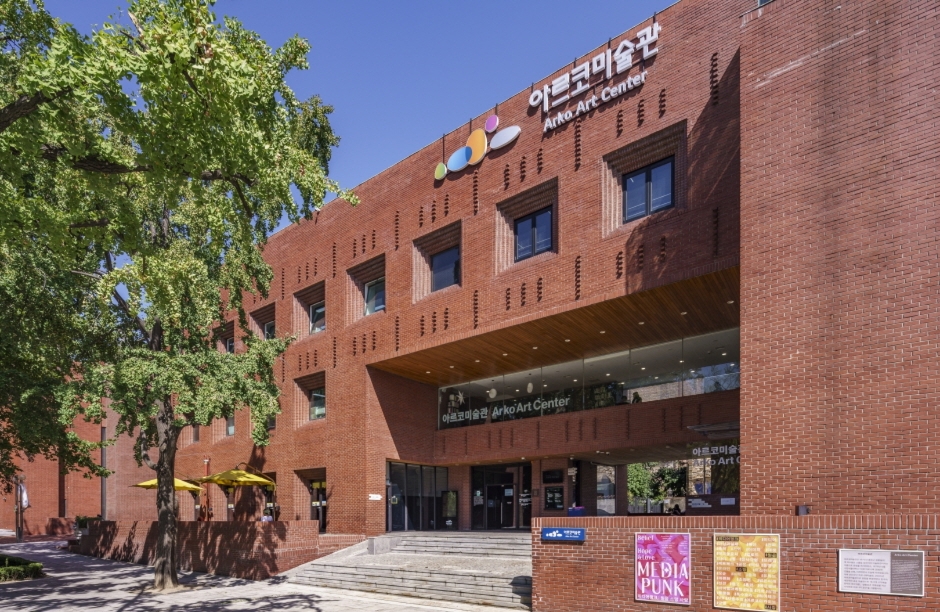
ARKO Art Center was founded in 1974 as Misulhoegwan in a building of former Deoksu Hospital in Gwanhun-dong, Jongno-gu to offer much-needed exhibition space for artists and arts groups. In 1979, Misulhoegwan moved to its present building, designed by preeminent Korean architect Kim Swoo-geun (1931-1986) and located in Marronnier Park, the former site of Seoul National University. The two neighboring brick buildings accommodating ARKO Art Center and ARKO Arts Theater are the major landmarks of the district of Daehakro.
As more public and private museums and commercial galleries came into the art scene in the 1990s, Misulhoegwan shifted to curating and presenting its own exhibitions. Renamed as Marronnier Art Center in 2002, ARKO Art Center assumed a full-fledged art museum system and played an increasingly prominent role as a public arts organization leading the contemporary art paradigm. When The Korea Culture and Arts Foundation was reborn as Arts Council Korea, Marronnier Art Center became ARKO Art Center named after the abbreviation for Arts Council Korea in 2005.
ARKO Art Center is committed to working as a platform where research, production, exhibitions and the exchange of creative activities grow and develop in connection with one another in addition to having a diversity of programs including thematic exhibitions addressing social agenda and public programs widely promoting various discourses in art.
](https://ktrip.blogsailing.com/wp-content/uploads/2026/03/4020171_image2_1.jpg)

](https://ktrip.blogsailing.com/wp-content/uploads/2026/04/4023198_image2_1.jpg)
](https://ktrip.blogsailing.com/wp-content/uploads/2026/04/4044515_image2_1.jpg)
](https://ktrip.blogsailing.com/wp-content/uploads/2026/03/4028708_image2_1.jpg)
One Comment