King Jeongjo’s Royal Parade (정조대왕 능행차 공동재현)
King Jeongjo’s Royal Parade (정조대왕 능행차 공동재현)
 – Tel
– Tel
Seoul +82-786-0610Suwon +82-31-5191-2367 Hwaseong +82-70-4202-1017
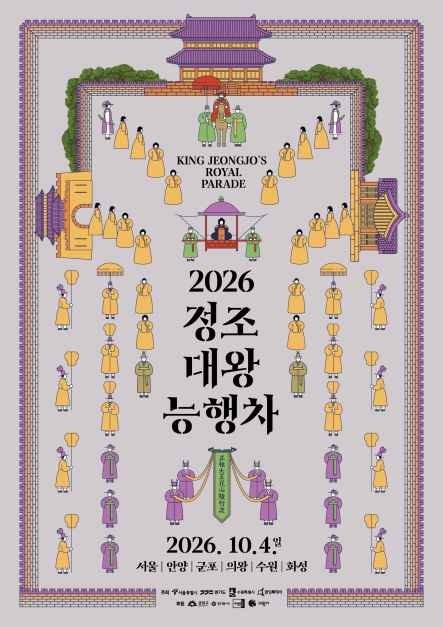
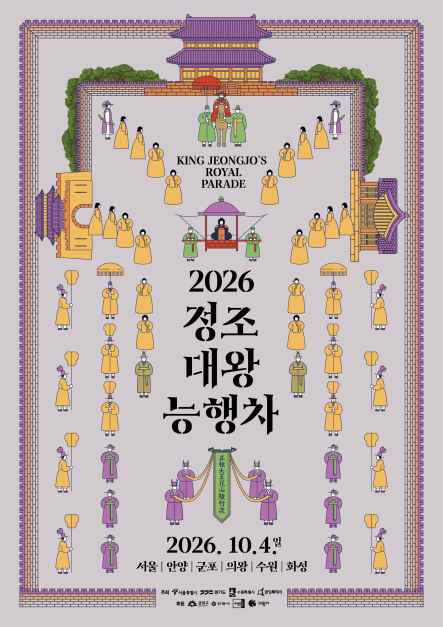
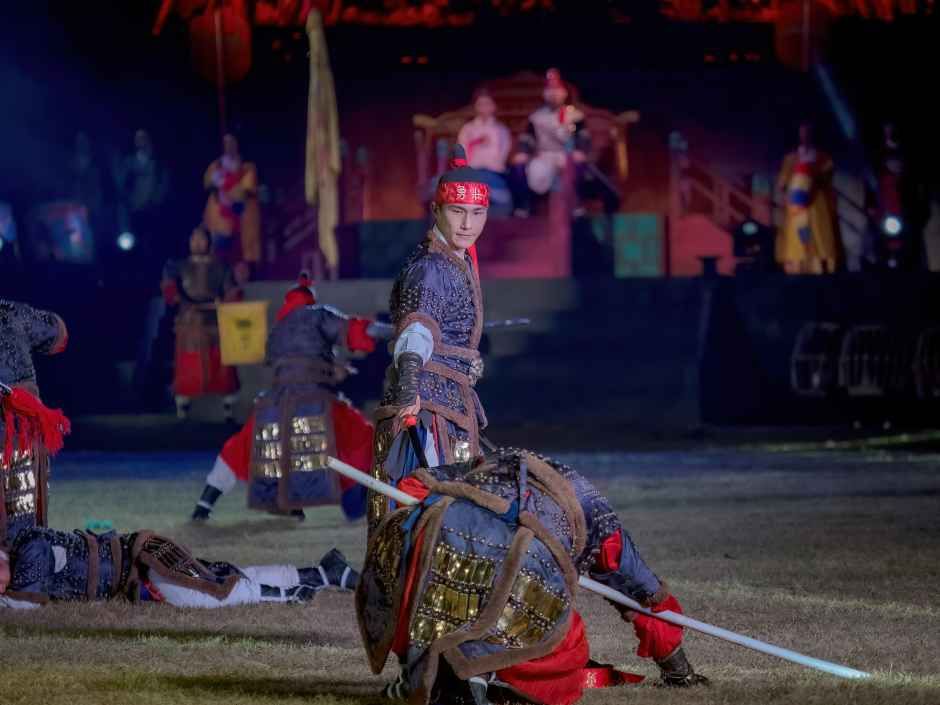
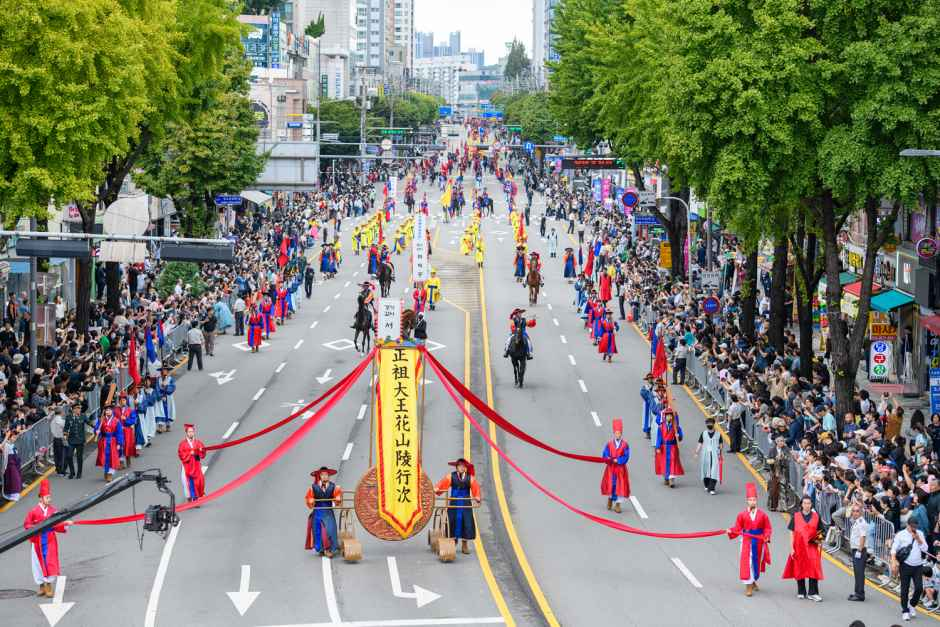
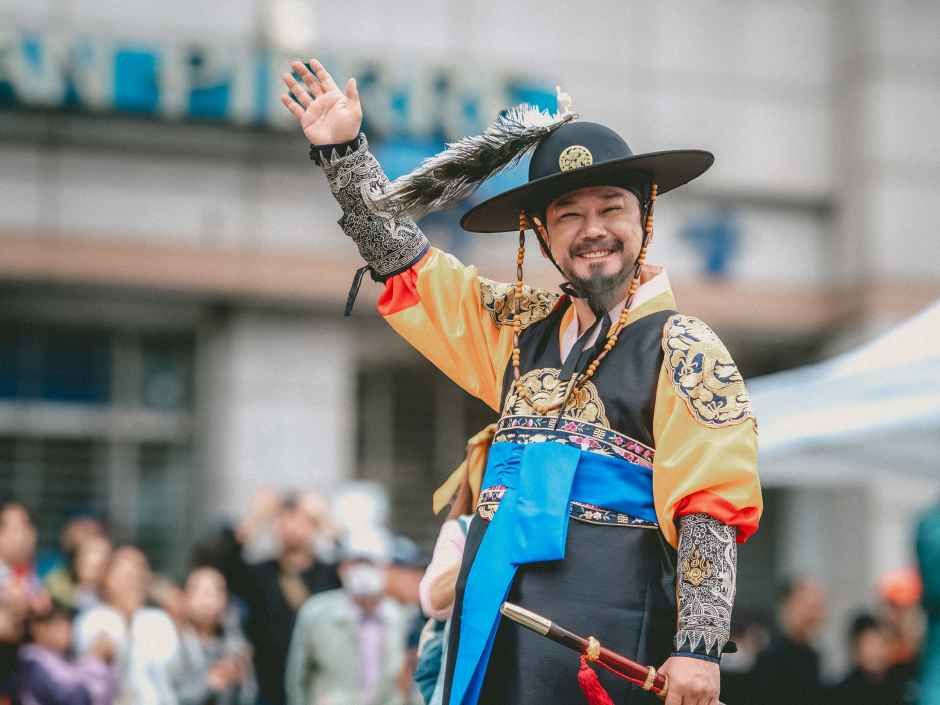
King Jeongjo’s Royal Parade to Hwaseong Fortress recreates one of the most remarkable events of the Joseon dynasty. In 1795, King Jeongjo traveled from Seoul to Suwon to celebrate the 60th birthday of his mother, Queen Heonui, sharing the eight-day journey with the people along the route. Based on records from the “Wonhaeng Eulmyo Jeongni Uigwe,” the festival faithfully reenacts the royal procession with traditional costumes, performances, and ceremonial displays. Held through the cooperation of Seoul, Gyeonggi-do, Suwon, and Hwaseong, the event offers visitors a chance to experience the grandeur and spirit of a historic royal celebration.
– Address : 161 Sajik-ro, Jongno-gu, Seoul
※ Presentation Information
– Age Limit
Open to visitors of all ages
– Event Date
20261004 ~ 20261004
– Schedule
09:00-21:00
– Location
Gyeongbokgung Palace
– Program
Seoul: Ceremony of Departure, Citizen Parade, etc.
Suwon: Welcoming King Jeongjo, Suwon Hwaseong Parade, etc.
Hwaseong: Modern Section Parade, Traditional Section Parade, etc.
– Sponsor
Seoul Metropolitan Government, Gyeonggi Province, Suwon Special City, Hwaseong Special City
– Sponsor Phone
Seoul +82-786-0610Suwon +82-31-5191-2367 Hwaseong +82-70-4202-1017
– Co-Sponsor
Seoul Metropolitan Government, Gyeonggi Province, Suwon Special City, Hwaseong Special City
– Fees
Free (Separate charges apply to programs)
◎ Nearby Tourism Infobox
⊙ Gwanghwamun Gate (광화문)
View detailed guide on Korea Trip Guide →
– Homepage
gwanghwamun.seoul.go.kr: Visit site
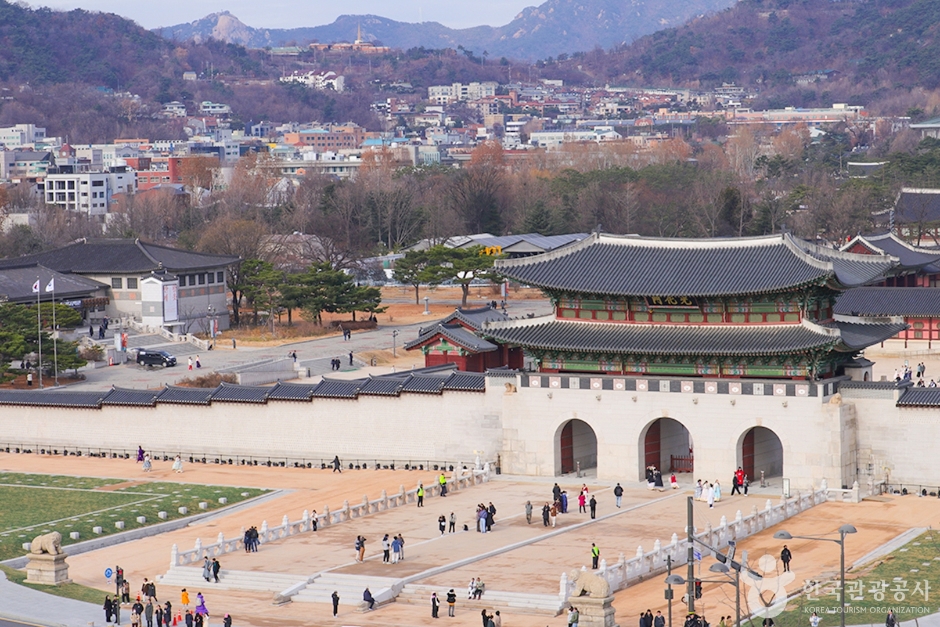
Built in 1395 under the reign of King Taejo, the first king of the Joseon dynasty, Gwanghwamun Gate is the southern gate of Gyeongbokgung Palace. It is also the main gate of the palace, therefore larger and fancier in comparison to the other gates. Gwanghwamun Gate consists of three arched gates; the center gate was used by the king, while the other two were used by the crown prince and royal officials. The tall granite walls of the gate serve as a platform for the wooden gate tower that watches over the city. The gate has a sign with its name written at the top center of the gate tower.
Gwanghwamun Gate went through several damages and restorations over the course of history. It was first severely damaged during the Imjin War (1592-1598) and was not restored until the reconstruction of Gyeongbokgung Palace in 1864. Under the Japanese administration, the gate was demolished and relocated to the north of the palace’s eastern gate, followed by series of damages during the Korean War (1950-1953). In 1968, Gwanghwamun Gate was relocated back to the south of the palace and was rebuilt using concrete; however, the gate’s position was shifted a few meters away from its original location. In 2006, a major reconstruction project took place to restore Gwanghwamun Gate to its original state and location, disassembling the structure completely and replacing concrete with granite and wood. After three years and eight months of construction, Gwanghwamun Gate was fully restored to its original form and was open to the public on August 15, 2010.
⊙ Sejong-ro Park (세종로공원)
View detailed guide on Korea Trip Guide →
– Homepage
parks.seoul.go.kr: Visit site
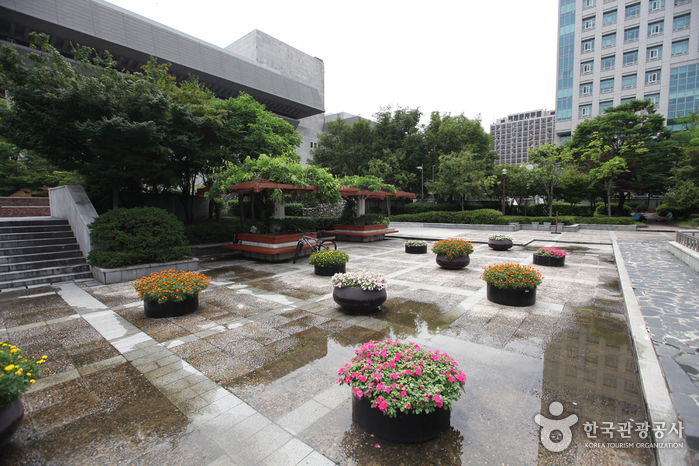
Sejong-ro Park is located next to Sejong Center for the Performing Arts in central Seoul. Inside the park, there are wooden benches and shaded areas where people can sit and relax. Also available are water fountains, a round outdoor stage, and various sculptures. The lunch crowd from the nearby office buildings often come to the park during weekdays. On the weekends, the park is also used as a venue for outdoor weddings.
Seoul’s anthem and the poem “Bulnori” by Ju Yo-han are written on a memorial stone that can be found inside the park.
⊙ Lee Ri-Ja Hanbok Museum (이리자 한복전시관)
View detailed guide on Korea Trip Guide →
The Lee Ri-Ja Hanbok Museum displays the traditional clothing worn in Korea from birth to death. All hanbok displayed at the museum are created by the hanbok designer Lee Ri-Ja herself, who has over 40 years of experience.
⊙ Daelim Museum (대림미술관)
View detailed guide on Korea Trip Guide →
– Homepage
www.daelimmuseum.org: Visit site
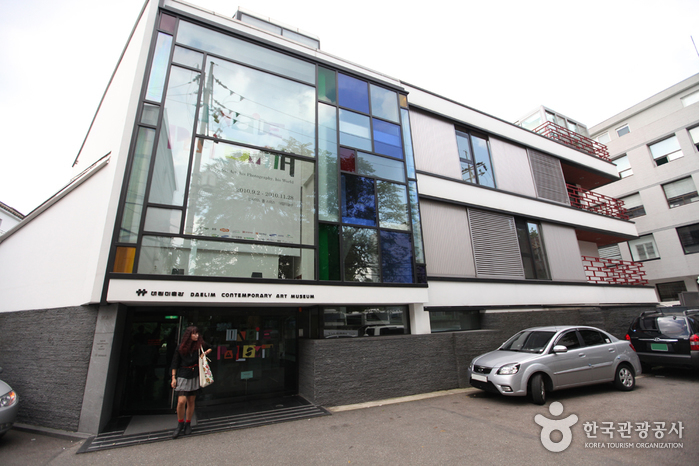
The Daelim Museum, built by the Daelim Group, was first established in Daejeon in 1996 and later moved to Jongno, Seoul in 2002. The art gallery studies, analyzes, and presents modern art through the lens of photography and holds exhibitions centered around photo media.
The museum is located in the residential area of Tongui-dong, near the time-honored Gyeongbokgung Palace. The museum, which was designed by French architect, Vincent Cornu, and built by the Daelim Corporation, opened its door to the public in late May 2002.
On the first floor, there is a garden, parking lot, reception desk, storage area, and conference room. On the second and third floor are offices and exhibition hall approximately 595 m² in size, consisting of small and large rooms, a long gallery, and a special high-ceilinged exhibition space. On the fourth floor, there is a seminar room that can seat up to 120 guests and a balcony with a beautiful view. From the balcony of the seminar room, Visitors can also enjoy a wide open view of Inwangsan Mountain and Bukhansan Mountain. The stained glass panels (designed to reflect the beauty of traditional Korean wrapping cloth) and the scenic lounges on the 2nd and 3rd floors of the building add to the overall charm.
Above all else, the museum was designed with consideration of the photos, which are very sensitive to humidity, light, and temperature.
⊙ Africa Museum of Art (아프리카미술관)
View detailed guide on Korea Trip Guide →
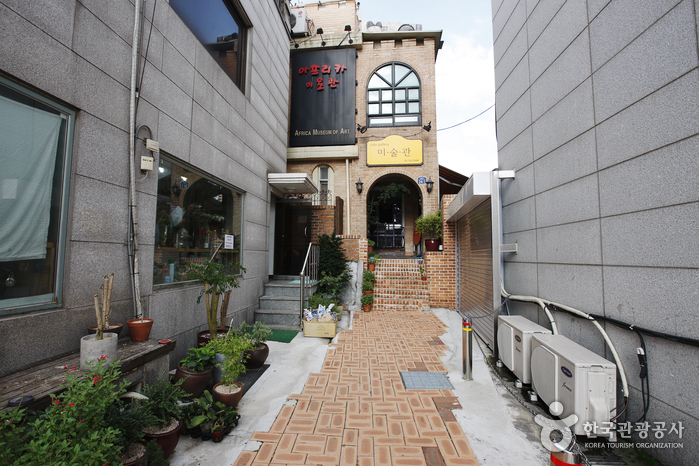
The Africa Museum of Art was established with the purpose of hosting various art festivals and providing the grounds for researching various art themes. A major principle of the gallery is to promote works of art that actively attempt to explore the human mind.
⊙ Gallery Simon (갤러리 시몬)
View detailed guide on Korea Trip Guide →
– Homepage
www.gallerysimon.com: Visit site
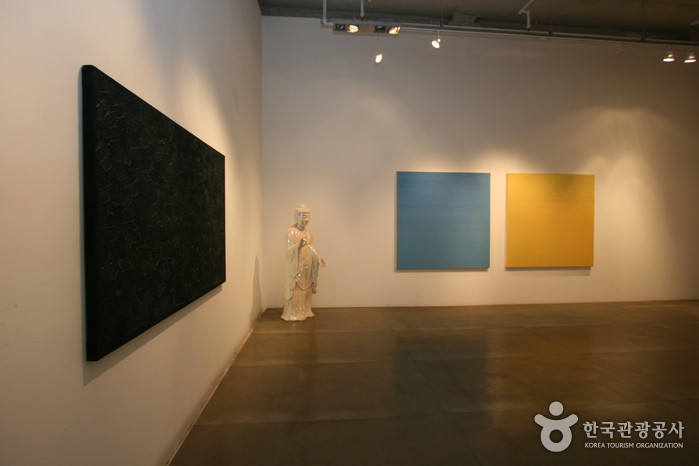
Since its opening in April, 1994, Gallery Simon has continued to focus on promoting the beauty of modern art. Exhibitions include works from experienced artists as well as the works of budding artists, both from Korea and abroad. Select artists, referred to collectively as “Simon’s Friends,” have exhibitions annually. The changing collections allow the museum and featured artists to constantly strive for improvement and follow the changes in art over time.
⊙ Statue of Admiral Yi Sun-Shin (충무공 이순신 동상)
View detailed guide on Korea Trip Guide →
– Homepage
tour.jongno.go.kr: Visit site
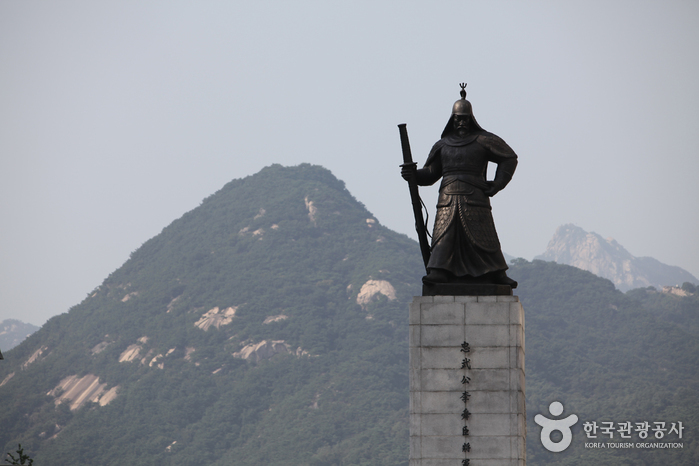
The Statue of Admiral Yi Sun-Shin can be found at Gwanghwamun Square in Seoul. Admiral Yi Sun-shin (1545-1598) was a naval commander who served during the Japanese invasion of Korea (also known as Imjin War: 1592-1598). The undefeated admiral achieved 23 victories against the Japanese navy using innovative tactics, and he is thus considered as one of the greatest generals in the history of Korea. Admiral Yi’s likeness can be found on the 100 won coin.
⊙ Ground Seesaw Seochon (그라운드시소 서촌)
View detailed guide on Korea Trip Guide →
– Homepage
www.groundseesaw.co.kr: Visit site
Ground Seesaw is a cultural complex located in Seochon, Jongno presented by Media & Art, an exhibition production company, and designed by SoA, an architecture firm, and Loci Studio, a landscaping studio. Visitors are able to check out a variety of exhibits at Ground Seesaw Seochon.
⊙ Sejong Village Food Street (세종마을 음식문화거리)
View detailed guide on Korea Trip Guide →
– Homepage
tour.jongno.go.kr: Visit site
Previously known as Geumcheongyo Market, it was officially named Sejong Village Food Street in 2011, as King Sejong was born in this village. The street is full of lively energy and features both long-standing restaurants, also known as nopo in Korean, and recently established trendy eateries. Its convenient location and inviting atmosphere make it a popular place to visit.
⊙ Seochon Village (서촌마을)
View detailed guide on Korea Trip Guide →
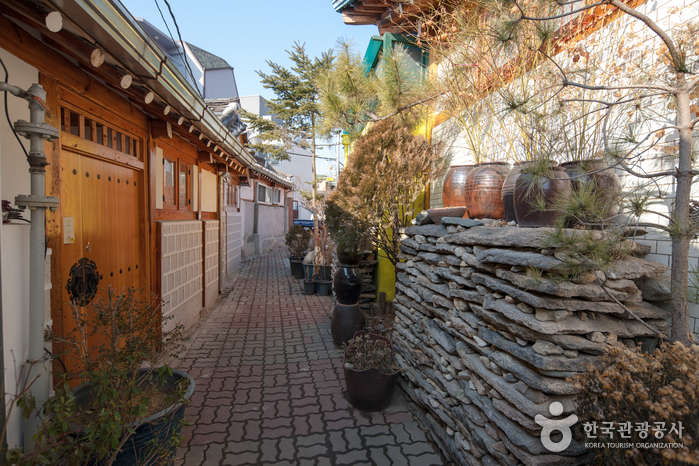
Seochon Village is the name given to the area to the west of Gyeongbokgung Palace. It is a historic village, home to old shops and hanok buildings that have stood the test of time. Korean traditions and contemporary sensibilities coexist within Seochon Village’s maze-like alleyways, creating the unique ambience that makes the district so beloved. One can find shops, guesthouses, cafés, and restaurants in the village.
](https://ktrip.blogsailing.com/wp-content/uploads/2026/05/4043888_image2_1.jpg)
](https://ktrip.blogsailing.com/wp-content/uploads/2026/03/4045665_image2_1.jpg)
](https://ktrip.blogsailing.com/wp-content/uploads/2026/05/4023214_image2_1.jpg)
](https://ktrip.blogsailing.com/wp-content/uploads/2026/05/4019062_image2_1.jpg)
](https://ktrip.blogsailing.com/wp-content/uploads/2026/05/4019274_image2_1.jpg)