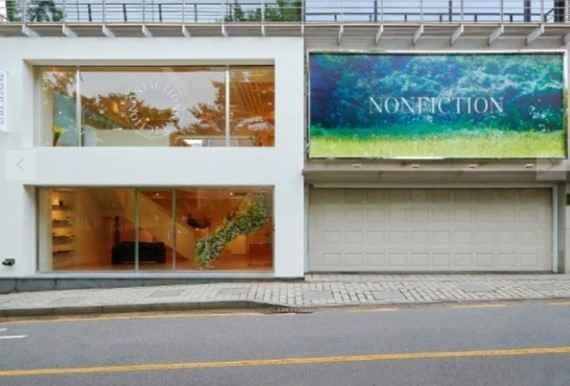
NONFICTION Samcheong & Gift Shop [Tax Refund Shop](논픽션 삼청&기프트샵)
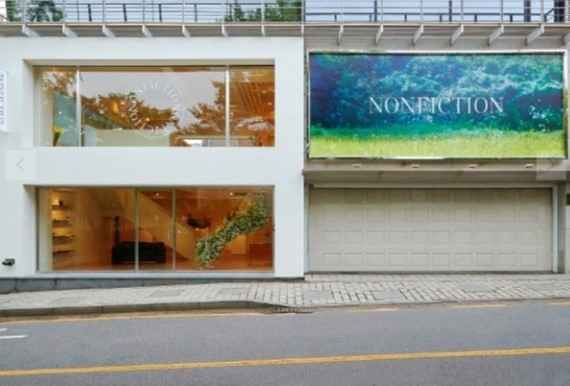
NONFICTION Samcheong & Gift Shop [Tax Refund Shop](논픽션 삼청&기프트샵)
 – Homepage
nonfiction.kr/
NONFICTION is a lifestyle beauty brand that invites moments of focus on one’s own essence. Through perfumes and body care products with captivating scents and a refined mood, it brings clear inspiration and a sense of healing to everyday moments.
– Address : 84, Bukchon-ro 5-gil, Jongno-gu, Seoul
※ Presentation Information
– Fair Day
Monday – Sunday
– Information and Guides
02-733-4099
– Opening Hours
11:00~20:00
– Day Off
Seollal (Lunar New Year’s Day) & Chuseok (Korean Thanksgiving Day) holidays
– Parking
Not available
– Restroom
Not available
– Items for Sale
Perfume / cosmetics
◎ Nearby Tourism Infobox
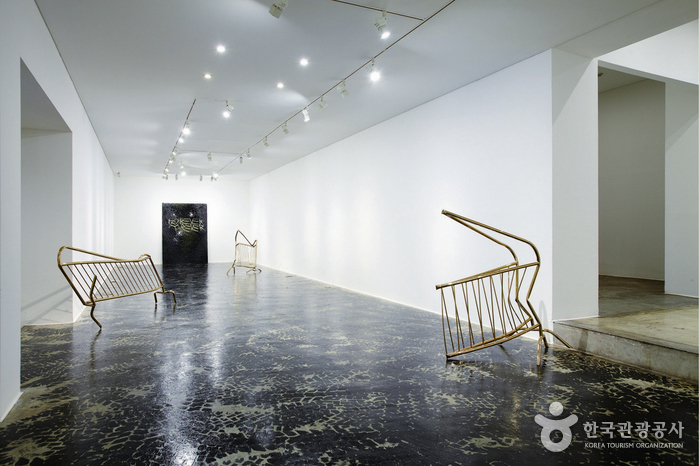
⊙ Kukje Gallery (국제갤러리)
View detailed guide on Korea Trip Guide →
– Homepage
www.kukjegallery.com
The Kukje Galley has been committed to presenting the work of significant Korean and international contemporary artists to the public since 1982. The gallery has established itself as a leading venue for international exhibits such as Helen Frankenthaler, Sam Francis, Jim Dine, Frank Stella, Robert Mangold, Anthony Caro, Cy Twombly, Edward Ruscha, Anselm Kiefer, Joseph Beuys, and Bill Viola, attracting enthusiastic responses from both the public and the media.
The gallery has placed emphasis on collaborations between artists, galleries, and art dealers around the world and nurturing upcoming artists by sponsoring their artwork and giving them international exposure.
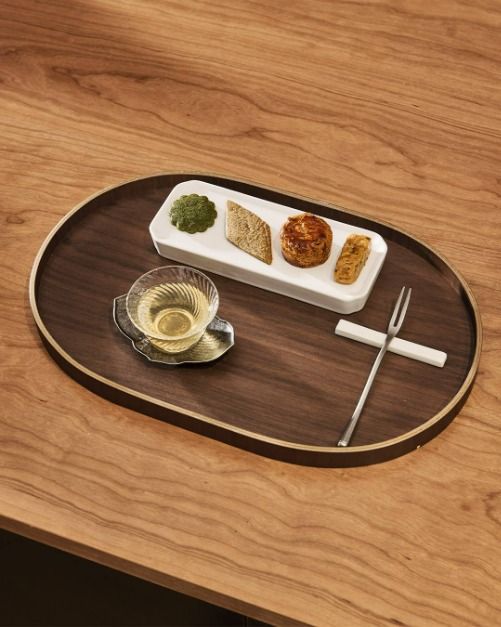
⊙ Pyunkang Yul Flagship & Tea house (편강 율 플래그십&티하우스)
View detailed guide on Korea Trip Guide →
– Homepage
www.instagram.com/pyunkangyul_teahouse/
Pyunkang Yul Flagship & Tea house is a cafe in Bukchon Hanok Village near Gyeongbokgung Palace. The first floor is a teahouse where one can enjoy Korean tea infused with traditional ingredients and delightful desserts with a view of the cafe’s serene garden, and the second floor is a flagship store of Pyeongang Yul, a K-beauty brand known for integrating hanbang (traditional Korean medicine) in their skincare products. The third floor features a rooftop that offers a sweeping view of the Bukchon Hanok Village and Gyeongbokgung Palace.
⊙ World Jewellery Museum (세계장신구박물관)
View detailed guide on Korea Trip Guide →
– Homepage
www.wjm.or.kr
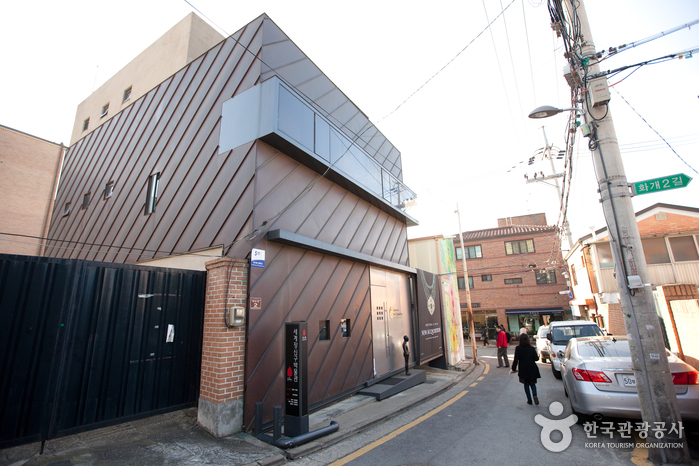
Situated in the gallery district in the back alley of Samcheong-dong (east of Gyeongbokgung Palace), the World Jewellery Museum houses 3,000 jewelry pieces from 60 countries, which have been collected over 30 years. Of which, 1,000 have been selected for display. The first floor contains an Amber Wall that goes back as far as 50 million years, the Golden Hall (El Dorado), the Necklace Hall, and the solemn Alter of the Cross. The second floor holds a mask wall, rings, beads and ivory as well as modern jewelry.
⊙ Artee Riders Club (아띠인력거)
View detailed guide on Korea Trip Guide →
– Homepage
arteepedicab.com/
Artee Riders Club is the first company that offers rickshaw tours in the nation. Not only do you get to ride on the rickshaw to tour around popular attractions including Bukchon Village, Seochon Village, the rickshaw tour guides you to the smaller alleys as well. Travelers to Bukchon Village may have their belongings or luggage stored at the center, and individual’s insurance as well as a complimentary drink are offered.
⊙ The Children’s Museum of the National Folk Museum of Korea (국립민속박물관&국립민속박물관 어린이박물관)
View detailed guide on Korea Trip Guide →
– Homepage
www.nfm.go.kr
The Children’s Museum of the National Folk Museum of Korea, located within Gyeongbokgung Palace, showcases artifacts related to Korean traditional culture. This interactive museum allows children to experience and learn about various aspects of Korean traditional clothing, food, society, culture, and games firsthand. Especially catering to children from Asian countries, there is a service for renting items, and reservations are required for admission.
⊙ Africa Museum of Art (아프리카미술관)
View detailed guide on Korea Trip Guide →
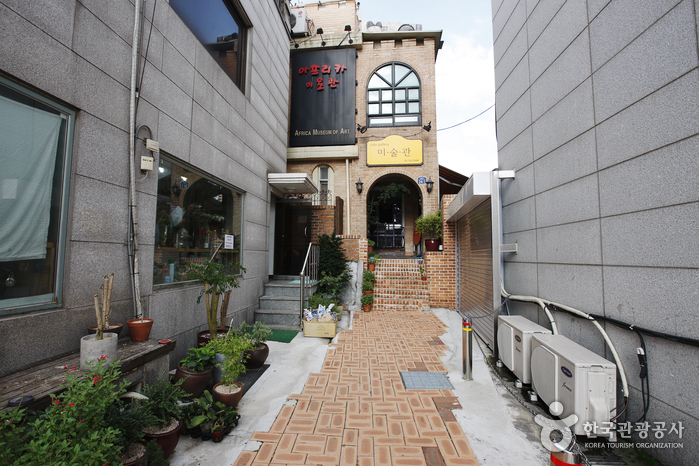
The Africa Museum of Art was established with the purpose of hosting various art festivals and providing the grounds for researching various art themes. A major principle of the gallery is to promote works of art that actively attempt to explore the human mind.
⊙ Lee Ri-Ja Hanbok Museum (이리자 한복전시관)
View detailed guide on Korea Trip Guide →
The Lee Ri-Ja Hanbok Museum displays the traditional clothing worn in Korea from birth to death. All hanbok displayed at the museum are created by the hanbok designer Lee Ri-Ja herself, who has over 40 years of experience.
⊙ Bukchon Hanok Village Gamgodang Street (북촌한옥마을 감고당길)
View detailed guide on Korea Trip Guide →

– Homepage
https://tour.jongno.go.kr/
An alley with cute cafes and galleries
This is the road that appeared in the last episode and the flashback scene where Choi Ung (played by Choi Woosik) and Kuk Yeonsoo (played by Kim Dami) got drunk. Behind the Seoul Craft Museum in Bukchon Hanok Village, it extends for about 440m from Poongmoon Girls’ High School to Jeongdok Library. There are many pretty cafes and galleries on the cozy road, and there are also craft markets open, so there is plenty to look around. The alley where Kuk Yeonsoo walked with the drunken Choi Ung on her back is Yunboseon Street in the middle of Gamgodang Street. It stretches along the hill between narrow tiled walls and stone walls, giving off a unique atmosphere.
⊙ Songhyeon Green Plaza (열린송현 녹지광장)
View detailed guide on Korea Trip Guide →
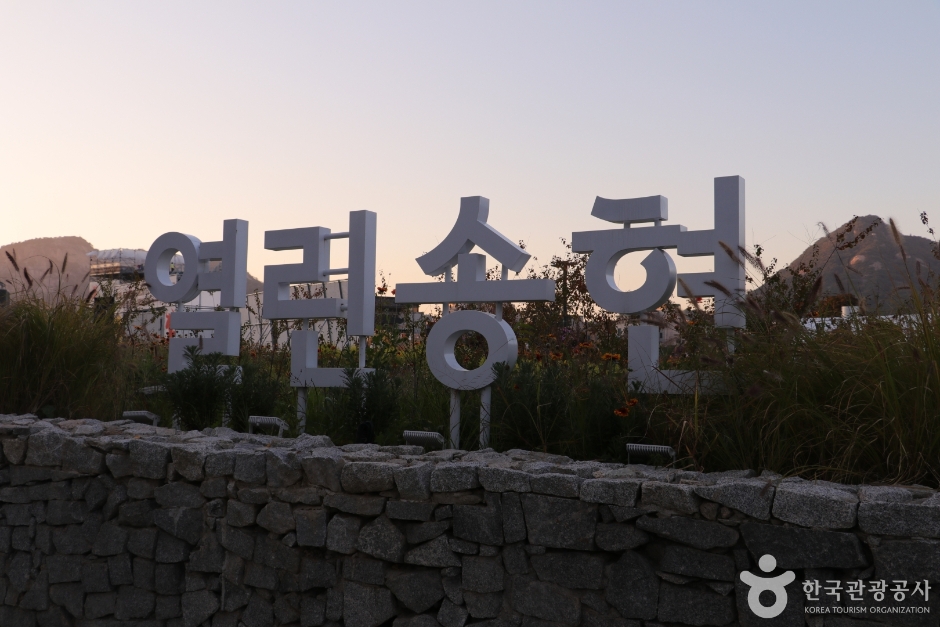
Songhyeon Green Plaza, located between Gyeongbokgung Palace and Jongno, is a space for culture and rest. The site was formerly used as housing for Shiksan Bank during Japanese rule. After Korea’s liberation, it served as a residence for the US Embassy and military personnel. Later in 1997, it was returned to the Korean government but remained unused for years. In 2022, the ownership was transferred to the Korean House and Land Corporation and then to the Seoul Metropolitan Government, which redeveloped it into a green plaza and opened it to the public. Upon entering the plaza, visitors are greeted by a spacious lawn adorned with flowers during the blooming season. The plaza is connected to the nearby tourist attractions through shortcuts cutting through it, including Cheong Wa Dae (Blue House), Gwanghwamun Plaza, Insa-dong, and Bukchon Hanok Village.
⊙ Palace Royal Guard Changing Ceremony (수문장 교대의식)
View detailed guide on Korea Trip Guide →
– Homepage
www.chf.or.kr
– Tel
+82-2-3210-1645
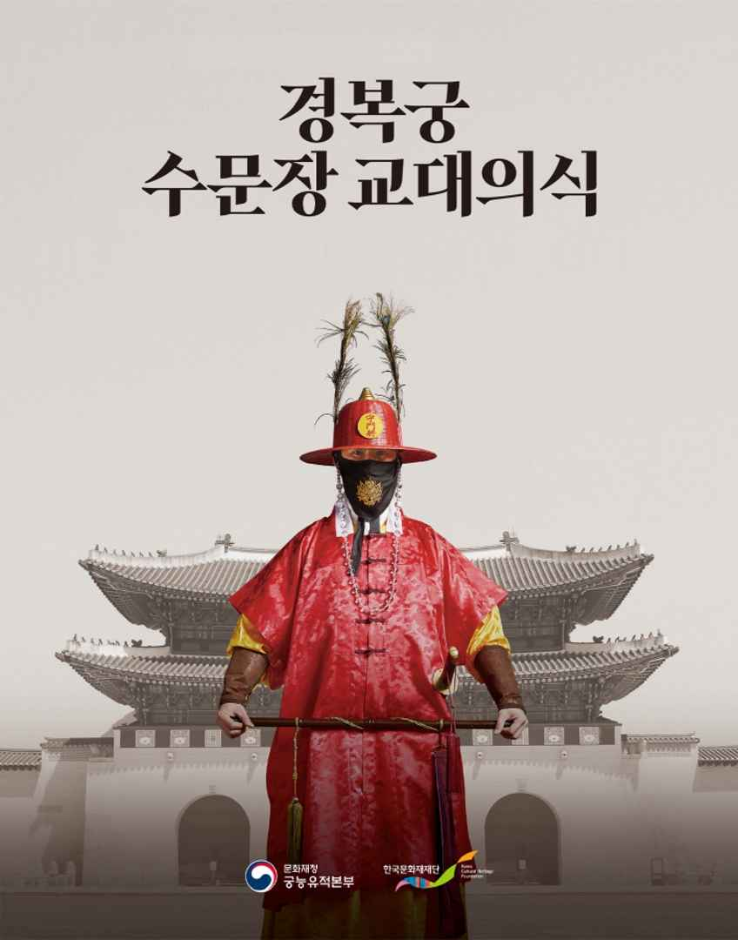
In the Joseon dynasty, the royal guards of the palace were gatekeepers who were responsible for guarding the the main gates of Gyeongbokgung Palace as well as the main gates of the city such as Heunginjimun Gate and Sungnyemun Gate. The royal guards worked in shift duties and were in charge of opening and closing Gwanghwamun Gate. Before the royal guard system was enforced in 1469, the palace gates were protected by soldiers of the central army. The Palace Royal Guard Changing Ceremony held at Gyeongbokgung Palace and the Gwanghwamun area reenacts the guard-changing procedure that took place during the Joseon dynasty, along with the reproduction of costumes and weapons, based on historical records.
](https://ktrip.blogsailing.com/wp-content/uploads/2026/05/4024264_image2_1.jpg)
](https://ktrip.blogsailing.com/wp-content/uploads/2026/05/4043723_image2_1.jpg)
](https://ktrip.blogsailing.com/wp-content/uploads/2026/03/4024654_image2_1.jpg)
![Hogan – Galleria Department Store Luxury Hall WEST Branch [Tax Refund Shop] (호간 갤러리아백화점 명품관 WEST점)](https://ktrip.blogsailing.com/wp-content/uploads/2026/04/4044276_image2_1.jpg)
![Plastic Island – Mario Outlet Building 1 Branch [Tax Refund Shop] (플라스틱아일랜드 마리오아울렛 1관점)](https://ktrip.blogsailing.com/wp-content/uploads/2026/04/4021253_image2_1.jpg)