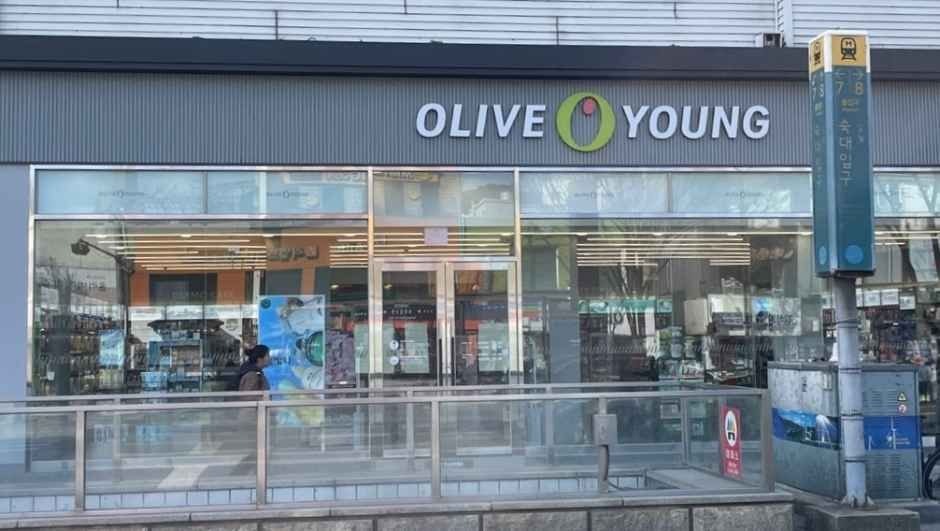
Olive Young – Sookmyung Women’s Univ. Station Branch [Tax Refund Shop](올리브영 숙대입구역점)
Olive Young – Sookmyung Women’s Univ. Station Branch [Tax Refund Shop](올리브영 숙대입구역점)
 – Homepage
www.oliveyoung.co.kr
Olive Young is a popular health and beauty store showcasing the latest K-beauty trends. It offers a wide selection of skincare, makeup, and health products at affordable prices, making it a favorite among international visitors.
– Address : 285, Hangang-daero, Yongsan-gu, Seoul
※ Presentation Information
– Fair Day
Monday – Sunday
– Information and Guides
02-701-7132
– Opening Hours
10:00~22:30
– Parking
Not available
– Restroom
Not available
– Items for Sale
Perfume / cosmetics, Miscellaneous goods, Ginseng / herbal medicines / health supplements, Food products
– Shop Guide
Refund method (Time-frame) : Claim for refund
◎ Nearby Tourism Infobox
⊙ Seoul Hyochang Park (서울 효창공원)
View detailed guide on Korea Trip Guide →
– Homepage
parks.seoul.go.kr
Hyochang Park covers 122,245 square meters spanning across Hyochang-dong and Cheongpa 2-dong. It is a historic landmark that once contained several royal tombs, and was known at that time as Hyochangwon. The cemeteries that were originally located in Hyochangwon belonged to Crown Prince Munhyo, King Jeongjo’s first son who died at the age of five; Royal Noble Consort Uibin of the Seong Clan, King Jeongjo’s royal concubine and Crown Prince Munhyo’s mother; Royal Noble Consort Sugui of the Park Clan, King Sunjo’s royal concubine; and her daughter Princess Yeongon. The royal tombs were moved to Seooreung Tombs in the waning months of the Japanese colonial period. The Japanese empire began the development of Hyochangwon into a park in 1924, and the Japanese governor-general officially assigned the site as a park in 1940.
Presently, several of Korea’s greatest leaders are buried in Hyochang Park. The remains mostly belong to independence activists including Yoon Bong-gil, Lee Bong-chang, and Baek Jeong-gi, whose graves are collectively known as Samuisa Tomb. A statue of Lee Bong-chang has been built in the graveyard. Among the other patriotic martyrs who are interred in the park are Kim Gu and some of the key figures of the provisional government such as Lee Dong-nyeong, Cha I-seok, and Cho Seong-hwan. An ancestral shrine named Uiyeolsa has been built along the main gate and holds the portraits of the deceased independence activists.
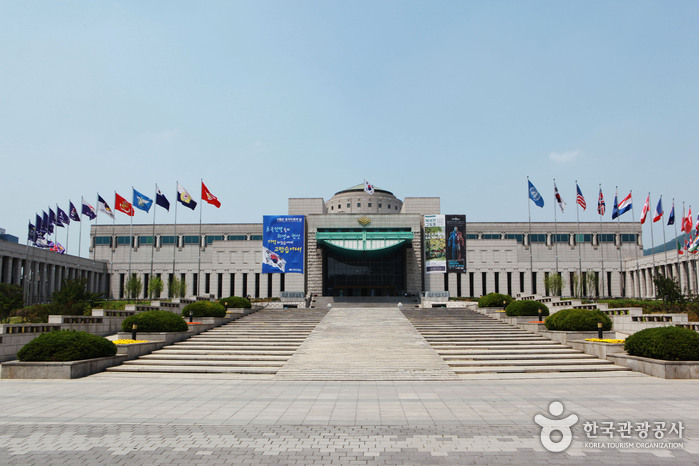
⊙ The War Memorial of Korea (전쟁기념관)
View detailed guide on Korea Trip Guide →
– Homepage
www.warmemo.or.kr
mfis.mpva.go.kr
The War Memorial of Korea, located in Yongsan-gu, Seoul, exhibits and preserves materials related to the Korean War and serves as a national moral educational venue. It was established on June 10, 1994 by the War Memorial Service Korea Society to commemorate the noble sacrifice of patriotic martyrs. The museum houses approximately 33,000 artifacts with about 10,000 on display at indoor and outdoor exhibitions. There are six separate indoor halls, including Expeditionary Forces Room, Patriotic Memorial Room, War History Room, 6·25 Korean War Room, Development Hall and Large Machinery Room. The outdoor exhibition showcases large-sized weapons. Visitors of all ages from children to adults can also participate in 20 various educational programs and diverse cultural events such as military music and honor guard events, drawing contest, cultural event and more. The character of War Memorial of Korea is ‘Mudori’ featuring a helmet symbolizing the protection of the nation and a bay leaf meaning peace.
⊙ ARTEASPOON (아티스푼)
View detailed guide on Korea Trip Guide →
– Homepage
instagram.com/arteaspoon
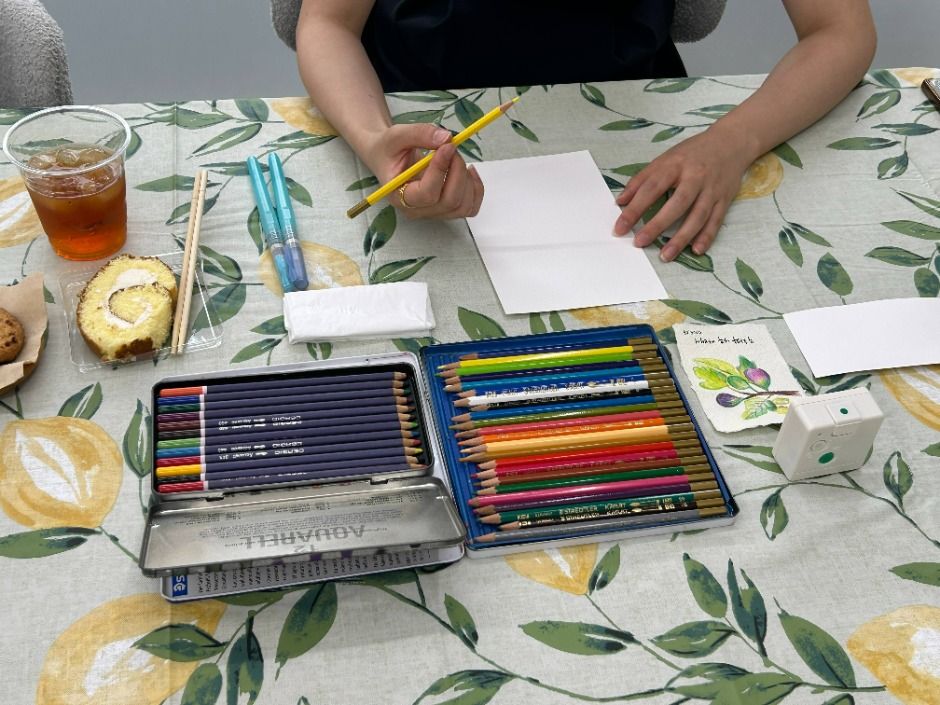
ARTEASPOON operates cultural arts programs centered on paintings, music, and books. It also has a program related to exploring one’s feelings and mind, and offers a special program for foreigners for learning Korean culture and art. Located in Huam-dong at the foothills of Namsan Mountain, it’s an ideal place to immerse in art and inspirations.
⊙ Soul (소울)
View detailed guide on Korea Trip Guide →
– Homepage
https://www.instagram.com/souldining_seoul
Soul is a fine-dining located in Hannam-dong. It presents reinterpretations of Korean cuisine, drawing inspiration from traditional dishes. The menu is structured into lunch and dinner courses. Known for its ability to artistically express familiar flavors encountered in daily life, Soul was selected for the 2023 Michelin Guide Seoul. Operating on a reservation-only basis, bookings can be made via phone.
⊙ Kim Koo Museum & Library (백범김구기념관)
View detailed guide on Korea Trip Guide →
– Homepage
www.kimkoomuseum.org
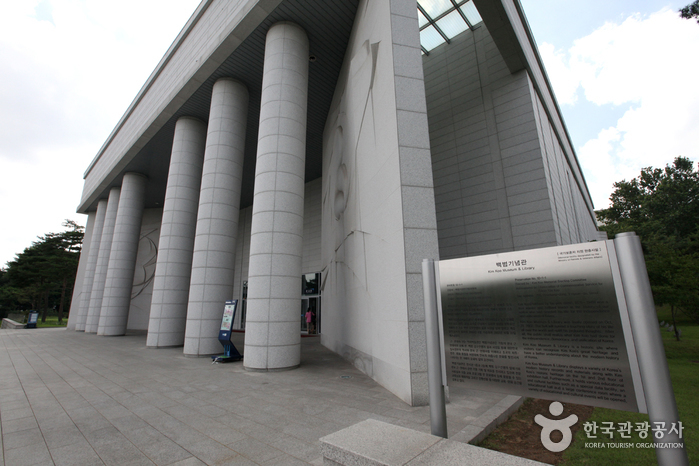
Kim Koo Museum & Library was built in Yongsan-gu, Seoul to commemorate Baekbeom Kim Koo (1876-1949), a highly respected Korean independence activist. It opened on October 22, 2002 to commemorate Kim Koo’s efforts and achievements in Korean history. The main hall is comprised of two floors, exhibiting relics related to his entire life. A statue of a seated Kim Koo is situated in the central space of the first hall.
⊙ Seoullo 7017 (서울로 7017)
View detailed guide on Korea Trip Guide →
– Homepage
https://parks.seoul.go.kr/
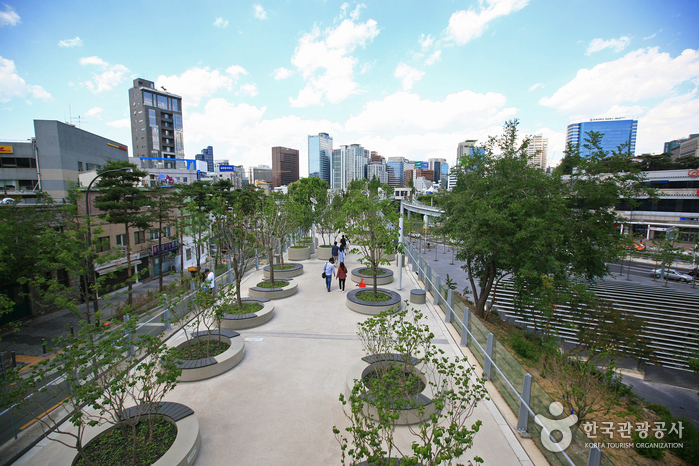
Originally opened in 1970, Seoullo 7017 was an elevated road that crossed over the Seoul Station railway, but when it became dilapidated and unusable for traffic, it was converted into a park in 2017. It is about 17 metres above the ground and offers a panoramic view of the Seoul Station Railway and the city of Seoul. It is directly connected to Seoul Station.
⊙ Lotte Outlets – Seoul Station Branch [Tax Refund Shop] (롯데아울렛 서울역점)
View detailed guide on Korea Trip Guide →

– Homepage
https://www.lotteshopping.com/store/main?cstr=0343
– Located in the heart of transportation at Seoul Station, LOTTE Seoul Station offers convenience with easy access to nearby public transport and parking and holds a diverse selection of brands under the YOUNG & SPORTY concept. Experience top-notch services tailored to our foreign guests in our Global Service Room.
⊙ Ahn Junggeun Memorial Museum (안중근의사기념관)
View detailed guide on Korea Trip Guide →
– Homepage
ahnjunggeun.or.kr
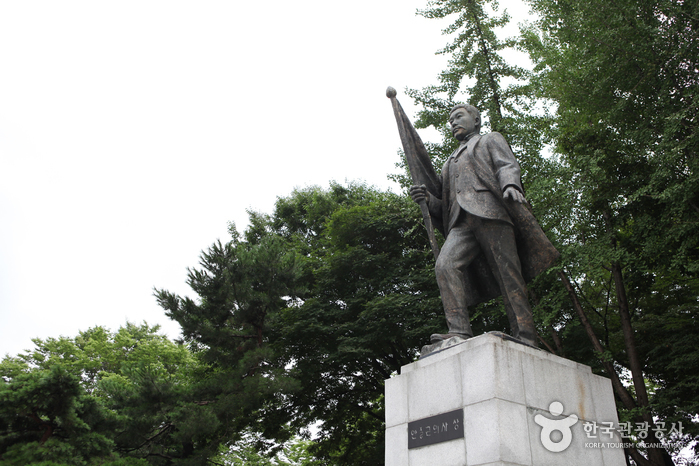
The Ahn Junggeun Memorial Museum honors the memory of Ahn Junggeun (1879-1910), an independence activist and soldier who advocated for Korean independence and peace in Asia. He fought against the Japanese to defend the Korean Empire (1897-1910). He was executed in 1910 for assassinating Hirobumi Ito, the Japanese who led the invasion of Korea in 1909, in Harbin, China.
⊙ Cha Fertility Ceter – Seoul Station ((의)성광의료재단 차여성의원)
View detailed guide on Korea Trip Guide →
Since opening in 2015, CHA Fertility Center – Seoul Station has served as Korea’s leading fertility treatment center. Based on the know-how of CHA University Gangnam Medical Center, the first private hospital to deliver a test-tube baby in 1986, CHA Fertility Center – Seoul Station is conveniently located near the center of Seoul, making it convenient for domestic and international fertility clients. Foreign fertility patients who arrive in Korea via Incheon Airport not only have easy access to the clinic via the direct rail linking Seoul and the airport but also benefit from the capital city’s excellent infrastructure (transportation, tours, accommodations, restaurants, etc.) for a safe and comfortable fertility treatment during their stay. In particular, many international residents in Korea, embassy officials, U.S. soldiers, and Koreans living abroad visit CHA Fertility Center for fertility treatment.
⊙ Namsan Library (서울특별시교육청 남산도서관)
View detailed guide on Korea Trip Guide →
– Homepage
nslib.sen.go.kr
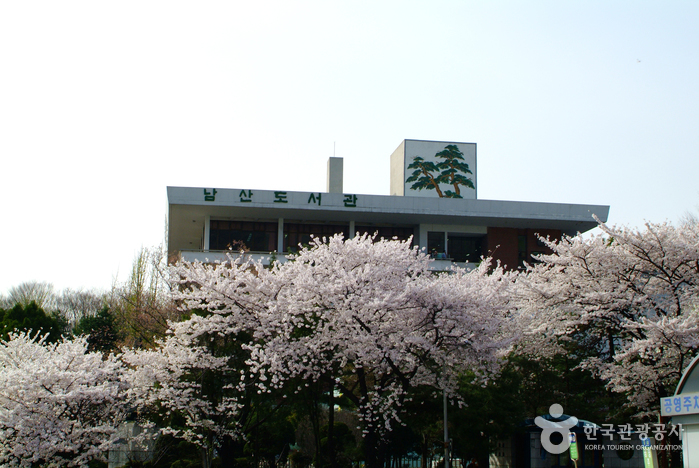
Namsan Library opened as Kyeongseong Prefectural Library in 1922 as a public library in Myeong-dong, Jung-gu, Seoul. The library was moved to the current site in 1964 with a newly built building and its name changed to Namsan Library in 1965. This concrete building was built in 1964 and was designed by architect Lee Haeseong. It was designated as Seoul Future Heritage in 2013, credited for its preservation value.
It is comprised of 19 rooms and educational areas including the Humanity and Social Science Hall, Nature Science Hall, Language and Literature Hall, Electronic Information Room and more. Since opening, the library has collected nearly 500,000 books, 16,000 non-book materials, 700 continuing resources, and other special materials like old books, oriental books (including Japanese books), and more. Namsan Library also operates a reading treatment program unique to this library that began in 2005. The program includes remodeling of reading consultation room, training for people in charge of reading treatment, workshops, programs for individuals and groups. Also, various exhibitions, lectures, shows, cultural classes and other events are available all year long to enhance lifelong education.
](https://ktrip.blogsailing.com/wp-content/uploads/2026/06/4017626_image2_1.jpg)
](https://ktrip.blogsailing.com/wp-content/uploads/2026/04/4023242_image2_1.jpg)
](https://ktrip.blogsailing.com/wp-content/uploads/2026/03/4017506_image2_1.jpg)
](https://ktrip.blogsailing.com/wp-content/uploads/2026/05/4045734_image2_1.jpg)