Speed Scandal(과속스캔들)
Speed Scandal(과속스캔들)
– Address : 서울특별시 종로구 동숭길 47 (동숭동) 지하1층, 나인진홀 2관
※ Presentation Information
– Age Limit
8 years old or older
– Location
Ninejin Hall 2, B1, 47 Dongsung-gil, Jongno-gu, Seoul
– Program
A laugh-out-loud comedy packed with nonstop gags and unexpected twists, Speed Scandaltakes place just three hours before the comeback stage of a washed-up celebrity—plunging into total backstage chaos.
As actor Jae-jun prepares for his return, his long-lost first love Hye-seon suddenly appears in his dressing room after 20 years. The situation escalates when Max, claiming to be her son, demands help finding his father. Add to the mix a fiancée, an ambitious journalist, and mounting lies, and the stage is set for 90 minutes of riotous confusion.
Through a whirlwind of desperate cover-ups and spiraling mishaps, the play keeps audiences on edge, wondering if the show will ever go on. Beneath the laughter, it touches on themes of family and friendship, making it a feel-good human comedy.
– Event Duration
90 minutes
– Sponsor
나인진엔터테인먼트
◎ Nearby Tourism Infobox
⊙ Wasted (웨이스티드)
View detailed guide on Korea Trip Guide →
⊙ ARKO Art Center (아르코미술관)
View detailed guide on Korea Trip Guide →
– Homepage
www.arko.or.kr: Visit site
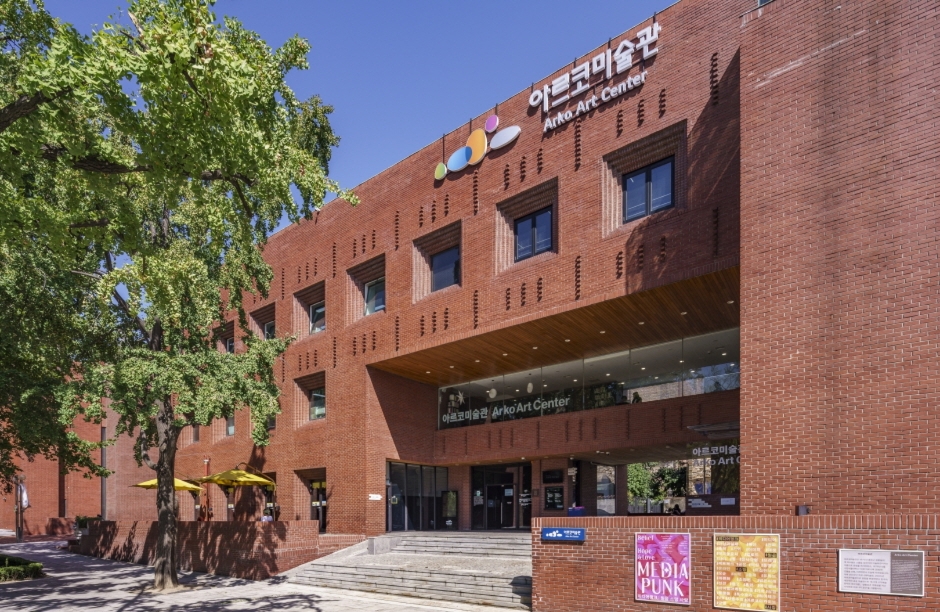
ARKO Art Center was founded in 1974 as Misulhoegwan in a building of former Deoksu Hospital in Gwanhun-dong, Jongno-gu to offer much-needed exhibition space for artists and arts groups. In 1979, Misulhoegwan moved to its present building, designed by preeminent Korean architect Kim Swoo-geun (1931-1986) and located in Marronnier Park, the former site of Seoul National University. The two neighboring brick buildings accommodating ARKO Art Center and ARKO Arts Theater are the major landmarks of the district of Daehakro.
As more public and private museums and commercial galleries came into the art scene in the 1990s, Misulhoegwan shifted to curating and presenting its own exhibitions. Renamed as Marronnier Art Center in 2002, ARKO Art Center assumed a full-fledged art museum system and played an increasingly prominent role as a public arts organization leading the contemporary art paradigm. When The Korea Culture and Arts Foundation was reborn as Arts Council Korea, Marronnier Art Center became ARKO Art Center named after the abbreviation for Arts Council Korea in 2005.
ARKO Art Center is committed to working as a platform where research, production, exhibitions and the exchange of creative activities grow and develop in connection with one another in addition to having a diversity of programs including thematic exhibitions addressing social agenda and public programs widely promoting various discourses in art.
⊙ Cheonhamu-Bbong(천하무뽕)
View detailed guide on Korea Trip Guide →
⊙ Seoul National University Hospital (서울대학교병원)
View detailed guide on Korea Trip Guide →
Seoul National University Hospital, a national central hospital that has led Korean medicine for over 130 years, is a top-tier hospital equipped with world-class medical professionals and cutting-edge systems. For 25 consecutive years, it has ranked first in brand power in the hospital sector. The hospital is renowned for its cancer research, the most comprehensive pediatric care in the country, and treatments for rare and intractable diseases. Through patient-centered, personalized services, it has established itself as a trusted healthcare institution.
⊙ Ostrich Boys(타조소년들)
View detailed guide on Korea Trip Guide →
⊙ Art Center K (아트센터 K)
View detailed guide on Korea Trip Guide →
– Homepage
www.artcenterk.com/: Visit site
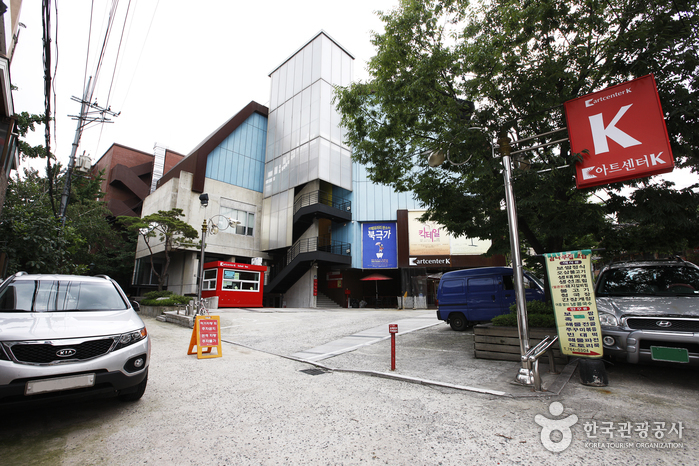
Art Center K (formerly Wonder Space) opened in February 2012, offers art programs in Daehangno, a neighborhood of youth, romance and culture. It also supports artists through creative activities, exchanges, and trainings, while serving as a performing art hall where people can participate in artistic and creative activities.
Art Center K’s three theaters feature unique stages and audience spaces: Donggeurami (Circular) Theater, Semo (Triangle) Theater, and Nemo (Square) Theater. One stage hosts fun and educational open-run performances for children, while the other two theaters offer popular plays, musicals, concerts, and other cultural events.
⊙ Detective K(탐정 케이)
View detailed guide on Korea Trip Guide →
⊙ Wiliams: Wiliam and Wiliam’s Williams(윌리엄과 윌리엄의 윌리엄들)
View detailed guide on Korea Trip Guide →
⊙ Leather Craft Shop (손놀림공방)
View detailed guide on Korea Trip Guide →

The leather workshop featured in the drama ‘Boyfriend’
It is a leather workshop that appeared in the scene where Cha Soohyeon (Song Hyekyo) and Kim Jinhyeok (Park Bogum) reunite in the drama ‘Boyfriend’. It is run by leather craft artist Kim Yeongae and is known for its many cute items. You can experience making leather knotted string bracelets and rings at a low cost.
⊙ Seoul Daehan Hospital (서울 대한의원)
View detailed guide on Korea Trip Guide →
– Homepage
tour.jongno.go.kr www.cha.go.kr: Visit site · Visit site
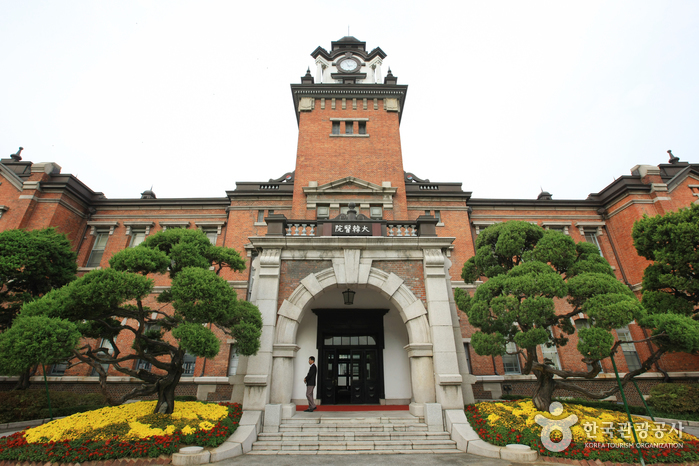
Daehanuiwon (Daehan Medical Center) is an antique two-story brick building within the grounds of Seoul National University Hospital. It was established under the direct administration of the Uijeongbu (State Council), combining the Gwangjewon (under the Home Ministry), Gyeongseong Medical School and the Korean Red Cross Hospital (under the Royal Household).
Built in the Madubong Hill area, this location where Hamchunwon, the outer garden of Changgyeonggung Palace, once stood in 1484 (15th year of King Seongjong), was also once the site of Gyeongmogung Palace, where King Jeongjo enshrined the mortuary tablet of his birth father Crown Prince Sado Seja in 1776 (the year King Jeongjo ascended to the throne).
These places that held importance for the royal family were destroyed as the Japanese built Gyeongseong Empire University in its place. In 1907, with the announcement of the plan to establish Daehan Medical Center, construction began on the main building, seven wards and affiliated buildings. Construction was completed in November 1908.
The Daehan Medical Center opened in Gwangjewon, but upon Japanese colonization in 1910, its name was changed to the Japanese Viceroyalty Hospital. In 1926, it was included as a part of Gyeongseongjeguk University to become a university hospital. Since the liberation of Korea in 1945, it has been a hospital affiliated with Seoul National University.
](https://ktrip.blogsailing.com/wp-content/uploads/2026/04/4018715_image2_1.jpg)
](https://ktrip.blogsailing.com/wp-content/uploads/2026/05/4045053_image2_1.jpg)
](https://ktrip.blogsailing.com/wp-content/uploads/2026/04/4018908_image2_1.jpg)
](https://ktrip.blogsailing.com/wp-content/uploads/2026/05/4017937_image2_1.jpg)
3 Comments