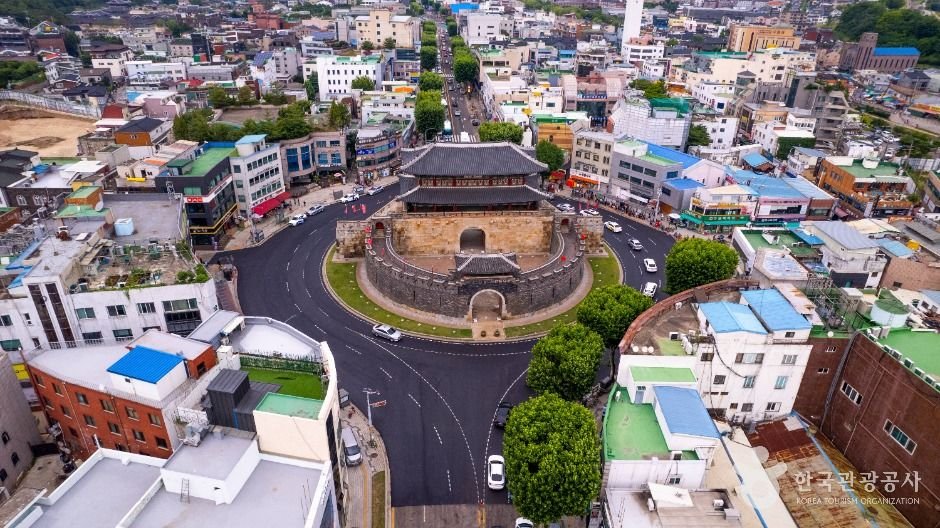
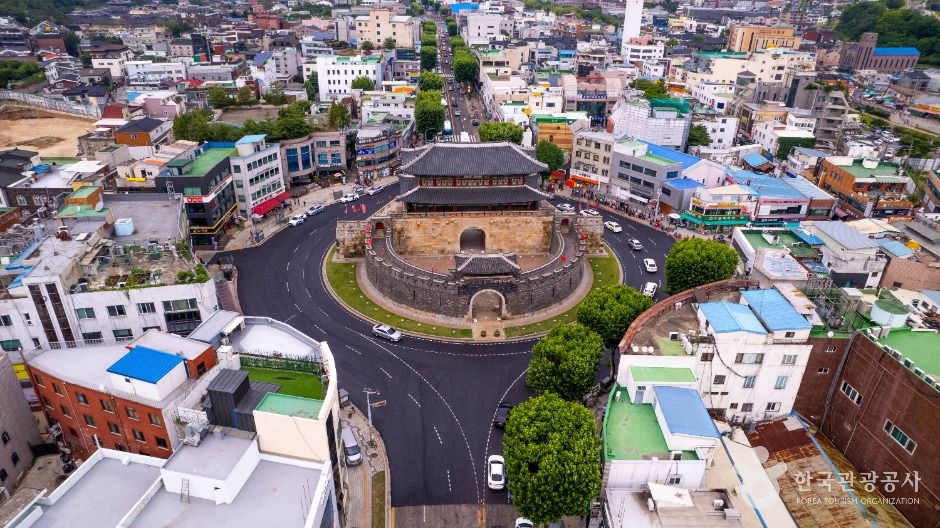
Suwon Hwaseong Fortress [UNESCO World Heritage] (수원 화성 [유네스코 세계유산])
Suwon Hwaseong Fortress [UNESCO World Heritage] (수원 화성 [유네스코 세계유산])
 – Homepage
www.swcf.or.kr
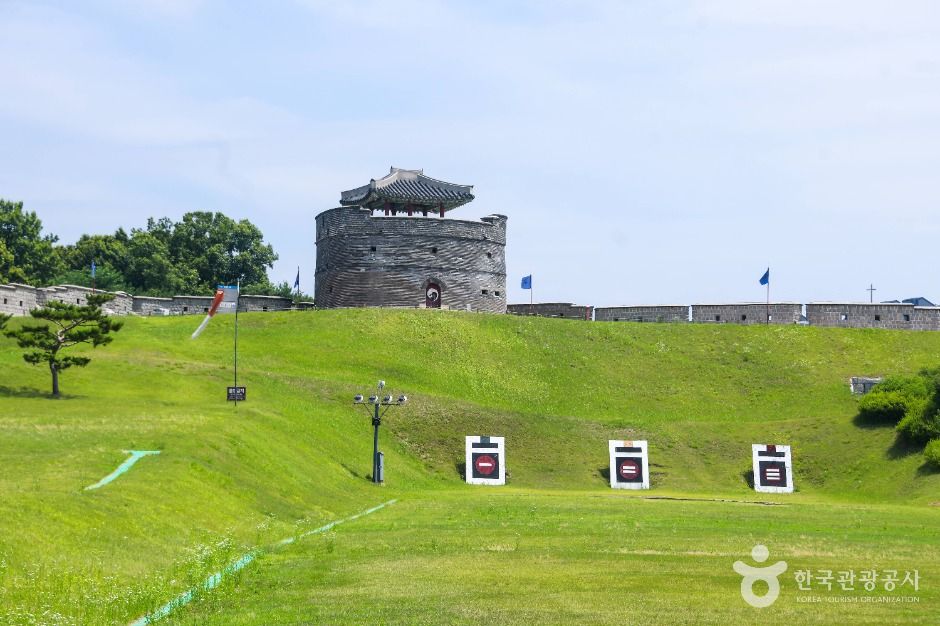
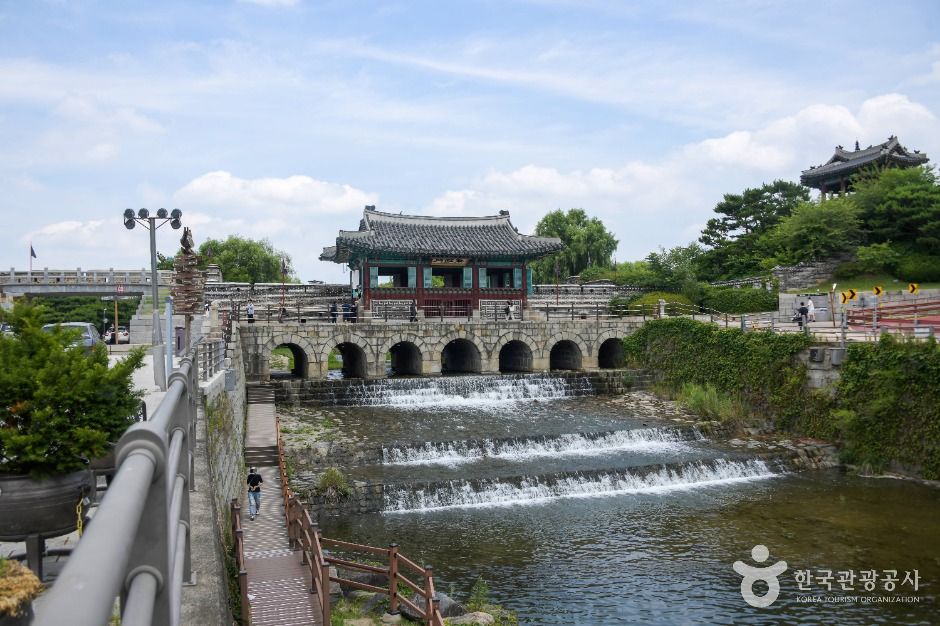
Suwon was one of four main regional government centers during the Joseon dynasty. Hwaseong Fortress, built to protect the city, was designated as a UNESCO World Cultural Heritage Site on December 12, 1997 for its historical value. The fortress offers various performances daily as well as the Suwon Hwaseong Cultural Festival every fall. The walls stretch for approximately 5.7 kilometers, with Paldalsan Mountain at the center. The fortress, constructed from 1794 to 1796, was built as a display of King Jeongjo’s filial piety towards his father and to build a new pioneer city with its own economic power.
– Address : Yeonghwa-dong, Jangan-gu, Suwon-si, Gyeonggi-do
※ Presentation Information
– Information and Guides
+82-31-290-3600
– Parking
Available
– Day Off
N/A (Open all year round)
– Operating Hours
Open 24 hr
◎ Nearby Tourism Infobox
⊙ Haengnidan Street (행리단길)
View detailed guide on Korea Trip Guide →
Haengnidan Street is a stretch of approximately 612 meters from Hwahongmun Gate of Hwaseong Fortress to Hwaseo Park. The name Haengnidan Street originates from Haenggung-dong (Haenggung referring to the king’s temporary palace) and Gyeongnidan Street, a popular area in Itaewon, Seoul. This vibrant district seamlessly blends tradition and modernity, featuring a variety of unique restaurants, stylish cafés, concept stores, and exhibition spaces. It has become one of Suwon’s most iconic attractions.
⊙ Hwaseomun Gate (화서문)
View detailed guide on Korea Trip Guide →
– Homepage
www.swcf.or.kr
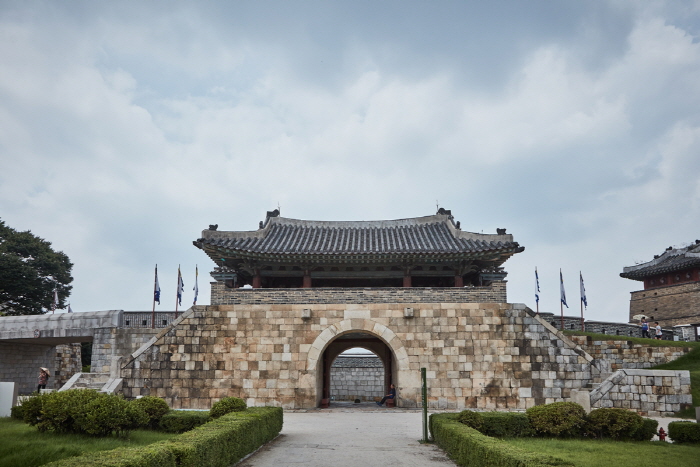
Hwaseomun Gate is the western gate of Hwaseong Fortress, a Treasure. Over the stone mujigae (rainbow) door is a single-story tower gate. Hwaseomun Gate’s ongseong (defensive gate) forms a crecent shape, with one side of the ongseong remaining open.
⊙ Mong Ted (몽테드)
View detailed guide on Korea Trip Guide →
– Homepage
https://www.instagram.com/__mongted
◎ Travel information to meet Hallyu’s charm – TV series “Lovely Runner”
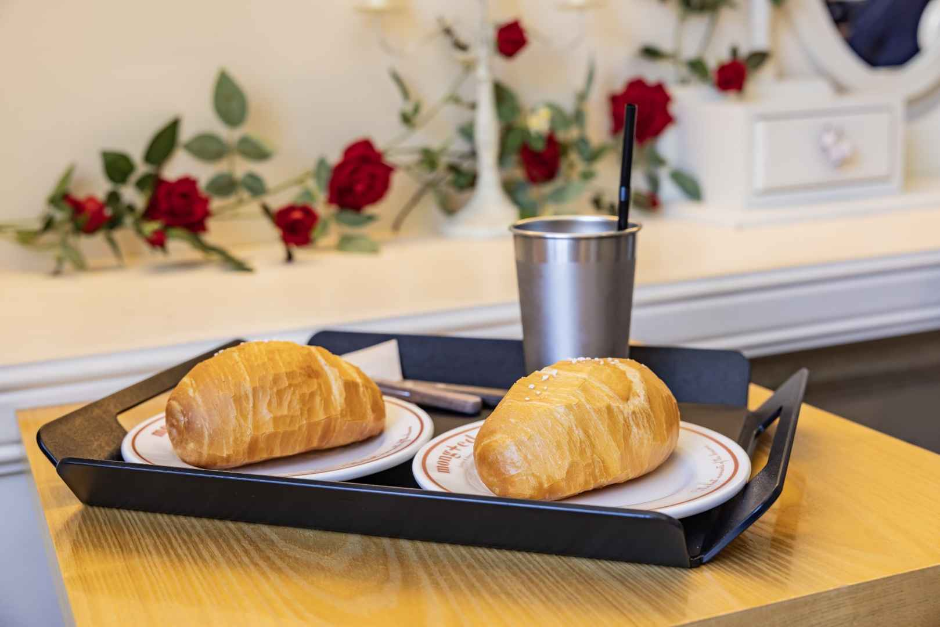
Café Mong Ted appears as Sol’s house in the drama, with the blue-gate house across the alley as Sun-jae’s residence. Take a stroll down the alley, perhaps with a yellow umbrella, to feel like the characters in “Lovely Runner.”
⊙ Yeonpo Galbi (연포갈비)
View detailed guide on Korea Trip Guide →
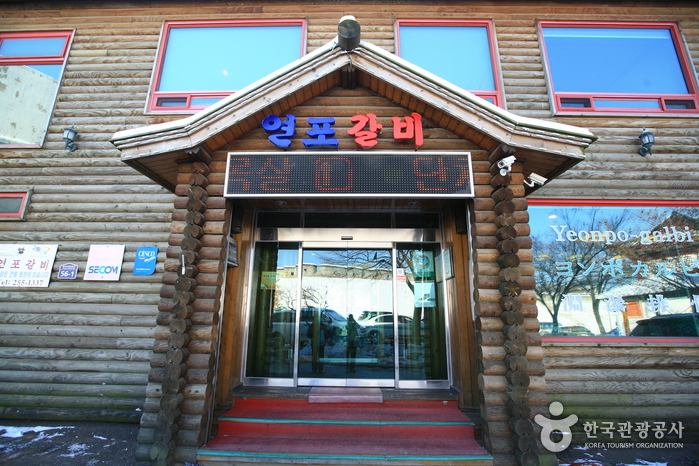
This restaurant occupies a remodeled public bath and inn, preserving the original chimney from its bathhouse days. Known for offering Suwon wanggalbi at relatively affordable prices, it also serves galbitang (galbi soup) exclusively during lunchtime on weekdays. Due to limited availability, galbitang often sells out quickly.
⊙ Haenggung-dong Mural Village (행궁동 벽화마을)
View detailed guide on Korea Trip Guide →
– Homepage
www.suwon.go.kr
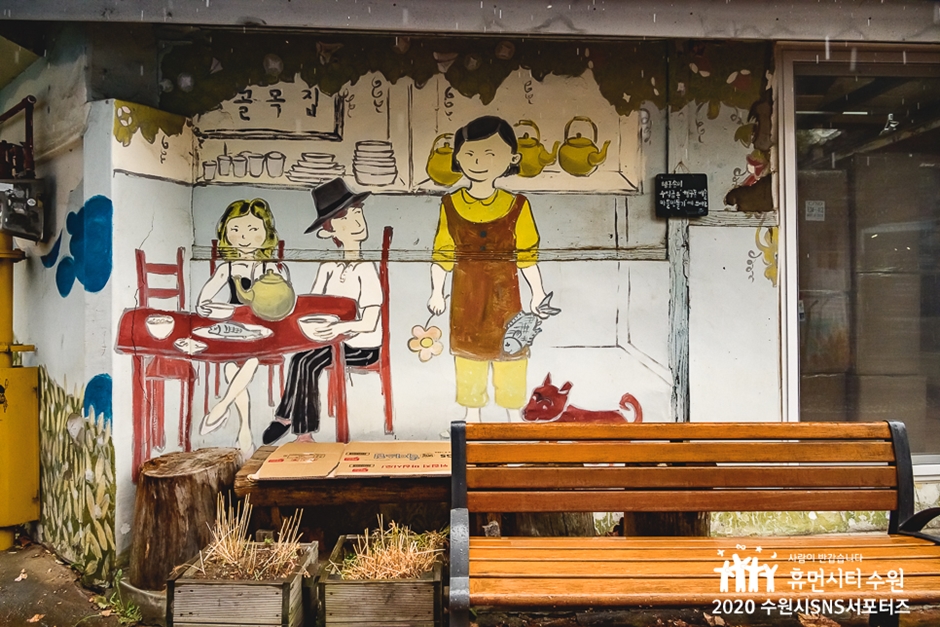
Suwon’s Haenggung-dong is the name for 12 neighborhoods, including Jangan-dong and Sinpung-dong, in the Hwaseong Fortress area. It was the most bustling place in Suwon from when the Hwaseong Fortress was built 220 years ago until just a few decades ago. However, with Hwaseong Fortress being designated as a UNESCO World Heritage Site, time seems to have stopped due to strict development regulations. In the meantime, residents, civic groups, and artists came together to paint murals in effort to make the area become more alive. Due to their efforts, the region has now emerged as a tourist attraction visited by as many people as Hwaseong Fortress.
The Haenggung-dong comprises various alleys connected depending on their characteristics, including the Mural Village, Workshop Street, Suwon Chicken Street, and Jidong Market. The Mural Village is divided into six alleyways by theme, including the Haengbokha (Happy) Road, Saranghada (Love) Road, Nuneuroganeun (to Snow) Road, Cheoeumachim (First Morning) Road, Romance Road, and Dwiroganeun (Backward) Road. A photo zone has been set up in front of the mural, and not only the mural but also the walls, roof, and fence are filled with various sculptures and paintings. Many pretty workshops and cafés nearby are also interesting to look around.
◎ Travel information to meet Hallyu’s charm – TV series “Lovely Runner”
Haenggung-dong Mural Village sets the scene where Sol and Sun-jae walked to school together. It is also where the memorable scene was filmed of Sol dashingly pushing a flustered Sun-jae against the wall. As you stroll along the low stone walls adorned with murals, it’s easy to imagine the couple’s school-day moments, adding a nostalgic charm to your walk.
⊙ Banghwasuryujeong Pavilion (방화수류정(동북각루))
View detailed guide on Korea Trip Guide →
– Homepage
www.suwon.go.kr
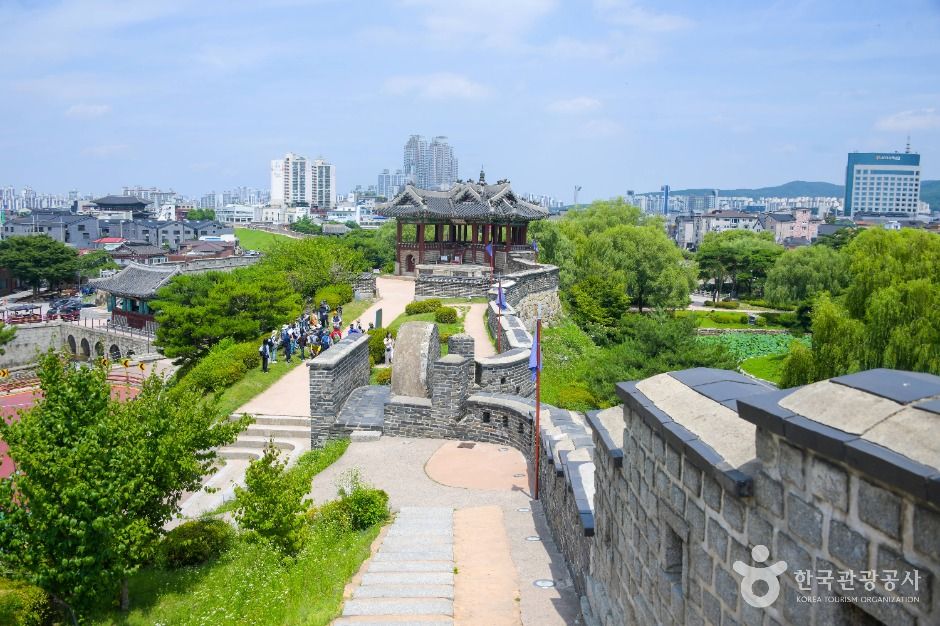
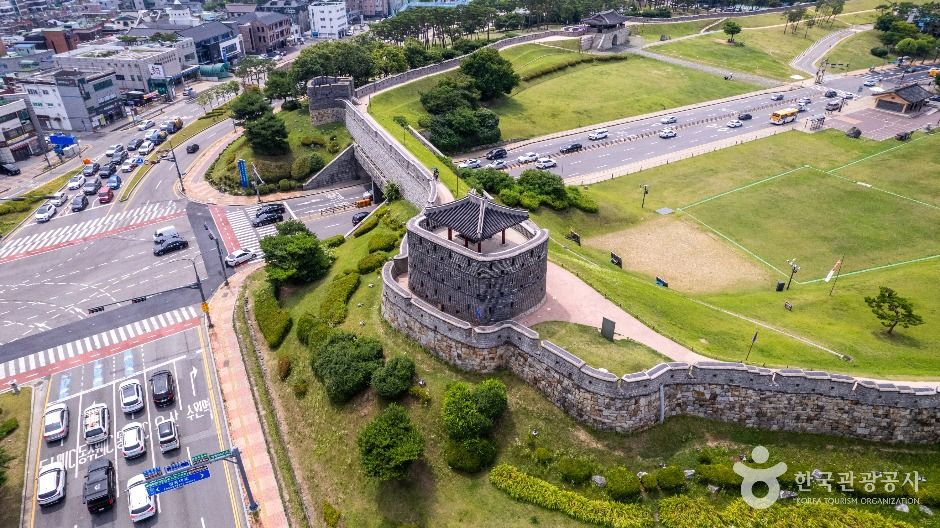
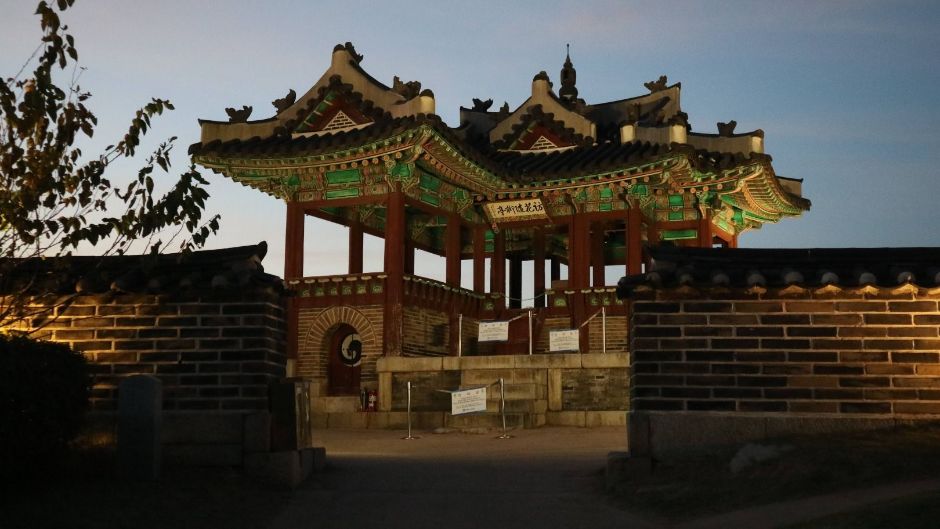
Banghwasuryujeong Pavilion, officially called Dongbukgangnu Pavilion, was built in 1794 during the construction of Suwon Hwaseong Fortress. It sits atop a hill east of Hwahongmun Gate and offers beautiful views of the surrounding scenery. For this reason, the pavilion received the nickname Banghwasuryujeong, meaning a pavilion where one can “find flowers and stroll among willow trees.” The pavilion was once damaged due to flooding and reconstructed in 1848, followed by continuous recovery and preservation efforts. In 2011, the pavilion was designated as Treasure No. 1709. Banghwasuryujeong Pavilion is evaluated as one of the most original architectures in Hwaseong for its unique composition and roof design that offer a different look depending on the viewer’s angle. Known to be the spot where King Jeongjo would stop by to rest on his way to Hwaseong Fortress, the pavilion offers a bird’s-eye-view of Yeonmudae Post to the east and Janganmun Gate to the west with Paldalsan Mountain in the background.
⊙ Suwon Museum of Art (수원시립미술관)
View detailed guide on Korea Trip Guide →

– Homepage
suma.suwon.go.kr
Suwon Museum of Art is a cultural and artistic space located in the plaza of Hwaseong Haenggung Palace in Suwon. The building, which embodies the harmony of modernity and nature, includes exhibition halls, a library, classrooms, and a cafeteria. It serves as a place where the spirit of Hwaseong meets contemporary art, offering high-quality exhibitions, immersive interactive displays, and unique showcases focusing on the Suwon region.
⊙ Temporary Palace at Hwaseong Fortress (Hwaseong Haenggung Palace) (화성행궁)
View detailed guide on Korea Trip Guide →
– Homepage
www.suwon.go.kr
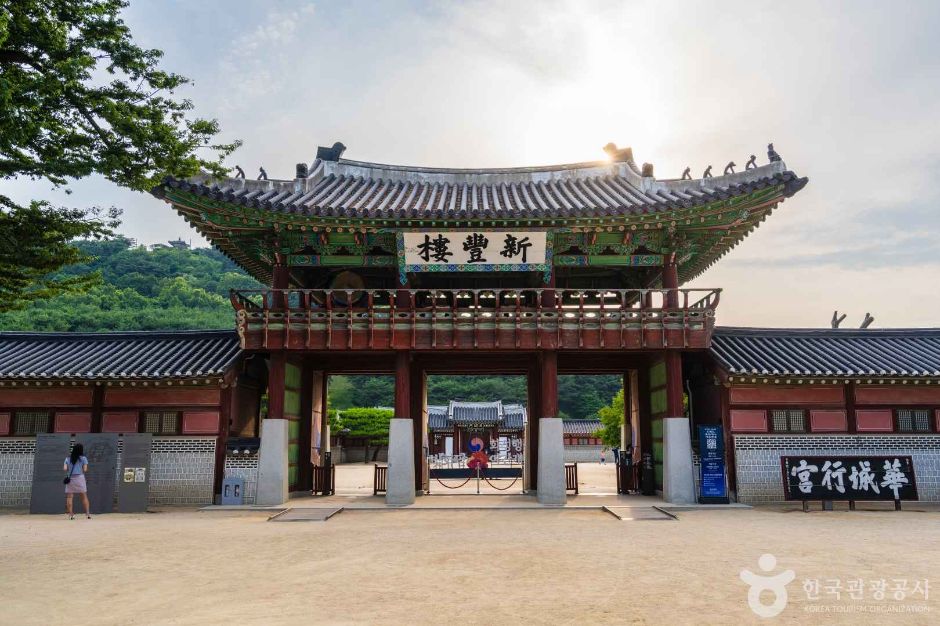
A haenggung is a temporary palace where the king and royal family retreated to during a war. Hwaseong Haenggung Palace is the largest one of these, used by the Joseon kings since the time of King Jeongjo (r. 1776-1800). In addition to being used as a shelter during war, King Jeongjo also stayed here during trips to worship at his father’s tomb. The palace was the location of a splendid feast held on the 60th birthday of his mother, Hyegyeonggung Hong, and many other events, including award certificates for successful candidates of special national exams. These days, the palace serves as a venue for many traditional cultural performances and activities.
⊙ Jeongjo Theme Performance Hall (정조테마공연장)
View detailed guide on Korea Trip Guide →
– Homepage
www.swcf.or.kr
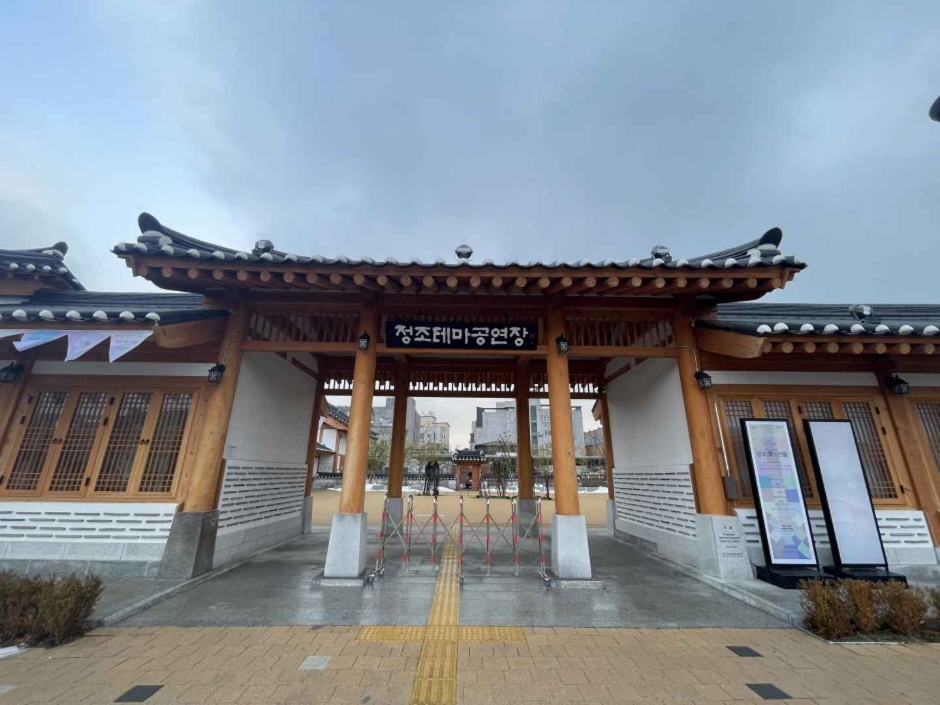
Jeongjo Theme Performance Hall is located in a hanok-style building just next to the Temporary Palace of Hwaseong Fortress in Suwon. The hall serves as venue to a range of performances, both traditional and modern, and is a great addition to family visits to the area.
⊙ Suwon Hwaseong Museum (수원화성박물관)
View detailed guide on Korea Trip Guide →
– Homepage
hsmuseum.suwon.go.kr
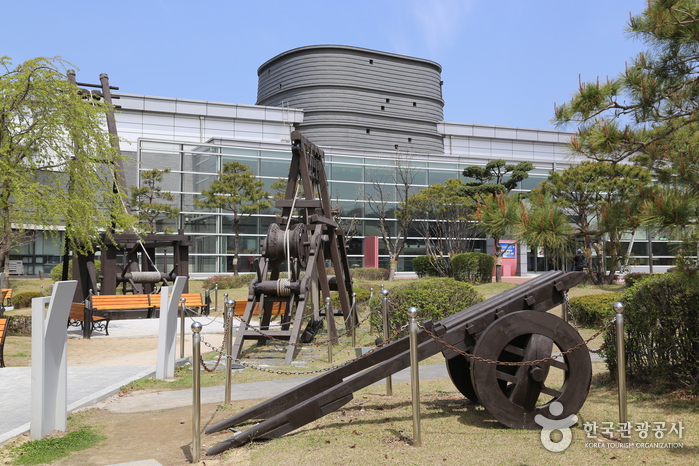
Suwon Hwaseong Museum presents the history and culture of Suwon Hwaseong Fortress, an important Korean cultural asset and UNESCO World Cultural Heritage Site. Visitors to the museum can learn about the formation of the fortress and the city of Suwon itself through detailed, systematically designed exhititions. The museum houses an extensive collection of items that showcase the construction and development of the fortress, as well as gatherings and events that took place within the fortress.
](https://ktrip.blogsailing.com/wp-content/uploads/2026/06/4021823_image2_1.jpg)
![Levi’S – Shinsegae Simon Premium Outlet Siheung Branch [Tax Refund Shop] (리바이스 신세계사이먼프리미엄아울렛 시흥점)](https://ktrip.blogsailing.com/wp-content/uploads/2026/06/4021386_image2_1.jpg)
](https://ktrip.blogsailing.com/wp-content/uploads/2026/06/4023655_image2_1.jpg)
](https://ktrip.blogsailing.com/wp-content/uploads/2026/06/4021271_image2_1.jpg)
7 Comments