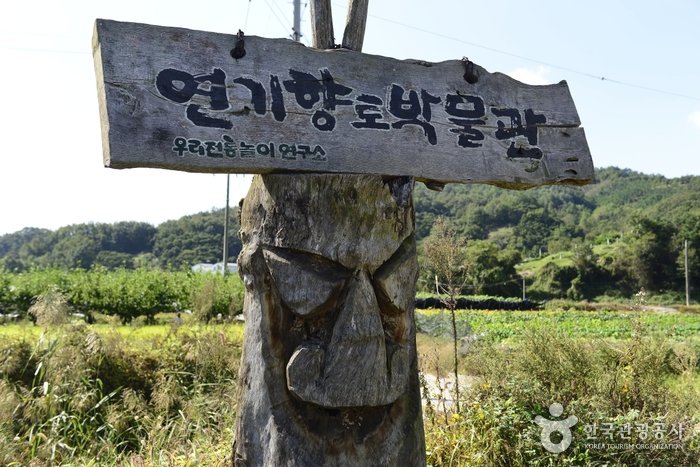
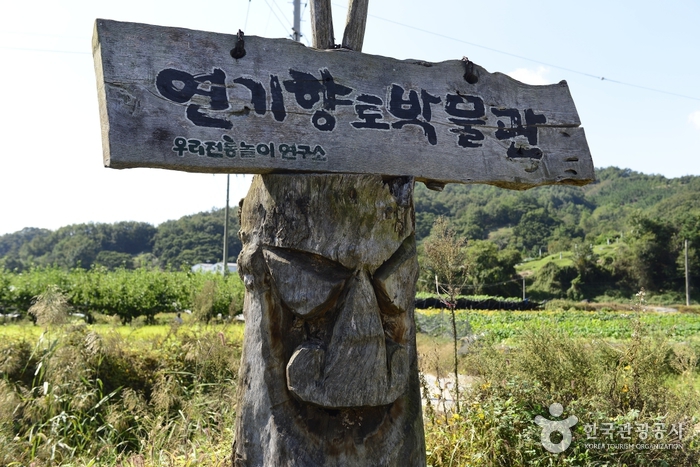
Yeongi Folk Museum (연기향토박물관)
Yeongi Folk Museum (연기향토박물관)
 – Homepage
cafe.daum.net/yghmuseum
(Korean only)
Opened in August 1966, the Yeongi Folk Museum showcases relics found in the old site of Sejong Special Self-Governing City. Over 1,000 relics, including Buddhist statues, weapons, pagodas, earthenware, porcelain, bronze ware, roof tiles, paintings, letters, houseware, kitchenware, farming tools, and others are arranged by era.
– Address : 34-4, Yangdae-gil, Yeonseo-myeon, , Sejong-si
※ Presentation Information
– Information and Guides
• 1330 Travel Hotline: +82-2-1330
(Korean, English, Japanese, Chinese)
• For more info: +82-44-862-7449
– Parking
Available
– Parking Fee
Free of charge
– Day Off
Seollal (Lunar New Year’s Day) & Chuseok (Korean Thanksgiving Day)
– Usage Fee
Individuals: Adults 3,000 won / Children 2,500 won
Groups: Adults 2,500 won / Children 2,000 won
* Group: 20 people or more
– Operating Hours
Summer: 09:00-18:00
Winter: 09:00-17:00
– Tour Duration
Approx. 1 hour
– Program Information
Traditional tea ceremony etiquette, making sotdae, hanji-handcraft (hand mirror), natural-dying (handkerchief), making injeolmi tteok (rice cake), etc.
– Collections Status
1,300 articles
(40 prehistory relics, 200 earthenwares, 30 Buddhist statues, 50 roof tiles, 500 celadon porcelain, 320 folk material, others)
– Info. Services for Koreans
Guided tour available.


◎ Nearby Tourism Infobox
⊙ Gobok Natural Park (고복자연공원)
View detailed guide on Korea Trip Guide →
– Homepage
www.sejong.go.kr
Gobok Natural Park spans an area of 1,840,000 square meters and nearby attractions include a forest, Yonggul Cave, Sinheungsa Temple, and an outdoor sculpture park on Obongsan Mountain. A 3.65-kilometer-long deck circles the reservoir. The neighboring village is home to orchards for growing grapes, peaches, and pears. The park has a large meeting square and the outdoor sculpture park features works by Ewha Woman’s University art professor Kang Tae-seong, attracting many visitors. The park is especially popular in summer when the outdoor swimming pool is open. In spring, people flock to Millakjeong Pavilion to view the cherry blossoms. There are many restaurants nearby specializing in galbi (ribs), Hanbang ori (duck with medicinal herbs), and megi maeuntang (spicy catfish stew), as well as cafes overlooking the natural scenery.