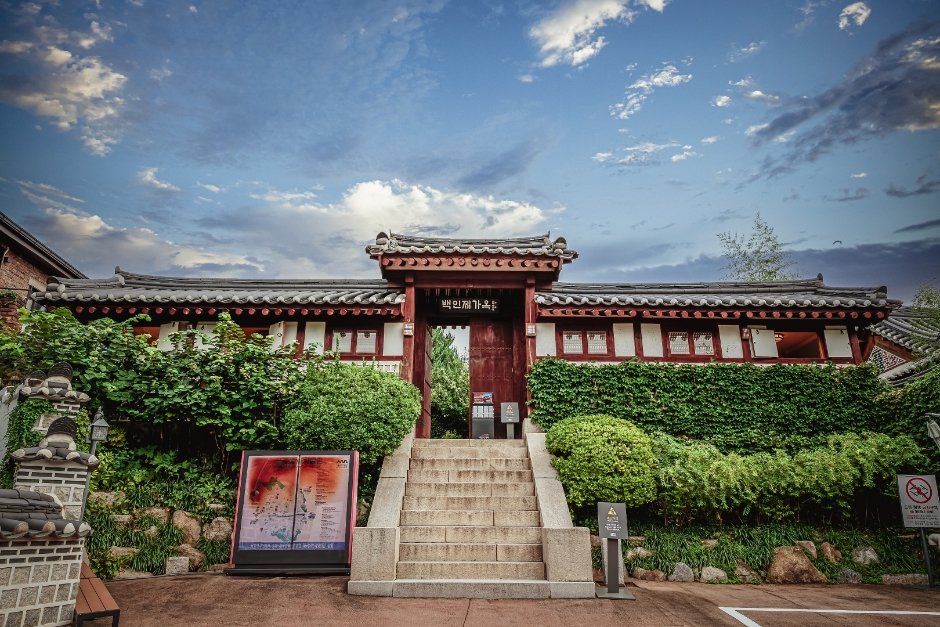
Baek In-je House (백인제가옥)
Baek In-je House (백인제가옥)
 – Homepage
www.museum.seoul.kr
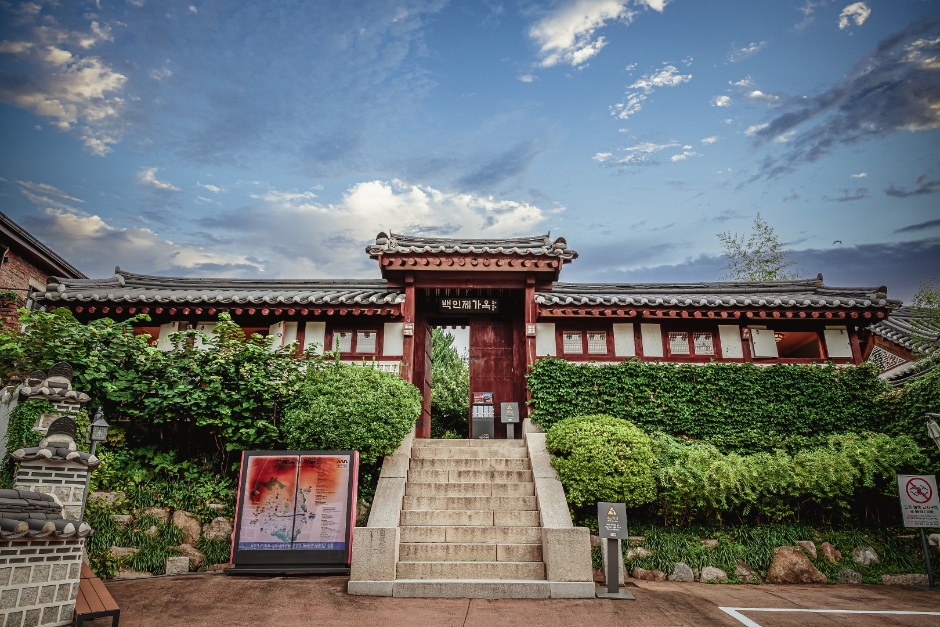
Baek In-je House, located in Bukchon Hanok Village, is a hanok built during the Japanese administration period that portrays modern hanok features. The structure consists of a main room offering a good view of the whole village, spacious bedrooms, a large garden, and annex buildings. As it maintains the beauty of a traditional hanok while incorporating the modern trend of its time, Baek In-je House is considered to be highly valuable in means of both architecture and history, representing the Bukchon Hanok Village together with Yun Bo-seon House.Baek In-je House was built from black pine, which was first introduced in Seoul during the Gyeongseong Expo in 1907, distinguishing itself from other upper-class houses of its time. Unlike other traditional hanok designs that separate the main building from the other rooms, Baek In-je House connects the two with a hallway, allowing convenient access between the two structures. The house also consists of a Japanese-style hallway and floor mat rooms, reflecting the interior trends of that period. Baek In-je House is also unique in that the main room is partially built as a two-story structure, a style that was never seen in any traditional hanok built during the Joseon period.
◎ Travel info featuring Korean Wave attractions – Drama
The place where major shareholder Jin Do-jun and Sunyang Group Chairman Jin Yang-cheol meet is Baek In-je House. Baek In-je House is a representative modern hanok with a commanding view over Bukchon. The sarangchae (men’s quarters), anchae (women’s quarters), garden, and byeoldangchae (separate annex) give a glimpse into the lifestyles of the upper class at the time. The room where Jin Yang-cheol and Jin Do-jun met is the sarangchae. Interior tours are available with guided tour reservations, so be sure to check ahead.
– Address : 16 Bukchon-ro 7-gil, Jongno-gu, Seoul
※ Presentation Information
– Capacity
100 people
– Information and Guides
+82-2-724-0200
– Parking
Not available
– Day Off
Mondays (open in the case of Monday being a public holiday), January 1
– Operating Hours
09:00-18:00 (Last entry 17:30) ※In the case of free viewing, only outside the facility (no entry inside the facility)


◎ Nearby Tourism Infobox
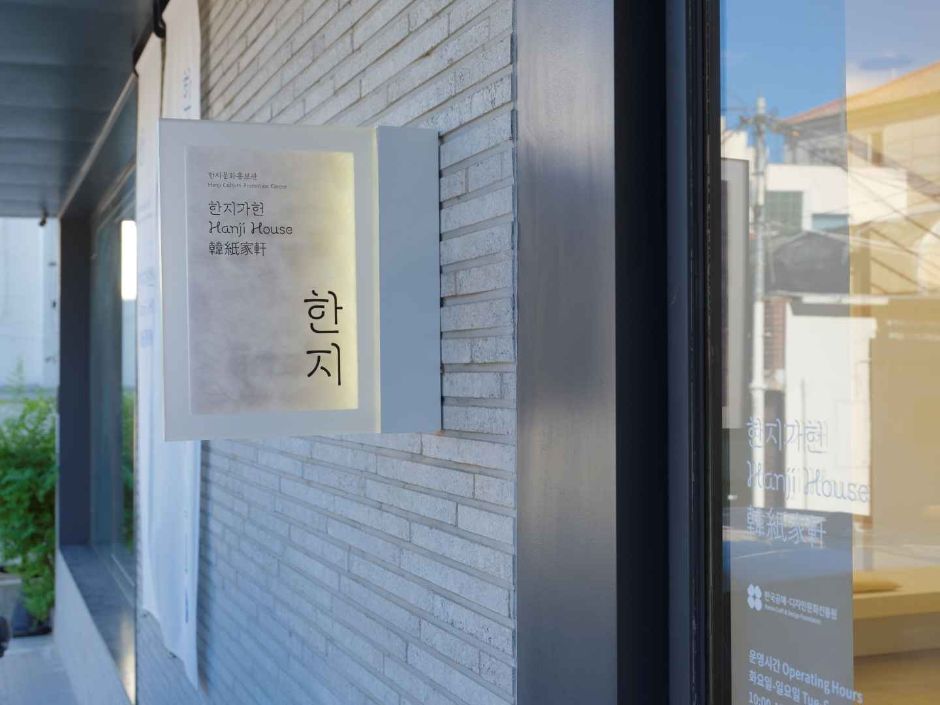
⊙ Hanji House (한지가헌)
View detailed guide on Korea Trip Guide →
– Homepage
www.kcdf.or.kr/hanji/
www.instagram.com/hanji.HOUSE
Hanji House was founded to pass on the cultural heritage of hanji, traditional Korean paper, as well as to promote its excellence and uses in everyday life. The center is operated by Korea Craft & Design Foundation, and offers a variety of programs that consist of exhibitions, hands-on activities, classes, and marketing hanji products. On the first floor is Hanji Showroom, where various exhibitions take place to showcase hanji of the past and the present. The basement floor comprises Hanji Open Archive, Hanji Print Studio, and Hanji Workroom, where most of the hands-on activities and classes are held. Hanji House also offers a docent program for exploring the whole area.
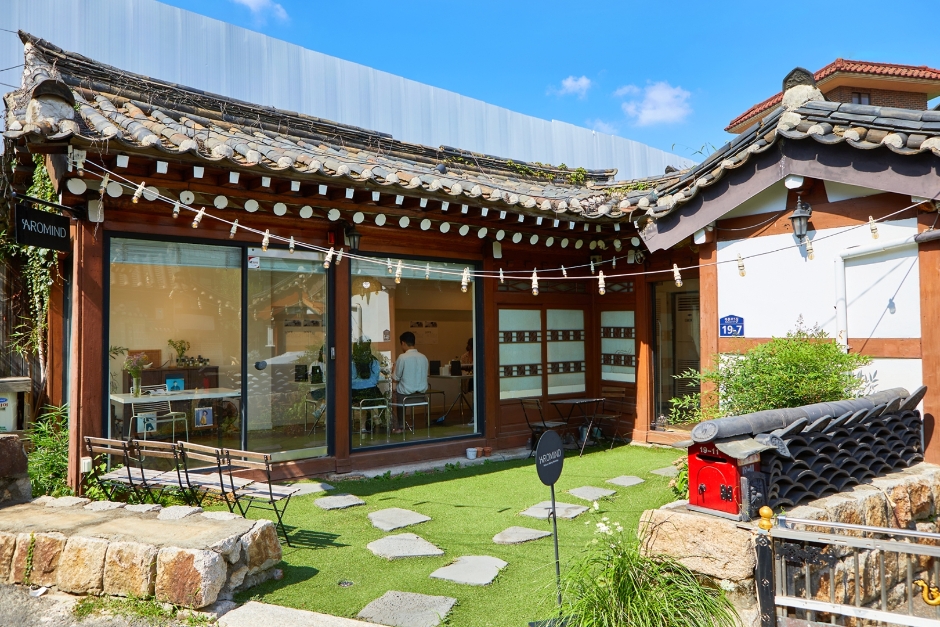
⊙ Aromind (아로마인드)
View detailed guide on Korea Trip Guide →
– Homepage
www.aromind.co.kr
Aromind is a perfume workshop that offers a perfume-making experience with a professional perfumer in a quiet hanok building. Visitors can create their own one-of-a-kind perfume by choosing three out of 30 different scent options that change on a seasonal basis. A perfume one-day class is held for one to eight people for one to one and a half hours. The fee for the experience includes a 50 ml product and a 10 ml sample. They also offer the class in Korean with English interpretation when there non-Korean speaking participants. Aromind is the perfect place to create your own scent to associate your memory of Korea.
⊙ Artee Riders Club (아띠인력거)
View detailed guide on Korea Trip Guide →
– Homepage
arteepedicab.com/
Artee Riders Club is the first company that offers rickshaw tours in the nation. Not only do you get to ride on the rickshaw to tour around popular attractions including Bukchon Village, Seochon Village, the rickshaw tour guides you to the smaller alleys as well. Travelers to Bukchon Village may have their belongings or luggage stored at the center, and individual’s insurance as well as a complimentary drink are offered.
⊙ Rakkojae Seoul Bukchon Hanok Hotel (락고재 서울 북촌 한옥호텔)
View detailed guide on Korea Trip Guide →
– Homepage
http://www.rakkojae.com
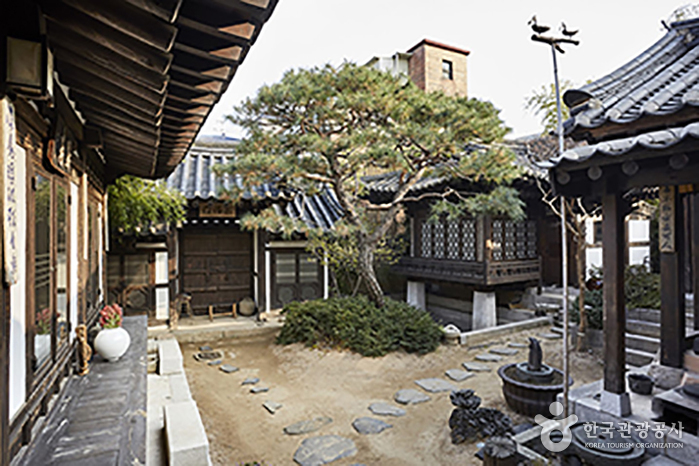
Rakgojae Bukchon Hanok Hotel in Jongru-gu, Seoul, is a traditional hanok compound with a 130-year history, renovated by master carpenter Jeong Yeong-jin. The elegant gate and stone walls, the traditional roof tiles, the jangdokdae jar store, the pavilions and ponds – not to mention the beautiful pine trees – express the archetypal beauty of hanok. Sitting on the daecheongmaru (wooden patio) with a breeze in the trees, guests will feel taken back in time. Guestrooms are clean and comfortable, and visitors can relax in a wood-fired red-clay sauna and a jade-covered ondol room,. Traditional culture programs are available.
⊙ Bukchon Son Mandu Bukchon Branch (북촌손만두 북촌점)
View detailed guide on Korea Trip Guide →
– Homepage
http://mandoo.so
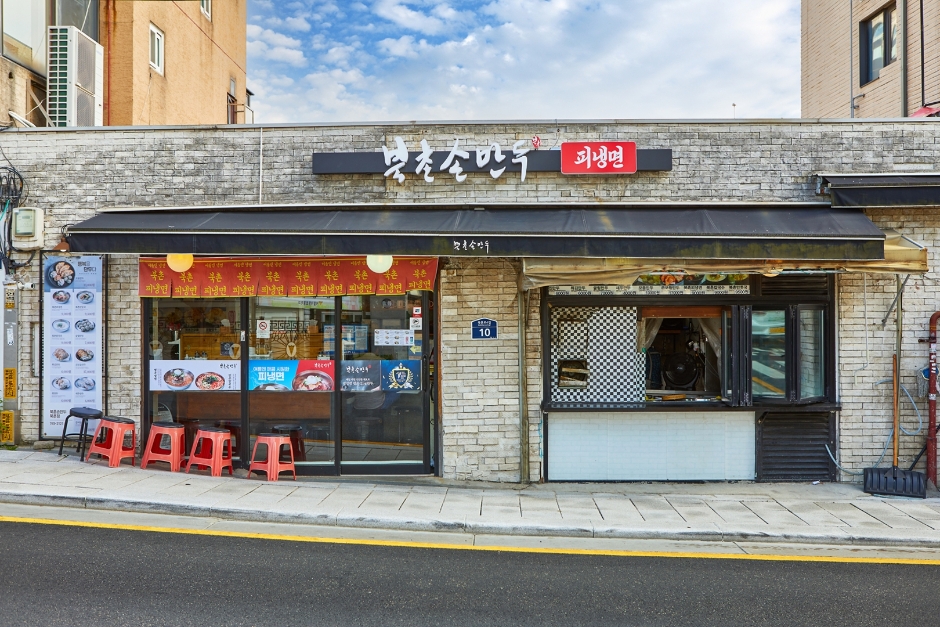
This third-generation family-owned handmade mandu restaurant has been in business since 1953. Its handmade mandu bears the tradition of nearly 70 years. This restaurant distinguishes itself above others with its unique expertise in the art of mandu-making and fresh ingredients, capturing deep flavors with care in each mandu. A full spread of mandu is available here, from steamed mandu to thin-skin mandu, deep-fried mandu, shrimp mandu, and galbi mandu, which can be ordered in individual pieces or as an assorted package. Mandu and noodles go perfectly together, and here, visitors can enjoy mandu with cold buckwheat noodles or noodle soup. The most recommended menu is the noodle soup, which serves thick, plump noodles in warm broth. But that does not mean that the cold buckwheat noodles are lacking: cold buckwheat noodles are served in a cool, red kimchi broth.
⊙ Dong-Lim Knot Museum (동림매듭박물관)
View detailed guide on Korea Trip Guide →
– Homepage
www.shimyoungmi.com
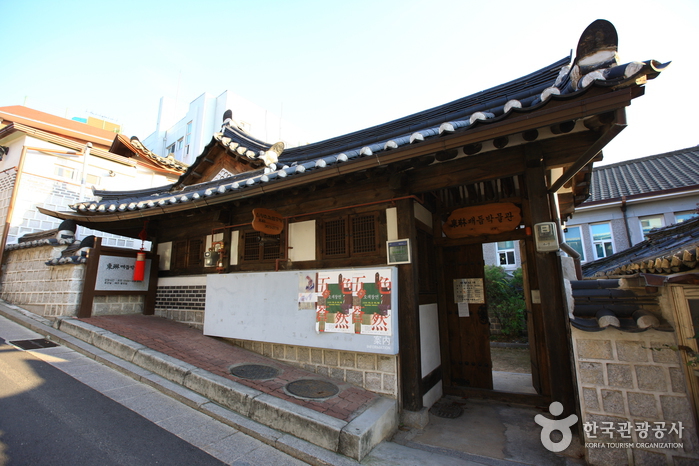
Opened in April 2004, Dong-Lim Knot Museum exhibits a variety of decorative traditional Korean maedeup (knots): norigae for hanbok, belts, pouches, as well as materials like thread, cord, and accessories. Housed in a hanok, a traditional Korean house, the gallery has a variety of exhibits, including old and new artwork, and creations that reflect modern trends.
⊙ World Jewellery Museum (세계장신구박물관)
View detailed guide on Korea Trip Guide →
– Homepage
www.wjm.or.kr
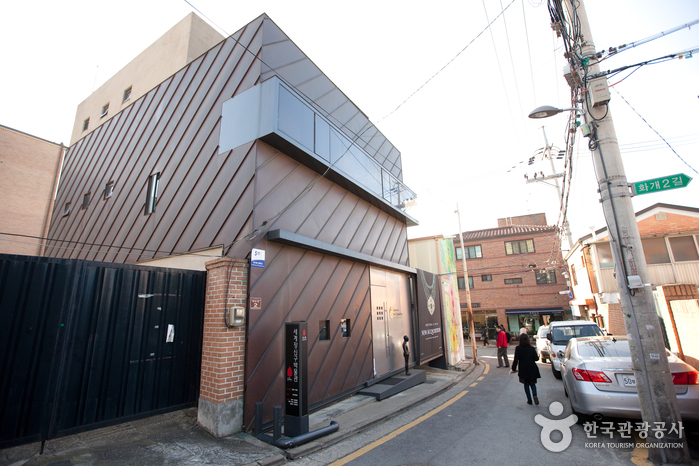
Situated in the gallery district in the back alley of Samcheong-dong (east of Gyeongbokgung Palace), the World Jewellery Museum houses 3,000 jewelry pieces from 60 countries, which have been collected over 30 years. Of which, 1,000 have been selected for display. The first floor contains an Amber Wall that goes back as far as 50 million years, the Golden Hall (El Dorado), the Necklace Hall, and the solemn Alter of the Cross. The second floor holds a mask wall, rings, beads and ivory as well as modern jewelry.
⊙ Eight Scenic Views of Bukchon (북촌 8경)
View detailed guide on Korea Trip Guide →
– Homepage
tour.jongno.go.kr
The Eight Scenic Views of Bukchon can be found at the Bukchon Hanok Village between Gyeongbokgung Palace and Changdeokgung Palace. Bukchon was historically a district where the aristocracy of Joseon had resided in, so it is still home to a large number of traditional dwellings, called hanok in Korean. The eight views are as follows: No. 1, view of Chengdeokgung Palace; No. 2, view of Wonseo-dong Handicraft Road; No. 3, view of the Gahoe-dong area; No. 4, view from the hill at Gahoe-dong (Bukchon Observatory); No. 5, the view of the road uphill at Gahoe-dong; No. 6, the view of the road downhill at Gahoe-dong; No. 7, the view at house number (beonji) 31, Gahoe-dong; No. 8, the view of the stone stairway at Samcheong-dong.
⊙ Bukchon Cultural Center (북촌문화센터)
View detailed guide on Korea Trip Guide →
– Homepage
hanok.seoul.go.kr
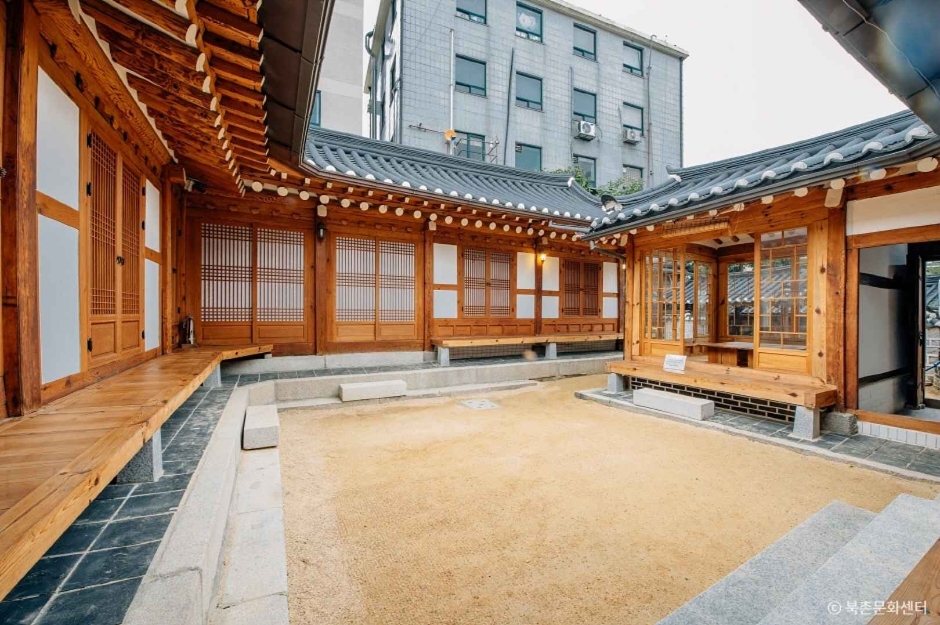
Bukchon Cultural Center, located in a hanok, was established to offer traditional cultural experience opportunities for visitors to the area. The programs include tea ceremony, handicraft, and gugak as well as a Public Relations Exhibition Hall introducing Bukchon culture and hanok. Also, the center houses a space and a pavilion for visitors to relax while traveling.
⊙ Bukchon Hanok Village (북촌한옥마을)
View detailed guide on Korea Trip Guide →
– Homepage
hanok.seoul.go.kr (Korean, English, Japanese, Chinese)
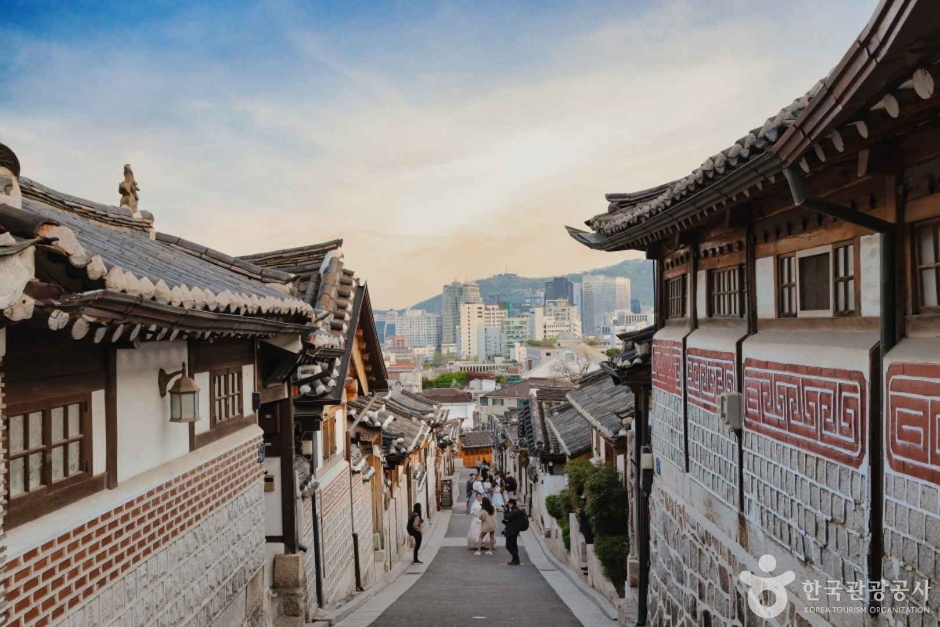
Surrounded by Gyeongbokgung Palace, Changdeokgung Palace and Jongmyo Shrine, Bukchon Hanok Village is home to hundreds of traditional houses, called hanok, that date back to the Joseon dynasty. The name Bukchon, which literally translates to “northern village,” came about as the neighborhood lies north of two significant Seoul landmarks, Cheonggyecheon Stream and Jongno. Today, many of these hanoks operate as cultural centers, guesthouses, restaurants and tea houses, providing visitors with an opportunity to experience, learn and immerse themselves in traditional Korean culture. As Bukchon Hanok Village is an actual neighborhood with people’s homes, visitors are advised to be respectful at all times while looking around.
![PungGyeong [Korea Quality] / 풍경 [한국관광 품질인증]](https://ktrip.blogsailing.com/wp-content/uploads/2026/03/2633780_image2_1.jpg)
![Stylenoriter – Hyundai Outlet Garden Five Branch [Tax Refund Shop] (스타일노리터 현대아울렛 가든파이브점)](https://ktrip.blogsailing.com/wp-content/uploads/2026/04/4018553_image2_1.jpg)
](https://ktrip.blogsailing.com/wp-content/uploads/2026/05/4045084_image2_1.jpg)
](https://ktrip.blogsailing.com/wp-content/uploads/2026/05/4043732_image2_1.jpg)
](https://ktrip.blogsailing.com/wp-content/uploads/2026/05/4017248_image2_1.jpg)
](https://ktrip.blogsailing.com/wp-content/uploads/2026/03/4017815_image2_1.jpg)
6 Comments