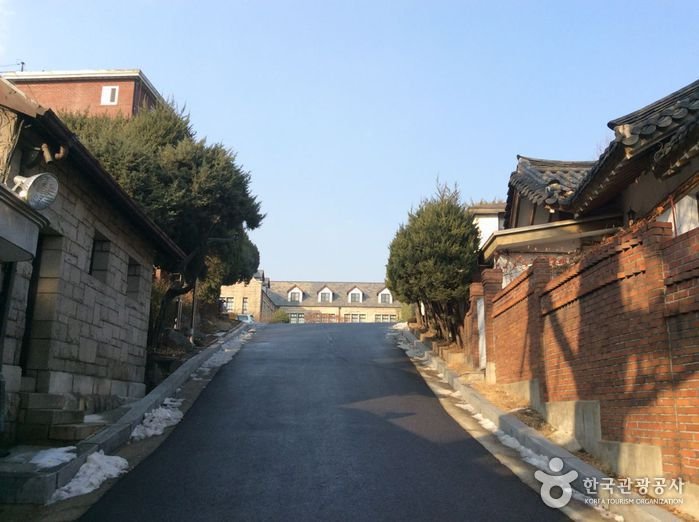
Choong Ang High School (중앙고등학교)
Choong Ang High School (중앙고등학교)
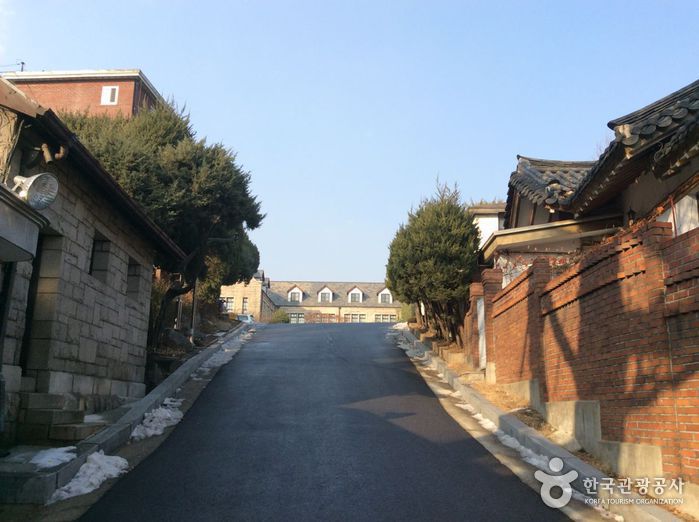 – Homepage
https://choongang.sen.hs.kr/
Choong Ang High School is located in Jong-ro near Samcheongdong-gil. It was built to educate the public at the beginning of the 20th century. The school’s main building was reconstructed in 1937 after the original two-story brick house was destroyed in 1934. The main building situated in front of the main gate is a two-story H-shaped granite stone building in Gothic style, with a four-story tower in the middle.
The school holds historical significance because it was designed by Park Dong Jin, one of Korea’s first modern architects and the designer of Korea University’s main building, library, and the Chosun Ilbo Newspaper Company building. The main building of Choong Ang High School is designated as Historic Site No. 281. Many national leaders were educated at the gothic building during the grim period when Korea was trying to escape Japanese colonial rule.
– Address : 164 Changdeokgung-gil, Jongno-gu, Seoul
※ Presentation Information
– Information and Guides
+82-2-742-1321
– Parking
Not available
◎ Nearby Tourism Infobox
⊙ Woo Joo Yon Clinic (우주연한의원)
View detailed guide on Korea Trip Guide →
Woojooyon Clinic takes an integrative approach considering the patient’s overall health. Rather than merely treating the affected area, we listen to the patient’s story, understand their daily life, and focus on identifying and correcting the root causes of imbalances in the body. Our goal is to pursue true healing and happiness by treating with a delicate touch that connects with the patient’s soul. We aim to restore the body to its original state, ensuring a holistic examination of both body and mind, as well as habits and personality. Woojooyon Clinic is committed to helping patients regain a healthy life by applying the wisdom of traditional Korean medicine. We value our relationships with patients and strive to always do our best.
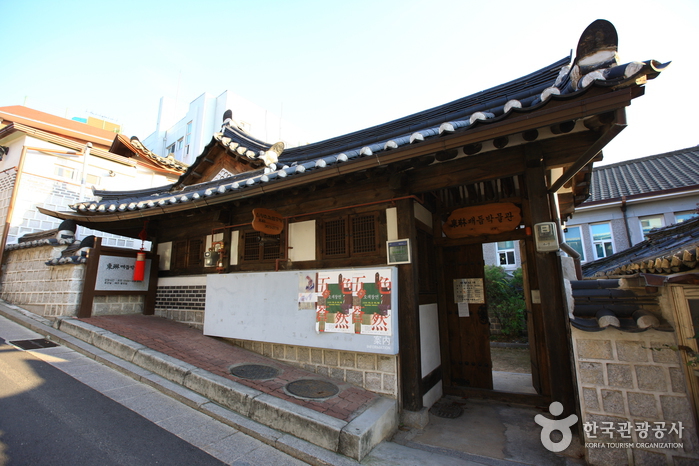
⊙ Dong-Lim Knot Museum (동림매듭박물관)
View detailed guide on Korea Trip Guide →
– Homepage
www.shimyoungmi.com
Opened in April 2004, Dong-Lim Knot Museum exhibits a variety of decorative traditional Korean maedeup (knots): norigae for hanbok, belts, pouches, as well as materials like thread, cord, and accessories. Housed in a hanok, a traditional Korean house, the gallery has a variety of exhibits, including old and new artwork, and creations that reflect modern trends.
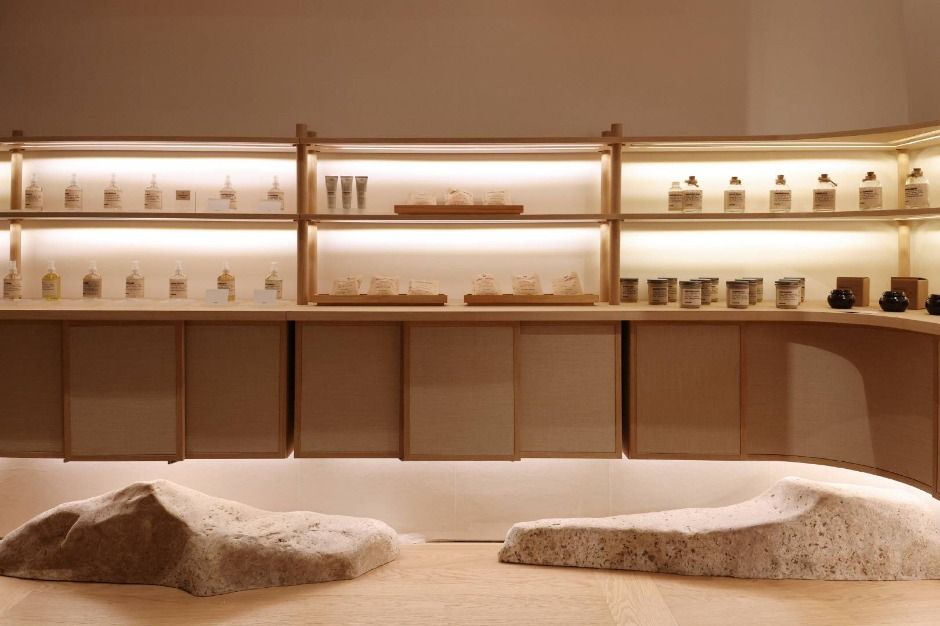
⊙ GRANDHAND. Gahoe (그랑핸드 가회점)
View detailed guide on Korea Trip Guide →
– Homepage
granhand.com
Launched in 2014 at a small hanok in Bukchon Hanok Village, this Korean perfume brand now has nine stores around Seoul. With no advertisements or online sales, GRANDHAND has preserved its roots for years. GRANDHAND. Gahoe located amidst the beautiful surroundings of Bukchon Hanok Village and various art museums has customers of all ages and nationalities.
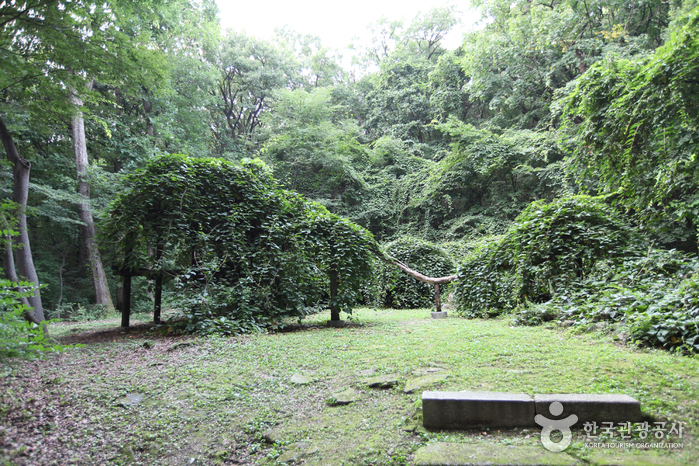
⊙ Daraenamu Tree in Changdeokgung Palace (창덕궁 다래나무)
View detailed guide on Korea Trip Guide →
– Homepage
www.cdg.go.kr (Korean, English)
www.cha.go.kr (Korean, English, Japanese, Chinese)
Daraenamu Tree in Changdeokgung Palace is estimated to be 600 years old, meaning it had likely been planted before the palace was built. The tree stands 19m in x_height, and has six separate trunks sprawling in all directions. It is the biggest and the oldest in Korea. It is designated and protected as a National Natural Monument.
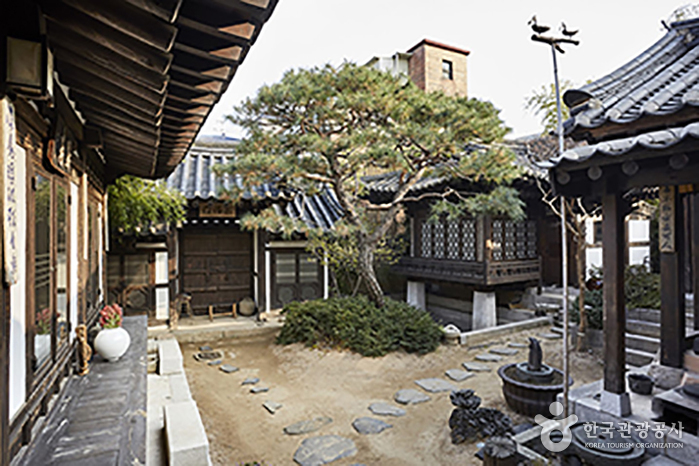
⊙ Rakkojae Seoul Bukchon Hanok Hotel (락고재 서울 북촌 한옥호텔)
View detailed guide on Korea Trip Guide →
– Homepage
http://www.rakkojae.com
Rakgojae Bukchon Hanok Hotel in Jongru-gu, Seoul, is a traditional hanok compound with a 130-year history, renovated by master carpenter Jeong Yeong-jin. The elegant gate and stone walls, the traditional roof tiles, the jangdokdae jar store, the pavilions and ponds – not to mention the beautiful pine trees – express the archetypal beauty of hanok. Sitting on the daecheongmaru (wooden patio) with a breeze in the trees, guests will feel taken back in time. Guestrooms are clean and comfortable, and visitors can relax in a wood-fired red-clay sauna and a jade-covered ondol room,. Traditional culture programs are available.
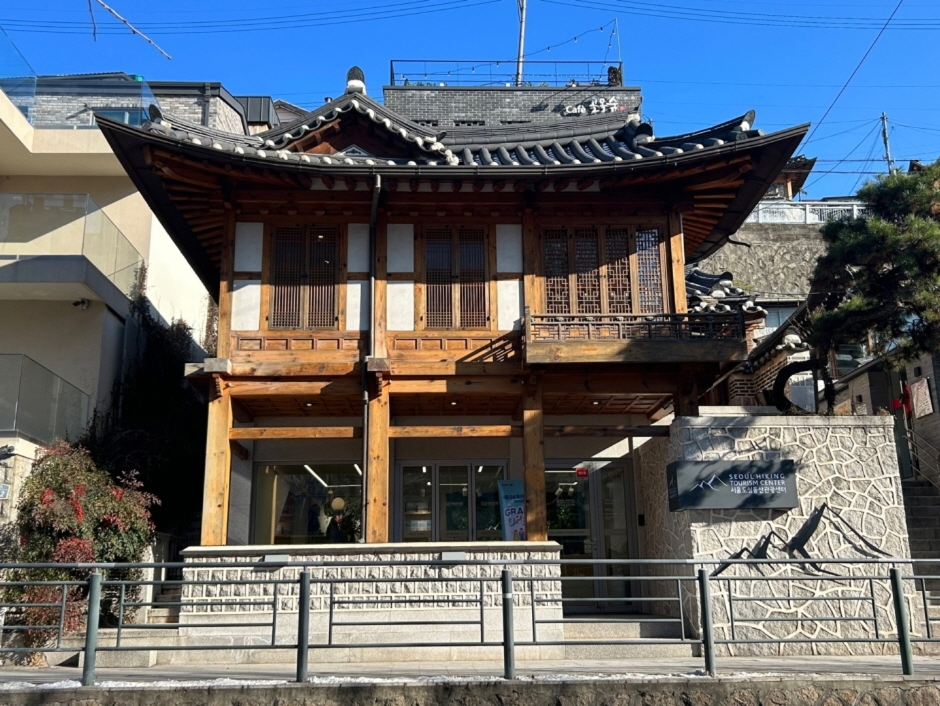
⊙ Seoul Hiking Tourism Center – Bugaksan Branch (서울도심등산관광센터(북악산))
View detailed guide on Korea Trip Guide →
– Homepage
www.instagram.com/seoulhikingtourism_official
The Bugaksan branch of Seoul Hiking Tourism Center is located on Samcheong-dong Culture Street and provides various services to hikers. It provides hiking course guidance and information (available in Korean, English, Chinese, and Japanese) about the mountains of Seoul, including Bukhansan, Bugaksan, and Inwangsan Mountains, as well as promotional materials such as Seoul hiking tourism guidebooks and maps. Also, it operates hiking tour programs with various themes every week for foreigners and offers hiking gear rental services such as hiking boots, hiking attire, trekking poles, gloves, and crampons for foreigners. (Koreans accompanied by foreigners can also rent the gear.) In addition, there is a storage locker and lounge for visitors, so they can pack up and rest before hiking.
⊙ Samcheong-dong Street (삼청동길)
View detailed guide on Korea Trip Guide →
– Homepage
www.visitseoul.net
It is said that Samcheong-dong was named from the story about the three “cheong” (Chinese character meaning clean) of the area, namely the mountain, water, and people. Another theory is that the origin of the region’s name came from Samcheongjeon Hall where three tablets called “Taecheong,” “Sangcheong,” and “Okcheong,” were set up based on Taoism. Samcheong-dong Street features a mixture of old scenes of hanok buildings with traditional beauty and modern scenes of galleries and cafés, creating a unique atmosphere. Visitors can feel the abundant cultural mood at every corner of the street through the art galleries, museums, antique shops, and quiet pathways.
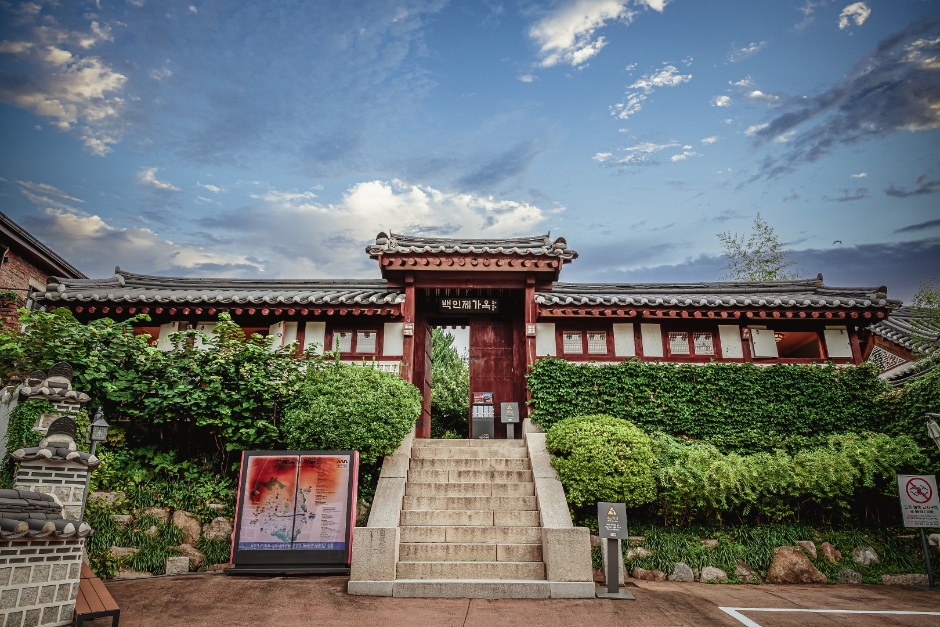
⊙ Baek In-je House (백인제가옥)
View detailed guide on Korea Trip Guide →
– Homepage
www.museum.seoul.kr
Baek In-je House, located in Bukchon Hanok Village, is a hanok built during the Japanese administration period that portrays modern hanok features. The structure consists of a main room offering a good view of the whole village, spacious bedrooms, a large garden, and annex buildings. As it maintains the beauty of a traditional hanok while incorporating the modern trend of its time, Baek In-je House is considered to be highly valuable in means of both architecture and history, representing the Bukchon Hanok Village together with Yun Bo-seon House.
Baek In-je House was built from black pine, which was first introduced in Seoul during the Gyeongseong Expo in 1907, distinguishing itself from other upper-class houses of its time. Unlike other traditional hanok designs that separate the main building from the other rooms, Baek In-je House connects the two with a hallway, allowing convenient access between the two structures. The house also consists of a Japanese-style hallway and floor mat rooms, reflecting the interior trends of that period. Baek In-je House is also unique in that the main room is partially built as a two-story structure, a style that was never seen in any traditional hanok built during the Joseon period.
⊙ Owl Museum (부엉이박물관)
View detailed guide on Korea Trip Guide →
– Homepage
www.owlmuseum.co.kr
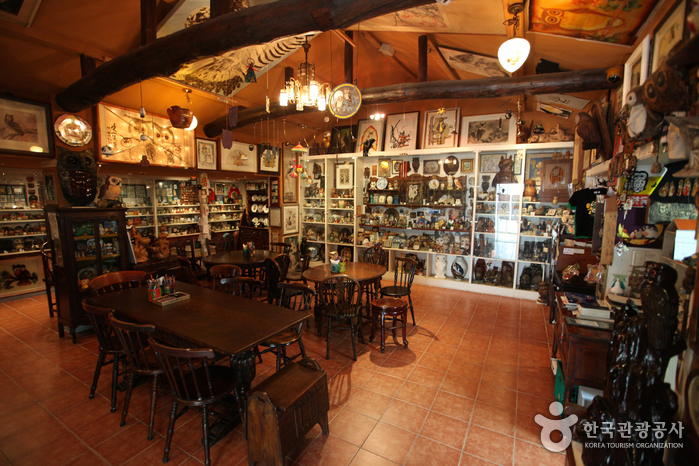
The Owl Museum is filled with over 2,000 pieces of owl-themed arts and crafts collected from all over the world by the owner. Renovated from a house, the museum has a feel of an antique café as the owner offers a cup of coffee or tea to visitors. Located near the city, those interested in owls should stop for a view and a drink. Various stories of how the collection was gathered as well as information on owls are also interesting.
⊙ Jongno Cheonggye Special Tourist Zone (종로 청계 관광특구)
View detailed guide on Korea Trip Guide →
– Homepage
tour.jongno.go.kr
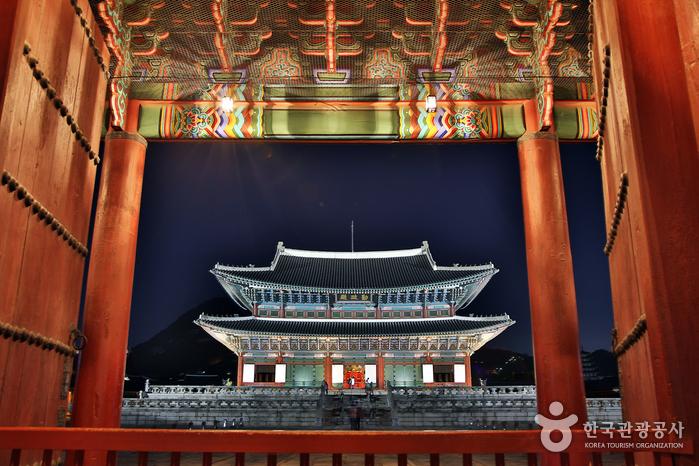
Jongno Cheonggye Special Tourist Zone stretches from Seorin-dong to Changsin-dong between Cheonggyecheon Stream and Jong-ro. It includes Youth Street, Gwangjang Market, Sewoon Electronics Department Store, lighting stores, pharmacy & medical device stores, badge stores, Stamp Street, Stationery · Toy Market, Aquarium Street, Shoes Market, and other markets totalling to approximately 14,000 shops. Nearby attractions include modern high-story buildings as well as Gyeongbokgung, Changdeokgung, Changgyeonggung, Deoksugung, and Unhyeongung Palaces, Jongmyo Shrine, and Insa-dong, merging traditions, modernism, culture, and markets alike.
Thought to be at the heart of Seoul, Cheonggyecheon Stream is located in the dense cultural area of Seoul where various press networks, organizations, bookstores and other major corporations are situated. Walking along Cheonggyecheon Stream is a famous activity for tourists. Also, the area is the venue for the Seoul Lantern Festival every winter. Keeping its traditional scene including narrow alleys, old-fashioned hanok buildings and various stores still fully intact, the tourist zone has enough fun places for sightseeing as well as tasty restaurants in every corner for a more enjoyable visit.
](https://ktrip.blogsailing.com/wp-content/uploads/2026/05/4043733_image2_1.jpg)
](https://ktrip.blogsailing.com/wp-content/uploads/2026/05/4028602_image2_1.jpg)
![8 Seconds – New Balance Times Stream Branch [Tax Refund Shop] (에잇세컨즈 타임스트림점)](https://ktrip.blogsailing.com/wp-content/uploads/2026/04/4024511_image2_1.jpg)
](https://ktrip.blogsailing.com/wp-content/uploads/2026/04/4043315_image2_1.jpg)
5 Comments