Daegu Modern History Museum (대구근대역사관)
Daegu Modern History Museum (대구근대역사관)
– Homepage
artcenter.daegu.go.kr
Located in Pojeong-dong, Jung-gu, Daegu, the Daegu Modern History Museum was officially opened on January 24, 2011. The museum is housed in a building that is rich in history. First built by Japan in 1932 as a bank, the building was once a symbol of repression and exploitation during the Japanese colonial rule. Today, the building stands proudly as an educational site and bears the title of ‘Cultural Property No. 49’ in recognition of its historical and cultural significance.
The two-story museum (1,971 square meters) houses a permanent exhibition (1F), featured exhibition (2F), and a hands-on exhibition room and classroom for diverse cultural activities and lectures. The history exhibition features the lifestyle of Daegu citizens, local customs, and education of the late 19th century and the early 20th century.
– Address : 67 Gyeongsanggamyeong-gil, Jung-gu, Daegu
※ Presentation Information
– Capacity
50 people
– Information and Guides
+82-53-430-7910
– Parking
Not available
– Day Off
Mondays, Janualry 1, Seollal (Lunar New Year’s Day) & Chuseok (Korean Thanksgiving Day) holidays, days determined by the Director of the museum
– Usage Fee
Free
– Operating Hours
09:00-18:00
* Last admission is 30 minutes before closing.
– Scale
1971 ㎡
– Reservations
Via phone
* Inquiry: +82-53-606-6430
– General Overview
Cultural Lecture Room
Inquiries: +82-53-606-6431


◎ Nearby Tourism Infobox
⊙ Daegu Modern History Streets (Tour of Modern Streets) (대구 근대골목(근대로의 여행))
View detailed guide on Korea Trip Guide →
– Homepage
www.jung.daegu.kr (Korean, English, Japanese, Chinese)
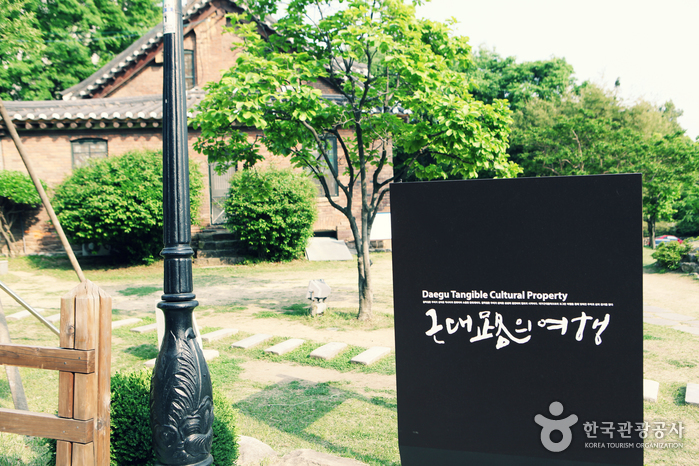
Daegu Modern History Streets is an experiential tour that brings the participants across Daegu’s alleyways and living history. During the Korean War, Daegu was much less damaged than other regions. Because of that, the city retains the changes in lifestyles before and after the war relatively well.
There are 13 courses in total, run by regional self-governance groups in Daegu, defined according to different themes and areas. The most popular among them is Course 2, the Modern Cultural Street, which takes visitors on a tour of major sites associated with Daegu’s modernity. Follow the retro aesthetics and the history of Daegu and Korea along places like Kyesan Catholic Church, Jeil Church, old houses, and the former Chinese Elementary School.
Note that multilingual tours are offered to international visitors in English, Japanese, and Chinese, in regular tours (14:00 every Saturday) and on-demand tours (available for groups of more than 5). Reservations are offered on the official website.
⊙ Daegu Dongseong-ro Street (대구 동성로거리)
View detailed guide on Korea Trip Guide →
– Homepage
tour.daegu.go.kr
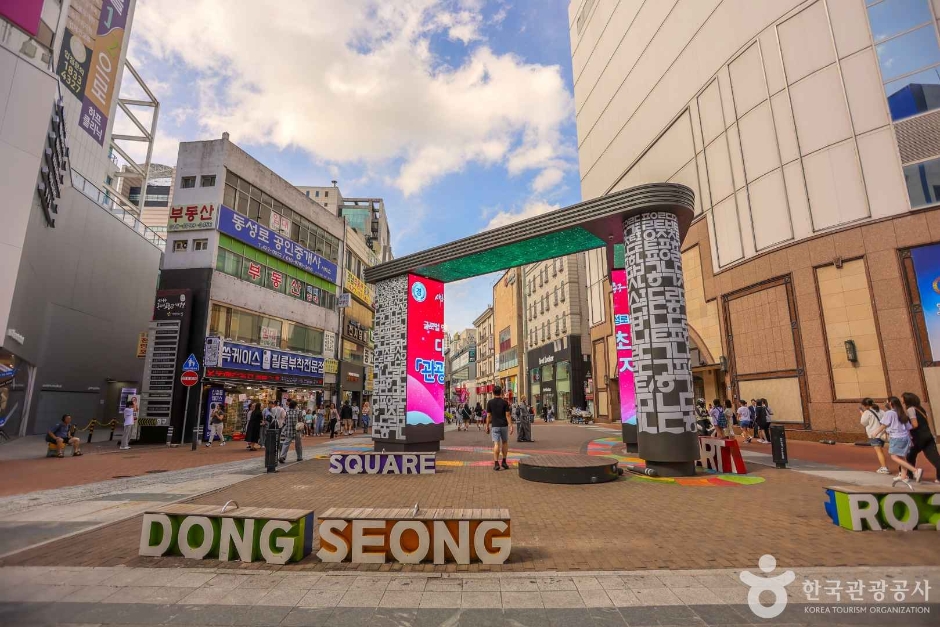
Dongseong-ro Street, named for its location in relation to the old Daegueupseong Walled Town’s wall, is the epicenter of youth culture in Daegu. It is the central business district, stretching 900 meters from Daegu Station Intersection to Art Square. In addition to the many name brand shops located here, the street includes performance stages and event squares, creating a lively environment. The street is divided into various sections, making it easy for first-time visitors to find their way around.
⊙ Hyangchon Cultural Center (향촌문화관)
View detailed guide on Korea Trip Guide →
– Homepage
hyangchon.jung.daegu.kr
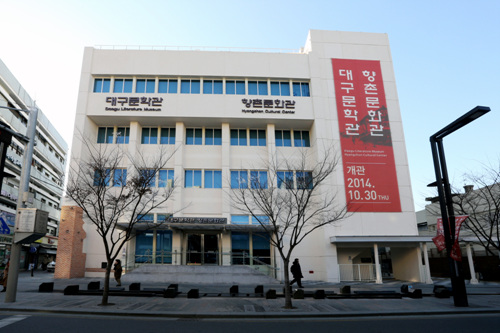
Hyangchon Cultural Center opened on October 30, 2014 in what was previously the Daegu branch of Commercial Bank, and was founded to promote the revitalization of the local economy. During the refugee period in the 1950s, Hyangchon-dong served as a hometown to many cultural artists. The cultural center replicated the old looks of Hyangchon-dong, making the cultural space even more special. Moreover, in the basement of the building, is the original location and still running “Nokhyang,” the oldest classical music hall in the nation, which opened in 1946.
⊙ Daegu Korean Chinese Association (대구화교협회)
View detailed guide on Korea Trip Guide →
– Homepage
www.jung.daegu.kr
Daegu Korean Chinese Association building is a red brick two-story Western-style house built in 1929. Seo Byeong-guk, a rich man in Daegu, entrusted the design and construction to Mo Mungeum, a Chinese architect. It is a flat rectangular structure, and the protruding granite porch balances left and right symmetry. There is a theory that the bricks were brought from Pyeongyang and the woods from Geumgangsan Mountain. It was also used as an HID (Headquarters of Intelligence Detachment) building. There is one building, a playground, a statue of Chiang Kai-shek, and a mural of a Chinese figure painted at the entrance. It is a representative modern building in the Daegu area that boasts a beautiful appearance and is currently used as the office of the Daegu Korean Chinese Association. It was designated as a National Registered Cultural Heritage on June 19, 2006, as it shows the style of modern architecture in the 1930s, not many examples of which are left. This is the last stop of Daegu Modern Alley Tour Course 2.
⊙ Petite Joongang Family Museum (작은 중앙가족박물관(한방개인박물관))
View detailed guide on Korea Trip Guide →
– Homepage
jdailyhealth.modoo.at
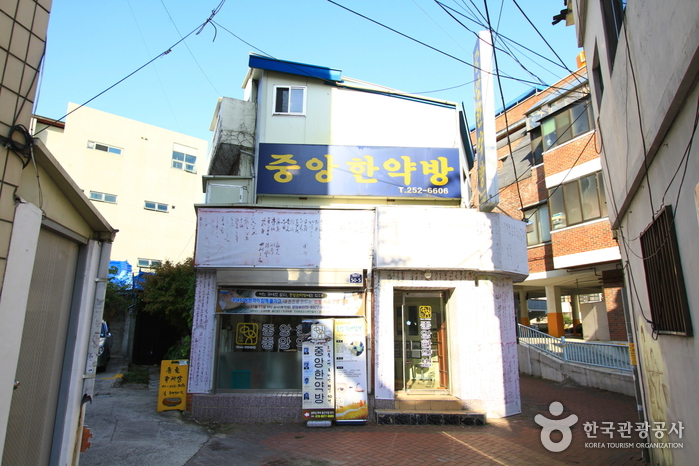
Petite Joongang Family Museum is a family-owned museum that showcases the antiquities of Oriental medicine, as practiced by a local family for three generations over 90 years in the city of Daegu, a city known for its 350-year-old medicinal herb market. The tools used by the family including scales, medicine bowls, prescriptions and manuscripts of traditional medicine tell the history of Oriental medicine in Korea as well as the family’s dedication to treatment using the traditional herbal medicine practice. The museum serves its visitors with healthy Oriental medicine tea, while the living family members offer free medical consultation.
⊙ Daegu Yangnyeongsi Museum of Oriental Medicine (대구약령시 한의약박물관)
View detailed guide on Korea Trip Guide →
– Homepage
dgom.daegu.go.kr
Yangnyeongsi Museum of Oriental Medicine continues to provide an opportunity to experience the 350-year-old traditions of Oriental medicine and medicine markets through multiple exhibitions and various hands-on experience programs. The museum provides graphics and animation shows in four languages as well as approximately 300 items on display. The first floor also houses the nation’s only wholesale market of traditional medicinal herbs.
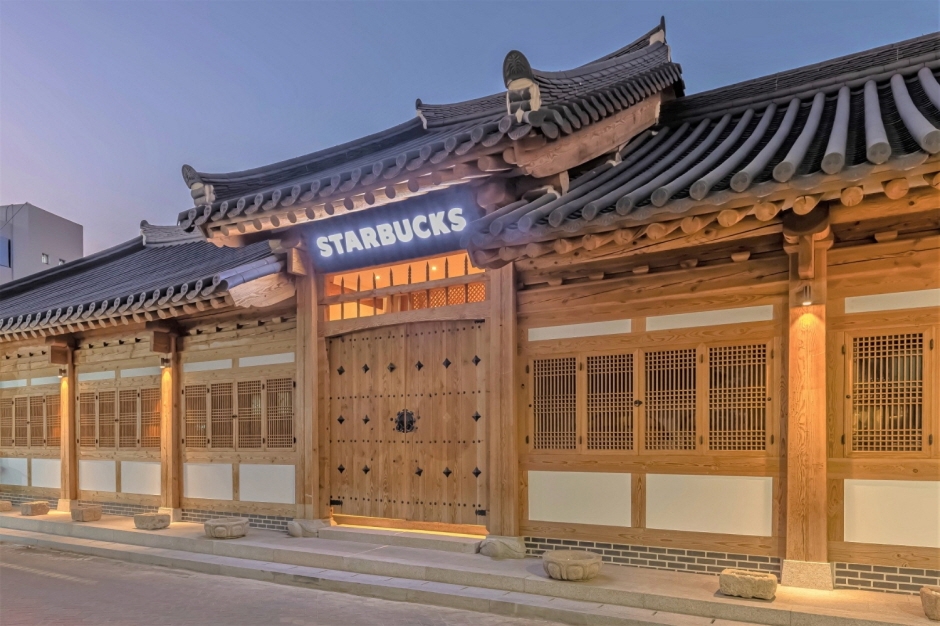
⊙ Starbucks Daegu Jongro Old House (스타벅스 대구종로고택)
– Homepage
www.starbucks.co.kr
Special Starbucks store where the past and present meet in harmony
.Starbucks Daegu Jongro Old House store conserved the beautiful architectural style of a hanok house built in 1919 and reinterpreted with the modern touch. The store is composed of two hanok buildings and a garden. There is a separate building for restrooms. Here, you can enjoy the scenery of the four seasons and the history from past to present. The store also offers high-quality audio sound in collaboration with Bang & Olufsen, who was inspired by Daegu, the origin of Korea’s modern music cafe and the city of culture and art. The store sits in the middle of the Jingolmok Alley, the second course of the Modern Cultural Alley Tour, and has become a tourists’ beloved destination and landmark in Daegu. This special store serves as a guide that indirectly delivers a historical meaning.
⊙ Samsong Bakery main store (삼송빵집 본점)

– Homepage
www.ssbnc.kr
Daegu’s representative bakery f(x) KRYSTAL visited
This place opened in 1957 and became famous after a broadcast of KRYSTAL eating bread here, hence it is called Daegu’s representative bakery. The best menu is Whole Corn Bun, Squid Ink Whole Corn Bun, Vegetable Croquettes, Streusel Bun with Red Bean Filling, and Cream Cheese Sweet Rice Cake Bread. The high ceilings and chandeliers are impressive. When you go up to the second floor, you will find a minimalist cafe-like atmosphere with simple tables placed in a wide space.
⊙ Daegu Jeil Church (대구제일교회)
View detailed guide on Korea Trip Guide →
– Homepage
www.firstch.org (Korean only)
Daegu Jeil Church is the oldest Protestant Church in Gyeongsangbuk-do Province. Initially established in 1898 over four tile-roofed houses, Daegu Jeil Church was rebuilt in 1933 with traditional and Western architectural designs. Subsequently, Deacon Lee Ju-Yeol dedicated a 33m bell tower in 1937, whlie the church underwent an interior renovation in 1969, and an expansion in 1981.
In conjuction with its physical development, which was at the forefront of the nation’s architectural modernization, the church contributed largely to modernization and expansion of Christianity in the region as well as in Korea. In addition, by introducing modern medicine and education to the citizens of Daegu, the founders of Daegu Jeil Church stimulated social development in the region.
](https://ktrip.blogsailing.com/wp-content/uploads/2026/06/4044122_image2_1.jpg)
![Nepa – Hyundai Outlets Daegu Branch [Tax Refund Shop] (네파 현대아울렛 대구점)](https://ktrip.blogsailing.com/wp-content/uploads/2026/06/4044696_image2_1.jpg)
](https://ktrip.blogsailing.com/wp-content/uploads/2026/06/4044290_image2_1.jpg)
One Comment