Gimje Horizon Festival (김제지평선축제)

Gimje Horizon Festival (김제지평선축제)

– Homepage
festival.gimje.go.kr/

– Tel
+82-63-540-3172

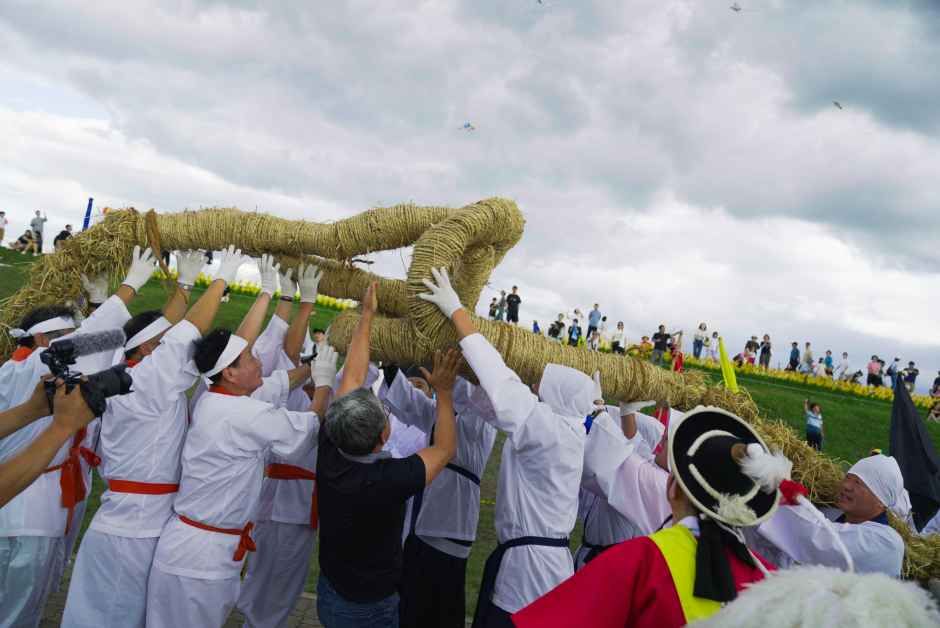
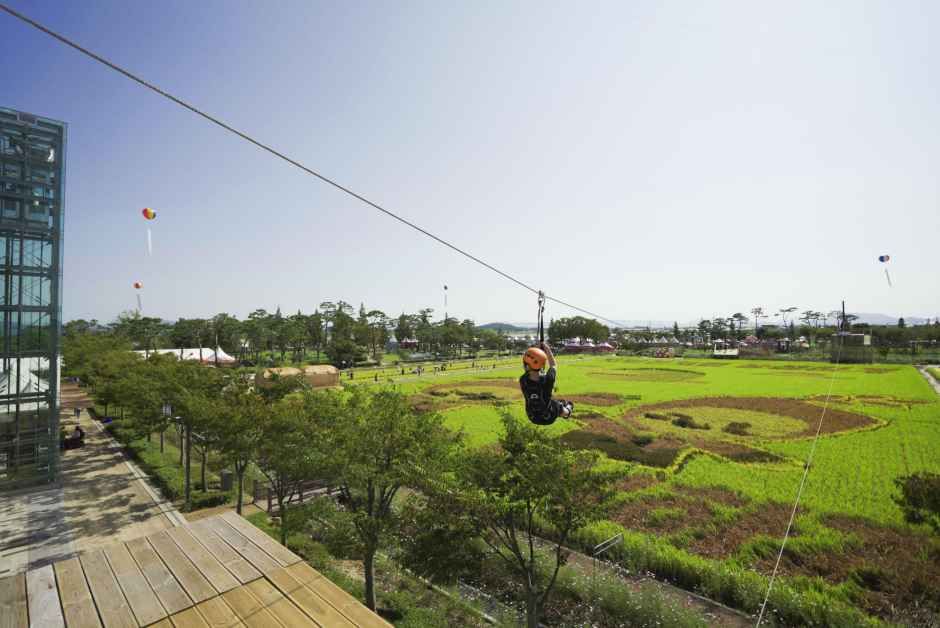
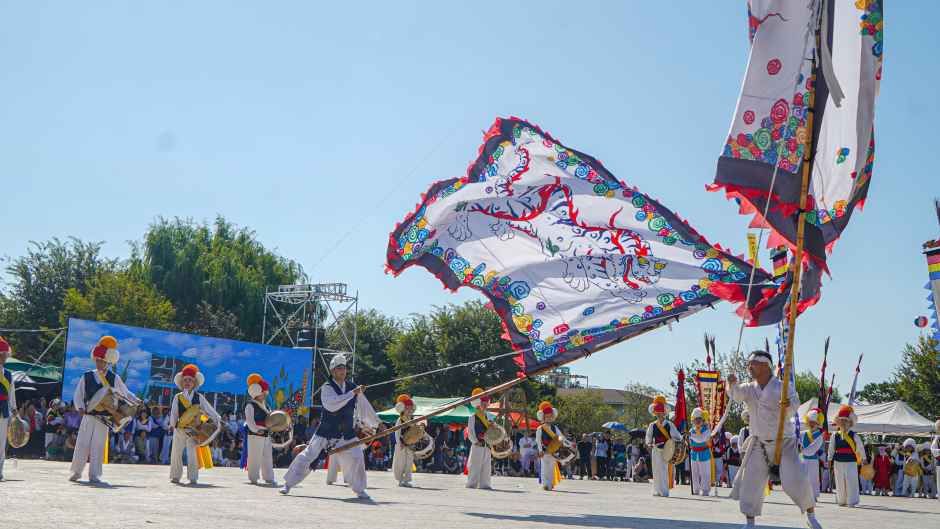
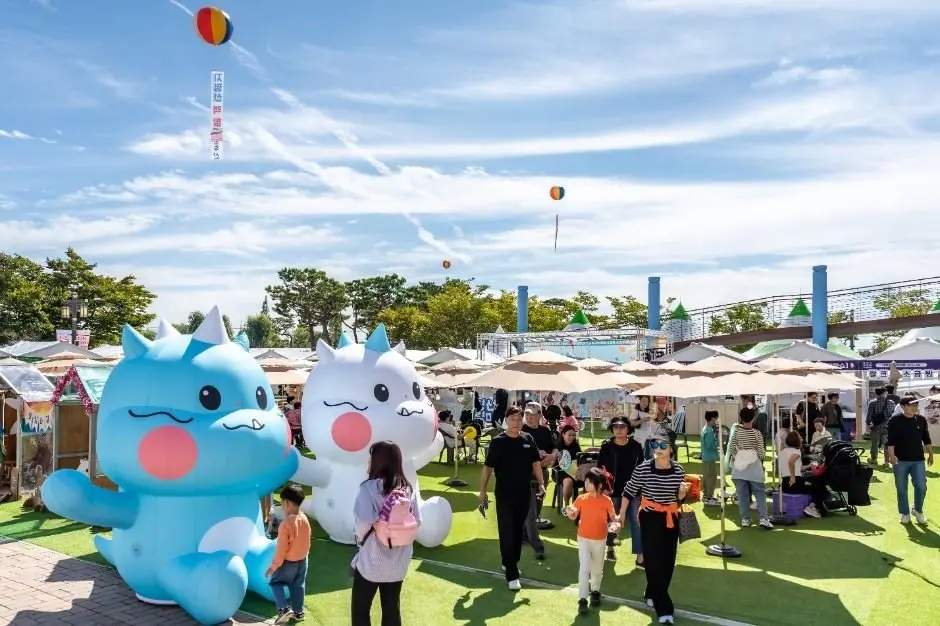
The Gimje Horizon Festival is Korea’s only Honorary Cultural Tourism Festival dedicated to traditional farming culture, as designated by the Ministry of Culture, Sports and Tourism. Centered around Byeokgolje Reservoir, Korea’s oldest and largest irrigation facility, the festival celebrates the nation’s rich farming heritage. Set against the region’s expansive horizon, the festival features the Presidential Cup National Nongak Competition, along with hands-on agricultural experiences such as cooking rice over a traditional wood-fired stove, catching grasshoppers, and harvesting rice. Visitors can also take part in traditional events, including the Byeokgolje Twin Dragon Play, inspired by a local legend, and the Ipseok Tug-of-War for a bountiful harvest.

– Address : 442, Byeokgolje-ro, Buryang-myeon, Gimje-si, Jeonbuk-do

※ Presentation Information
– Event Date
20261001 ~ 20261005

– Schedule
09:00 ~ 21:00

– Location
Across Gimje (around Byeokgolje Reservoir)

– Program
Presidential Cup National Nongak Competition, Byeokgolje Twin Dragon Play, Ipseok Tug-of-War for a Good Harvest

– Sponsor
Gimje-si

– Sponsor Phone
+82-63-540-3172

– Co-Sponsor
Gimje Horizon Festival Committee

– Fees
Free (Some fees apply)


◎ Nearby Tourism Infobox

⊙ Byeokgolje Reservoir Site (김제 벽골제)

View detailed guide on Korea Trip Guide →


– Homepage
www.gimje.go.kr

Byeokgolje Reservoir Site is home to the embankment and stele recording reconstruction for Korea’s first ever reservoir. Records show it was rebuilt in the 6th year of King Wonseong of Silla (790), the 21st year of King Hyeonjong and King Injong of Goryeo (1143), and then again in the 15th year of King Taejong of Joseon (1415). It was lost due to heavy rain in 1420 (the 2nd year of King Sejong’s reign).

Currently, only about 3 kilometers of straight embankment remains on the site. In 1925, the Dongjin Land Improvement Association remodeled this embankment and used it as a channel for providing water for farming, thus losing a lot of its original appearance. A monument was erected on the north side of the embankment to commemorate the rebuilding of Byeokgolje Reservoir during the Joseon Dynasty. However, it is difficult to read the writing because it is worn out.

In 1975, two sites with water gates that controlled the water in the reservoir were excavated, and the results showed that the construction used large-scale, high-level engineering technology. Byeokgolje Reservoir is not only significant in that it was Korea’s first reservoir but also proves that the country’s civil engineering technology was developed enough to build such a reservoir at the time, revealing a groundbreaking fact in the history of science and technology in Korea.

Nearby tourist attractions can be visited together: Byeokgolje Agricultural Museum, where you can get a glimpse of the old agricultural culture, Theme and Experience Space for Agriculture, and Byeokcheon Art Gallery, which displays the works of Na Sang-mok, an Oriental Painting artist in Korea.

* Pets are allowed; however, a leash is required.

⊙ Byeokgolje Museum of Agricultural Culture (벽골제 농경문화 박물관)

View detailed guide on Korea Trip Guide →


– Homepage
tour.gimje.go.kr

The largest irrigation facility in Korea, Byeokgolje Reservoir (Historic Site) is considered the birthplace of Korea’s rice-farming culture. All that remains of the reservoir today are a three-kilometer long embankment that spans from Sinyong-ri to Wolseung-ri in Buryang-myeon, Gimje-si and a monument that was erected in 1415. The Byeokgolje Museum of Agricultural Culture exhibits around 250 artifacts related to rice farming; located within the same complex is an experience center where visitors can discover many properties of irrigation facilities first-hand.

⊙ Arirang Literature Museum (조정래 아리랑문학관)

View detailed guide on Korea Trip Guide →


Located in Gimje, Jeollabuk-do, Arirang Literature Museum (Jo Jung-rae Arirang Literature Museum) was opened in May, 2003. The museum displays materials related to Jo Jung-rae’s novel “Arirang,” a work praised to have x_heightened Korea’s literature standards in aspects of cultural, literary, and popular value. “Arirang” takes place during the time of Japanese colonization, vividly describing the pain and common racial values which people shared as a whole amidst the suffering and efforts that were made to bring Korea’s independence a step closer.

Similar Posts

Leave a Reply

Your email address will not be published. Required fields are marked *