Gyochon Cultural Performance Silla Ogi(교촌문화공연 신라오기)
Gyochon Cultural Performance Silla Ogi(교촌문화공연 신라오기)
– Address : 경상북도 경주시 교촌길 39-2 (교동) Gyeongju Gyochon Traditional Village Square
※ Presentation Information
– Age Limit
All ages
– Event Date
20260411 ~ 20260523
– Location
Gyeongju Gyochon Traditional Village Square, 71 Gyo-dong, Gyeongju-si, Gyeongsangbuk-do
– Program
* The show has closed.
Returning to his homeland after studying abroad in the Tang dynasty, Choi Chi-won, a brilliant scholar of the Silla dynasty, encounters a clown troupe performance in the village of Gyochon in Gyeongju. Mesmerized by the dazzling dances and masterful performances, he immortalized his impressions in poetry. In his work “Hyangak Japyeong ,” he introduced five distinct plays collectively known as “Silla Ogi (five plays).” The Gyochon Cultural Performance Silla Ogi is a creative outdoor theater production that reinterprets his poetry and brings back the thousand-year-old art of Silla to the modern era.
The five chapters of the performance — “Geumhwan,” “Daemyeon,” “Sanye,” “Woljeon,” and “Sokdok”— create the illusion of traveling back in time to the Silla era. Each chapter showcases a unique traditional art: Geumhwan features the juggling of golden balls; Daemyeon presents a play performed with a golden mask; Sanye with a dynamic lion mask dance; Woljeon engages the audience with satire and humor, distinctive to masked plays; and Sokdok concludes with an energetic group dance set to the rhythmic beat of drums. Together, these performances vividly express the artistic spirit of the Silla people and are sure to make the audience shake their shoulders. Between acts, the actor plays the author, Choi Chi-won, to provide commentary so that the audience can fully understand the story.
The performance, held on a special stage in Gyeongju Gyochon Traditional Village Square overlooking Woljeonggyo Bridge, demonstrates the alive history and eternal art. Creative organizations from Gyeongju, including Gyochon Gugak Center Yeakdang, the traditional Korean theater company Duduri, Neoul Dance Company, and Art Project Jin, will take the stage, bringing a rich blend of traditional and contemporary art to life.
– Event Duration
60minutes
– Sponsor
경주시, 경주문화재단
– Co-Sponsor Phone
054-777-6305
◎ Nearby Tourism Infobox
⊙ Gyeongju Gyochon Traditional Village (경주 교촌마을)
View detailed guide on Korea Trip Guide →
– Homepage
gyeongju.go.kr: Visit site
At Gyeongju Gyochon Village, visitors can see the House of the Gyeongju Choi Clan (Important Folklore Material No. 27) and try some Gyeongju Gyodong Beopju Liquor (Important Intangible Cultural Asset No. 86-3). The village centers around the Gyeongju Choi Clan, a family known to have maintained their wealth for over 12 generations, producing many important people. Visitors can learn about the lifestyle and spending habits that enabled the family to do this. The village is also home to the site of Yoseokgung, the house of Silla Princess Yoseok. Nearby attractions include Gyerim Forest, Naemulwangneung Royal Tomb, and Gyeongjuhyanggyo Local Confucian School.
⊙ Yosukgung 1779 (요석궁1779)
View detailed guide on Korea Trip Guide →
– Homepage
Instagram @yosukgung.kr: Visit site
Named after Silla King Muyeol’s daughter Princess Yoseok, Yosukgung 1779 is a fine dining restaurant that serves traditional Korean food. The resturant is run by the Choi family, who settled on the site of Princess Yoseok’s house during the Joseon dynasty, and has passed on the restaurant and family recipes through 12 generations. All the foods served are made with organic ingredients, for a healthy taste that cannot be found anywhere else.
⊙ Gyeongjuhyanggyo Local Confucian School (경주향교)
View detailed guide on Korea Trip Guide →
– Homepage
hyanggyo.kr: Visit site
Gyeongjuhyanggyo Local Confucian School is located near Gyochon Hanok Village in Gyeongju. The surrounding areas, Gyochon, Gyori, and Gyodong, derive their names because of this school. Although the exact date of its original construction is unknown, Gyeongju Hyanggyo was renovated during the reign of King Seongjong of the Joseon Dynasty, modeled after Seoul’s Seonggyungwan National Academy. The buildings follow the typical Confucian layout of “hall in the front, shrine in the back.” While seowon were private academies, hyanggyo were public institutions. Although it no longer serves the educational purpose, every spring and autumn it hosts traditional Confucian rituals. It also offers cultural programs such as tea ceremonies, rice-cake pounding, and archery. From April to October it hosts traditional Korean-style demonstration weddings, where visitors can participate in the ceremonies for free.
⊙ Woljeonggyo Bridge (월정교)
View detailed guide on Korea Trip Guide →
– Homepage
www.gyeongju.go.kr: Visit site
Woljeonggyo Bridge, located in Gyo-dong, Gyeongju, was built during the Unified Silla period (AD 676-935), but was burnt down during the Joseon dynasty. Through historical research, the bridge was rebuilt in April 2018 to become the largest wooden bridge in Korea. According to Samguk Sagi (History of the Three Kingdoms), the bridge was built during the 19th year of King Gyeongdeok’s reign (AD 760), connecting Wolseong and Namsan together. The historical research to rebuild the bridge lasted from November 26, 1984 to September 8, 1986, finding that the bridge was made with wood for the first time. The first rebuilding of the bridge was from 2008 to 2013 and the finishing touches were added from April 2016 to April 2018. Through this research and rebuilding process, future restoration of historical buildings have a better reference to use.
⊙ Cheonnyeonae Gyeongjuppang Chalborippang Chalboritteok (천년애 경주빵 찰보리빵 찰보리떡)
View detailed guide on Korea Trip Guide →
– Homepage
www.chalboribbang.com/: Visit site
Cheonnyeonae Gyeongjuppang Chalborippang Chalboritteok is located on Hwangnidan Street in Gyeongju. The building is designed in a hanok-style with an antique facade. The store’s main products are chalboritteok and chalborippang, which are chewy barley rice cake and chewy barley bread, respectively. The store uses fresh barley that gets harvested every June and all products are made with barley. The chewy delicacies sold at this store have become a popular nutritious snack that represents Gyeongju.
⊙ Gyeongju Wolseong Palace Site (Banwolseong Fortress) (경주 월성(반월성))
View detailed guide on Korea Trip Guide →
– Homepage
www.gyeongju.go.kr: Visit site
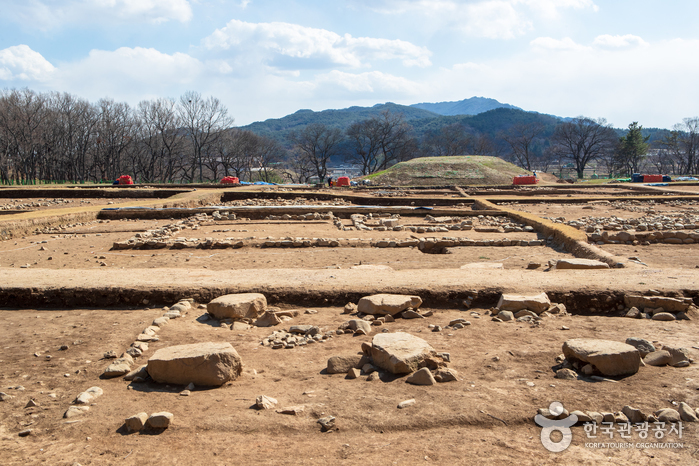
This was the location of the palace-fortress during the Silla dynasty (57 BC ~ AD 935). The fortress takes after its name, which, literally translates to mean a crescent moon shape on top of a hill. The famous history books of Samgukyusa mention that Silla’s 4th King Seoktalhae (AD 57~80) thought this area was an ideal spot for the fortress and bought the land from a nobleman. The 2nd King Namhae (AD 4~24) impressed by Seoktalhae’s actions, took him in as his son-in-law, later, becoming the 4th king. The area was then under Silla’s rule for 900 years, the last king being the 56th, Gyeongsoon (AD 927~935).
Although the magnificent grandeur of the palace is now just an empty lot, it has been told that this area was filled with imperial buildings during the Silla dynasty. Currently, the region of Wolseong has a freezer made out of rocks called Seokbinggo, an archery range, a horse-riding field, and a traditional playground, which resembles the grounds of the Joseon Period (the dynasty that ruled the Korean peninsula from 1392-1910).
⊙ Gyeongju Hwangnidan Street (경주 황리단길)
View detailed guide on Korea Trip Guide →
– Homepage
www.gyeongju.go.kr: Visit site
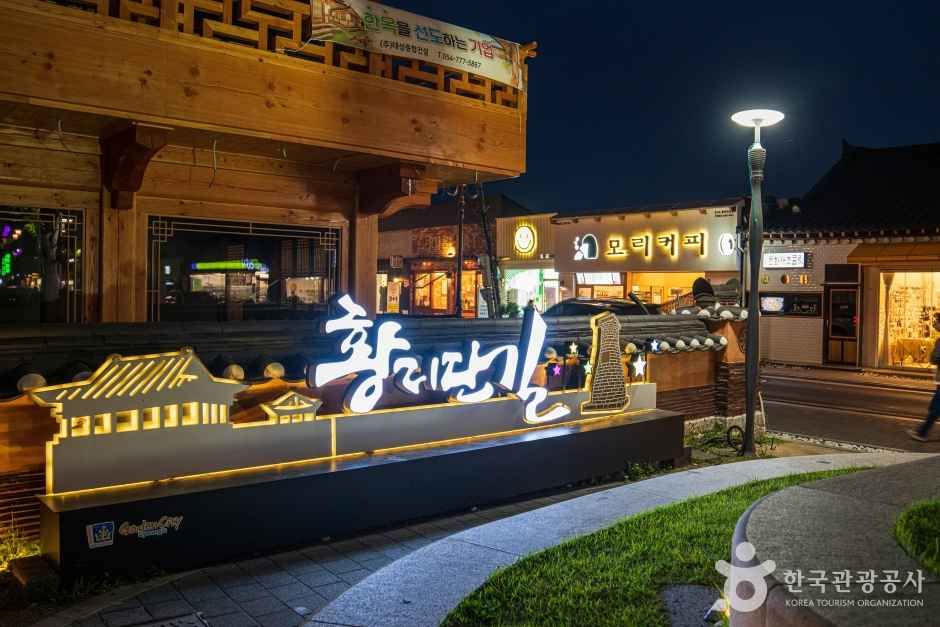
Hwangnidan Street was originally known as “Hwangnam Keungil” near Poseok-ro, Hwangnam-dong. Its name comes from the combination of Hwangnam-dong and Gyeongnidan Street in Itaewon, Seoul, meaning the “Gyeongnidan Street of Hwangnam-dong.” The street is home to numerous restaurants, cafes, photo studios, and shops housed in traditional hanok buildings, making it popular among the younger generations in Korea. The street also demonstrates newtro aesthetics due to the remaining old and worn buildings built during the 1960s and the ’70s. Hwangnidan Street is near Cheomseongdae Observatory, Daereungwon Ancient Tombs, and other major tourist sites, allowing the street to become a popular Gyeongju attraction as well.
⊙ Gyeongju Five Royal Tombs (경주 오릉)
View detailed guide on Korea Trip Guide →
– Homepage
www.gyeongju.go.kr: Visit site
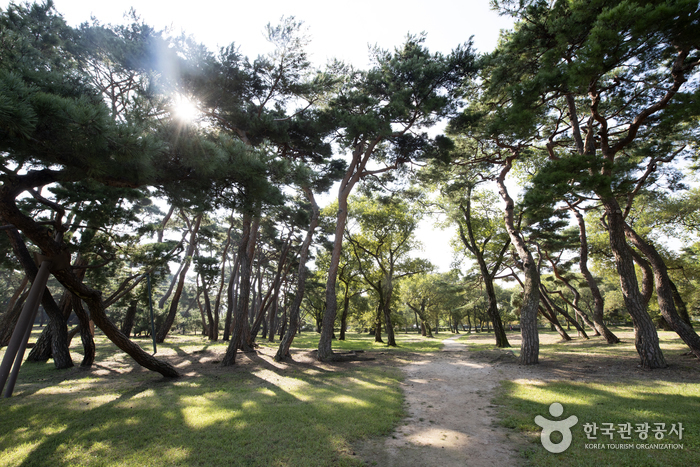
The Five Royal Tombs (called Oreung in Korean) have been officially designated Historic Site No. 172 and are the final resting places of four kings of the Park clan—King Park Hyeokgeose (founder of the Silla Kingdom), King Namhae, King Yuri, and King Jabi—and one queen (Queen Aryeong, wife of King Park Hyeokgeose).
To the east of the royal tombs lies Sungdeokjeon Shrine, which holds the ancestral tablet of King Park Hyeokgeose. Behind the shrine is the Aryeongjeong Well, said to be the birthplace of Queen Aryeong.
⊙ Gyeongju Hanbokpan (경주한복판)
View detailed guide on Korea Trip Guide →
– Homepage
www.instagram.com/gyeongju_hanbokpan: Visit site
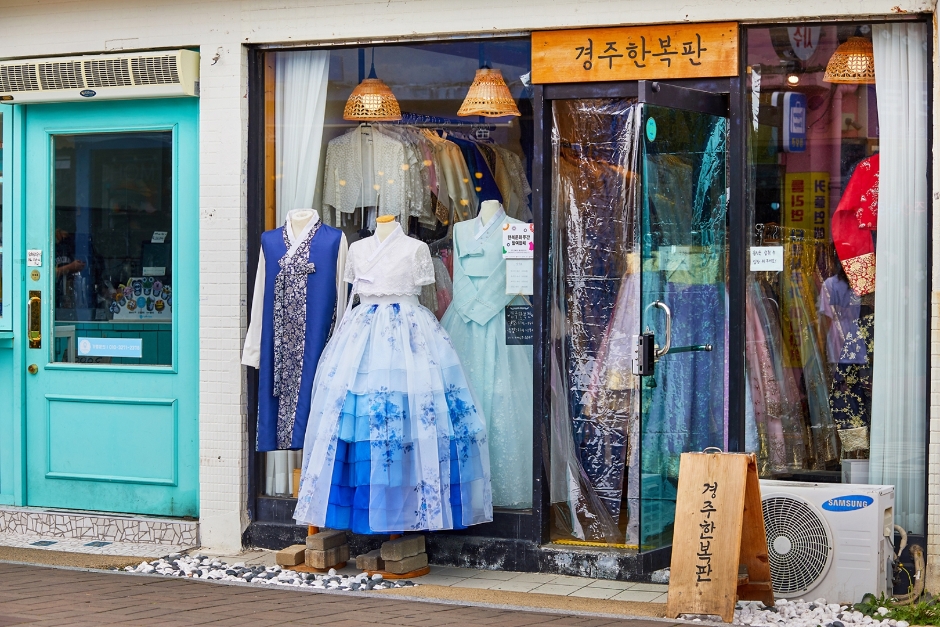
Gyeongju Hanbokpan is a hanbok rental store located in the middle of Hwangnidan Street. Hanbok attires are available in a variety of materials, colors, and seasons. There are many hanbok wears reflecting the latest trends, so they look good on anyone and are easy to wear. Besides changing clothes, the store owner also assists customers with hair accessories. There are many family customers as the store also offers hanbok for both men and children. Customers can also print the photos they took with their smartphone upon retrning the hanbok, making it an even more memorable experience.
⊙ Gyeongju Historic Area [UNESCO World Heritage] (경주역사유적지구 [유네스코 세계문화유산])
View detailed guide on Korea Trip Guide →
– Homepage
www.gyeongju.go.kr: Visit site
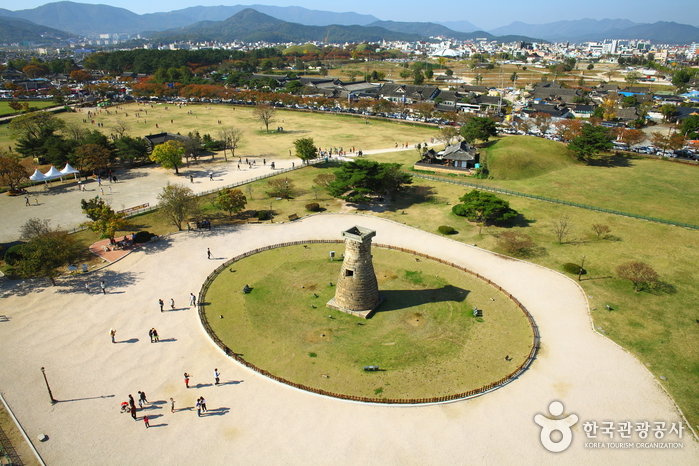
The Gyeongju Historic Area, registered as a UNESCO World Cultural Heritage on November 2000, is an area that embodies the time-honored history and culture of Gyeongju, the ancient capital of the Silla Kingdom (57 BC-AD 935).
The Gyeongju Historic Area can be divided into 5 major sections. The first section is the Namsan Area, a treasure trove of Buddhist art masterpieces dating back to the Silla Kingdom. Gyeongju Namsan Mountain (often referred to as an ‘outdoor museum’) is home to many historical heritage sites from the Silla Kingdom. Major attractions include: Poseokjeong Pavilion Site (Historic Site), Rock-carved Buddhas in Tapgok Valley (Treasure), Three-story Stone Pagoda in Cheollyongsa Temple Site (Treasure), Rock-carved Buddhas at Chilburam Hermitage (Treasure), Rock-carved Seated Buddha in Bulgok Valley (Treasure), and 37 other Buddhist relics
The second section is the Wolseong Area, one of the former palace sites of the Silla Kingdom. The area consists of Gyerim Forest (Historic Site); Donggung Palace and Wolji Pond (Historic Site), a Silla Royal Palace site; and Cheomseongdae Observatory (National Treasure), the oldest observatory in Asia.
Daereungwon Ancient Tomb Complex, the third area, features a cluster of the royal graves of the kings and queens of Silla. Also in the same area are Ancient Tombs in Nodong-ri (Historic Site), Ancient Tombs in Noseo-ri (Historic Site), Ancient Tombs in Hwangnam-ri (Historic Site), and Five Royal Tombs (Historic Site), among others. Archaeologists have discovered a number of invaluable relics and historic items in this area such as Geumgwan (golden crown), Cheonmado (a painting of flying horses), and numerous pottery pieces. These finds are perhaps the greatest clues into the life of the people of the Silla dynasty.
Area number four, the Hwangnyongsa Temple Site, is where the former site of the Hwangnyongsa Temple (Historic Site) and Bunhwangsa Stone Pagoda are located. Last is the Sanseong Area, housing remnants of the major defense system for the capital city. The site consists of Myeonghwalsanseong Fortress (Historic Site) which is estimated to be around 400 years old.
The Gyeongju Historic Area has a total of 52 designated cultural assets that are registered as World Cultural Heritages.
](https://ktrip.blogsailing.com/wp-content/uploads/2026/06/4028068_image2_1.jpg)
](https://ktrip.blogsailing.com/wp-content/uploads/2026/06/4043885_image2_1.jpg)